wayground logo

Free Printable Worksheets

Font size

S
M
L
XL
Worksheets

SC.912.P.10.4 States of Matter

Total questions: 99

Worksheet time: 2hrs 3mins

Name
Class
Date
1.

Which best describes temperature?

a)

It is equal to the heat difference between two objects

b)

It is proportional to the total energy in an object

c)

It is proportional to the average kinetic energy of particles in an object

d)

It is equal to an object's specific heat capacity

2.

If you wanted to know how much the temperature of a particular piece of material would rise when a known amount of heat was added to it, which of the following quantities would be most helpful to know?

a)

initial temperature

b)

specific heat

c)

density

d)

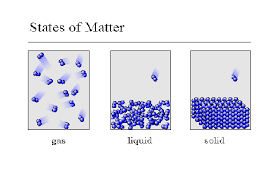
coefficient of linear expansion

3.
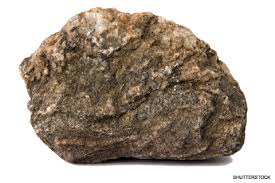
Which object is a solid that keeps it's shape when it changes containers? 
a)
Chocolate milk
b)
Gravel
c)
Oxygen
4.
A student observes a clear substance in a container that has a flat, level surface.  The substance flows when poured, and is not magnetic.  The substance is most likely...
a)
sand
b)
water
c)
paper clips
5.
Which thing in this picture represents a gas? 
a)
ice cubes
b)
bubbles 
c)
soda
6.
Which of the following changes liquid water into gas?
a)
boiling
b)
freezing 
c)
melting
7.
Which of the following things will take the shape of the container it is in?
a)
ice cube
b)
melted chocolate
c)
baseball
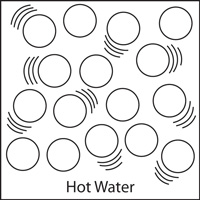
8.
When a stick of butter melts it changes from a...
a)
solid to gas
b)
gas to solid
c)
solid to liquid
9.
A gas
a)
has a definite shape but no definite volume
b)
has a definite volume but no definite shape
c)
has fast-moving particles
10.
Freezing
a)
Solid to gas
b)
Liquid to solid
c)
Gas to solid
d)
Liquid to gas
11.
Boiling
a)
liquid to gas
b)
gas to solid
c)
gas to liquid
d)
solid to liquid
12.
Which state of matter has tightly packed molecules?
a)
solid
b)
liquid
c)
gas
13.
Which state of matter has a definite shape?
a)
solid
b)
liquid
c)
gas
14.
What is happening when my ice cream changes from a solid to a liquid?
a)
freezing
b)
melting
c)
burning
d)
evaporation
15.
Define a liquid.
a)
Indefinite shape, indefinite volume
b)
Definite shape, definite volume
c)
Found in stars
d)
Definite volume, indefinite shape
16.
The state of matter that has no definite size or shape is
a)
Solid
b)
Liquid
c)
Gas
17.
Particles (molecules) in a ______________________ have more energy than the other states of matter.
a)
gas
b)
solid
c)
liquid
18.
Particles of a liquid
a)
are tightly packed together and stay in a fixed position.
b)
have no viscosity.
c)
decrease in volume with increasing temperature.
d)
are free to move around one another but still touch.
19.
What term describes a solid changing to a gas?
a)
Deposition
b)
Sublimation
c)
Evaporation
d)
Freezing
20.
Particles (molecules) in a ______________________ have more energy than the other states of matter.
a)
gas
b)
solid
c)
liquid
21.
What is condensation?
a)
gas to solid
b)
gas to liquid
c)
liquid to solid 
d)
solid to liquid 
22.
The speed of the molecules determines the _____.
a)
volume
b)
density
c)
pressure
d)
temperature
23.
Which has a greater distance between particles?
a)
Solid
b)
Liquid
24.
The slower the particles in a substance move,
a)
the colder it is.
b)
the warmer it is.
c)
the more energy it has.
d)
the less energy it has.
25.
What is matter?
a)
Anything that has mass and volume
b)
The shape of an object
c)
How much an object weighs
d)
The pull of objects on one another
26.
Volume is.....
a)
the weight of an object
b)
the gravity of an object
c)
how much space an object takes up
d)
measured with a balance scale
27.
The molecules in a gas....
a)
are tightly packed
b)
slide past one another in a flowing manner
c)
vibrate, move freely, and spread
d)
are in a regular pattern
28.
Liquids....
a)
have a definite shape
b)
are always clear
c)
take the shape of their container
d)
are not matter
29.
Evaporation is
a)
Gas changing to a liquid
b)
Solid changing to a liquid
c)
Liquid changing to a solid
d)
Liquid changing to a gas
30.
A solid changing to a liquid is...
a)
melting
b)
freezing
c)
condensing
d)
evaporating
31.

Which form of matter has a definite shape and takes up space (has definite volume)?

a)

liquid

b)

solid

c)

gas

d)

clay

32.
Which form of matter fills the space like it has in the balloon?
a)
liquid
b)
string
c)
solid
d)
gas
33.
The molecules in the picture are tightly held together with little movement. They have shape and energy.  Therefore, the picture represents _________.
a)
solid
b)
liquid
c)
gas
d)
plasma
34.
When the temperature of matter decreases the particles ...
a)
speed up and move farther apart
b)
speed up and move closer together
c)
slow down and move farther apart
d)
slow down and move closer together
35.
When the temperature of matter increases the particles...
a)
speed up and move closer
b)
speed up and move farther apart
c)
slow down and move closer together
d)
slow down and move farther apart
36.
If the tops were removed from the cylinders, the following would happen:
a)
The solid would fly out of the container
b)
The liquid would fly out of the container.
c)
The gas would fly out of the container.
d)
They ALL would fly out of the container.
37.
What does this picture represent? 
a)
solid
b)
liquid
c)
gas
d)
plasma
38.
What does this picture represent? 
a)
solid
b)
liquid 
c)
gas
d)
plasma
39.
Which of the following statements is NOT true of all different types of matter?
a)
They are made of atoms and molecules
b)
The particles are always in motion
c)
The particles always move at the same speed
d)
They are made of particles that are too small to see
40.
When the temperature of matter increases the particles...
a)
speed up and move closer
b)
speed up and move farther apart
c)
slow down and move closer together
d)
slow down and move farther apart
41.
What happens to the particles when I add heat?
a)
The particles get bigger
b)
The particles get smaller
c)
The particles get slower
d)
The particles get faster
42.
Which of the following statements describes a gas?
a)
It has a fixed volume
b)
It becomes the volume of it's container
43.
The atoms in a solid DO NOT move at all? 
a)
True
b)
False
44.
What state of matter makes up our sun, flames, and the core of stars?
a)
Solid
b)
Liquid
c)
Gas
d)
Plasma
45.

Plasma can be found in which of the following

a)

Auroras

b)

Lightening

c)

LED light bulbs

d)

Stars

e)

Moons

46.

A plasma can be made in a laboratory by

a)

cooling a gas to very low temperatures

b)

cooling a gas and reducing the pressure

c)

heating a gas to extremely hot temperatures

d)

heating a liquid to the point it turns into a gas

47.

In a plasma the electrons are no longer associated with a particular nucleus.

a)

True

b)

False

48.
When the temperature of a gas at a constant volume is increased, the pressure of the gas
a)
increases
b)
decreases 
c)
stays the same
d)
it will vary
49.
Which of the following is not true about gases?
a)
They spread out to fill their containers
b)
They have a low density. 
c)
The particles move very slowly. 
d)
The volume changes with whatever shape the room is. 
50.
What are the three states of matter?
a)
solid, volume, mass
b)
density, volume, mass
c)
solid, liquid, gas
d)
density, gas, volume
51.
Something that takes up space and has mass.
a)
volume
b)
matter
c)
mass
d)
density
52.
A measure of how much mass is contained in a given unit of volume.
a)
mass
b)
density
c)
volume
d)
matter
53.
The amount of space something takes up
a)
density
b)
volume
c)
mass
d)
matter
54.
Shape is a ____ that helps identify an object.
a)
physical property
b)
chemical property
c)
mass
d)
matter
55.
A watermelon has more matter than a grape, so it has more
a)
mass
b)
eat
c)
solid
d)
greater
56.
You can measure ______ with grams.
a)
mass
b)
volume
c)
conductivity
d)
melting point
57.
a type of matter that can be found on earth as a solid, liquid, and gas
a)
gold
b)
water
c)
oxygen
d)
rock
58.
A description of objects that can be measured and observed.
a)
gas
b)
mustangs
c)
physical properties
d)
melting point
59.
Which of the following is a part of the water cycle?
a)
evaporation
b)
condensation
c)
precipitation
d)
all of the above
60.
If you saw a glass of water and later the water was gone what happened to the water? Remember that your in the science lab.
a)
Ms. Klenk was very thirsty and drank the water.
b)
evaporation
c)
precipitation
d)
solubility
61.
A physical property can be observed with your
a)
Eyes
b)
Ears
c)
Tastes
d)
All of the above
62.
Cutting an orange is a physical change.
a)
True
b)
False
63.
What causes a change in the state of matter?
a)
physical properties
b)
chemical energy
c)
temperature
64.
Which change can occur when  you add heat energy to water?
a)
The water can change from a liquid to a solid
b)
The water can change from a gas to a liquid
c)
The water can change from a liquid to a gas
d)
The water can change from a solid to a liquid
65.
Which term means "the ability to cause change?"
a)
Matter
b)
Heat
c)
Energy
d)
physical change
66.
Which of the following could be a characteristic that changes in matter during a PHYSICAL CHANGE?
a)
Size
b)
State
c)
Texture
d)
All of the above
67.
Adding HEAT to matter causes its particles to:
a)
move faster and farther apart
b)
Move slower and farther apart
c)
Move faster and closer together
d)
Move slower and closer together
68.
__________ are the building blocks of life.
a)
solids
b)
gases
c)
atoms
d)
nutrients
69.
Gasoline is a ________________.
a)
liquid
b)
solid
c)
gas
70.
Helium is a ____________.
a)
liquid
b)
solid
c)
gas
71.
I am the smallest whole particle of matter. 
a)
atom
b)
compound
c)
molecule
d)
mixture
72.
I am two or more atoms chemically bonded.
a)
atom
b)
compound
c)
molecule
d)
mixture
73.
A pure substance that cannot be broken down into any other substance by chemical or physical means. There are about 100 of us shown in the Periodic Table
a)
compound
b)
mixture
c)
molecule
d)
element
74.
How can you describe this picture?
a)
liquid
b)
solid
c)
gas
75.
What is an example of gas?
a)
crayons
b)
paper
c)
soda
d)
air
76.
What can causes ice to transform from a solid to a liquid?
a)
The air.
b)
The cold.
c)
Shape
d)
Heat
77.
This state of matter does not have a definite size or shape.
a)
Gas
b)
Liquid
c)
Solid
d)
Milk
78.
Which is not a property of matter?
a)
Shape
b)
Mass
c)
Liquid
d)
Volume
79.
When you see steam, fog or clouds, which state of matter is it?
a)
solid
b)
liquid
c)
gas
80.
Which state of matter has particles that are tightly packed?
a)
liquid
b)
gas
c)
solid
81.
The amount of matter something contains. 
a)
volume
b)
mass
c)
density
d)
measurement 
82.

What is a solid?

a)

particles that are tightly compacted

b)

particles that are not tightly compacted

83.

what is a liquid?

a)

a substance that flows freely but is of constant volume

b)

a substance or matter in a state in which it will expand freely

c)

firm and stable in shape

84.

what is a gas?

a)

a substance or matter in a state in which it will expand freely to fill the whole of a container

b)

the basic unit of a chemical element

c)

an atom or molecule with a net electric charge due to the loss or gain of one or more electrons.

85.

How would you describe the way molecules move when the molecules are solid?

a)

the molecules are moving in place.

b)

the molecules are moving around each other.

c)

the molecules are moving away from each other.

d)

the molecules are not moving

86.

Molecules are always moving no matter what phase they are in: solid, liquid, gas.

a)

True

b)

False

87.

What happens to molecules when the temperature drops or lowers?

a)

The molecules get closer together

b)

The molecules start moving faster.

c)

The molecules stop moving.

d)

The molecules become smaller.

88.
When a substance melts, the kinetic energy _____________.
a)
decreases
b)
stays the same
c)
increases
d)
decreases then increases
89.
Gas particles are...
a)
tightly packed.
b)
loosely bonded and flowing.
c)
free to fly in all directions.
d)
so hot that the electrons are removed from the nucleus.
90.
Plasma particles are...
a)
tightly packed.
b)
loosely bonded and flowing.
c)
free to fly in all directions.
d)
so hot that the electrons are removed from the nucleus.
91.
Solid particles have the _________ energy.
a)
most
b)
middle amount of
c)
least
92.
Liquid particles are...
a)
tightly packed
b)
loosely bonded and flowing
c)
free to fly in all directions
d)
so hot that the electrons are removed from the nucleus.
93.
Liquids have...
a)
A definite shape and volume
b)
A definite shape but no definite volume
c)
No definite shape but a definite volume
d)
No definite shape or volume
94.
A liquid's resistance to flow is called...
a)
victory
b)
vadery
c)
viscosity
d)
velocity
95.
The _____ the viscosity the _____ the flow
a)
lower, slower
b)
higher, slower
c)
higher, faster
d)
lower, lazier
96.
Solids melt when solid particles _____ energy, liquids freeze when liquid particles _____ energy.
a)
absorb, release
b)
release, absorb
c)
absorb, absorb
d)
release, release
97.
What is the change from a Solid to a Gas due to the gaining of energy?
a)
Condensation
b)
Vaporization
c)
Sublimation
d)
Deposition
98.
Helium
a)
Gas
b)
Liquid
c)
Solid
99.
volcano (Clouds)
a)
gases
b)
liquids
c)
solids