wayground logo

Free Printable Worksheets

Font size

S
M
L
XL
Worksheets

Genetics Review

Total questions: 103

Worksheet time: 2hrs 39mins

Name
Class
Date
1.
Genotype refers to the ...
a)
physical expression of the genes
b)
the possible combination of alleles in a gene
c)
whether an allele is dominant or recessive
d)
how an organism will appear
2.
An offspring will receive how many alleles from each parent to determine a specific trait?
a)
one
b)
two
c)
three
d)
five
3.
Which of the following is a phenotype?
a)
BB
b)
Bb
c)
bb
d)
Blue eyes
4.
What is a phenotype
a)
The genetic make up (code)
b)
The physical trait
5.
the passing of genetic traits from parent to offspring.
a)
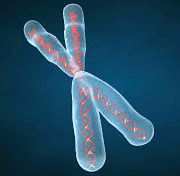
heredity
b)
trait
c)
gene
d)
allele
6.
having two of the same genes for the trait (sometimes called purebred).
a)
homozygous
b)
hetrozygous
c)
protein
d)
chromosome
7.
having two different genes for a trait (sometimes called hybrid).
a)
protein
b)
homozygous
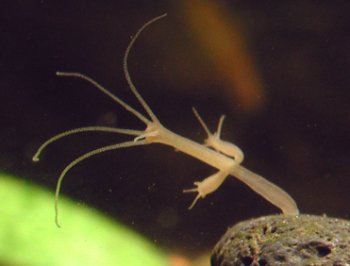
c)
heterozygous
d)
genotype
8.
Two brown eyed parents (Bb) have a baby. What is the chance the baby is blue eyed?
a)
0 %
b)
25%
c)
50%
d)
75%
9.
An allele whose trait only shows up when no dominant allele is present.
a)
hidden allele
b)
dominant allele
c)
recessive allele
d)
present allele
10.
One form of a gene is called_______________
a)
a DNA
b)
a Phenotype
c)
a trait
d)
an allele
11.
If green is dominant over purple, then what is the genotype for this individual?
a)
Purple
b)
Green
c)
GG
d)
gg
12.
Brown fur color is dominant over black fur color. Which of the following is the actual genotype of ALL of the offspring in the next generation of this cross for fur color?
AA x aa
a)
AA
b)
Aa
c)
aa
d)
brown fur
13.
Which is the correct phenotype for this organism?
a)
BB
b)
blue
c)
green
d)
bb
14.
 Dominant alleles are-
a)
capital
b)
lowercase
c)
both
d)
neither
15.
 Recessive alleles are-
a)
capital
b)
lowercase
c)
both
d)
neither
16.
A characteristic that an organism can pass on to its offspring through its genes is ___________
a)
Trait
b)
Gene
c)
Allele
d)
Dominant
17.
What is called when a organism has two identical alleles for a trait. TT or tt. RR or rr
a)
Heterozygous
b)
Homozygous
c)
Domozygous
d)
Thermozygous
18.
What is called when a organism has  two different alleles for a trait. Tt or Rr
a)
Heterozygous
b)
Homozygous
c)
Domozygous
d)
Thermozygous
19.
An organism’s physical appearance, or visible traits. 
a)
Genotype
b)
Phenotype
c)
Beanotype
d)
Notype
20.
A factor that covers up another factor is _____
a)
Recessive
b)
Obsessive
c)
Dominant
d)
Combinant
21.
Scientists use capital and small letters to show the _____ of an organism. 
a)
genotype
b)
genetic disorder
c)
phenotype
d)
genome
22.
An organism that has one dominant and one recessive allele for height is _____.
a)
unusual
b)
homozygous
c)
mutated
d)
heterozygous
23.
In a certain species of plant, the color purple (P) is dominant to the color white (p).
According to the Punnett Square, what is the probability of an offspring being purple?
a)
25%
b)
0%
c)
100%
d)
50%
24.
In a certain species of plant, the color purple (P) is dominant to the color white (p).
According to the Punnett Square, what is the probability of an offspring being white?
a)
25%
b)
0%
c)
100%
d)
50%
25.
T - tall and t = short
In the punnett square below, what belongs in the missing square
a)
tt
b)
Tt
c)
Bb
d)
TT
26.
B = brown fur  b = white fur
In the punnett square, what is the probability for white fur? 
a)
0%
b)
25%
c)
50%
d)
75%
27.
In the punnett square shown, what must the genotype of the missing parent be?
a)
BB
b)
Bb
c)
bb
d)
Tt
28.
This image shows a...
a)
Punnett Square
b)
Phenotype
c)
Genotype
d)
Dominant allele
29.

If a homozygous recessive woman marries a heterozygous man. What is the chance of having a baby with dimples?

a)

0%

b)

25%

c)

50%

d)

75%

e)

100%

30.

Two parents have a heterozygous genotype for eye color. What is the chance of having a blue eye baby?

a)

0%

b)

25%

c)

50%

d)

75%

e)

100%

31.

A heterozygous woman marries a man who is homozygous recessive. What are the chances of a curly hair baby?

a)

0%

b)

25%

c)

50%

d)

75%

e)

100%

32.

The different forms of a gene

a)

alleles

b)

atoms

c)

proteins

d)

wheels

33.

A chart that shows all the possible combinations of alleles that can result from a genetic cross

a)

dominant allele

b)

codominance

c)

probability

d)

Punnett Square

34.

B = brown fur b = white fur

In the Punnett square, what is the probability for white fur?

a)

0%

b)

25%

c)

50%

d)

75%

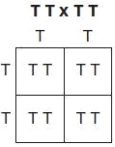
35.
What is the probability of heterozygous offspring?
a)
25%
b)
50%
c)
0%
d)
100%
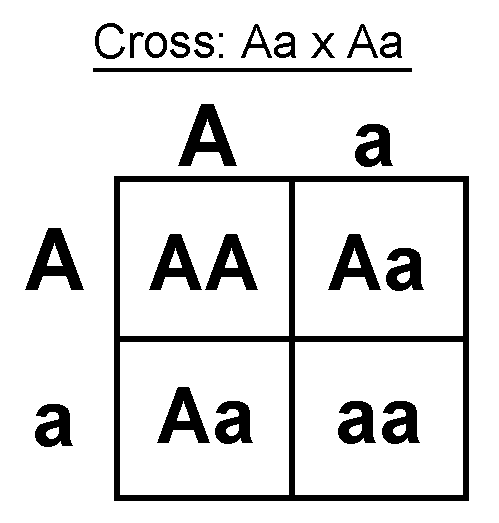
36.
What allele combination should go in the missing box?
a)
AA
b)
Aa
c)
aa
d)
none of these
37.
B = brown eyes
b = blue eyes
What is true about these two brothers that have brown eyes?
One has genotype BB the other Bb.
a)
they have same phenotype and genotype
b)
they have different genotypes and phenotypes
c)
they have same phenotype but different genotypes
d)
they have same genotype but different phenotypes
38.
What is the phenotype of the heterozygous parent in the punnett square?
a)
green
b)
yellow
c)
hybrid
d)
purebred
39.
An offspring will receive how many alleles from each parent to determine a specific trait?
a)
one
b)
two
c)
three
d)
five
40.

What are the possible phenotype(s) of the offspring? (A-Brown hair; a-blond hair)

a)

50 % Brown Hair and 50% Blond Hair

b)

25 % Brown Hair and 75% Blond Hair

c)

75 % Brown Hair and 25% Blond Hair

d)

0% Brown Hair and 100% Blond Hair

41.

In pea plants: T=tall t=short

What ratio of the offspring could be short?

a)

0 in 4

b)

1 in 4

c)

2 in 4

d)

4 in 4

42.

In a certain species of plant, the color purple (P) is dominant to the color white (p).

According to the Punnett Square, what is the probability of an offspring being purple?

a)

25%

b)

0%

c)

100%

d)

50%

43.
What is the yellow seed genotype?
a)
aa
b)
Aa
c)
AA
d)
AA or Aa
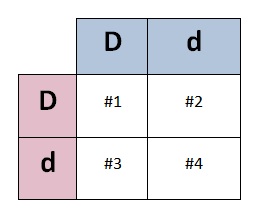
44.
What genotype would go in box 2?
a)
BB
b)
Bb
c)
bb
45.

What is the probability of heterozygous offspring?

a)

0%

b)

100%

c)

50%

d)

25%

46.

What genotype would go in box 4?

a)

BB

b)

Bb

c)

bb

47.

What genotype would go in box 1?

a)

BB

b)

Bb

c)

bb

48.

What is the possibility of this offspring having the dominant trait?

a)

50%

b)

75%

c)

25%

d)

0%

49.
What is the missing allele?
a)
a
b)
A
c)
AA
d)
aa
50.

The 2 female sex chromosomes are ___.

a)

XY

b)

XX

51.

The 2 male sex chromsomes are _____.

a)

XY

b)

XX

52.
DNA is inside your cells. What part of the cell is the DNA inside of?
a)
cell membrane
b)
cytoplasm
c)
nucleus
53.

What is a gene

a)

A long length of DNA that codes for a chromosome

b)

A short length of DNA that codes for a chromosome

c)

A short length of DNA that codes for a protein.
54.

The number of human chromosomes is

a)

23

b)

46

c)

92

d)

64

55.
How are similarities passed from parent to offspring?
a)
through teaching
b)
through learning
c)
through blood
d)
through genes
56.
Which statement about DNA is true?
a)
Different people can have the same copy of DNA in their cells.
b)
DNA is made up of genes that carry hereditary information.
c)
DNA controls the genotype but not the phenotype of an organism.
d)
DNA controls the genotype only in the second and third generations.
Question
57.
A chromosome is best described as a
a)
gene that has more than one form.
b)
green cell found in many plants.
c)
strand of DNA containing genetic information.
d)
reproductive cell found in certain kinds of bacteria
58.

From smallest to largest how would genetic information be organized?

a)

genes, cell, nucleus, chromosome, DNA

b)

chromosome, cell, gene, DNA, nucleus

c)

DNA, gene, chromosome, nucleus, cell

d)

nucleus, cell, gene, DNA, chromosome

59.
What is it called when a sperm and egg meet?
a)
meiosis
b)
fertilization
c)
cell division
d)
mitosis
60.
Which process and type of resulting cells are represented?
a)
mitosis, gametes
b)
mitosis, body cells
c)
meiosis, gametes
d)
meiosis, body cells
61.
The chromosomes that pair up during meiosis, are called __________ chromosomes.  
a)
homozygous 
b)
asexual
c)
homologous
d)
genes
62.
A male shark has 40 chromosomes in each of its sex cells. How many would be present in its body cells?
a)
20
b)
40
c)
80
d)
160
63.
Which letter(s) in the diagram correspond to cells that are haploid? 
a)
A
b)
B
c)
C
d)
A and B
64.
Compared to the number of chromosomes contained in a body cell, how many chromosomes would normally be contained in a gamete?
a)
The same number
b)
One-fourth as many
c)
Twice as many
d)
Half as many
65.
What causes genetic variation in meiosis?
a)
chromosomes lining up
b)
crossing over of chromosomes
c)
separation of chromosomes
d)
chromosomes pulling apart
66.
What is one of the advantages, why is it better to reproduce sexually versus asexually?
a)
survival of the fittest
b)
overproduction
c)
genetic variation
d)
cloning
67.
A type of reproduction in which the genetic materials from two different cells combine, producing an offspring 
a)
Asexual Reproduction
b)
Sexual Reproduction
68.
All of the offspring of an organism have the same genetic material, which is identical to the parent organism. From this, we can conclude that this organism -
a)
makes its own food
b)
is unicellular
c)
live in a marine habitat
d)
reproduces asexually
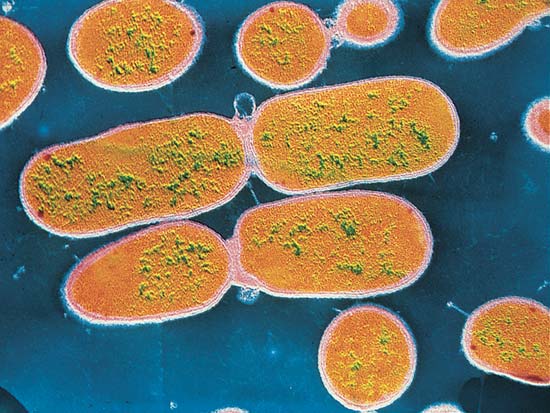
69.
Which is a type of Asexual Reproduction
a)
Sexual 
b)
Binary fission
c)
Cells 
d)
organism 
70.
What are some of the facts about asexual reproduction?
a)
Takes only one mate to reproduce and takes a longer time to reproduce
b)
Takes a shorter amount of time to reproduce and it takes two mates to reproduce
c)
Reproduces diverse offspring and takes a longer time to reproduce
d)
Takes only one mate to reproduce and takes a shorter time to reproduce
71.
What are some of the facts about sexual reproduction?
a)
Takes two mates to reproduce and takes a longer time to reproduce
b)
Takes one mate to reproduce and takes a shorter amount of time to reproduce
c)
Takes two mates to reproduce and takes a shorter amount of time to reproduce
d)
Takes one mate to reproduce and takes a shorter amount of time to reproduce
72.
What is an advantage of sexual reproduction?
a)
Allows genetic variation
b)
Only needs one parent
c)
Happens very quickly
d)
Offspring are exact copies of parent
73.
What is one disadvantage of sexual reproduction?
a)
Only one parent needed
b)
Off spring are exact copies of parents
c)
Happens very quickly
d)
Needs two parents
74.
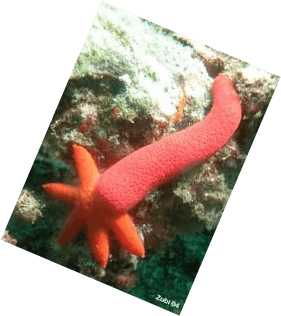
When a starfish grows a new body off a broken arm, what kind of reproduction is this?
a)
Sexual
b)
Differentiation
c)
Asexual 
d)
Specialization
75.
Sexual reproduction requires _____ parents and asexual reproduction requires ___ parents
a)
1,1
b)
2,2
c)
2,1
d)
1,2 
76.
What type of asexual reproduction is taking place?
Fishermen work hard to catch and remove all the starfish that get into their favorite shell fishing beds and the “underwater farms” where they raise clams and oysters. In the past, they put the starfish into their boats, cut them up with knives, and then throw the pieces of starfish overboard. They thought this would kill the starfish. What they did not know was that each piece of starfish will grow into a whole new animal.
a)
Regeneration
b)
Vegetative propagation
c)
Budding
d)
Fission
77.
This is when a new organism grows by cell division on the body of its parent. The bud, or offspring is identical to the parent. The bud, when large enough, can break off of the parent and live on its own.  Examples of this include yeast, hydra and potatoes.
 
a)
Regeneration
b)
Vegetative propagation
c)
Fission
d)
Budding
78.
In asexual reproduction, all of the offspring are:
a)
Physically Identical
b)
Genetically Identical
c)
Physically and Genetically Identical
d)
Not Identical
79.
If an environment suddenly changes, which type of reproduction would be most beneficial? Why?
a)
Asexual, because asexual organisms always have variation within species.
b)
Sexual, because sexual organisms have variation within species.
c)
Both Asexual and Sexual reproduction would be beneficial, because they both have variation within species.
d)
Asexual, because asexual organisms have no variation, so they can adapt to a changing environment.
80.
The offspring from asexually reproduced organisms are?
a)
Different than their parents
b)
Identical to parents
c)
Like a combination from both parents
d)
A different species
81.
If two organisms reproduce sexually, then their offspring will exhibit a genetic makeup that is -
a)
identical to only one parent
b)
identical to all of its siblings
c)
a unique combination of traits
d)
the recessive traits of each parent
82.
Organism produces offspring without fertilization 
a)
Sexual Reproduction 
b)
Asexual Reproduction 
83.

What word describes a trait that helps an organism survive in its environment?

a)

natural selection

b)

mutation

c)

camouflage

d)

adaptation

84.
The differences among a species, like different bird beaks, are called
a)
genes.
b)
variations.
c)
traits.
d)
theories.
85.
Do organisms "decide" to evolve and change?
a)
Yes, they know they need to change to survive 
b)
No, they change because of natural selection
86.
When humans breed 2 organisms with specific traits to influence the traits of the next generation, it is __________.
a)
selective breeding
b)
natural selection
87.
This sequence of pictures of a population of mice in the wild BEST represents _______. 
a)
natural selection
b)
selective breeding 
c)
inbreeding (selective breeding that crosses two organisms with similar genetic traits. )
d)
asexual reproduction
88.
Change over time
a)
Natural Selection
b)
Selective Breeding
c)
Homeostasis
d)
Evolution
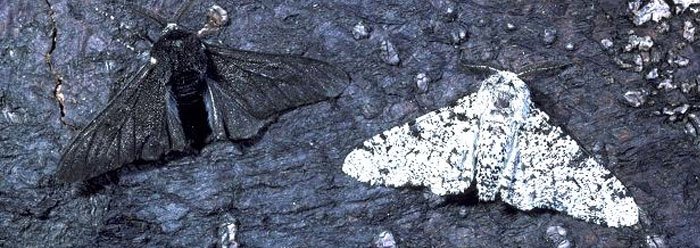
89.
The trees these moths used to live on were white, but have been covered in soot from coal factories. Which moth will be more successful in this environment?
a)
Dark moth
b)
Light moth
c)
Both will be equally successful
d)
Neither will be successful
90.

When farmers breed specific plants to produce fruits with specific traits

a)

Natural Selection

b)

Selective Breeding

91.

Natural selection

a)

Happens in nature without human involvement

b)

Humans control the process to obtain desirable traits

92.

When organisms have advantageous traits that help them survive and reproduce this is...

a)

Natural Selection

b)

Selective Breeding

93.

All these birds are finches but they have developed different beaks due to the type of foods available to them, this is because of

a)

Natural Selection

b)

Selective Breeding

94.
Where the better adapted organisms survive to pass traits along to offspring.
a)
Evolution
b)
Natural Selection
c)
Extinction
d)
Artifical Selection
95.

Why are advantageous traits more likely to be passed onto offspring?

a)

Because they are more likely to survive and reproduce.

b)

Because humans like and choose them

96.

What process is being shown in this image?

a)

Selective Breeding

b)

Natural Selection

97.

Selective breeding is where ___________ decides which traits should be passed on

a)

Nature

b)

A human

98.

The overall function of selective breeding is to

a)

Create organisms with desirable traits

b)

Create bigger organisms

c)

Create animals with more genetic mutations

99.

A farmer has bred his pineapple plants from the sweetest pineapples from his last harvest to get even sweeter pineapple plants. What is this an example of?

a)

Selective breeding

b)

Natural selection

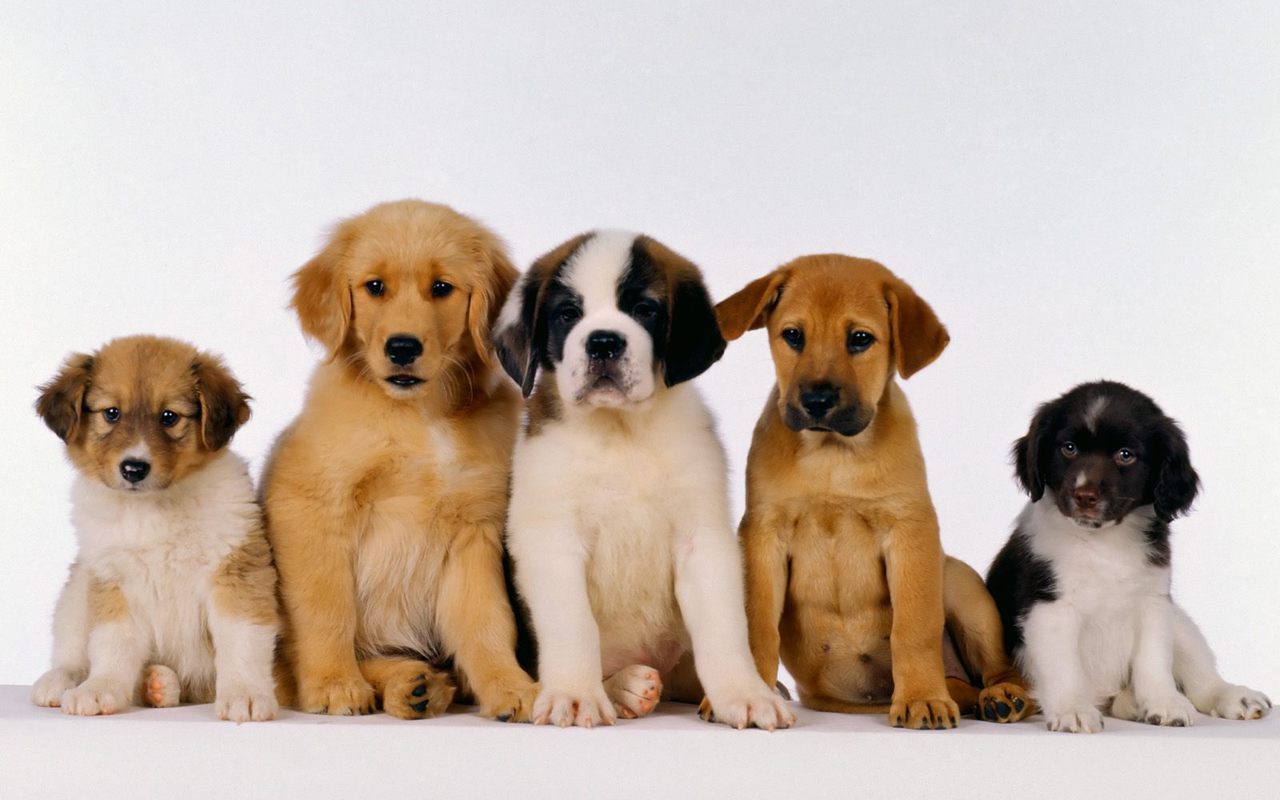
100.

Evidence shows that the wolf is the ancestor to all of the breeds of dogs shown below. How did this variation arise in a relatively short period of time?

a)

Random Selection

b)

Natural selection

c)

Random chance

d)

Selective breeding

101.

The purpose of selective breeding is to

a)

Create animals and plants with desirable traits

b)

Get smaller animals and plants

102.

"Survival of the Fittest" describes which theory

a)

natural selection

b)

selective breeding

103.

Selective breeding is where ___________ decides which traits should be passed on

a)

Nature

b)

A human

c)

Mrs. Yezak

d)

The illuminati