
 Worksheets
DN_SKELETAL & MUSCULAR SYSTEM
Total questions: 100
Worksheet time: 2hrs 40mins
How many types of muscles are there in the body?
2
4
3
1

Which type of muscles are under our conscious control?
Skeletal/Voluntary Muscle
Smooth/Involentary
Cardiac Muscle
Rough Muscle

Cardiac muscle is only found in _________.
Lungs
Heart
Kidney's
Liver
Muscles are attached to bones through __________.
Ligaments
Cartlidge
Skin
Tendons
What are skeletal muscles?
muscles that connects to bones and helps move the body
muscles that make up many organs in the body
Muscles that connect to bones, and help move the bones of the body
Muscles that make up the walls of the human heart
What is a smooth muscle?
A bone that has broken and is poking through the skin
Muscle that makes up many organs in the body
Muscle that you do not control
When a bone is out of place at the joint
Involuntary Muscle
Broken bone that pokes through the skin
When a ligament is overstretched or torn
Muscle that you do not control
When a bone is out of place at the joint
Which system is responsible for creating red blood cells?
skeletal
muscular
respiratory
nervous
Which of the following best describes the job of the skeletal system?
Gives shape and support to the body.
Sends messages from the stomach to the brain.
Brings in and breaks down all nutrients for the body
The joint with a rounded end of bone fitting snug within another bone.
ball and socket joint
hinge joint
pivot joint
gliding joint
The joint that moves in one direction, like a door
ball and socket joint
hinge joint
pivot joint
gliding joint
The joint that consists of a bone resting atop another bone, permitting free movement.
ball and socket joint
hinge joint
pivot joint
gliding joint
The joint in which bones slip over other bones, allowing free movement.
ball and socket joint
hinge joint
pivot joint
gliding joint
This attaches bone to bone
cartilage
tendon
ligament
How many bones are in an adult body?
106
206
306
406

Which of the following body systems work together for support, protection, and movement?
respiratory and circulatory
skeletal and muscular
skeletal and respiratory
digestive and respiratory
Which of the following is NOT a function of bones?
Protection
Support
Movement
Blood movement
Your skeletal system is in charge of making your blood.
True
False
The ribs protect your...
heart
lungs
all of the above
Your thigh bone (femur) is which type of bone?
long
flat
small
irregular
Babies have more bones than adults.
True
False


What type of bone is the scapula?
long bone
short bone
flat bone
irregular bone


Which set of bones is in your back and holds up your body?
skull
spine
joint
arm
The set of bones inside your head that protects your brain is called ____________.
femur
backbone
skull
The ________ is a set of bones in your chest that protects your heart & lungs.
skull
ribcage
femur
What protects the spinal cord?
vertebrae
body
ribcage
What mineral helps keep your bones healthy and strong?
iron
zinc
calcium
What happens after you break a bone?
your body connects the bone together and the bone heals
the bone will be broken forever
your body won't need bones anymore
you grow an extra bone
The smallest bone in your body is inside your ear. Which is the biggest bone?
a rib in your ribcage
the thighbone in your leg
the jawbone in your skull
a wrist bone in your wrist
Where is the femur located in the body?
arm
shoulder
leg
foot

What bone is highlighted?
Skull (Cranium)
Mandible
Femur
Scapula
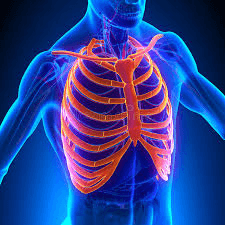
What bone is highlighted?
Ribs
Cranium
Clavicle
Femur

What bone is highlighted?
Vertebrae
Femur
Cranium
Ribs

What bone is highlighted?
Femur
Cranium
Ribs
Skull

What is the place where two bones meet?
bones
tendons
ligament
joint

What is the name for the connector that attaches muscle to bone?
ligament
tendon
joint
bones

What is the name for the connector that attaches bone to bone?
ligament
tendon
joint
cartilage

What do the bones make?
veins
cartilage
red blood cells
bone marrow
What does the cranium protect?
heart
eyes
brain
lungs
Which is the largest and strongest bone in the body?
skull
vertebrae
femur
ribs
What is a flexible connective tissue that is found in your nose and ears?
cartilage
joints
ligaments
cranium
At what age are nearly all bones completely ossified?
25 years
15 years
5 years
Birth
How many pairs of ribs are in the thoracic cage?
7
2
12
10
What is the scientific name of the 'jaw bone'?
Maxilla
Mandible
The bones at the end of our fingers and toes are known as _______________.
Tarsals
The phalanges
The scientific name of the collar bone is the ____________.
Scapula
Clavicle
The vertebra is a gliding joint.
True
False
The vertebra is a gliding joint.
True
False
Examples of a hinge joint are the elbow and knee.
True
False
The bone that spans from the shoulder to the elbow is known as the ___________________.
Humerus
Ulna
Femur
Tibia
The carpals are your ankle bones.
True
False
The patella is commonly known as your knee cap.
True
False


It makes up you lower jaw, what is the bone colored green in this picture?
Patella
Cranium
Zygomatic
Mandible


In this picture, what would you call the section colored in blue?
Phalanges
Carpals
Tarsals
Meta-Tarsals

What bone is highlighted?
Skull (Cranium)
Scapula
Clavicle
Mandible

What bone is highlighted?
Radius
Ulna
Humerus
Carpals

What bone is highlighted?
Radius
Ulna
Humerus
Carpals

What bone is highlighted?
Patella
Pelvis
Clavicle
Femur
From wrist to fingertip, what is the order of bones?
Carpals, metacarpals, phalanges
Phalanges, metacarpals, carpals
Carpals, phalanges, metacarpals
Metacarpals, carpals, phalanges
From ankle to toe, what is the order of bones?
Tarsals, metatarsals, phalanges
Phalanges, metatarsals, tarsals
Metatarsals, phalanges, tarsals
Tarsals, phalanges, metatarsals

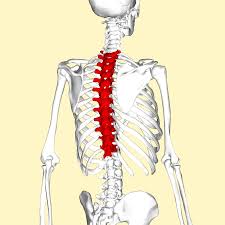
What is the function of the backbone?
protect the brains
protect the lungs and heart
support the body
Which joint helps in the movement of the neck?
Hinge joint
Pivot joint
Gliding joint
Ball & socket joint
The_______________ is protected inside the vertebral column.
Heart
Spinal cord
Liver
Where would you find the humerus?
head
leg
arm
knee

What type of joint is this
pivot
gliding
ball and socket
fixed

What type of joint is this
gliding
pivot
ball and socket
hinge

The bones that make up the spine are called
femurs
vertebrae
cartilage
marrow
Which term best describes compact bone?
Spongy
flexible
rigid
liquid
What can you infer from the fact that babies have more bones than adults?
Most adults suffer from bone loss
Teenagers also have more bones than adults
Babies shed some of their bones as they grow
Some of babies' bones fuse together as they grow
Which type of joint gives you the largest range of motion?
Pivot
Ball and socket
Hinge
Gliding

What does the cartilage between bones do?
Allows the nerves in adjacent bones to communicate with one another
Provides padding and protection against wear and tear
Prevents bones from overheating
Prevents bones from becoming too rigid
The joint in which bones slip over other bones, allowing free movement.
ball and socket joint
hinge joint
pivot joint
gliding joint

