wayground logo

Free Printable Worksheets

Font size

S
M
L
XL
Worksheets

TCAP Review 2

Total questions: 105

Worksheet time: 2hrs 36mins

Name
Class
Date
1.
The red shift of light from distant galaxies provides evidence that these galaxies are
a)
decreasing in size
b)
increasing in size
c)
decreasing in distance from Earth
d)
increasing in distance from Earth
2.
In which sequence are the celestial objects
correctly listed in order from the smallest mass to
the largest mass?
a)
Saturn, solar system, Milky Way, universe
b)
Saturn, universe, Milky Way, solar system
c)
Milky Way, Saturn, solar system, universe
d)
Milky Way, universe, solar system, Saturn
3.
Frank has a paper clip. It has a mass of 9g and a volume of 3cm3. What is its density?
a)
3 g/cm3
b)
1/3 g/cm3
c)
27 g/cm3
d)
39 g/cm3
4.
If this substance takes up 6ml of space, what is its mass?
a)
 6 ml
b)
6 grams
c)
0 grams
d)
4 grams 
5.
Some of the constellations that are visible to New York State observers at midnight in December are different from the constellations that are visible at midnight in June because
a)
constellations revolve around Earth
b)
constellations rotate on an axis
c)
Earth rotates on its axis
d)
Earth revolves around the Sun
6.

The diagram below represents the light spectra given off by the same element as observed under two different conditions. Spectrum A was observed when that element was heated in a laboratory. Spectrum B shows the same element as seen in the light from a distant star.

The light spectrum observed from this distant star shows a

a)

red shift, which indicates that the star is moving away from Earth

b)

red shift, which indicates that the star is moving toward the Earth

c)

blue shift, which indicates that the star is moving away from Earth

d)

blue shift, which indicates that the star is moving toward Earth

7.

The modern heliocentric model of planetary motion states that the planets travel around

a)

the Sun in slightly elliptical orbits

b)

the Sun in circular orbits

c)

Earth is slightly elliptical orbits

d)

Earth in circular orbits

8.
What caused the interior of Earth to separate into layers?
a)
a decrease in the rate of rotation of Earth
b)
the gravitational pull on materials of varying densities
c)
variations in heating by the Sun due to Earth’s tilt
d)
collisions with meteors and comets
9.
Land that is along an ocean
a)
geography
b)
continent
c)
coast
d)
region
10.
How is Earth different from the other planets in the solar system?
a)
It has an atmosphere
b)
It has a solid surface
c)
It has warm temperatures
d)
It has liquid water on its surface
11.
Wind blows sand onto rocks and slowly breaks down the rock
a)
Mechanical Weathering
b)
Chemical Weathering
c)
Erosion
d)
Deposition
12.
A flash flood washes away the side of a river bank
a)
Mechanical Weathering
b)
Chemical Weathering
c)
Erosion
d)
Deposition
13.
The small peices of rock that break off of a larger rock during weathering are called...
a)
Sediment
b)
Salt
c)
Erosion
d)
Deposition
14.
What is the correct order (starting from the surface) of Earth's layers?
a)
crust, outer core, inner core, mantle
b)
mantle, outer core, inner core, crust
c)
crust, mantle, outer core, inner core
d)
outer core, inner core, crust, mantle
15.
Earth's inner core is...
a)
a dense ball of solid iron and nickel.
b)
a layer of molten iron and nickel.
c)
a layer of hot rock.
d)
a layer of rock that forms Earth's outer skin.
16.
Which layer of Earth has the GREATEST density?
a)
crust
b)
mantle
c)
outer core
d)
inner core
17.
Earth's mantle is
a)
a layer of molten metal.
b)
a layer of hot rock.
c)
a dense ball of solid metal.
d)
a layer of rock that forms Earth's outer skin.
18.
Using data from seismic waves, geologists have learned that Earth's interior is made up of several
a)
continents
b)
layers
c)
ridges
d)
trenches
19.
Which layer of Earth is LIQUID?
a)
upper mantle
b)
lower mantle
c)
outer core
d)
inner core
20.
What are the two kinds of crust?
a)
lithospheric and asthenospheric
b)
silicon based and iron based
c)
continental and oceanic
d)
outer and inner
21.
Which layer of Earth is made up partly of crust and partly of mantle material?
a)
asthenosphere
b)
crust
c)
lithosphere
d)
mantle
22.
Earth's solid inner core is surrounded by the hot, molten metal of which layer?
a)
lithosphere
b)
outer core
c)
crust
d)
mantle
23.
Earth's crust is broken into large pieces called
a)
Continents
b)
Countries
c)
Tectonic plates
d)
Oceans
24.
4. What layer is the hottest?
a)
Core
b)
Crust
c)
Mantle
25.
5. Which layer is the thickest?
a)
Core
b)
Crust
c)
Mantle
26.
Which layer is made up of iron and nickel?
a)
Crust
b)
Mantle
c)
Inner Core
d)
Lithosphere
27.
What type of heat transfer in found in Earth"s asthenosphere?
a)
Conduction
b)
Convection
c)
Radiation
d)
I don't know
28.

What kind of waves travel through Earth's Interior?

a)

ocean waves

b)

time waves

c)

sound waves

d)

seismic waves

29.

Which seismic waves are the fastest?

a)

p waves

b)

s waves

c)

surface waves

30.

Secondary waves can pass through __________.

a)

solids

b)

liquids

c)

gases

d)

all

31.

Primary waves can pass through ___________.

a)

solids

b)

liquids

c)

gases

d)

all

32.
Which body wave is pictured?
a)
P-Wave
b)
S-Wave
c)
Rayleigh Wave
d)
Love Wave
33.
An instrument that detects and measures earthquakes is a 
a)
seismogram
b)
focus seismic map
c)
focus
d)
seismograph 
34.
The OLDEST seafloor is located? 
a)
Closest to the mid-ocean ridge
b)
Farthest from the mid-ocean ridge
35.

What is Pangaea?

a)

the name of a German scientist

b)

the name of the supercontinent that existed millions of years ago

c)

another name for continental drift

d)

the name of an ancient fossil

36.
New crust is always formed at the...
a)
mid-ocean ridge
b)
deep-ocean trench
c)
asthenosphere
37.

Which of the following are evidence for continental drift?

a)

Puzzle-like fit

b)

Fossils

c)

Rocks

d)

Climate Clues

e)

All of the Above

38.

Climate clue are evidence for continental drift because

a)

there is glacial evidence in tropical areas

b)

there are fossils of tropical plants in arctic areas

c)

all of the above

d)

none of the above

39.

Rocks and mountains are evidence for continental drift because

a)

no rock evidence is found

b)

rocks layers do not match on any continents

c)

there are matching rock layers on separate continents

d)

there are matching fossils on separate continents

40.

This is a segment of DNA on a chromosome

a)

trait

b)

gene

c)

genotype

d)

phenotype

41.

These are the genes an organism has - it's genetic makeup.

a)

trait

b)

gene

c)

genotype

d)

phenotype

42.

The study of heredity.

a)

selective breeding

b)

Mendel's Laws

c)

Law of Independent Assortment

d)

genetics

43.

Having two of the same alleles for a given trait.

a)

heterozygous

b)

doubling

c)

homozygous

d)

tripling

44.

This is having two different alleles for a given trait.

a)

homozygous

b)

dominant

c)

heterozygous

d)

recessive

45.

The hypothesis that continents have slowly moved to their current locations is called ____.

a)

continental drift

b)

continental slope

c)

magnetic reversal

d)

convection

46.

Plates move apart at ____ boundaries.

a)

convergent

b)

stable

c)

divergent

d)

transform

47.

Plates slide past one another at ____.

a)

subduction zones

b)

transform boundaries

c)

convection currents

d)

divergent boundaries

48.

The boundary between two plates moving towards each other is called a ____.

a)

divergent boundary

b)

convergent boundary

c)

transform boundary

d)

lithosphere

49.
What is a difference between spring and neap tides?
a)
Spring tides occur when the earth and sun are IN LINE with the new or full moon. 
b)
Spring tides occur when moon in 3rd or 1st quarter phases
c)
Spring tides are LOWER than neap tides
50.
Which body has the greater effect on Earth's tides?
a)
Sun
b)
Saturn
c)
Moon 
d)
Venus
51.

Wha type of tide would this arrangement of earth-moon-sun create?

a)

full moon tide

b)

new moon tide

c)

neap tide

d)

spring tide

52.
What type of tides would this arrangement of earth-moon-sun create?
a)
neap tide
b)
spring tide
c)
new moon tide
d)
full moon tide
53.
the process of sediment being glued together
a)
compaction
b)
weathering
c)
erosion
d)
cementation
54.
What process is used to form sedimentary rocks?
a)
Lava cools and hardens to form a rock.
b)
Weathering, Erosion, Deposition, Compaction, Cementation
c)
Extreme heat and pressure from inside the Earth turn rocks into new rocks.
d)
Magma trapped under the Earth's surface cools and solidifies.
55.
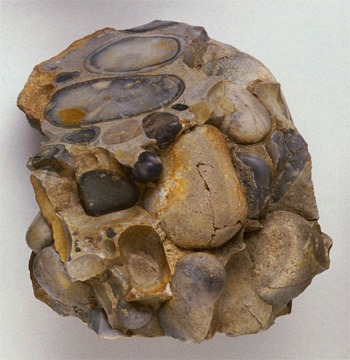
This rock was formed by smaller pieces of rock that settled at the bottom of a lake millions of years ago. What type of rock is this?
a)
Sedimentary
b)
Igneous
c)
Metamorphic
56.
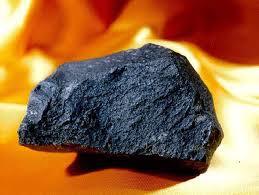
This rock was found near the mouth of a volcano. What type of rock is this?
a)
Sedimentary
b)
Igneous
c)
Metamorphic
57.
Which type of rock results from melting and cooling of magma?
a)
Igneous
b)
Metamorphic
c)
Sedimentary
d)
Extrusive
58.
Which type of rock forms from extreme heat and pressure?
a)
Igneous
b)
Sedimentary
c)
Organic
d)
Metamorphic
59.
Each rock type can follow only one pathway of the rock cycle.
a)
True
b)
False
60.
The type of plate boundary where two plates come together is a .....
a)
Convergent Boundary
b)
Divergent Boundary
c)
Transform Boundary
d)
Plate Boundary
61.
Which of the following causes Earth's tectonic plates to move?
a)
Energy from the Sun
b)
Magnetic Pole Reversal
c)
Convection currents in the mantle
d)
Faults in Mountain Ranges
62.
What type of event will occur at this boundary?
a)
Earthquake
b)
Volcano Eruption
c)
Tornado
d)
Mountain Building
63.
A subduction zone is formed...
a)
when one tectonic plate sinks below another
b)
at every type of convergent plate boundary
c)
at every type of divergent plate boundary
d)
at transform boundaries
64.

The outermost layer is the ________.

a)

mantle

b)

crust

c)

inner core

d)

outer core

65.

The core is made up mostly of _______________.

a)

oxygen

b)

magnesium

c)

iron

d)

carbon

66.
What is the transfer of heat by movement of liquids or gases?
a)
conduction
b)
convection
c)
radiation
67.
Which planet is closest to the sun?
a)
Earth
b)
Venus
c)
Mercury
d)
Mars
68.
What are the Inner Planets?
a)
Mercury, Mars, Earth, and Venus
b)
Earth, the Moon, Mars
c)
Neptune, Pluto, Earth
d)
:)
69.
________ holds all of the planets in orbit around the sun.
a)
Gravity
b)
String
c)
Bill Nye
d)
Duct tape
70.

How does the fossil record help to support the theory of evolution?

a)

the fossil record shows that organisms slowly change over time

b)

The fossil record shows that species evolve very quickly

c)

The fossil record does not support the theory of evolution

71.

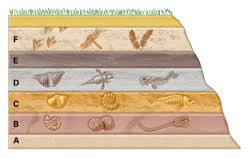
Which rock layer most likely contains fossils of the oldest organisms?

a)

1

b)

2

c)

3

d)

4

72.

Which rock layer contains the newest fossils?

a)

B

b)

C

c)

D

d)

E

e)

F

73.
Which of the following is homozygous recessive?
a)
rr
b)
AA
c)
TT
d)
Ff
74.
Which of the following is homozygous dominant?
a)
Jj
b)
Rr
c)
MM
d)
ee
75.
The different forms of a gene are called 
a)
traits
b)
chromosomes
c)
alleles
d)
peas
76.
T - tall and t = short
In the punnett square below, what belongs in the missing square.
(Click the picture to see it without the text)
a)
tt
b)
Tt
c)
Bb
d)
TT
77.
What are the possible genotypes for this cross?
(Click the picture to see it without the text)
a)
TT = 25% Tt= 50% tt=25%
b)
all tall
c)
TT= 75% tt = 25%
d)
Tt = 100%
78.
In a heterozygous genotype, the ___________ allele takes over in the phenotype.
a)
recessive
b)
dominant
c)
lower case letter
d)
both 
79.
The different forms of the same gene are called? 
a)
genes 
b)
alleles
c)
probability 
d)
chromosomes 
80.
Genetics is the study of:
a)
heredity 
b)
offspring 
c)
Punnett squares 
d)
none of these 
81.
If you saw the following pair of alleles AA, it would represent:
a)
recessive 
b)
heterozygous 
c)
tall
d)
dominant 
82.
Which pair below would represent a recessive pair of alleles?
a)
Aa
b)
AA
c)
aa
d)
aA
83.
The physical appearance of a trait, or what it looks like is called? 
a)
genotype 
b)
allele
c)
gene
d)
phenotype 
84.
A genetically determined characteristic
a)
Trait
b)
Allele
c)
Homozygous
d)
Phenotype
85.
Two different alleles for a specific gene (Bb)
a)
Homozygous
b)
Heterozygous
c)
Allele
d)
Trait
86.
List the ratios and percentages of the genotypes of GG and YY.
a)
100% GY
b)
25% GY, 25% gy, 25% Gy, 25% gY
87.
Red flower (R) color is dominant to white flower (r) color in rose plants. What is the  expected phenotypic results of a cross between two heterozygous (Rr) rose plants?
a)
100% red
b)
75% red, 25% white
c)
50% red, 50% white
d)
75% white, 25% red
88.
A ________________________ is used to predict the possible genotype from certain parents
a)
Mendel Grid
b)
Genetic Tic Tac Toe
c)
Punnett Square
d)
Pedigree Plot
89.
What is a dominant allele?
a)
A trait that is always shown (capital letter)
b)
A trait that can be hidden (lower case letter)
c)
Alleles that are the same
d)
Alleles that are different
90.
You get your genes from:
a)
Department Store
b)
Parents
c)
Aunt
d)
Neighbor
91.
White hair (W) is dominant in horses, and non-white (w) is recessive. A dominant WW horse is crossed with a recessive ww horse, as shown in the Punnett square. What percentage of offspring would have white hair?
a)
0%
b)
50%
c)
75%
d)
100%
92.

Which type of apparatus do scientists use to collect visible light and separate it into bands of color seen in the image?

a)

spectroscope

b)

telescope

c)

Seismograph

d)

Space probe

93.

The first major optical space telescope to be put into space was the Hubble Telescope

a)

Hubble Telescope

b)

Mir

c)

James Webb Space Telescope

d)

Voyager

94.

A small robotic space probe that can move about on the surface of a planet or moon is

a)

Orbiter

b)

Rover

c)

Space Station

d)

Apollo

95.

Unmanned space vehicles that take instruments into space to collect data are called

a)

Satellite

b)

Space Shuttle

c)

Rocket

d)

Space Probe

96.

Scientists at NASA are planning a human mission to the space station. Which of these spacecraft would they use to deliver astronauts to the space station?

a)

Space Shuttle

b)

Rover

c)

Space Probe

d)

Satellite

97.

A Telescope that uses a set of lenses to gather and focus light from distant objects is called a

a)

refracting telescope

b)

optical looking device

c)

spectroscope

d)

reflecting telescope

98.

A telescope that uses a curved mirror to gather and focus light from distant objects is called a ____________

a)

reflecting telescope

b)

refracting telescope

c)

spectroscope

d)

optical looking device

99.

What are some useful benefits of satellites? Choose 2.

a)

They take images of celestial objects too distant for humans to explore.

b)

They transport humans to the International Space Station.

c)

They provide television, phone, navigational services, and weather information.

d)

They deliver rovers to distant planets for observation.

e)

They travel to distant planets to test atmospheres.

100.

Which is an advantage of a space probe compared to a space shuttle?

a)

Space probes can travel further into space since they are unmanned.

b)

Space probes may need human intervention if problems arise.

c)

Space probes transmit information back to Earth.

d)

Space probes are not able to be used more than once.

101.

What type of space vehicle is shown?

a)

Rover

b)

Satellite

c)

Space Probe

d)

Rocket

102.

What type of space vehicle is shown?

a)

Rover

b)

Satellite

c)

Space Probe

d)

Rocket

103.

Artificial satellites are launched into space on rockets.

a)

True

b)

False

104.
When blueshift occurs, the perceived WAVELENGTH of the wave would...
a)
Increase
b)
Decrease
c)
Stay the same
d)
Make frog sounds
105.
Galaxies that are redshifted are:
a)
actually blue.
b)
really far away.
c)
invisible.
d)
moving away from us.