wayground logo

Free Printable Worksheets

Font size

S
M
L
XL
Worksheets

SSA Review-Life and Physical Science

Total questions: 108

Worksheet time: 9hrs 0mins

Name
Class
Date
1.
What does NOT produce carbon dioxide?
a)
Photosynthesis
b)
Burning Fossil Fuels
c)
Animal respiration
d)
Plants decaying
2.
TRUE or FALSE?
All of the carbon in existence is continually recycled in the carbon cycle.
a)
True
b)
False
3.
What is the energy source for the water cycle?
a)
the sun
b)
the earth
c)
water
d)
the moon
4.
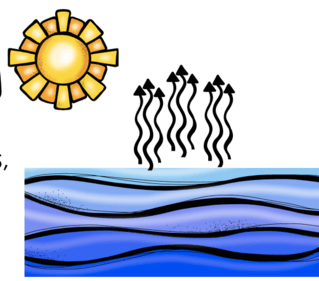
What part of the water cycle does this picture show?
a)
condensation
b)
precipitation
c)
evaporation
5.
What is evaporation?
a)
The part of the water cycle when the sun heats up water, turning it from a liquid into water vapor or steam. It rises from the ground into the air.
b)
The part of the water cycle when the water vapor in the air gets cold. The water turns back into a liquid and forms clouds.
c)
The part of the water cycle when clouds get heavy and can no longer hold the liquid water. This causes the water to fall from the sky to the earth as rain, snow, sleet, or hail.
6.
Produces energy in the form of ATP for the cell.
a)
chloroplast
b)
mitochondria
c)
ribosome 
d)
nucleus
7.
Site of photosynthesis.  Gives plants their green color.
a)
mitochondria
b)
ribosome
c)
chloroplast
d)
nucleus
8.
Controls cell functions because DNA is stored here.
a)
nucleus
b)
nucleolus
c)
ribosome
d)
cholorplast
9.
Provides extra support for the plant cell and gives in shape
a)
chlorophyll
b)
chloroplast
c)
cell wall
d)
vacuole
10.
A storage structure- in an animal cell there are many small ones, but in a plant cell there is just one large one.
a)
vacuole
b)
ribosomes
c)
golgi body
d)
chloroplast
11.
The ___________ is the basic unit of life
a)
organ
b)
cell
c)
atom
d)
tissue
12.
The factors that control a trait
a)
genetics
b)
trait
c)
gene
d)
alleles
13.
This trait always shows up in an organism when the allele is present
a)
dominant allele
b)
codominance
c)
probability
d)
recessive allele
14.
This trait is hidden whenever the dominant allele is present
a)
dominant allele
b)
codominance
c)
recessive allele
d)
Punnett Square
15.
Homozygous is when...
a)
the alleles are the same
b)
the alleles are different
c)
the alleles are absent
d)
the alleles are present
16.
Heterozygous is when...
a)
the alleles are the same
b)
the alleles are different
c)
the alleles are absent
d)
the alleles are present
17.
B = brown fur  b = white fur
In the punnett square, what is the probability for white fur? 
a)
0%
b)
25%
c)
50%
d)
75%
18.
In the punnett square shown, what must the genotype of the missing parent be?
a)
BB
b)
Bb
c)
bb
d)
Tt
19.

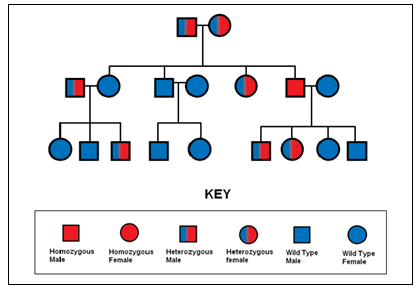
If this pedigree shows a recessive disorder, what MUST the genotype of individual 4 be?

a)

HH

b)

Hh

c)

hh

20.
In a pedigree, what shape represents a male?
a)
circle
b)
square
c)
triangle
d)
diamond
21.
How many generations are shown in this pedigree?
a)
1
b)
2
c)
3
d)
4
22.
Which one of the following systems DO NOT absorb nutrients or get rid of wastes?
a)
Respiratory System
b)
Digestive System
c)
Nervous System
d)
Circulatory System
23.
What function do the endocrine system and nervous system have in common?
a)
Both relay messages to cells throughout the body.
b)
Both produce electrical signals that are carried by neurons
c)
Both produce hormones which are chemical messengers
d)
both remove wastes and toxins from the body
24.
What two systems work together to get rid of infection?
a)
Digestive and immune
b)
Respiratory and circulatory
c)
Circulatory and immune
d)
Immune and endocrine
25.

Which body system controls the body to maintain homeostasis?

a)

excretory

b)

nervous

c)

circulatory

d)

skeletal

26.

Which two systems work together to maintain homeostasis while transporting oxygen throughout the body and removing carbon dioxide?

a)

circulatory and respiratory

b)

respiratory and excretory

c)

circulatory and digestive

d)

respiratory and digestive

27.
Cattle egrets forage (feed) in fields among cattle. The egret gets easy access to flying insects stirred up by the cattle, and the cattle don't care if they are there or not.
a)
mutualism
b)
commensalism
c)
competition
d)
parasitism
28.

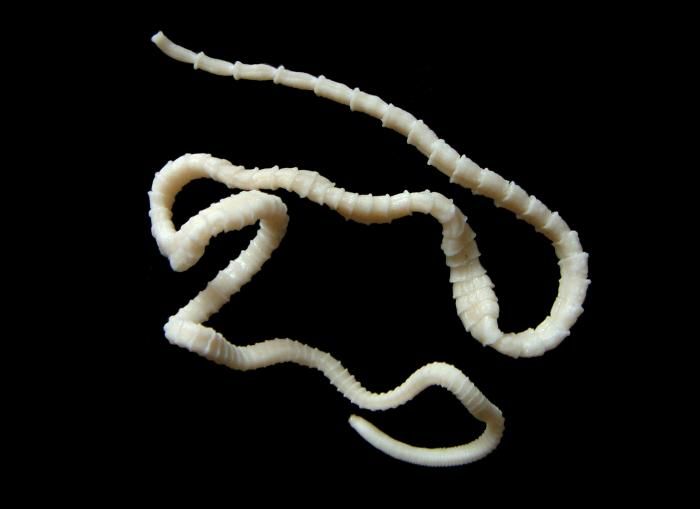
A tapeworm lives in the intestine of a cat absorbing nutrients through its skin. A tapeworm and a cat have this type of relationship.

a)

mutualism

b)

parasitism

c)

commensalism

d)

competition

29.
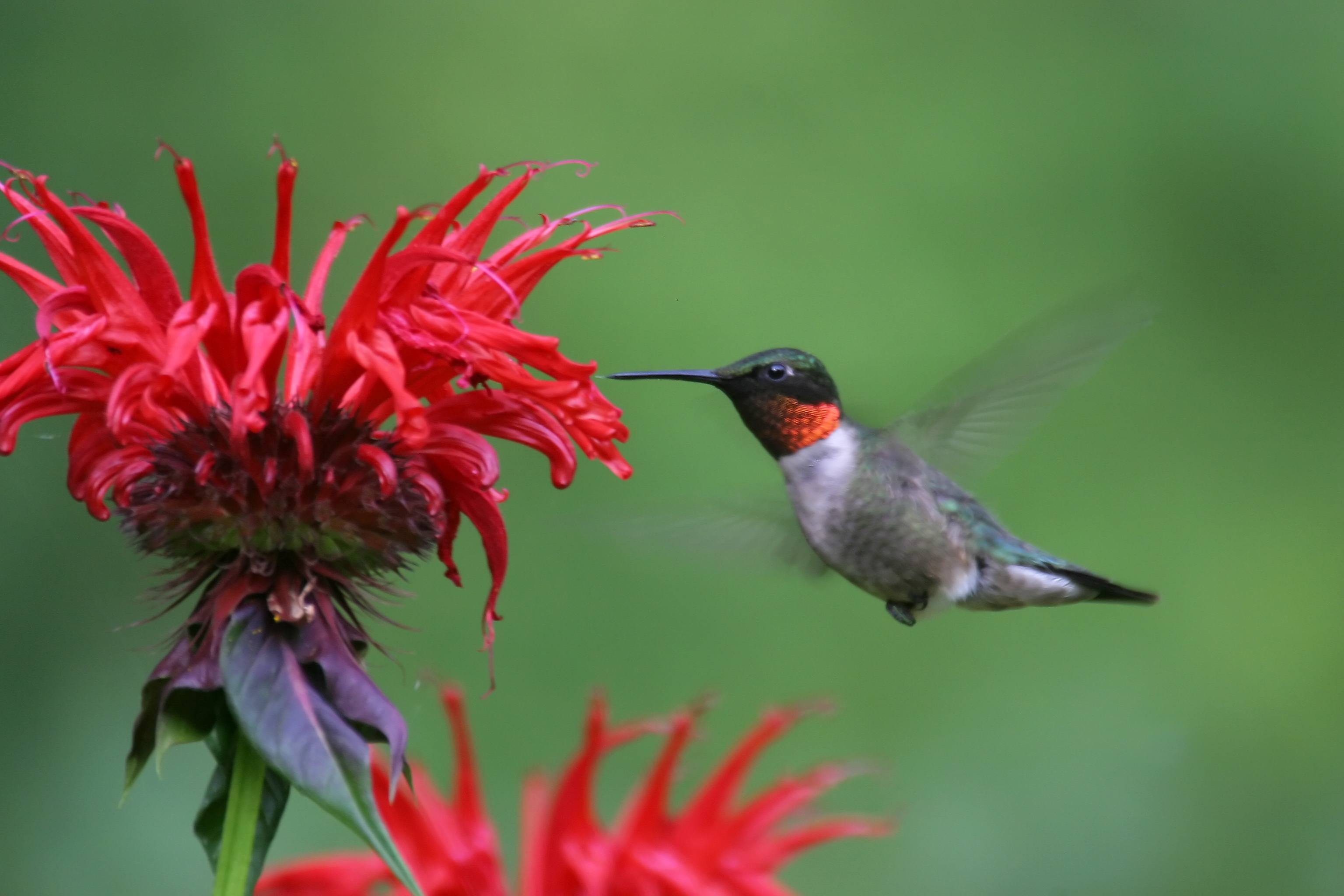
What type of symbiosis?  Hummingbirds feed on nectar from flowers.  The flowers are pollinated by hummingbirds as they move from flower to flower.
a)
commensalism
b)
mutualism
c)
parasitism
d)
predation
30.
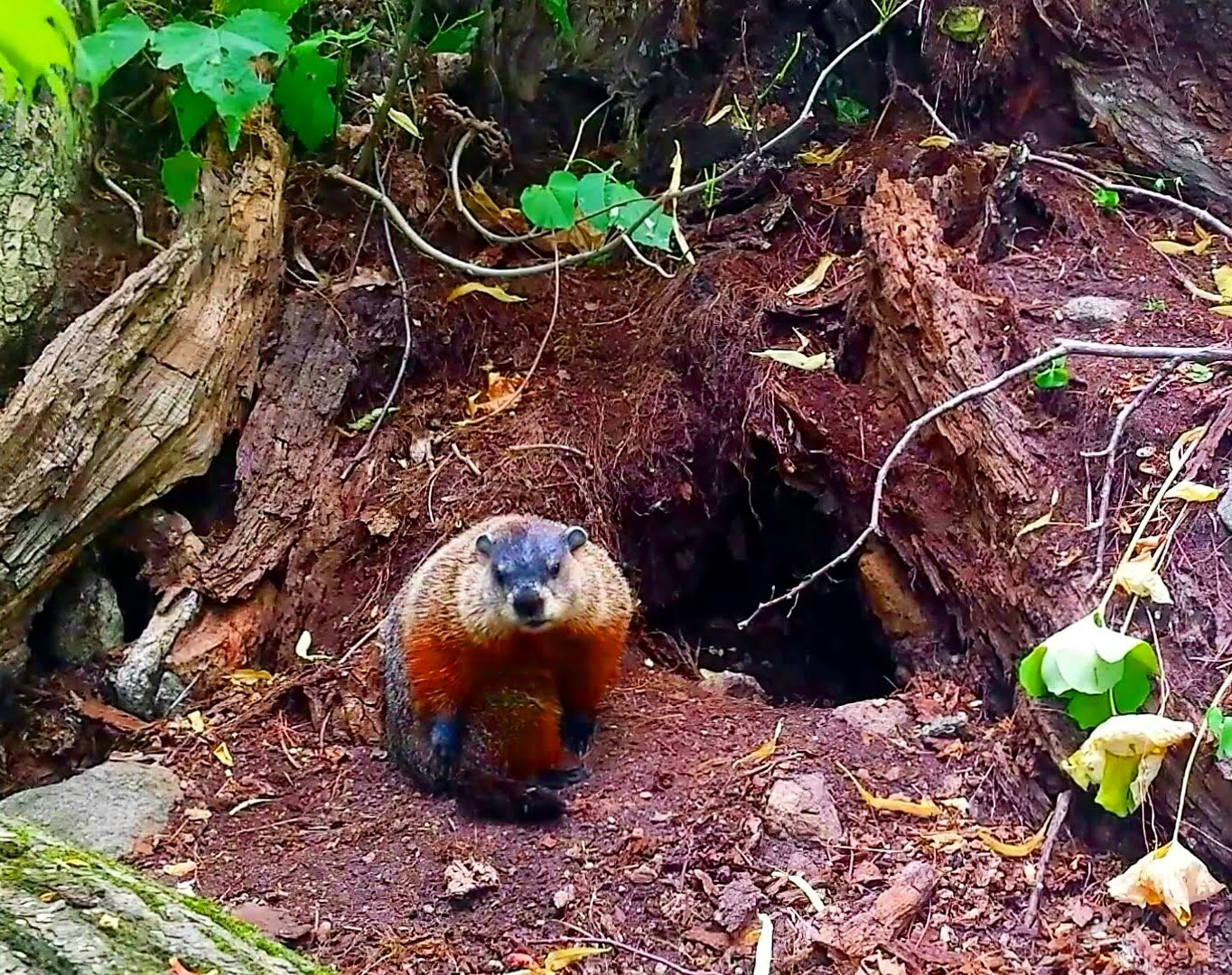
What type of symbiosis?  Skunks often live in burrows that have been dug and abandoned by woodchucks.  
a)
commensalism
b)
mutualism
c)
parasitism
d)
predation
31.
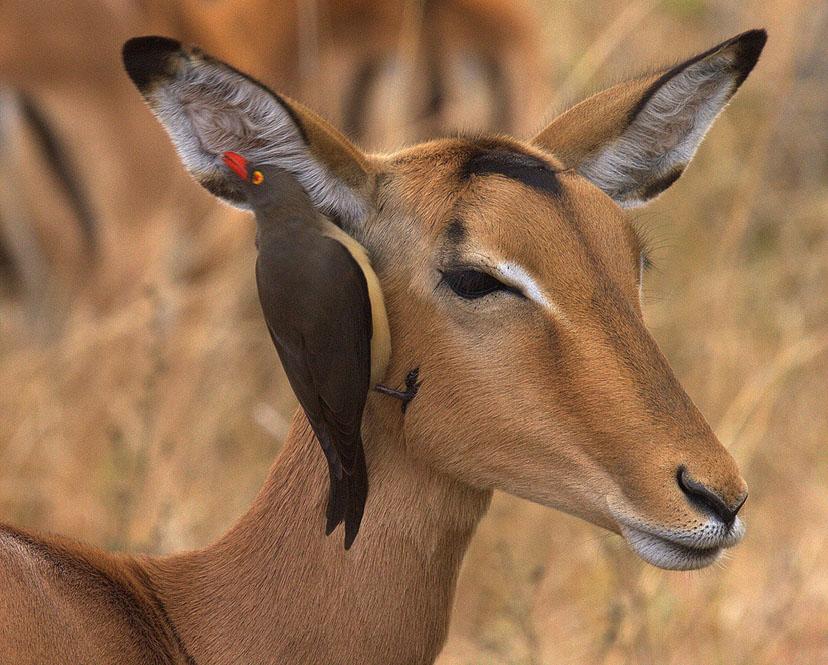
Red-billed oxpeckers are birds that often feed on parasites that infest impala.  This is an example of _______.
a)
commensalism
b)
mutualism
c)
neutralism
d)
competition
32.
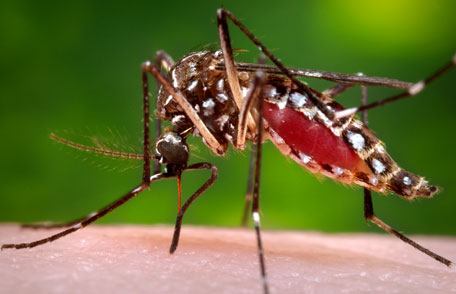
When a mosquito bites you, you are the __________ and the mosquito is the  ____________.
a)
host, hostess
b)
parasite, host
c)
host, parasite
d)
prey, predator
33.

Clown fish live among anemones, acting as a lure for the sea anemone's prey. The clown fish get protection and shelter from the anemone. This is an example of which type of symbiosis?

a)

Commensalism

b)

Mutualism

c)

Parasitism

34.

Lichens are close associations of fungi and algae. The fungi hold the water supply and the algae perform photosynthesis to manufacture carbohydrates for both organisms.

a)

mutualism

b)

commensalism

c)

parasitism

35.

What do the arrows show in this food chain:


plant → grasshopper → bird → snake → owl.

a)

The arrow points from the organism being eaten to the organism that eats it.

b)

The arrow points from the organism that eats it to the organism that is being eaten.

c)

The arrow points from biggest animal to smallest animal.

d)

The arrow points from the consumers to the producers.

36.

Mushroom (Fungus)

a)

Decomposer

b)

Producer

c)

Consumer

37.

Trees

a)

Decomposers

b)

Consumers

c)

Producers

38.

Falcon

a)

Decomposer

b)

Consumer

c)

Producer

39.

What are the two REACTANTS in photosynthesis?

a)

Carbon dioxide and oxygen

b)

Water and sunlight

c)

Water and carbon dioxide

d)

Glucose and sunlight

40.

What are the PRODUCTS in photosynthesis?

a)

Sunlight and water

b)

Carbon dioxide and water

c)

Glucose and carbon dioxide

d)

Glucose and oxygen

41.

Which group is not represented in the food web?

a)

producers

b)

primary consumers

c)

secondary consumers

d)

decomposers

42.

In this energy pyramid, which organism would most likely be in level 2?

a)

bird

b)

fox

c)

caterpillar

d)

tree

43.

How would the removal of earthworms from the food chain affect the other organisms?

a)

The number of bass will increase.

b)

The number of crayfish will decrease.

c)

The crayfish will get their energy directly from the sun.

d)

The number of bass and ospreys (bird) will increase.

44.

Interactions in an ecosystem result from the transfer of matter and energy from producers to consumers and eventually decomposers. What are the forms of energy transfer from numbers 1 through 4?

a)

Chemical energy to chemical energy

b)

Light energy to chemical energy

c)

Chemical energy to heat energy

d)

Heat energy to mechanical energy

45.

Suppose that a new predator of the rabbit migrated to this ecosystem. What is the most likely initial effect on the other organisms?

a)

More competition among the mice for food

b)

More competition among the hawks for food

c)

Less competition among snakes for food

d)

Less grass available for food

46.
A scientist puts 100 houseflies in a sealed container; then sprays an insecticide into the container.  Ninety-six of the flies die.  Four survive.  The scientist lets the survivors mate and produce offspring, then repeats the experiment with 100 offspring.  Fifty-six of them survive the spray.  This experimental result is evidence of – 
a)
adaptive radiation 
b)
speciation
c)
natural selection
d)
extinction
47.
What genetic change allows organisms to survive natural selection in their environments? 
a)
learned behavior
b)
acquired traits
c)
analogies
d)
adaptations
48.
Which statement does not accurately describe natural selection?
a)
Individual organisms change their genes to adapt to their environment
b)
The genetic composition of a population changes from one generation to the next
c)
More advantageous traits become more common in population
d)
Beneficial and useful traits are inheritable
49.

Which is the correct order?

a)

Kingdom Phylum Order Class

b)

Class Order Family Genus

c)

Domain Phylum Kingdom Species

d)

Order Family Species Genus

50.

You find a species that seems to be unicellular and is eating smaller cells around it. It has organelles and a nucleus. Which kingdom is it MOST likely a part of?

a)

Fungi

b)

Bacteria

c)

Protists

d)

Plants

51.

Which one is NOT a difference between plants and fungi?

a)

Plants use cellulose but fungi use chitin

b)

Plants are autotrophs but fungi are heterotrophs

c)

Plants have cell walls but fungi don't

d)

Plants make their own food and fungi decompose their food

52.
Cell with a nucleus, DNA is found in the nucleus of this cell. 
a)
Prokaryotic 
b)
Eukaryotic
c)
Unicellular
d)
Multicellular 
53.
Blue liquid and yellow liquid mixed to make a green liquid
a)
Chemical Change
b)
Physical Change
54.

Which of the following could indicate that a chemical change took place?

a)

Change in color

b)

Production of Energy

c)

Formation of Gas

d)

All are correct

55.

The difference between a Physical change and a Chemical change is…

a)

Physical change is only a change to the outside appearance.

b)

Chemical change is when matter is changed into something new.

c)

Atoms are rearranged in chemical changes & not in physical.

d)

All are correct.

56.

What does a chemical change result in?

a)

A change in state of the substance (ex. liquid to solid)

b)

A change in texture of the substance.

c)

A change in the way atoms are bonded to each other.

d)

A change in the appearance of the substance.

57.

During Chemical Reactions, the substances that are used are called?

a)

Precipitate

b)

Corrosion

c)

Reactants

d)

Products

58.

During Chemical Reactions, the new substances created are called?

a)

Precipitate

b)

Corrosion

c)

Reactants

d)

Products

59.

Which is not a clue that could indicate a chemical change has occurred?

a)

Change in color

b)

Change in shape

c)

Release of energy

d)

Formation of an odor

60.

Which elements are to the right of the zig zag?

a)

metals

b)

nonmetals

c)

metalloids

61.

Which elements are to the LEFT of the zigzag?

a)

metals

b)

nonmetals

c)

metalloids

62.
An element has properties of BOTH metals and nonmetals. WHERE would it be found in the periodic table? 
a)
To the right 
b)
To the left 
c)
on the zig zag line
63.
Frank has an eraser. It has a mass of 4g, and a volume of 2cm3. What is its density?
a)
8 g/cm3
b)
2 g/cm3
c)
1/2 g/cm3
d)
24 g/cm3
64.
What is the volume of Object X?
a)
10.0 cm3
b)
15.0 cm3
c)
20.0 cm3
d)
25.0 cm3
65.
Helium balloons rise on earth because
a)
helium is less dense than air
b)
helium is more dense than air
c)
helium is cooler than air
d)
helium is warmer than air
66.
A tiny but very dense, positively charged portion of the atom that holds most of the atomic mass
a)
Electron Shells
b)
Orbitals
c)
Electron Cloud
d)
Nucleus
67.
Elements can be broken down into simpler substances. 
a)
false 
b)
true 
c)
sometimes 
68.
Classify the picture with the correct label.
a)
Element
b)
Compound
c)
Mixture of Elements
d)
Mixture of Compounds
69.
Classify the picture with the correct label.
a)
Element
b)
Compound
c)
Mixture of Elements and Compounds
d)
Mixture of Elements
70.
Classify the picture with the correct label.
a)
Element
b)
Compound
c)
Mixture of Elements & Compounds
d)
Mixture of Compounds
71.
As particles are exposed to warmer temperatures they __________
a)
speed up
b)
slow down
c)
stay the same
d)
vibrate
72.
These can only be separated by chemical means. 
a)
element 
b)
compound 
c)
mixture 
d)
stuff 
73.
A compound is made of ________ atoms. 
a)
big 
b)
similar 
c)
different 
74.
Of these mixtures, which one is a solution?
a)
A
b)
B
c)
C
d)
D
75.

Can be either a single atom or multiple atoms

a)

Element

b)

Molecule

c)

Compound

76.
A pure substance that cannot be broken down into other substances by chemical or physical means. 
a)
compound          
b)
atom
c)
mixture 
d)
element
77.

_____ waves have vibrations that run parallel to the direction the wave travels, and _____ waves have vibrations that run perpendicular to the direction the wave travels.

a)

transverse, longitudinal

b)

longitudinal, transverse

78.

The _______ is the size or height of a wave, measured from the equilibrium to the crest or trough.

a)

Amplitude

b)

Wavelength

c)

Frequency

79.

The _______ of a wave is how many waves pass a given point every second.

a)

Frequency

b)

Wavelength

c)

Amplitude

80.

Waves that can travel through empty space are called _____ waves. Waves that require a medium to travel, such as air or water, are called _____ waves.

a)

mechanical, electromagnetic

b)

electromagnetic, mechanical

c)

crest, trough

d)

compressional, rarefactional

81.

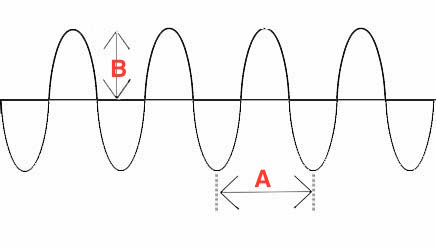
What property of this wave is represented by the letter "A"

a)

amplitude

b)

crest

c)

trough

d)

wavelength

82.
Which of these describes how light travels through an empty space?
a)
It travels straight but may change direction to avoid objects.
b)
It changes direction often even if there are no objects. 
c)
It comes to a stop after it travels a certain distance. 
d)
It travels in a straight line without stopping. 
83.

Which has more energy than visible light?

a)

Microwaves

b)

Radio waves

c)

Infrared light

d)

Gamma rays

84.
What is happening when you see something Black?
a)
All light is getting absorbed by the object and no light is reflected
b)
No light is getting absorbed by the object and all light is reflected
c)
The object is just black
d)
The object is being reflected
85.
What is happening when you see something White?
a)
All light is getting absorbed by the object and no light is reflected
b)
No light is getting absorbed by the object and all light is reflected
c)
The object is just white
d)
The object is just black, but looks white
86.

Period of a wave refers to...

a)

how long it takes for the event to repeat.

b)

how strong a wave is.

c)

how long a wave is.

d)

how much energy a wave has.

87.

What does #1 represent?

a)

Period

b)

Frequency

c)

Wavelength

d)

Amplitude

88.

What does #2 represent?

a)

Period

b)

Frequency

c)

Wavelength

d)

Amplitude

89.

What does #3 represent?

a)

Period

b)

Frequency

c)

Wavelength

d)

Amplitude

90.

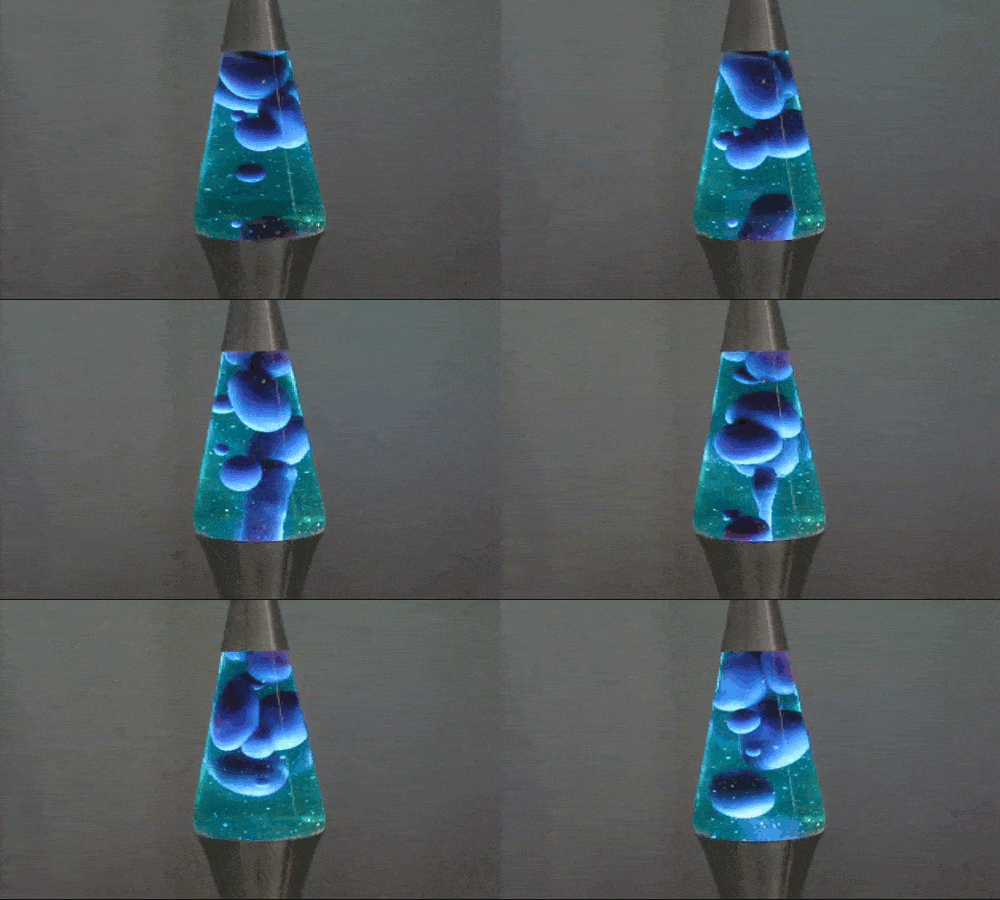
A certain type of decorative lamp contains colored liquids. These liquids form globs that break off and rise to the top of the liquid. The globs rise due to

a)

Convection

b)

Conduction

c)

Radiation

d)

Globulation

91.

In heat transfer, heat always flows from the _______________ object to the _______________ object.

a)

hotter / colder

b)

colder / hotter

c)

hotter / hotter

d)

colder / colder

92.

Which of the following statements is true regarding heat energy?

a)

The quicker a molecule moves, the colder it is.

b)

The slower a molecule moves, the warmer it is.

c)

The quicker a molecule moves, the warmer it is.

d)

The faster you dance, the quicker you get tired.

93.

The higher the temperature the higher the...

a)

Kinetic Energy

b)

Potential Energy

c)

Sound Energy

d)

Chemical Energy

94.

The more heat the more the particles...

a)

Stay in a fixed psoition

b)

Vibrate

95.
Which direction will the heat flow while this ice cap melts?
a)
there is no heat transfer
b)
from the icecap to the water
c)
from the water to the icecap
96.

What will happen to the temperature of the water?

a)

Cup A temperature will increase and Cup B temperature will decrease

b)

Cup A temperature will decrease and Cup B temperature will increase.

c)

Cup A temperature will stay the same and Cup B temperature will stay the same.

d)

Both cups temperature will decrease.
97.
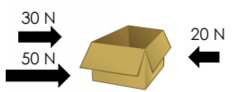
What is the net force?
a)
20 N 
b)
0 N 
c)
400 N 
d)
40 N 
98.
Balanced or unbalanced?
a)
balanced
b)
unbalanced
99.
Calculate the Net Force. 
a)
60N, Left 
b)
40N, Right 
c)
0N
d)
60N, Right
100.
You and your dad are moving the couch from one side to another. Your dad pushes with a force of 35 N to the right and you push with a force of 25 N right. What is the net force on the couch?
a)
60 N right
b)
10 N left
c)
60 n right
d)
50 N left
101.

Which example would be a balanced force?

a)

Train moving at a constant speed in the same direction.

b)

A skier going down a hill.

c)

A basketball being passed to a teammate.

d)

An apple falling to the floor.

102.

Match the description to the graph:

"The car is stopped."

a)
b)
c)
103.

Segment A-B The bus is _________________.

a)

at rest

b)

returning (to original position)

c)

moving forward

104.

In which of the following graphs below did one runner overtake (run past) the other?

a)
b)
c)
d)
105.

Which of these graphs do not show the object staying still?

a)
b)
c)
d)
106.
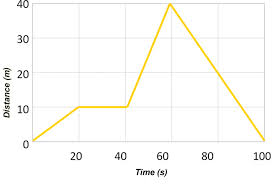
How long did it take this object to travel back to its reference/starting point?
a)
20 s
b)
30 s
c)
60 s
d)
100 s
107.

What are the two factors that gravity depends on?

a)

Mass and Type of surface

b)

Distance and Width

c)

Mass and Distance

d)

Distance and Type of surface

108.

What is the difference between Weight and Mass?

a)

Weight stays the same; Mass depends upon gravity

b)

Mass and Weight both stay the same

c)

Mass and Weight both change due to gravity

d)

Mass stays the same; Weight depends upon gravity