
 Worksheets
Semester 2 Final Review
Total questions: 104
Worksheet time: 59mins
Adaptations can be:
camouflage
ability to survive cold weather
hunting skills
all of the above

A yellow morph and green morph of an insect lives in the rainforest canopy. You would expect:
the green population to increase and the yellow to decrease
both populations should stay the same
both populations will increase
the green population to decrease and the yellow to increaseThis is a wrong answer
How do you "win" at natural selection?
survive
go extinct
survive & reproduce
What word describes a trait that helps an organism survive in its environment?
natural selection
mutation
camouflage
adaptation
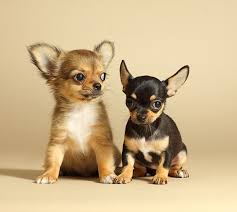
Natural Selection is driven by a change in the environment and survival of the
Earth
Fastest
Fittest
Biggest
The process where organisms best fit for the environment are more likely to survive and reproduce.
natural selection
adaptation
hibernation
selective breeding
hybridization
The process by which humans take control of the breeding process to choose favorable traits to be passed on.
natural selection
adaptation
hibernation
selective breeding
hybridization
The hibernation of bears during winter months is a-
structural adaptation
behavioral adaptation
natural selectiion
migration
Mountain lions are large cats and the top predator in their habitat. A population of mountain lions may vary in several characteristics. If a prey becomes scarce, competition between mountain lions for food will increase. Which variation would provide an advantage to the individuals that possessed it?
a spotted coat
short fur
long legs
abundant whiskers
A farmer wants to increase the amount of food produced by corn crops. If the farmer selectively breeds the plants, for which trait should the farmer select?
taller stems
deeper roots
resistance to pesticides
more cobs on plant
1. The process of choosing parent organisms for desired characteristics is called
natural selection
Artificial selection
random selection
genetic manipulation
What is an example of artificial selection?
Letting dogs choose their own mate
Letting plants pollinate on their own
Crossing a labrador and a poodle to create a labradoodle
The following is a similarity between artificial selection and natural selection
Takes hundreds of years
Humans determine traits
Nature determines traits
Offspring are produced
Which statement is true comparing natural selection and artificial selection?
In natural selection, traits benefit humans and in artificial selection, the traits benefit the species
In natural selection, traits benefit the species and in artificial selection, the traits benefit humans
In natural and artificial selection, the process takes hundreds of years to occur
In natural and artificial selection, nature determines what traits will be passed down to offspring.
Artificial selection is also known as
natural selection
selective hearing
genetic manipulation
selective breeding
Newton's are the unit used to measure...
energy
force
weight
mass
All forces occur in pairs
true
false
A push or pull on an object is
a force
acceleration
mass
momentum
Which of the following is an example of Newton’s Third Law:
You jump on a trampoline. It springs you back into the air.
A swimmer pushes against a pool wall to begin swimming a lap.
A rocket’s thrust pushes it out of Earth's atmosphere.
All of the above

According to Newton’s Third Law, when you lean on a wall, which force is greater?
the wall's force
your force
the force of friction
they are equal

A ball bat hits aball with a force of 100 Newtons. What is the force and direction exerted by the ball on the bat?
100 Newtons, same direction
100 Newtons, opposite direction
200 Newtons, same direction
200 Newtons, opposite direction

The head of a hammer is often made of steel. This makes the head heavy, which helps create a strong force for driving nails. Steel is also strong. The head of a hammer must be strong to resist what force?
The force of the air resistance on the moving hammer
The force of the person using the hammer
The force of gravity pulling down on the hammer
The force of the nail pushing in the opposite direction

According to Newton’s Third Law, if someone jumps off a skateboard, the skateboard will roll backward because -
the mass of the skateboard is the same as the mass of the person jumping off.
the pull of gravity on the person is the same as on the skateboard, regardless of size.
the air resistance on the person is great and the friction on the skateboard is small.
for the force that sent the person forward, there is an equal force pushing back on the skateboard.

A book pushes down on a table with a force of 5N, the table..
Pushes back with a force of 5N
Pushes back with a force less than 5N
Pushes back with a forcec greater than 5N
Does nothing. A table has no force.
Newton's 3rd Law states that for every action, there will be an ________________________ but ______________________ reaction.
equal, similar
greater, similar
equal, opposite
greater, opposite

The force that happens when two things rub together is called:
Electricity
Magnetism
Friction
Gravity

When two ring magnets are placed on a pencil, magnet A remains suspended above magnet B, as shown. Which statement describes the gravitational force and the magnetic force acting on magnet A due to magnet B?
The gravitational force is attractive and the magnetic force is repulsive.
The gravitational force is repulsive and the magnetic force is attractive.
Both the gravitational force and the magnetic force are attractive.
Both the gravitational force and the magnetic force are repulsive.

Which magnet will have the strongest magnetic force?
A
B
C
D

If the unequal opposing forces are applied to the cart at the same time, what will occur?
The cart will move to the left.
The cart will move to the right.
The cart will alternate between moving left and right.
The cart will remain stationary.
Which measurements are required to calculate the average speed of a car driving on a road?
Mass and direction
Mass and time
Direction and Time
Time and Distance
Weight is the measurement of the force of
gravity
mass
speed
distance
Which of the following is a complete list of the Terrestrial (inner) planets?
Venus, Earth, Mars, Jupiter
Mercury, Venus, Earth, Mars
Jupiter, Saturn, Uranus, Neptune
Mercury, Venus, Earth, Jupiter
Which of the following is a complete list of the Jovian (outer) planets?
Venus, Earth, Mars, Jupiter
Mercury, Venus, Earth, Mars
Jupiter, Saturn, Uranus, Neptune
Mercury, Venus, Earth, Jupiter
The orbits of the objects in the solar system are the direct result of which of the following feature of the Sun?
Its magnetic field
Its brightness
Its gravitational pull
Its chemical composition
If someone is building a scale model of our solar system which characteristic would be the most difficult to build into the model?
The relative sizes of the objects
The colors of the objects
The distances between objects
The composition of the objects
The force of gravitational attraction between the Sun and Venus could be increased by reducing which of the following?
The period of rotation of the Sun
The distance between the Sun and Venus
The speed of the orbit of Venus
The colors of the Sun and Venus
What are the characteristics of the Jovian (outer) planets in the solar system?
Giant balls of gas and ice
Hard and rocky
Very Large
Smaller
Have many moons
A large object orbiting a star
Planet
Moon
Asteroids
Sun
Comet
Masses that orbit around a planet
Planet
Moon
Asteroids
Sun
Comet
What holds celestial objects in orbit?
Centripetal Force
Gravity
Mass
Luck
Order from smallest to largest:
planet, solar system, galaxy, universe
universe, galaxy, solar system, planet
planet, galaxy, solar system, universe
A wave in which the vibration of the medium is perpendicular to the direction the wave travels
sound wave
longitudinal
transverse
translucent
How high or low a sound is, dependent on frequency
frequency
amplitude
pitch
space
a disturbance that transfers energy from one place to another
sound wave
space
wave
wavelength
a longitudinal wave that is caused by vibrations and that travels through a material medium
wavelength
translucent
transverse
sound wave
Horizontal distance between the crests or between the troughs of a wave
translucent
transverse
wavelength
wave
How many wave peaks pass a certain point per given time
translucdent
frequency
reflect
wavelength
the height of a wave's crest
amplitude
frequency
opaque
reflect
Allowing light to pass through; clear
transverse
transparent
translucent
sound wave
This force occurs when there is an attractive and repulsive force between two poles.
Electric
Electromagnetism
Magnetism
Static Electricity
In a magnet the opposite poles will
Attract
Repel
Neither
Like poles will
Attract
Repel
Neither
The magnetic field of a magnet is ____________ further away from the magnet.
Smaller
Stroner
Larger
Weaker
The area around an electric charge that experiences the force exerted by the electric charge.
Electric Field
Magnetic Field
Electric Force
Magnetic Force

What is this image showing.
Electric Current
An Electromagnet
Magnetic Force
Magnetic Field
Which of the two below result in an attractive force?
A positive charge and a negative charge
Two negative charges
Two south poles
A north pole and a south pole
Two postive charges
Frederick sets paper clips out on a table. He then takes a magnet, places it directly beneath the paper clips under the table, and moves the magnet. He finds that the paper clips move with the magnet. Why does this happen?
Magnetic force is a repellant force
Magnetic forces act on wood, like in the table
The paper clips are feeling the gravitational force of the magnet
Magnetic forces act at a distance, even betwewn objects
Surrounding each magnetic is an invisible force field called
Gravity
A magnetic field
An electric field
The Force
In an electromagnet, coils of wire are wrapped around a magnetic object to generate a magnetic field. What the is relationship between number of coils and the strength of the magnetic field?
The more coils an electromagntic has, the stronger the magnetic field
The more coils an electromagntic has, the weaker the magnetic field
The larger the metal object, the stronger the magnetic field is
There is no relationship between number of coils and the strength of a magnetic field
To decrease the strength of a magnetic field around an electromagnet, we must
increase the number of coils
increase the size of the iron core
decrease the size of the iron core
decrease the number of coils


This is a signal that fluctuates exactly like the original signal.
Analog
Digital
High Definition
Binary
This is a signal where the data is represented by binary digits.
Digital
Analog
NTSC
CRT


When placed at equal distances apart, the greatest gravitational attraction will be between two
skateboards
bowling balls
school buses
Which is needed to determine the amount of gravitational force between two objects?
distance and mass
weight and time
area and weight
The gravitational force exerted by an object depends on its
volume
mass
weight
A student drops a bowling ball and an apple from a third-story window. Both objects hit the ground at the same time. From the experiment, the student should conclude that
the apple weighs more than the bowling ball
more air friction is acting on the apple than on the bowling ball
gravity pulls on both objects, causing them to fall at the same time.
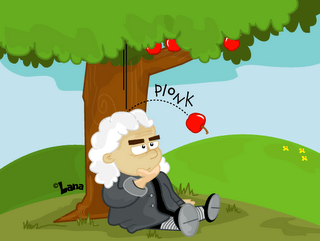
Gravity on moon is less than the gravity on earth because
a. moon's mass is less
b. moon's mass is more
c. moon's mass is equal to Earth
d. moon has no mass
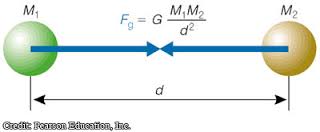
An astronaut way out in space is considered to be “weightless". This is because–
his mass is so small relative to the earth that gravity doesn’t affect him.
gravitational force decreases greatly over long distances.
gravitational force pushes objects away from each other at long distances.
objects far away from the earth have less mass.
Which statement is true?
All objects with mass exert a gravitational force.
Only celestial objects exert a gravitational force.
Gravity can both push and pull objects.
Only Earth exerts a gravitational force.
On which celestial object (outer space) would your mass be the greatest?
Earth
Jupiter
Sun
Your mass doesn't change on different celestial objects
What is the Big Bang Theory?
Two giant stars hit each other and exploded.
The universe started as a hot, dense point in space that is rapidly expanding.
The universe got too big, exploded, and started over.
None of the above
What are Galaxies made of?
Stars, gases, and space dust
Suns and planets
Dust and gases
Gravity

What type of galaxy is this?
Elliptical
Spiral
Irregular
Conical

What galaxy do we live in?
Andromeda
Milky Way
Tuffle
Ceres
Most scientists believe the Big Bang Theory explains which of the following questions?
How our planets and moons formed
How our universe began
How the sun turns hydrogen into helium
How fast light travels through space
A system of millions or billions of stars, together with gas and dust, held together by gravitational attraction
meteor
galaxy
constellation
solar system

consists of the sun and all the objects that revolve around it
solar system
universe
planet
moon
Tiny particles of matter floating in space
Gravity
Dust
Gas
Galaxy
Solar System
Which of the following best describes the formation of the solar system?
The sun ejected rocky material which later went on to form the planets.
A rotating disk of gas and dust was drawn together by the force of gravity.
One very large planetary body broke apart into several smaller planets.
Several stars of different masses cooled and formed the planets and the sun.
What stage is our Sun at right now?
Protostar
Main Sequence
Giant
True or false? Our universe is still expanding today.
True
False
Why do some stars appear brighter than others?
Distance from the earth
Colour of the star
Size of the star


What characteristics are used to classify stars?
Flammability, weight, and reactivity
Temperature/color and brightness
Conductivity, luster, and density
Malleability, distance, and viscoscity

Knowing the color of a star also tells us its __________
age
location
temperature
name

