wayground logo

Free Printable Worksheets

Font size

S
M
L
XL
Worksheets

Plate Boundaries

Total questions: 100

Worksheet time: 1hrs 7mins

Name
Class
Date
1.

What process drives the motion of the tectonic plates?

a)

conduction

b)

condensation

c)

cooperation

d)

convection

2.

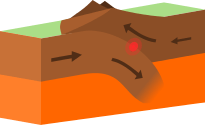
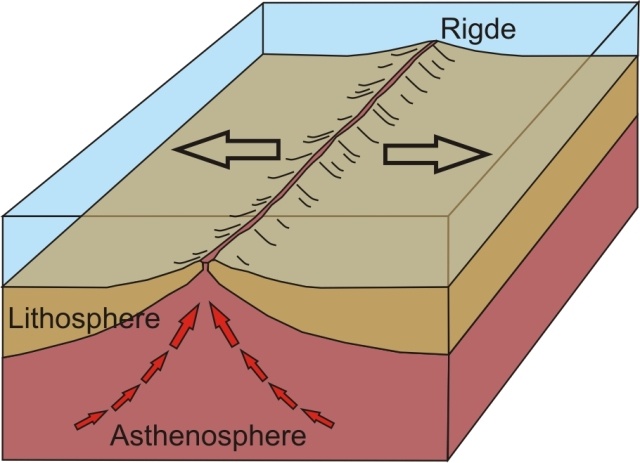
What is happening at this plate boundary

a)

Convergent

b)

Divergent

c)

Subduction

d)

Transform

3.
What type of event will occur at this boundary?
a)
Earthquake
b)
Volcano Eruption
c)
Tornado
d)
Mountain Building
4.

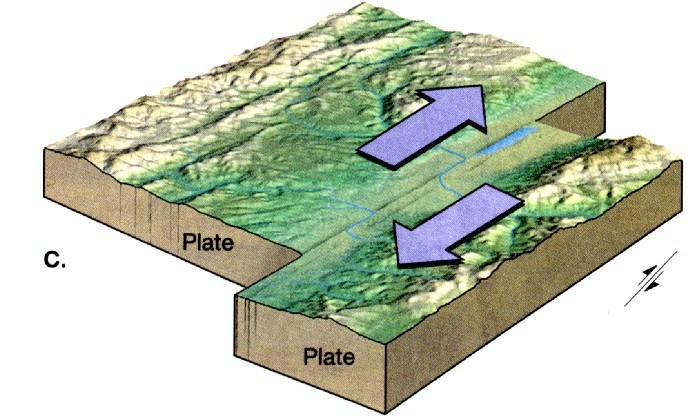
What type of plate boundary is this?

a)

Transform boundary

b)

Convergent boundary

c)

Divergent boundary

d)

Subduction boundary

5.
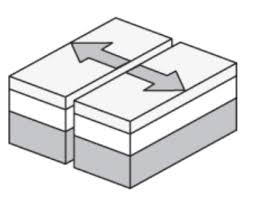
Name the boundary
a)
convergent boundary
b)
divergent boundary
c)
transform boundary
d)
sergent boundary
6.
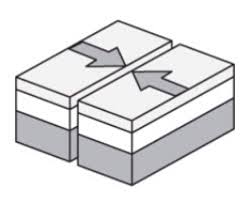
Name the boundary
a)
convergent boundary
b)
divergent boundary
c)
transform boundary
d)
sergent boundary
7.

What geological feature is formed at a divergent boundary for two continental plates?

a)

trench

b)

mid-ocean ridge

c)

rift valley

d)

subduction zone

8.

What geological feature is formed at a divergent boundary of two oceanic plates

a)

mid-ocean ridge

b)

volcano

c)

trench

d)

subduction zone

9.

A convergent boundary for two oceanic plates will form a

a)

Mountain

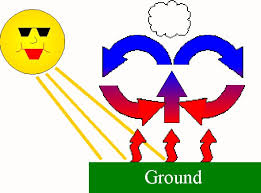
b)

Earthquake

c)

Volcanic Island Arc

d)

Mid-Ocean Ridge

10.

When a continental plate converges with an oceanic plate it will form a __________________ on the continental plate

a)

Earthquake

b)

Volcano

c)

Mountain

d)

Trench

11.

Convection currents take place in the...

a)

crust

b)

inner core

c)

mantle

d)

outer core

12.

In convection currents, as magma warms up it......

a)

rises

b)

sinks

13.

In convection currents, as magma cools down it...

a)

rises

b)

sinks

14.

When magma is close to the core it...

a)

heats up

b)

cools down

15.

When magma is closer to the crust it...

a)

heats up

b)

cools down

16.

The largest tectonic plate is...

a)

Atlantic

b)

Pacific

c)

Eurasian

d)

Indian

17.

Deep, underwater troughs created by an oceanic plate subducting under another plate is

a)

an oceanic trench

b)

a mid-oceanic ridge

c)

an oceanic transformation

d)

a transform fault

18.

What is a curved line of volcanoes that forms parallel to a plate boundary called?

a)

Oceanic trench

b)

A mid-ocean ridge

c)

Interlifted zone

d)

Volcanic arc

19.

Where do mid-ocean ridges form?

a)

Divergent boundaries

b)

Convergent boundaries

c)

Transform boundaries

20.

What is the process by which new oceanic crust forms along a mid-ocean ridge

a)

basin stretching

b)

oceanic growth

c)

plate expansion

d)

seafloor spreading

21.

What is the ring of fire?

a)

The section of the volcano which the most activity takes place in

b)

A section along the pacific ocean where a hot spot of volcanoes are located.

c)

The most deadly volcano in the world

22.

What are tectonic plates?

a)

Pieces of earth's crust

b)

The rocky core of the earth

c)

The new biome in 1.14

d)

The base of the volcano

23.
The huge pieces of the earth's crust are called ____________________________. 
a)
crust
b)
plates
c)
directions
d)
seismos
24.
Mountains form from ...
a)
plates sliding past one another
b)
collision of plates
c)
plates moving away from each other
25.
Which of the following is where one plate slides under another plate?
a)
submarine zone
b)
divergence zone
c)
subduction zone
d)
lower zone
26.
What does the theory of continental drift state?
a)
The continents were once joined in a super-continent and have moved over time
b)
Continents are stationary and do not move
c)
The Earth is broken into lithospheric plates that move due to convection currents
d)
none of the above
27.
Who is the person credited with developing the theory of continental drift?
a)
Harry Hess
b)
Galileo
c)
Alfred Wegener
d)
Newton
28.
What is Pangaea?
a)
The name of a German Scientist
b)
the name of the supercontinent that existed millions of years ago
c)
another name for continental drift
d)
the name of an ancient fossil
29.
Which piece of evidence did Wegener use to prove continental drift?
a)
The shape of the continents
b)
Similar fossils found on separate continents
c)
Tree fossils found in odd places
d)
All of the above
30.
What is this a picture of?
a)
plate tectonics
b)
continental drift
c)
pangea
d)
glacier scaring
31.
The movement of Earth's crust along plate boundaries produces
a)
earthquakes
b)
volcanoes
c)
mountains
d)
All of these options. 
32.
The San Andreas fault is located in Conneticut
a)
true
b)
false
33.
Which of the following causes Earth's tectonic plates to move?
a)
Energy from the Sun
b)
Magnetic Pole Reversal
c)
Convection currents in the mantle
d)
Faults in Mountain Ranges
34.
A divergent boundary occurs when plates ....
a)
Pull apart
b)
Come together
c)
Slide past each other
d)
subducting
35.
How is it possible for new crust to be formed without increasing the surface area of the Earth?
a)
Crust is destroyed at the same time it is created
b)
New crust is underwater where it sinks
c)
New crust breaks more easily than old crust
36.
What are the two types of crust
a)
continental and oceanic
b)
ocean and upper
c)
lower and upper
d)
pizza and subway
37.
Earthquakes and volcanoes are most likely found in which locations?
a)
At plate boundaries
b)
in oceans
c)
in the middle of continents
d)
in the middle of plates
38.
The Himalayas in Asia are an example of what type of plate boundary?
a)
divergent
b)
continent-to-continent convergent
c)
ocean-to-continent convergent
d)
transform
39.
Which of the following is NOT a tectonic boundary?
a)
Convergent
b)
Divergent
c)
Sedergent
d)
Transform
40.
The Ring of Fire is famous for
a)
deadly volcanoes
b)
terrible earthquakes
c)
terrifying tsunamis
d)
all of the above
41.

Earth's plastic like layer is called the...

a)

Lithosphere

b)

Asthenosphere

42.

The crust and upper mantle make up the...

a)

Lithosphere

b)

Asthenosphere

43.

What are the three types of convergent boundaries?

a)

Continent-Continent

b)

Continent-Ocean

c)

Ocean-Ocean

d)

All of the above

44.

In a subduction zone the...

a)

the oceanic plate goes below the continental plate

b)

the continental plate goes below the oceanic plate

c)

both plates go down

d)

both plates go up

45.

When subduction occurs with two oceanic plates....

a)

the older plate goes below the younger plate

b)

the younger plate goes below the older plate

c)

both of the plates sink down

d)

both of the plates push up

46.

Which of these forces is NOT responsible for tectonic plate movement

a)

slab pull

b)

ridge push

c)

basal drag

d)

slab drag

47.

Scientists now use __________ to measure how continents move

a)

rulers

b)

GPS

c)

GMS

d)

energy

48.

Convection currents in the mantle cause a rolling motion that is similar to a conveyor belt

a)

Slab Pull

b)

Basal Drag

c)

Ridge Push

d)

Plate Tectonics

49.

The denser plate sinks below the less dense plate at a convergent boundary, and continues to pull the rest of the plate down with it]

a)

Slab Pull

b)

Basal Drag

c)

Ridge Push

d)

Plate Tectonics

50.

Plates are moved out of the way when magma flows up from the mantle at mid-ocean ridges

a)

Slab Pull

b)

Basal Drag

c)

Ridge Push

d)

Plate Tectonics

51.
What kind of plate boundary is shown here?
a)
divergent
b)
convergent
c)
transform
d)
subducting
52.
What kind of plate boundary is shown here?
a)
divergent
b)
convergent
c)
transform
d)
submergent
53.
What geologic feature/event you be most likely to find at a transform boundary?
a)
Earthquakes
b)
Volcanoes
c)
Mountains
d)
Rift Valleys
54.
What geologic feature/event would you most likely to find at a divergent boundary between two pieces of oceanic crust?
a)
Rift Valley
b)
Mid-Ocean Ridge
c)
Island Arc
d)
Flat land
55.
Name the boundary
a)
convergent boundary
b)
divergent boundary
c)
transform boundary
d)
sergent boundary
56.
In which type of boundary do the plates move away from each other?
a)
convergent
b)
normal
c)
divergent
d)
transform
57.
What kind of plate boundary is shown here?
a)
divergent
b)
convergent
c)
transform
d)
strike slip
58.

What type of boundary is this?

a)

Divergent

b)

Convergent

c)

Transform

59.

Volcanic Eruptions and Earthquakes are considered to be ___________ changes to the Earth's surface?

a)

Slow

b)

Medium

c)

Fast

60.
Scientists think that convection currents that move the plates flow in Earth's
a)
Continental crust
b)
Oceanic crust
c)
Asthenosphere
d)
Lithosphere
61.
Where does the heat come from that drives this convection current in the mantle? 
a)
The sun
b)
The crust
c)
the mantle
d)
the core
62.
The physical layer of Earth made of solid rock and soil is called the ___________. 
a)
mesosphere
b)
lithosphere
c)
asthenosphere
d)
mantle
63.
During sea floor spreading, molten material rises up from the mantle...
a)
along the continents
b)
at the mid ocean ridges
c)
deep ocean trenches
d)
at north and south poles
64.
Oceanic crust is
a)
Younger and less dense than continental crust
b)
Thinner, younger and more dense than continental crust
c)
Older, thicker and less dense that continental crust
d)
Bigger and younger than continental crust
65.
Earth's plates are...
a)
constantly moving and changing the face of the earth
b)
Never moves
c)
Moves seldom and very fast
d)
Moves when it feels like it
66.

Where do plates slide past each other?

a)

subduction zones

b)

convection currents

c)

transform boundaries

d)

convergent boundaries

67.

This can be found at a divergent plate boundary

a)

deep-ocean trenches

b)

folded mountains

c)

mid-ocean ridges

d)

continental drift

68.

Plate movement happens at ____________

a)

ocean margins

b)

abyssal plains

c)

plate boundaries

d)

island arcs

69.

convection currents in Earth's _____________ move tectonic plates

a)

inner core

b)

outer core

c)

crust

d)

mantle

70.

Active volcanoes are most likely to form at...

a)

convergent oceanic-continental boundaries

b)

divergent boundaries

c)

tranform boundaries

d)

convergent continental-continental boundaries

71.

Tectonic plates float on the....

a)

Asthenosphere

b)

Core

c)

Crust

d)

Lithosphere

72.

A _________________ can also form when two oceanic plates collide

a)

Hot spot

b)

Line of volcanoes

c)

mid-ocean ridge

d)

rift valley

73.

Crust is neither destroyed nor formed along a ______________ boundary

a)

Convergent

b)

Divergent

c)

Subduction

d)

Transform

74.

Continental-Continental plate collisions create

a)

Mountain ranges

b)

Volcanoes

c)

Mid-Ocean Ridges

d)

Rift Valleys

75.

The boundary between two plates moving towards each other is called

a)

convergent

b)

divergent

c)

transform

d)

lithosphere

76.

The ______________ is (are) an example of a transform boundary

a)

Mountain Ranges

b)

Himalayan Mountains

c)

San Andreas Fault

d)

Rift Valleys

77.

Earth's plastic-like layer is called the...

a)

Lithosphere

b)

Core

c)

Crust

d)

Asthensophere

78.

The rigid outer layer of the Earth is the...

a)

Lithosphere

b)

Asthenosphere

c)

Core

d)

Mantle

79.

The theory of _____________________ states that Earth's surface is divided into rigid plates that move relative to one another

a)

Plate Tectonics

b)

Mountain Ranges

c)

San Andreas Fault

d)

Subduction

80.

_____________________ occurs when plates of different density collide

a)

subduction

b)

transform boundaries

c)

mountain ranges

d)

plate tectonics

81.

The crust and upper mantle make up the

a)

core

b)

mantel

c)

lithosphere

d)

asthenosphere

82.
This layer of the Earth is found between the core and the crust.
a)
mantle
b)
outer core
c)
inner core
d)
crust
83.
The outermost solid layer of the Earth is called the
a)
mantle
b)
outer core
c)
inner core
d)
crust
84.
The layer that lies beneath the mantle and surrounds the inner core. 
a)
mantle
b)
outer core
c)
inner core
d)
crust
85.
The solid, dense center of our planet that extends from the bottom of the outer core to the center of the Earth.. 
a)
mantle
b)
outer core
c)
inner core
d)
crust
86.
The driving force of the tectonic plates are convection currents, where can these be found?
a)
inner core
inner core
b)
crust
c)
mantle
d)
outer core
87.
This layer of Earth is the thickest part
a)
crust
b)
outer core
c)
mantle
d)
inner core
88.
Which of these layers is ALL solid iron and nickle?
a)
inner core
b)
outer core
c)
lithosphere
d)
mesosphere
89.
The layer that makes up most of the earth's mass and volume is the
a)
crust
b)
mantle
c)
core
d)
asthenosphere
90.
Which of the following occurs because of convection currents?
a)
Tectonic plates on the crust move.
b)
The mantle increases in size.
c)
Pressure in the crust increases.
d)
Pressure in the crust decreases.
91.
During sea floor spreading, molten material rises up from the mantle...
a)
along the continents
b)
at the mid ocean ridges
c)
deep ocean trenches
d)
at north and south poles
92.
Which of the following is where one plate slides under another plate?
a)
submarine zone
b)
divergence zone
c)
subduction zone
d)
lower zone
93.
This land formation occurs at a divergent continental/ continental boundary.
a)
mid ocean ridge
b)
deep ocean trench
c)
pacific hot spot
d)
rift valley
94.
Temperature _____________________ as you go deeper into the earth.
a)
increases
b)
decreases
c)
goes up and down depending on the layer
d)
stays the same
95.
Pressure ______________________ as you go deeper into the Earth
a)
increases
b)
decreases 
c)
goes up or down depending on the layer
d)
stays the same
96.
Which layer of Earth has the GREATEST density?
a)
crust
b)
mantle
c)
outer core
d)
inner core
97.
Which layer of Earth is the thinnest?
a)
crust
b)
mantle
c)
outer core
d)
inner core
98.
What is the definition of CONVECTION
a)
When heat transfers through waves.
b)
When heat transfers from objects that are touching.
c)
a  hot liquid or air that  expands, becomes less dense, and rises or becomes more dense, and sinks.
d)
Heat traveling from the sun
99.
Which of the following is an example of convection?
a)
A hair dryer is drying up your hair.
b)
When the AC or heater changes the temperature.
c)
When a car engine turns hot after being turned on.
d)
When you are making soup and the water is rising and lowering.
100.
Warm air rises and the cool air sinks demonstrates this type of heat transfer. 
a)
conduction
b)
convection
c)
radiation
d)
Insolation