
 Worksheets
Sci 8 - Earth's Layers, Plates, Geologic History Review
Total questions: 111
Worksheet time: 2hrs 2mins
Label each part of the Earth's interior.
Outer Core
Crust
Asthenosphere
Inner Core
Mantle
Which layer has convection currents?
Stiffer Mantle
Outer Core
Asthenosphere
Crust

Scientists think that convection currents that move the plates flow in Earth's
Continental crust
Oceanic crust
Mantle/Asthenosphere
Lithosphere
Oceanic crust is ____________ and ____________ than continental crust
thinner, less dense
thinner, more dense
thicker, less dense
thicker, more dense
Which layer of the earth is made of LIQUID iron and nickel?
Inner core
Outer core
Manthe
Crust
All continents were once joined together as a supercontinent called
Pangaea
Cocos
Which of the following increases as depth increases into the Earth? (choose all that apply)
time
Pressure
temperature
density
Evidence that the continents were once joined together
South America and Africa fit together like puzzle pieces
South America and Africa share fossils of Mesosaurus and Glossopteris
South America and Africa both have rocks of the same age
all of the above
Evidence of continental drift =
· matching _______ & _______on continents now separated by oceans
· South America and _______ fit together like puzzle pieces
rocks only, Africa
rocks & fossils, Asia
rocks & fossils, Africa
rocks & fossils, Asia & Africa
Rock layers are deposited _____________
vertically
horizontally
vertically & horizontally

Evidence of crustal movement =
faulting
folding
tilting

Evidence of crustal movement =
faulting
folding
tilting
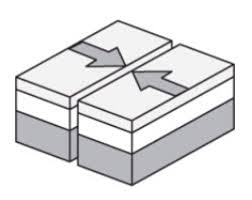

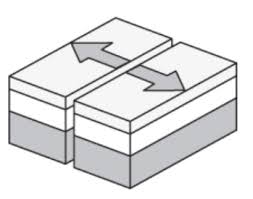


The crust and upper mantle form the ____________ = plates
continental crust
oceanic crust
lithosphere
asthenosphere
Earth's surface is broken into pieces called __
Jigsaw puzzle
Pattern
Plate boundary
Tectonic Plates
Which is more dense?
Continental Crust
Oceanic Crust
Since oceanic crust is more dense than continental crust, when the two collide, oceanic crust will _________
sink or subduct
sink or rise
rise or converge


New rock forms at _________ boundaries along _________ when two plates separate and ________ rises into the ocean and cools/solidifies.
Divergent; Mid-Ocean Ridges; magma
Convergent; Oceanic Trenches; lava

As distance from the ridge increases, the age of oceanic crust
increases (gets older)
decreases (gets younger)
remains the same
Rock gets recycled or "trashed" at
Mid-ocean ridges
Oceanic Trenches
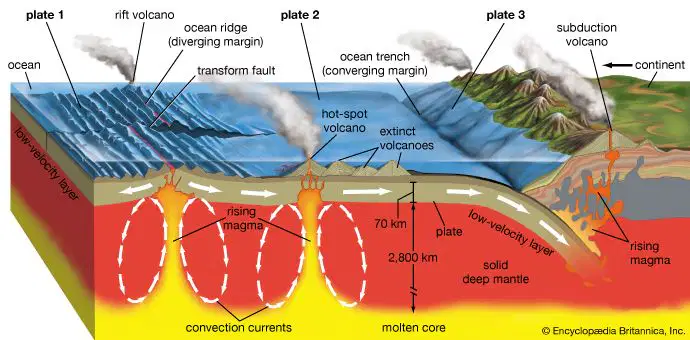
At oceanic trenches, oceanic crust ___________ under continental crust because it is ________ dense.
subducts (sinks); more
rises; less
subducts (sinks); less
rises; more
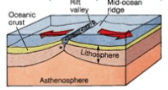
divergent
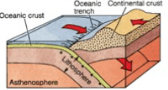
convergent
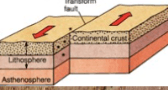
transform
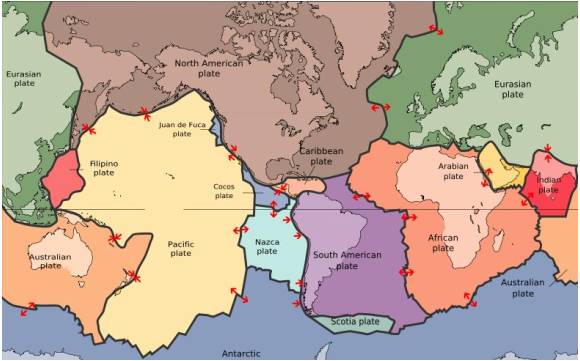
The map in the picture shows tectonic plate boundaries. This map would be useful in predicting the location of future
droughts
hurricanes
earthquakes
tornadoes
What are the geologic features associated with divergent boundaries?
Mid-ocean ridges, rift valleys, and volcanic activity
Mountain ranges, deserts, and glaciers
Tectonic plates, earthquakes, and tsunamis
Canyons, lakes, and forests
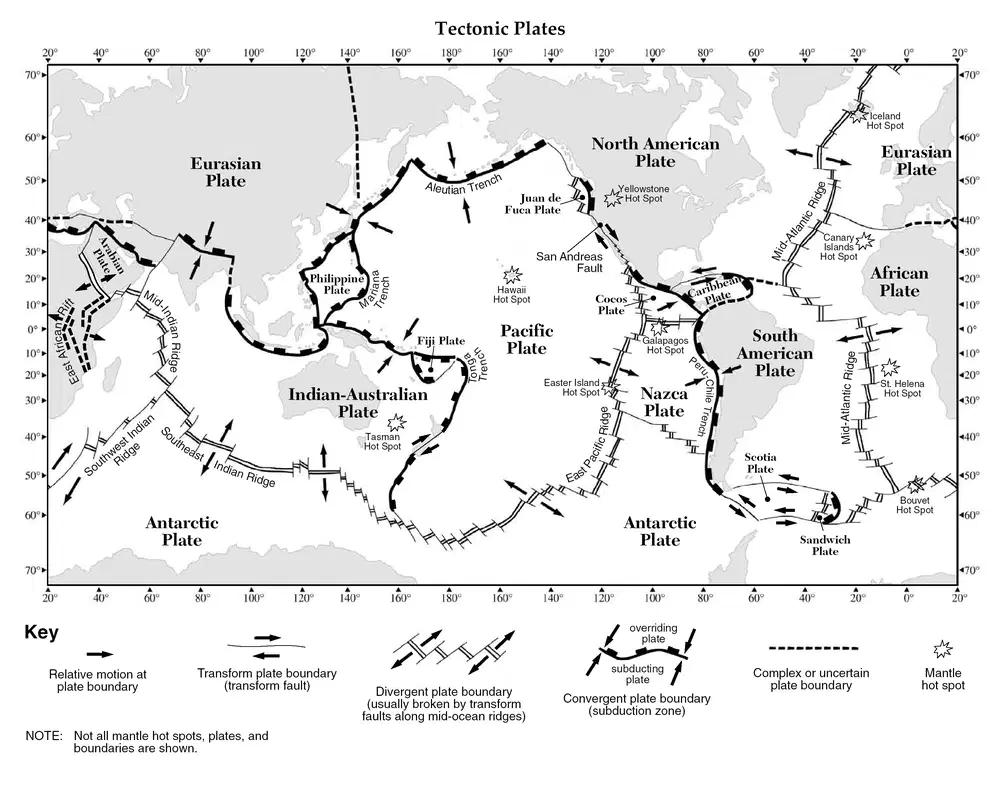
Give an example of a divergent boundary on land.
Sahara Desert in Africa
Amazon Rainforest in South America
Mount Everest in Asia
Great Rift Valley in East Africa
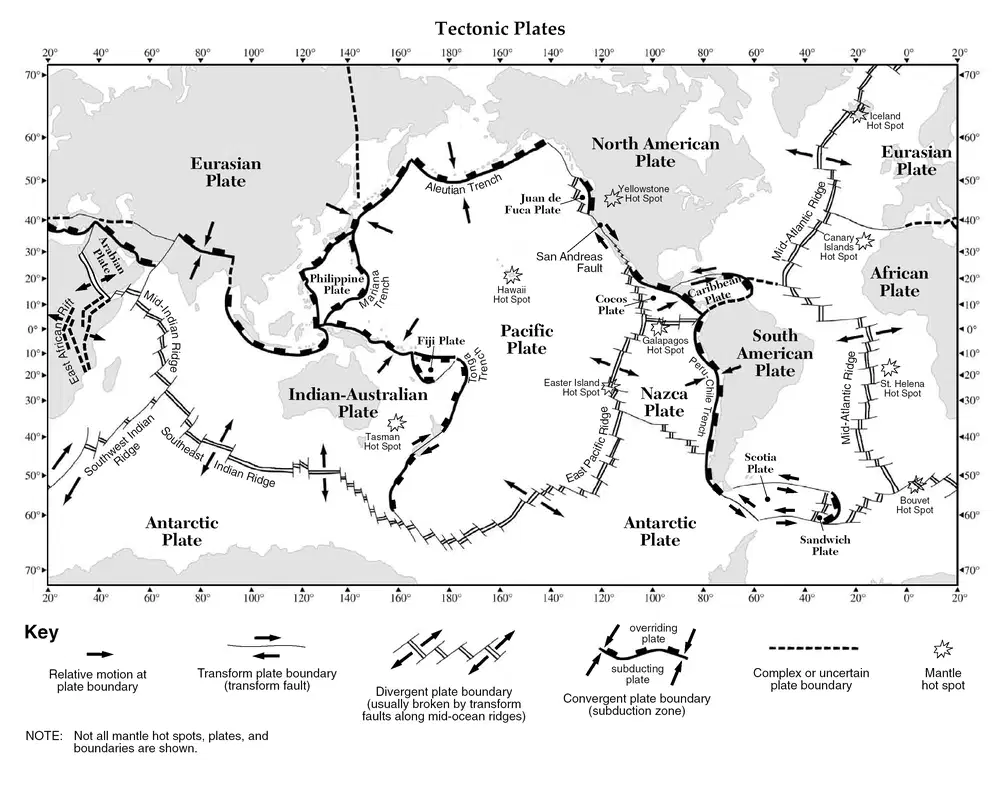
Which of the following is an example of a divergent plate boundary?
San Andreas Fault
Mid Atlantic Ridge
Eurasian - Indian Plates (formation of the Himalayas)

Name the Boundary-
boundaries are spreading apart under water
Divergent Boundary between
Oceanic Crust + Oceanic Crust
Ex.) Mid-Ocean Ridge
Divergent Boundary between
Continental Crust + Continental Crust
Ex.) Rift Valley
Convergent Boundary between
Oceanic Crust + Oceanic Crust
Ex.) Volcanic Island
Transform Boundary
Ex.) Earthquake

Name the plate boundary.
Divergent Boundary between
Oceanic Crust + Oceanic Crust
Ex.) Mid-Ocean Ridge
Divergent Boundary between
Continental Crust + Continental Crust
Ex.) Rift Valley
Convergent Boundary between
Oceanic Crust + Oceanic Crust
Ex.) Volcanic Island
Convergent Boundary between
Continental Crust + Continental Crust
Ex.) Mountains
At oceanic trenches, oceanic crust ___________ under continental crust because it is ________ dense.
subducts (sinks); more
rises; less
subducts (sinks); less
rises; more
What is a subduction zone?
A region where one tectonic plate is forced underneath another.
A place where two tectonic plates move apart
A location where tectonic plates slide past each other horizontally
An area where tectonic plates are stationary and do not move
What are the geologic features associated with convergent boundaries?
Deep ocean trenches, volcanic island arcs, and mountain ranges
Islands, coral reefs, and atolls
Faults, fracture zones, and earthquakes
Mid-ocean ridges, rift valleys, and volcanoes
What are the geologic features associated with transform boundaries?
Volcanoes and magma
Tropical storms and hurricanes
Faults, fracture zones, and earthquakes
Mountains and valleys
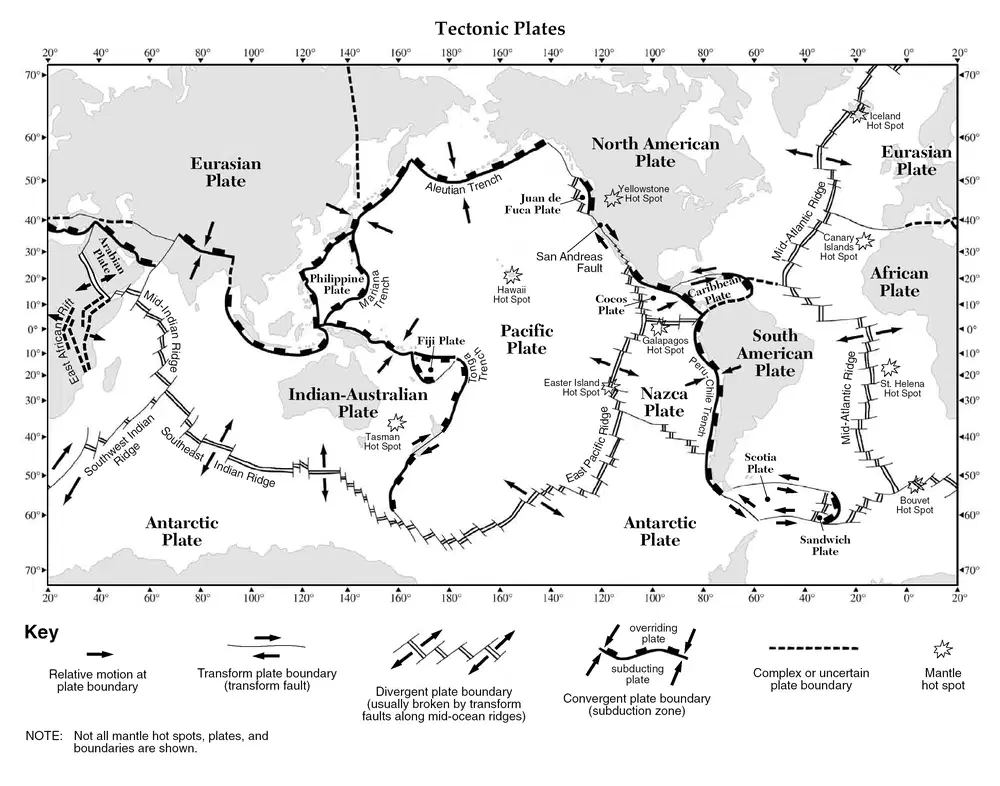
Which of the following is a convergent boundary?
Peru-Chile Trench
Mid-Atlantic Ridge
Southeast-Indian Ridge
San Andreas Fault
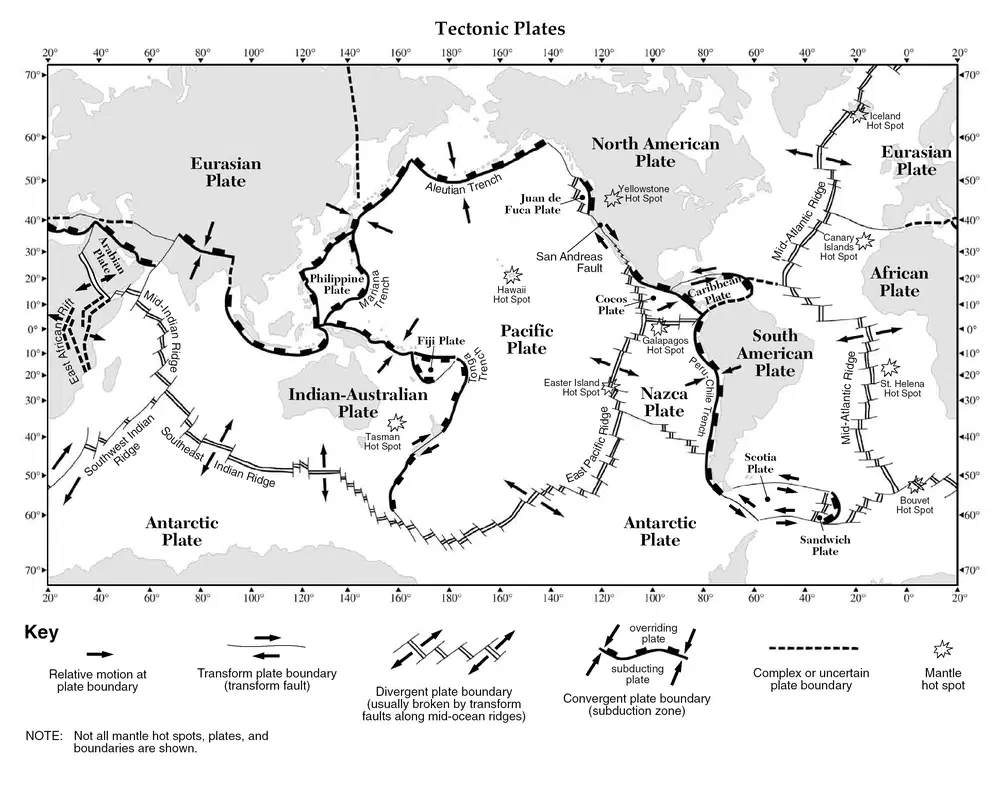
Give an example of a transform boundary.
The San Andreas Fault in California
The Great Rift Valley in East Africa
The Andes Mountains in South America
The Amazon Rainforest in South America
What type of plate boundary is associated with the creation of mountain ranges?
Transform plate boundary
Divergent plate boundary
Convergent plate boundary
Subduction plate boundary
Which of the following is an example of a divergent plate boundary?
San Andreas Fault
Mid Atlantic Ridge
Eurasian - Indian Plates (formation of the Himalayas)
Which of the following is an example of a convergent plate boundary?
San Andreas Fault
Mid-Atlantic Ridge
Indian to Eurasian Plates (formation of Himalayas)

What type of Boundary is this? What event will occur at this boundary?
Transform / Earthquakes
Subduction / Volcano Eruption
Tornado / Rain
Mountain Building / Volcanism

Name the Plate Boundary
Convergent Boundaries
between
Oceanic Crust and Continental Crust
Ex.) Subduction Zone
Convergent Boundaries
between
Oceanic Crust and Oceanic Crust
Ex) Island
Convergent Boundaries
between
Continental Crust and Continental Crust
Ex.) Mtn Building
Transform Boundary

Name the Plate Boundary
Transform Boundary
between
Oceanic Crust and Oceanic Crust
Ex. Earthquake
Convergent Boundaries
between
Continental Crust and Continental Crust
Ex.) Mtn Building
Convergent Boundaries
between
Oceanic Crust and Oceanic Crust
Ex.) Volcanic Island
Divergent Boundaries
between
Oceanic Crust and Oceanic Crust
Ex.) Mid-Ocean Ridge- Ocean Mountain Range

Name the Plate Boundary
Convergent Boundary
Divergent Boundary
Transform Boundary

Name the plate boundary that forms mountains
Transform Boundary
Convergent Boundaries
between
Continental Crust and Continental Crust
Convergent Boundaries
between
Oceanic Crust and Oceanic Crust
Convergent Boundaries
between
Oceanic Crust and Continental Crust
Which model represents volcanoes forming by subduction?


Where are most of the active volcanoes?
Hawaii
The United States
The Atlantic Ocean
The Ring of Fire
The map in the picture shows tectonic plate boundaries. This map would be useful in predicting the location of future
droughts
hurricanes
earthquakes
tornadoes
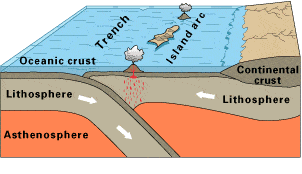
Observe this diagram of a plate boundary. One statement BEST describes what is happening. It is that
the oceanic crust is melting.
the denser ceanic crust is subducting under the less dense oceanic crust
volcanic islands are forming.
the tectonic plates are moving away from each other.
What types of landforms are formed at convergent boundaries?
PICK TWO
volcanoes
new crust
Trenches
rift valley
What happens when two continental plates collide at a convergent boundary?
Mountains are formed and earthquakes can occur.
The plates separate and new oceanic crust is formed.
The plates slide past each other and no significant geological events occur.
Volcanoes are formed and tsunamis can occur.

What two geologic features occur near every subduction zone?
Volcanoes and Trenches
Rift Valleys and Mid Ocean Ridges
Volcanoes and Rift Valleys
Mid Ocean Ridges and Trenches
Rock layers are originally deposited _____________
vertically
horizontally
vertically & horizontally
Evidence of crustal movement =
faulting
folding
tilting
A ________________ is a break in Earth's crust
intrusion
fault
extrusion
igneous rock
Evidence of crustal movement =
faulting
folding
tilting
Earthquakes and volcanoes are found
at plate boundaries
in water
on land
in the sky


Which diagram correctly models the relative plate motion on each side of a mid-ocean ridge?


What plate boundary feature is also shown?
A ridge formed by a convergent boundary
A valley forming at an divergent boundary
A fault forming at a transform boundary
A volcano formed by a convergent boundary
Tsunamis are caused by
underwater disturbances such as earthquakes, landslides, and volcanoes.
wind and the gravitational pull of the moon.
Tsunamis warning given = move to _____________ ground
higher
lower

Which rock type is the oldest?
rock type 2
rock type 3
rock type 4

Which rock layer most likely contains fossils of the most recently evolved organisms
1
2
3
4
Which can most likely be concluded about the top layer of rock seen in an undisturbed cliff wall?
The top layer is older than layers located farther down the cliff.
The top layer is younger than layers located farther down the cliff.
The top layer contains more fossils than layers located farther down the cliff.
The __________of rocks is the exact numerical age of a rock.
relative age
half-life
absolute age
Geologist use _________ to determine the absolute age of rocks.
absolute age dating
relative age dating
radioactive dating
Fossils are found in ____________________________ rock
Igneous
Metamorphic
Sedimentary

If you found an index fossil in a layer of rock in Montana and a similar fossil in a layer of rock in Texas, you would know that:
the fossils and rock layers are the same age
the fossils from Montana are older
the fossils from England are older
none of the above
The relative age of a rock determines
whether its older or younger than other rocks.
its exact age.


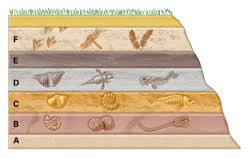
What are the oldest fossils and why?
B, C- because they are closest to the top
A, B- because they are closest to the bottom
They are all the same age- because they are all found on layer 2
A, B- because they are found closest to the top

A record of the geological events and the evolution of life on Earth, as seen by fossil record is:
era
geologic time scale
period
time line
The Earth is about __________yeras old.
50.6 million years
4.6 billion years old
4.6 million years old
4.6 trillion years old
A _____________________ is the remains or evidence of an ancient organism.
paleontologist
fossil
preserved
extinct
Most organisms that have once lived have
continued to survive
been perfectly preserved
gone extinct
Fossils are evidence of organisms that lived long ago & evolution
Fossils are fortune tellers.
Fossils are fun to study.
Fossils are found everywhere in the world.

The Geologic Time Scale is separated into specific time periods based on
dinosaurs
plants
oxygen
fossil evidence

When did a mass extinction of dinosaurs and many land plants occur?
65.5 mya
251 mya
300 mya
440 mya


The division of Earth's geologic history into units of time called eons, eras, periods, and epochs is based on
absolute dating techniques
fossil evidence
climatic changes
seismic data
Studies of the rock record suggest that
the period during which humans have existed is very brief compared to geologic time
evidence of the existence of humans is present over much of the geologic past
humans first appeared at the time of the intrusion of the Palisades sill
the earliest humans lived at the same time as the dinosaurs

What is the most recent feature shown?
The intrusion, D
Layer C
The fault, E
Layer A

Put the layers in order from oldest to youngest:
E, D, A, B, C
C, B, A, D, E
C, D, B, A, E
C, B, D, A, E

These geologic cross sections show the location of three fossilized species (W, X, and Y) found in rock layers at two nearby sites. Species X is probably the oldest species because it was found -
below species W
in the lowest layer
above the ash layer
in sandstone

How many million years ago was the origin of the Earth and solar system?
1600
2600
3600
4600

What event changed the horizontal bedrock in this picture?
Fault
Tilting
Folding
Extrusion
Asteroid impacts are thought to have caused mass (extinctions, parties).
extinctions
parties
Age of Earth ______ Billion years or _______ million years, age of universe 13.8 (million, billion) years
4.6, 4,600, billion
4,600 4.6, billion
For most of Earth’s history (all kinds of life, only simple life) forms existed
all kinds of
only simple life
Most of the species that have ever existed on Earth (will never become, has already become) extinct.
will never become
has already become

