
 Worksheets
Year 10 Science - General - Exam preparation 2023
Total questions: 111
Worksheet time: 2hrs 37mins

What is the concentration of nitrogen gas in the air?
78%
21%
approximately 1%
0.04%
What is the concentration of oxygen gas in the air?
78%
21%
approximately 1%
0.04%
What is the concentration of carbon dioxide gas in the air?
78%
21%
approximately 1%
0.04%
What is the chemical formula of nitrogen gas?
NO2
N2
O2
CO2
What is the chemical formula of oxygen gas?
NO2
N2
O2
CO2
What is the chemical formula of carbon dioxide gas?
NO2
N2
O2
CO2

Which two chemical substances are needed for photosynthesis?
Carbon dioxide
Water
Glucose
Oxygen
Which two chemical substances get produced during photosynthesis?
Carbon dioxide
Water
Glucose
Oxygen
Where does the energy for photosynthesis come from?
From the soil
From the plant
Sunlight
It's magic!
Which is a 'waste product' of photosynthesis?
CO2
H2O
Sunlight
O2
Which two substances are needed to make sugar molecules?
CO2
H2O
Sunlight
O2
During photosynthesis, 6 molecules of which substances are needed and produced? Select all the correct answers.
CO2
H2O
Sunlight
O2
Identify the correct chemical formula of glucose.
CO2
C6H12O6
C12O12H12
C6H6O6
Identify the correct chemical formula of glucose.
CO2
C6H12O6
C12O12H12
C6H6O6
Which of the soils below is a sandy soil?


Which of the soils below contains a lot of organic matter (decomposed plant material)?
Which of the soils below does not contain lots of nutrients?
Which of the soils below does not contain lots of nutrients?

Identify the doughnut-shaped structures in the picture.
Leaves
Stomata
Plant cells
Mosses
What information about stomata and their role is correct? Select all the correct answers.
Regulate the uptake of carbon dioxide.
Close to prevent water loss.
Are small pores in the epidermis of leaves.
Defend against pathogens.
Why does it make sense to have more stomata on the underside of leaves? Select the best answer.
Reduces the amount of dust that gets into the leaf.
It prevents water from entering the leaves when it rains.
Reduces the amount of water that is lost.
There is more carbon dioxide at the underside of leaves.
Since leaves lose water through the stomata. What would be correct about a plant in a dry environment? Select all correct answers.
Has more stomata.
Only has stomata on the upper side of leaves.
Fewer stomata.
Most or all stomata on the underside of leaves.
Does water move from the soil to the leaves while stomata are closed?
Yes. There are small pumps in plants.
No. Stomata need to be open for transpiration to occur.

What is it called when water evaporates from the surface of leaves?
(a)
Which gases would be present in every leave at all times? Select all the correct answers.
Carbon dioxide
Water vapour
Oxygen gas
Xenon gas
Biotic factors are
Living
nonliving
Abiotic factors
living
nonliving
Choose all the abiotic factors listed
water
mates
space
temperature
predators
Choose all the biotic factors listed
sunlight
food
predators
disease
water
What abiotic factor would plants compete for?
Food
Sunlight
Parasites
predators

biotic
abiotic

biotic
abiotic

biotic
abiotic

biotic
abiotic
What is the difference between the biotic and abiotic factors?
Biotic factors are living things and abiotic factors are nonliving things.
Biotic factors are nonliving things and abiotic factors are living things.
What is a example of a ABIOTIC factor?
Panda
Bacteria
Butterfly
Weather
Temperature is an example of what kind of factor?
biotic
abiotic
dead
living
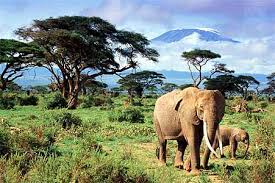
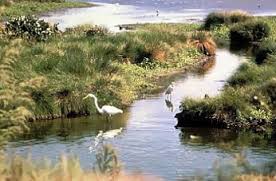
What are the ABIOTIC factors in this image?
water
sunlight
birds
grasses
mud
10.- What are the conditions that plants need to germinate?
A) water, warmth, air
B) water, sunlight, air
C) water, sunlight, carbon dioxide

The _____ stage in a plant's life cycle happens after germination when the young plant grows.
seedling
adult
roots
flower

The small baby plant inside the seed is called ...
... a shoot.
... an embryo.
... a leaf.
... a root.

Eventually, the growing plant bursts open through the seed coat in search of ...
... light.
... fresh air.
... other plants.
... shade.
Nutrients are....
candy
food for the plant
things plants get rid
not good for plants
Germination means . . . . . .
seeds growing into flowers
why seeds move from place to place
how seeds stick in the ground
when a seed begins to grow

What do seeds need to germinate (grow into a new plant)? (You may select more than one answer)
Air (oxygen)
Water
Warmth
All answers
Roots grow downward to anchor the seed.
True
False
Besides the plant embryo, what else is inside the seed?
Food, which it uses until it can make its own food.
grass
source of light

What makes an avocado a fruit?
An avocado contains a seed.
An avocado is green.
An avocado grows on a tree.
An avocado are edible.

Why is broccoli not a fruit?
Broccoli does not contain seeds.
Broccoli is not sweet.
Broccoli is green with a flowery head.
Broccoli can be eaten raw or cooked.
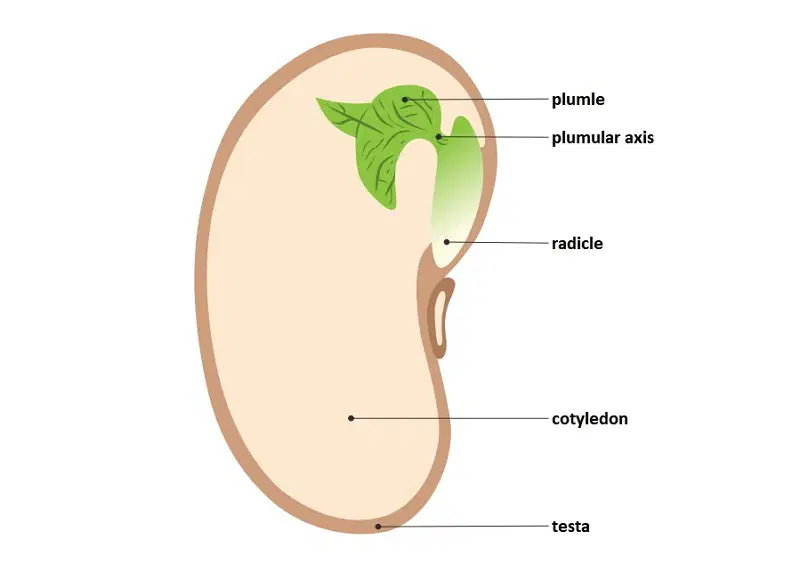
Which is NOT part of a seed?
seed coat
embryo
pollen
food store

Seed structure that grows become roots
radicle
plumule
cotyledon
endosperm

Seed structure that grows to become leaves
radicle
plumule
cotyledon
endosperm
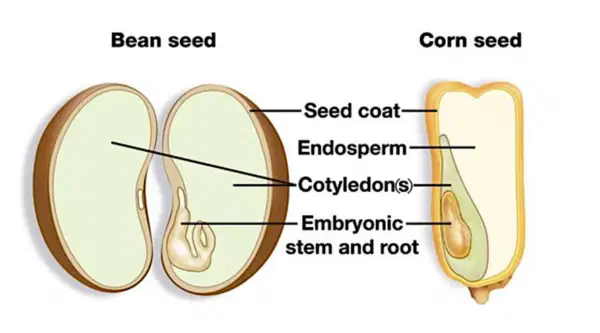
Seed structure that stores nutrients
radicle
plumule
testa
endosperm

Which of these is the first step in seed germination?
The radicle grows downward and develops root hairs.
The cotyledons open.
The seed coat splits and the radicle emerges.
The stem grows upward and pulls the cotyledons above the soil.
Which of these is the second step in seed germination?
The radicle grows downward and develops root hairs.
The cotyledons open.
The seed coat splits and the radicle emerges.
The stem grows upward and pulls the cotyledons above the soil.
Which of these is the third step in seed germination?
The radicle grows downward and develops root hairs.
The cotyledons open.
The seed coat splits and the radicle emerges.
The stem grows upward and pulls the cotyledons above the soil.
Which of these is the last step in seed germination?
The radicle grows downward and develops root hairs.
The cotyledons open.
The seed coat splits and the radicle emerges.
The stem grows upward and pulls the cotyledons above the soil.
What is the name for the part of the seed where the plant gets its energy to start growing?
embryo
cotyledon
germination
radicle
Wind-pollinated and insect-pollinated flowers have special adaptations for their pollinators.
True
False
Brightly colored flowers
Insect-pollinated flowers
Wind pollinated flowers
Long filaments dangling outside the flower
Insect-pollinated flowers
Wind-pollinated flowers

LOOK AT THE PICTURES
Which structure houses a plant's pollen prior to pollination?
A
B
C
D
What can you infer about a brightly-colored flower?
B
It has a greater chance of pollination than a dull-colored flower
A
It can only be pollinated by birds, not insects
C
Its pollen is probably the same bright color
D
It is probably pollinated by an insect that is attracted to that color
Pollen is to stamen as _____ is to pistil.
A
Ovule
B
Anther
C
Honeybee
D
Wind
Name the floral rewards provided to animals that help in pollination.
Nectar
Pollen Grains
Both 1 and 2
None of these

What helps pollen move form one plant to another?
hummingbirds
bees
butterflies
all of the above
After being pollinated, a flower will produce a _______.
seed
another flower
magic spell
bird
3. Why are flowers colourful?
To attract insects for pollination
To produce good seeds from the flowers
To produce good fruits
To help the plant making food
10. A plant has big anthers that dangle out from the flower on long filaments. It has a long and hairy stigma. The pollen grains are most probably transferred by
animals
wind
human
water

It is the spreading of seeds to other places.
germination
habitat
seed dispersal

How are dandelion seeds dispersed?
by animals
by explosion or bursting
by wind
The purpose of seed dispersal is for the seeds to __________.
germinate at the same time
move to the same place and grow
move further away from the parent plant
compete with one another for minerals in the soil
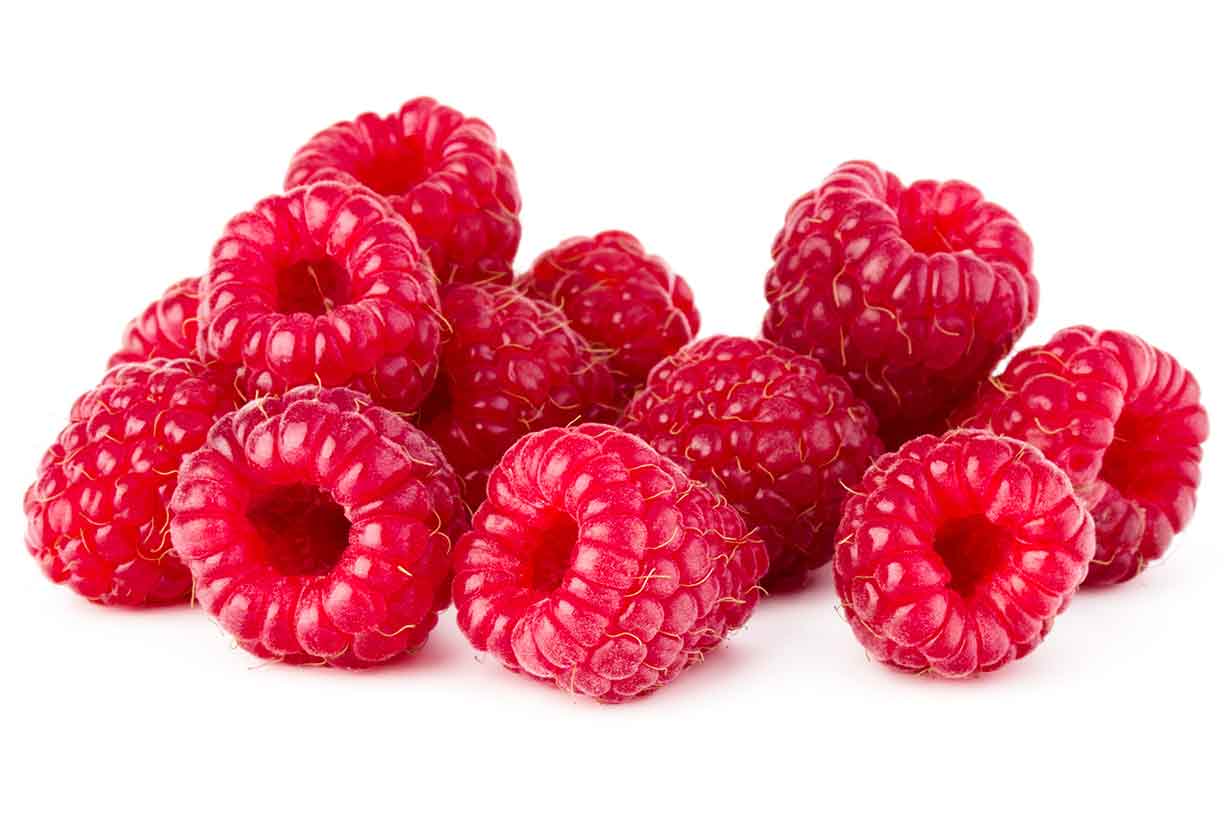
How are raspberries dispersed?
by animals
by explosion or bursting
by water
State the characters ideal for dispersion by wind.
Small, light and hair-like
Small, light and sharp hooks
Big, light and fibrous husk
Big, light and explode
The purpose of seed dispersal is for the seed to ______.
germinate at the same time
move further away from the parent plant
move to the same place and grow
compete with one another for minerals in the soil

How are stickers dispersed?
fire
wind
animal
water

Why are bur seeds able to be dispersed by animals?
It is light and has wing-like structure
It has hooks to hook onto the fur of animals
It has a fibrous husk that makes it float
It has dry pods that split open
All the following are the plants dispersal method except.......
By wind
By water
By animals
By explosion
By fire
Which particle holds the least amount of water?
Clay
Silt
Sand
What determines the amount of water the soil holds?
The mineral particles
Organic material
Organic Material adds what to the soil?
Minerals
AIr
Nutrients

Identify number 1.
Petal
Sepal
Stigma
Stamen
Identify number 2.
Petal
Sepal
Style
Stamen
Identify number 3.
Filament
Sepal
Style
Anther
Identify number 4.
Filament
Sepal
Style
Flower stalk
Identify number 5.
Ovary
Sepal
Style
Flower stalk
Identify number 6.
Ovary
Ovule
Style
Flower stalk
Identify number 7.
Ovary
Ovule
Style
Flower stalk
Identify number 8.
Ovary
Ovule
Style
Stigma
Identify number 9.
Ovary
Ovule
Style
Stigma

Identify the structure labelled #1.
Anther
Pistil
Style
Stamen
Identify the structure labelled #2.
Anther
Pistil
Style
Stamen

What is the scientific term for the female gametes in plants?
Ovule
Egg
Sperm
Pollen
What is the scientific term for the male gametes in plants?
Ovule
Egg
Sperm
Pollen
Pollen in plants is the same as ... in animals.
Ovule
Egg
Sperm
Pollen
Ovules in plants is the same as ... in animals.
Ovule
Eggs
Sperm
Pollen
This is where the pollen gets deposited.
Stigma
Filament
Style
Anther
This is where the pollen gets produced.
Stigma
Filament
Style
Anther
This is the structure that holds the anther.
Stigma
Filament
Style
Anther
This is the structure that connects the stigma to the ovary.
Stigma
Filament
Style
Anther
This is the structure that supports and displays the flower.
Petal
Sepal
Flower stalk
Ovary
The coloured parts that attracts animals to allow pollination.
Petal
Sepal
Flower stalk
Ovary
The part that covers the flower in the bud.
Petal
Sepal
Flower stalk
Ovary
The part that produces the effs and encloses the seeds when they form.
Petal
Sepal
Flower stalk
Ovary

