wayground logo

Free Printable Worksheets

Font size

S
M
L
XL
Worksheets

Unit 1

Total questions: 109

Worksheet time: 1hrs 16mins

Name
Class
Date
1.

What is a force that pulls objects towards each other?

a)

Tension

b)

Gravity

c)

Speed

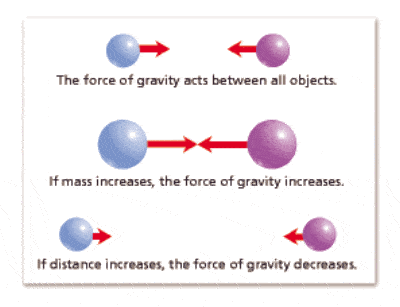
d)

Inertia

2.

Which variables affect gravity?

a)

mass

b)

speed

c)

distance

d)

volume

e)

weight

3.

More mass equals:

a)

less gravity

b)

less distance

c)

more gravity

d)

more distance

4.

Less mass equals:

a)

less gravity

b)

less distance

c)

more gravity

d)

more distance

5.

Less distance equals:

a)

less gravity

b)

less mass

c)

more gravity

d)

more mass

6.

More distance equals:

a)

less gravity

b)

less mass

c)

more gravity

d)

more mass

7.

What measures the amount of matter in an object?

a)

Weight

b)

Velocity

c)

Inertia

d)

Mass

8.

What measures the amount of force gravity applies on an object?

a)

Weight

b)

Velocity

c)

Inertia

d)

Mass

9.

Does your mass increase or decrease if you go to the moon?

a)

Increase

b)

Decrease

c)

It stays the same

10.

Does your weight increase or decrease if you go to the moon?

a)

Increase

b)

Decrease

c)

It stays the same

11.

Choose the image that has the most gravitational pull:

a)
b)
12.

Choose the image that has the most gravitational pull:

a)
b)
13.

Choose the image that has the most gravitational pull:

a)
b)
14.

If a rocket flies by close to a planet and becomes affected by that planet's gravity, what is most likely to happen?

a)

The rocket will be pushed away

b)

The rocket will be turned around in the opposite direction

c)

The rocket will be attracted down to the planet

d)

Nothing will happen

15.
A person would weigh less on on the Moon than on the Earth because . . .
a)
Moon has more mass, and therefore more gravity
b)
Moon has less mass, and therefore more gravity
c)
Moon has more mass, and therefore less gravity
d)
Moon has less mass and therefore less gravity
16.
An example of a gravitational interaction is that the Earth... 
a)
orbits the sun
b)
orbits the moon
c)
orbits other planets 
d)
None of the above 
17.
A person would weigh more on Jupiter than on the Earth because---
a)
Jupiter has less mass, and therefore less gravity
b)
Jupiter has more mass, and therefore less gravity.
c)
Jupiter has less mass, and therefore more gravity.
d)
Jupiter has more mass, and therefore more gravity
18.
__________holds all of the planets in orbit around the sun.
a)
Force
b)
Motion
c)
Weight
d)
Gravity
19.
Any object with mass has gravity.
a)
True
b)
Sometimes
c)
False
d)
Never
20.
Every object in the universe attracts every other object.
a)
True
b)
False
21.
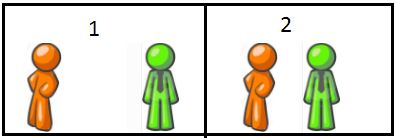
Which System has the greater gravitational pull between the two objects?
a)
System 1
b)
System 2
c)
Same: there is no gravitational attraction between the two objects
22.

As mass increases, what happens to gravitational force?

a)

increases

b)

decreases

c)

stays the same

23.

As distance increases, what happens to gravitational force?

a)

increases

b)

decreases

c)

stays the same

24.

Is gravity a push, a pull, or both?

a)

push

b)

pull

c)

both

25.
The Earth's axis is tilted _____ degrees.
a)
23.5
b)
25.3
c)
30.2
d)
24
26.
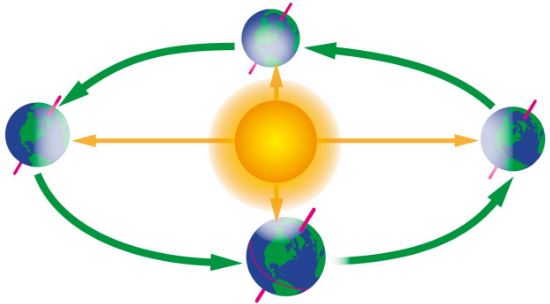
At position A, which hemisphere would have summer?
a)
Northern hemisphere
b)
Southern hemisphere
27.
What happens when the area in which you live tilts away from the sun?
a)
It is summer.
b)
It is spring.
c)
It is winter.
d)
It is fall.
28.
The term equinox means....
a)
equal amount of day light and equal amount of night
b)
Equal amount of winter and summer
c)
Equal amounts of hot dogs for everyone
d)
The longest day of the year
29.
What do June 21 and December 21 have in common?
a)
equinox dates
b)
the moon is full
c)
solstice dates
d)
the cold fronts blow in
30.
What is the longest day of the year?
a)
winter solstice
b)
summer solstice
c)
fall equinox
d)
spring equinox
31.
Why is the Equator warmest?
a)
Because it is closest to the sun.
b)
Because it receives the most direct sunlight
c)
Because no clouds form here.
d)
Because it is far from the sun
32.

In spring/fall, the axis of the earth is pointed away or toward the sun?

a)

towards

b)

Neither away or toward

c)

away

33.
Which season is taking place in the Southern Hemisphere in Position 1?
a)
Winter
b)
Spring
c)
Summer
d)
Fall
34.
Which season is taking place in the Northern Hemisphere in Position 1?
a)
Winter
b)
Spring
c)
Summer
d)
Fall
35.
Which season is taking place in the Northern Hemisphere in Position 2?
a)
Winter
b)
Spring
c)
Summer
d)
Fall
36.
Which season is taking place in the Northern Hemisphere in Position 3?
a)
Winter
b)
Spring
c)
Summer
d)
Fall
37.
Which season is taking place in the Northern Hemisphere in Position 3?
a)
Winter
b)
Spring
c)
Summer
d)
Fall
38.
Which season is taking place in the Northern Hemisphere in Position 4?
a)
Winter
b)
Spring
c)
Summer
d)
Fall
39.
What are the reasons for the season?
a)
Earth's tilt & rotation
b)
Earth's tilt & revolution
c)
Earth's rotation & rovolution
d)
Earth's tilt & resolution
40.
The hemisphere where you live 
a)
equator
b)
southern
c)
northern
d)
eastern
41.
Where is the equator?  
a)
at the North Pole
b)
halfway between the North and South Poles
c)
at the South Pole
d)
in the Western hemisphere
42.
What causes more heat,  indirect sunlight or direct sunlight?
a)
indirect
b)
direct
43.
Why do globes lean sideways?
a)
To allow them to spin easier.
b)
To demonstrate the tilt of Earth's axis.
c)
To demonstrate the effects of gravity.
d)
To demonstrate day and night.
44.
Why does the area around the equator stay the same temperature all year?
a)
The equator rotates slower than the poles.
b)
The equator remains the same distance from the sun.
c)
The equator always receives direct sunlight.
d)
The equator has 18 hour days.
45.
What would seasons be like if Earth's axis were straight up and down?
a)
Seasons would be the same.
b)
Seasons would be more extreme.
c)
There would be no seasons.
46.
Which seasons have an equal amount of daylight and darkness?
a)
Spring and Fall
b)
Winter and Summer
c)
Winter and Spring
d)
Summer and Fall
47.
The Northern Hemisphere gets __________ sunlight in the winter, which leads to _________ temperatures.
a)
less direct, hotter
b)
less direct, colder
c)
more direct, hotter
d)
more direct, colder
48.
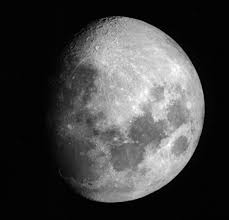
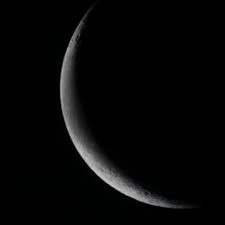
Name the moon phase
a)
waning crescent
b)
waxing crescent
c)
waning gibbous
d)
waxing gibbous
49.
Name the moon phase
a)
waning crescent
b)
waxing crescent
c)
waning gibbous
d)
waxing gibbous
50.
Name the moon phase
a)
waning crescent
b)
waxing crescent
c)
waning gibbous
d)
waxing gibbous
51.
Name the moon phase
a)
waning crescent
b)
waxing crescent
c)
waning gibbous
d)
waxing gibbous
52.
Name the moon phase
a)
waning crescent
b)
waxing crescent
c)
waning gibbous
d)
waxing gibbous
53.
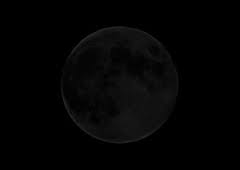
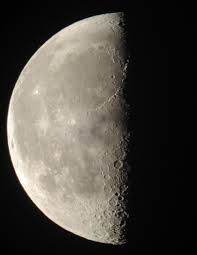
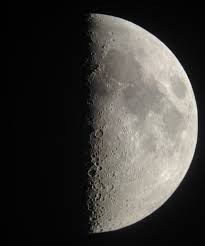
Name the moon phase
a)
First Quarter
b)
Last Quarter
c)
New Moon
d)
Full Moon
54.
Name the moon phase
a)
First Quarter
b)
Last Quarter
c)
New Moon
d)
Full Moon
55.
Name the moon phase
a)
First Quarter
b)
Last Quarter or (third quarter)
c)
New Moon
d)
Full Moon
56.
Name the moon phase
a)
First Quarter
b)
Last Quarter
c)
New Moon
d)
Full Moon
57.
How much of the moon is always lit?
a)
can't tell
b)
always changes
c)
half
d)
3/4
58.
Name the moon phase that would come AFTER this moon.
a)
waning crescent
b)
waxing crescent
c)
waning gibbous
d)
waxing gibbous
59.
What moon phase came right BEFORE this one?
a)
First Quarter
b)
Last Quarter
c)
New Moon
d)
Full Moon
60.
How many phases does the moon go through?
a)
4
b)
8
c)
10
d)
16
61.
As the moon's shape appears to get smaller, we say that the moon is _.
a)
swelling
b)
waxing
c)
waning
d)
disappearing
62.
Phases of the moon in which the moon appears to be getting larger are referred to as _.
a)
waxing
b)
waning
c)
new
d)
eclipse
63.
The cycle of the moon lasts about a _.
a)
day
b)
year
c)
week
d)
month
64.
Name the moon phase that would come AFTER this moon.
a)
waning crescent
b)
waxing crescent
c)
waning gibbous
d)
waxing gibbous
65.
What part of the moon do we see from Earth?
a)
all of it
b)
the same side
c)
none of it
d)
only one quarter
66.
How long is a lunar month?  
a)
30
b)
29.5
c)
27
d)
27.3
67.
Which phase of the moon is represented in this diagram?
a)
new moon
b)
first quarter
c)
full moon
d)
last quarter/third quarter
68.
What moon phase is shown at position #3?
a)
Last Quarter
b)
Full Moon
c)
New Moon
d)
First Quarter
69.
What moon phase is shown in position 8
a)
waxing crescent
b)
waxing gibbous
c)
waning gibbous
d)
waning crescent
70.
If the current moon phase is at position 2, where would it be in two weeks?
a)
full moon
b)
waning gibbous
c)
third quarter
d)
back to position 2
71.
Approximately how much time passes between the new moon and full moon?
a)
one month
b)
two weeks
c)
3 days
d)
24 hours�
72.
The moon is shrinking/getting smaller and light is on the left.
a)
Waxing
b)
Waning
73.
The moon is growing/getting bigger and light is on the right.
a)
Waxing
b)
Waning
74.

What moon phase is shown at position #6?

a)

Last Quarter

b)

Waxing Crescent

c)

New Moon

d)

First Quarter

e)

Waning Gibbous

75.
When does a lunar eclipse occur?
a)
At night
b)
When the moon's shadow is on the earth
c)
when the moon comes between the sun and earth
d)
During the day
76.
During a lunar eclipse, what color does the moon appear?
a)
Black
b)
Red-orange
c)
Yellow-green
d)
White
77.
A solar eclipse only happens during a ________ moon.
a)
New
b)
Cresent
c)
Gibbous
d)
Full
78.
A lunar eclipse only happens during a ________ moon.
a)
New
b)
Cresent
c)
Gibbous
d)
Full
79.
What do we call the sun's outer atmosphere that you see during a solar eclipse?
a)
an umbra
b)
a corona
c)
an orbit
d)
a shadow
80.
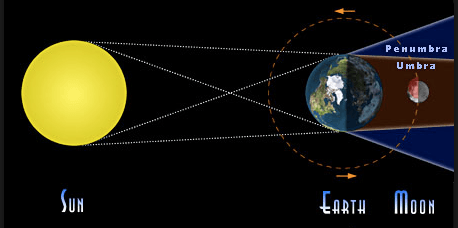
What is the darkest inner part of the shadow cone called, where a total eclipse can be viewed.
a)
Total
b)
Umbra
c)
Penumbra
81.
What is the larger outer lighter part of the shadow cone called, where a partial eclipse can be viewed?
a)
Partial
b)
Umbra
c)
Penumbra
82.
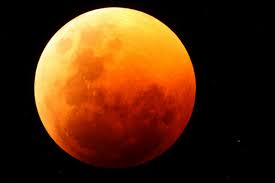
This image is an example of 
a)
Lunar Eclipse
b)
New Moon
c)
Solar Eclipse
d)
Full Moon
83.
Which type of eclipse is shown in this picture?
a)
Solar Eclipse
b)
Orbit
c)
Lunar Eclipse
d)
Total Eclipse
84.
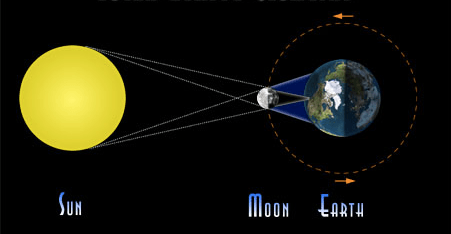
Which type of eclipse is shown in the diagram?
a)
Solar Eclipse
b)
Lunar Eclipse
c)
Total Eclipse
d)
Partial Eclipse
85.
We do NOT have a solar or lunar eclipse each month because...
a)
The tilt of the moon's orbit is at 5 degrees
b)
The moon is too small
c)
The moon's orbital distance changes
d)
All choices
86.
What type of solar eclipse is this?
a)
Total
b)
partial
c)
annular
87.
What type of eclipse is this?
a)
total lunar eclipse
b)
partial lunar eclipse
c)
total solar eclipse
d)
partial solar eclipse
88.
What type of eclipse is this?
a)
Total lunar eclipse
b)
Total solar eclipse
c)
Partial lunar eclipse
d)
Partial solar eclipse
89.
Which body has the greater effect on Earth's tides?
a)
Sun
b)
Saturn
c)
Moon 
d)
Venus
90.

Wha type of tide would this arrangement of earth-moon-sun create?

a)

full moon tide

b)

new moon tide

c)

neap tide

d)

spring tide

91.
What type of tides would this arrangement of earth-moon-sun create?
a)
neap tide
b)
spring tide
c)
new moon tide
d)
full moon tide
92.
What causes tides?
a)
gravity
b)
wind
c)
spring
d)
neap
93.
If tides alternate from high to low and there are two of each type of tide a day, about how many hours will generally be between each different tide?
a)
2 hours
b)
6 hours
c)
12 hours
d)
24 hours
94.
How many low tides and high tides happen in a day?
a)
1 low tide, 1 high tide
b)
4 low tides, 4 high tides
c)
3 low tides, 3 high tides
d)
2 low tides, 2 high tides
95.
The Moon has a greater influence on Earth tides than the Sun because...
a)
it is smaller than the Sun
b)
it revolves around the Earth
c)
it is closer to the Earth
96.

What planet is closest to the sun?

a)

Mars

b)

Earth

c)

Venus

d)

Mercury

97.

What are the four inner planets?

a)

Earth, Uranus, Mercury, Venus

b)

Mercury Venus Earth Saturn

c)

Mars, Earth , Mercury, Venus

d)

Mars, Earth, Neptune, Mercury

98.

Which planet is farthest from the sun?

a)

Neptune

b)

Jupiter

c)

Mercury

d)

Uranus

99.

What are the outer planets?

a)

Jupiter, Saturn, Earth, Neptune

b)

Saturn, Neptune, Mars, Uranus

c)

Uranus, Saturn, Neptune, Jupiter

d)

Mercury, Venus, Earth, Mars

100.

What is at the center of our solar system?

a)

asteroid belt

b)

Earth

c)

sun

d)

moon

101.

Which planets are made of solid surfaces and rocky cores?

a)

terrestrial

b)

gas giants

c)

outer planets

102.

Which planets are mostly made of gases?

a)

terrestrial

b)

gas giants

c)

inner planets

103.
Which planet is the largest?
a)
Jupiter
b)
Saturn
c)
Uranus
d)
Neptune
104.
Which of the following is NOT true of all the inner planets?
a)
They are made of solid rock.
b)
They are called gas giants.
c)
They do not have rings.
d)
They have impact craters.
105.
Very few moons
a)
Inner planets
b)
Outer planets
c)
Both
d)
Mercury
106.
Gas giants
a)
Inner planets
b)
Outer planets
c)
Both
d)
Venus
107.
Shorter revolutions
a)
Inner planets
b)
Outer planets
c)
Both
d)
Neptune
108.
Terrestrial planets
a)
Inner planets
b)
Outer planets
c)
Both
d)
Asteroid belt
109.
What is the correct order of the planets from the sun? 
a)
Mercury, Venus, Earth, Mars, Jupiter, Saturn, Uranus, Neptune
b)
Mercury, Earth, Venus, Mars, Jupiter, Saturn, Uranus, Neptune
c)
Mercury, Venus, Earth, Mars, Saturn, Jupiter, Uranus, Neptune. 
d)
Mars, Venus, Earth, Mercury, Jupiter, Saturn, Uranus, Neptune.