Worksheets
Waves Unit 1
Total questions: 114
Worksheet time: 58mins



Which type of wave can travel through space?
light wave
matter wave
sound wave
water wave

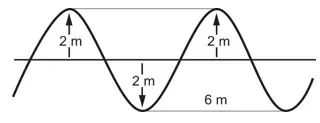
The diagram shows some properties of waves. Which property of a wave is shown by F?
period
frequency
amplitude
wavelength
A flashlight shines on a large black towel. What process is demonstrated?
absorption of light
diffraction of light
reflection of light
transmission of light
Which statement best shows that waves carry energy?
Sounds can be recorded.
A rainbow shows a spectrum of colors.
You feel vibrations if loud sounds are played.
Light shining through some trees makes shadows.
Chang noticed that it took 2 s for a wave to pass the end of the pier on which he was sitting. What property of a wave did he measure?
period
frequency
amplitude
wavelength
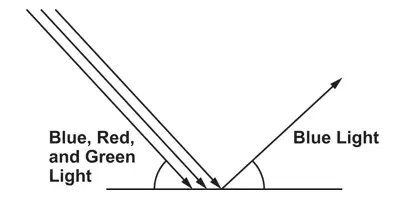
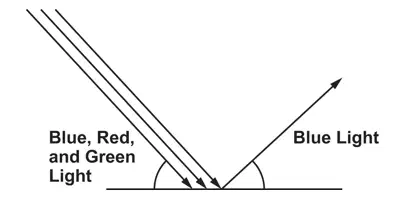
A light shines on a blue wall. Which explains what happens with the light as it reaches the wall?
The wall absorbs all of the colors of the spectrum and reflects none.
The wall reflects all of the colors of the spectrum and absorbs none.
The wall absorbs red, orange, green, yellow, indigo, and violet and reflects blue light.
The wall absorbs blue light and reflects red, orange, green, yellow, indigo, and violet.
Waves move energy from one place to another. Which statement is true about how waves move energy?
A transverse wave transfers energy in the direction of vibration.
A wave traveling through a medium transfers energy but not matter.
A wave traveling through a medium transfers both matter and energy.
A longitudinal wave transfers energy in a direction perpendicular to the direction of vibration.

The wavelength of a wave is less than 450 nanometers. Which color would this wave most likely appear?
orange
red
violet
yellow
Which describes the number of waves that pass a given point in a set period of time?
amplitude
energy
frequency
wavelength
Which of the following statements is true for sound waves?
They can travel through a vacuum.
They always have the same frequency.
They move at the same speed in every medium.
They can be transmitted though solids, liquids, and gases.
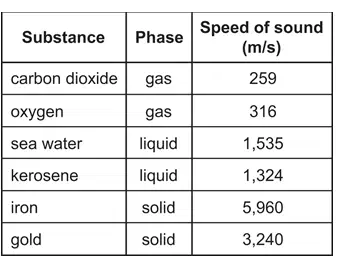
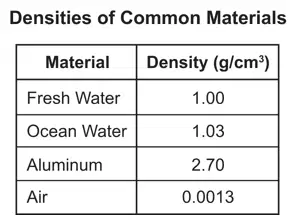
Which statement can be made based on these data?
Sound waves move slowest through liquids and fastest in gases.
Sound waves move fastest through solids and slowest through gases.
The speed of a sound wave increases as it moves from one medium to another.
The speed of a sound wave decreases as it moves from one medium to another.
Which describes the amplitude of a wave?
A wave is 5 meters long.
A wave has a height of 5 meters.
A wave has a frequency of 5 hertz.
A wave takes 5 minutes to pass a point.
What is true of all transverse waves and longitudinal waves?
They must travel through a medium.
They can travel through empty space.
They move energy from one place to another.
They move particles from one place to another.
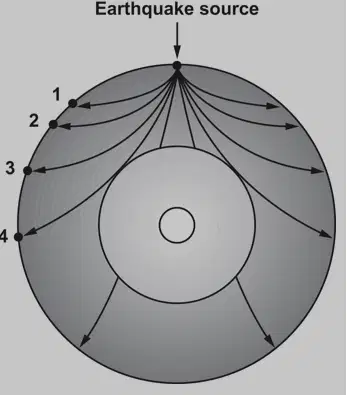


What can happen to light rays when they bend?
reflection
absorption
refraction
What are ways objects can be grouped based on how much light they let pass through them?
opaque
transparent
translucent
solid
What do we call the energy that travels from the Sun in the form of waves?
electric energy
magnetic energy
solar electric energy
electromagnetic energy
Why should you wear light colored clothes on a very hot day?
Dark colors reflect most light and stay cooler.
Light colors reflect most light and stay cooler.
Dark colors absorb most light and stay cooler.
Light colors absorb most light and stay cooler.
What happens when a laser is pointed at a mirror?
reflection
dispersion
refraction
absorption
What happens when a laser is pointed at a lens?
reflection
dispersion
absorption
refraction
What happens when a laser is pointed at black paper?
reflection
dispersion
absorption
refraction
What happens when light passes through water?
reflection
dispersion
absorption
refraction
What is opaque?
when light cannot pass through an object
when light changes direction between one medium and another
when a surface throws back light without absorbing
when light passes through a transparent or translucent object
What is reflection?
a surface throws back light without absorbing it
light changes direction between one medium and another
light is separated into equal amounts of visible light
light spreads out after it passes through another medium
What is dispersion?
a surface throws back light without absorbing it
light changes direction between one medium and another
light is separated into equal amounts of visible light
light spreads out after it passes through another medium
What is diffusion?
a surface throws back light without absorbing it
light changes direction between one medium and another
light is separated into equal amounts of visible light
light spreads out after it passes through another medium