wayground logo

Free Printable Worksheets

Font size

S
M
L
XL
Worksheets

Cell Cycle

Total questions: 108

Worksheet time: 1hrs 8mins

Name
Class
Date
1.
In mitosis, the two resulting cells are
a)
different from the starting cell and identical to each other.
b)
different from the starting cell and different from each other.
c)
identical to the starting cell and different from each other.
d)
identical to the starting cell and identical to each other.
2.
Fruit fly body cells have 8 chromosomes. After mitosis, you would expect a resulting fruit fly daughter cell to have ...
a)
16 chromosomes.
b)
46 chromosomes.
c)
8 chromosomes.
d)
4 chromosomes.
3.
In which type of cells will mitosis occur?
a)
egg cells
b)
sperm cells
c)
jail cells
d)
Body cells except the sperm and egg cells
4.
After meiosis is complete, the new cells:
a)
are all identical
b)
are all different
c)
are half identical and half different
d)
are all stretched out
5.
How many daughter cells are produced from meiosis ?
a)
10
b)
6
c)
4
d)
2
6.
The female sex cell is called
a)
zygote
b)
sperm
c)
fertilization
d)
egg
7.
The male sex cell is called
a)
egg
b)
zygote
c)
sperm
d)
mitosis
8.
Humans have how may chromosomes ?
a)
112
b)
46
c)
8
d)
67
9.

Name that process

a)

Mitosis

b)

Meiosis

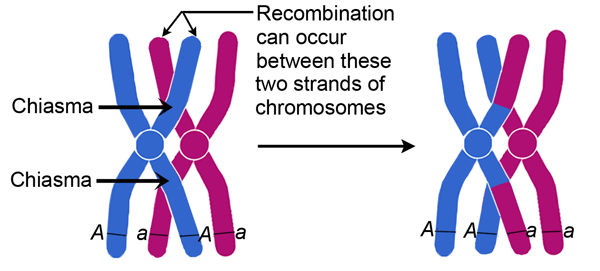
c)

Mutation

d)

Cell Cycle

10.
During which phase of the meiotic cell cycle does DNA Replication occur?
a)
Interphase 
b)
Prophase 
c)
Metaphase 
d)
Telophase
11.
In Meiosis if the parent cells has 40 chromosomes, then how many will the daughter cells have 
a)
40
b)
10
c)
20
d)
18
12.
The stages of mitosis in order
a)
Metaphase, Anaphase, Prophase, Telophase
b)
Prophase, Anaphase, Metaphase, Telophase
c)
Prophase, Metaphase, Anaphase, Telophase
d)
Anaphase, Prophase, Telophase, Metaphase
13.
A cat has a total of 38 chromosomes in its body cells.  How many in its gametes?
a)
38
b)
19
c)
76
d)
10
14.
DNA is replicated during the ______ phase of the cell cycle.
a)
G1
b)
Synthesis
c)
G2
d)
G0
15.
Structure B is pointing to the _____. 
a)
chromosome
b)
centromere
c)
DNA
d)
chromatid
16.
Structure C is pointing to one ____. 
a)
sister chromatid
b)
chromosome
c)
centromere
d)
gene
17.

How many chromosomes are normally found in human body cells?

a)

46

b)

23

c)

26

d)

44

18.
Identify the phase of mitosis.
a)
prophase
b)
metaphase
c)
anaphase
d)
telophase
19.
Which phase comes NEXT?
a)
prophase
b)
metaphase
c)
anaphase
d)
telophase
20.
a)
Anaphase
b)
Cytokinesis
c)
Telophase
d)
Metaphase
21.
a)
Cytokinesis
b)
Interphase
c)
Anaphase
d)
Metaphase
22.
a)
Anaphase
b)
Cytonkinesis
c)
Interphase
d)
Prophase
23.
a)
Cytokinesis
b)
Anaphase
c)
Telophase
d)
Prophase
24.
A process where one cell forms two identical daughter cells is called...
a)
cell cycle
b)
cell division (mitosis)
c)
interphase
d)
cytokinesis
25.
During interphase the cell ___________.
a)
divides into two cells
b)
divides its nucleus
c)
replicates its DNA
d)
replicates the organelles within the cell
26.
What does DNA stand for?
a)
DeNatured Acid
b)
DomiNant Acid
c)
DeoxyriboNucleic Acid
d)
DiriboNucleic Acid
27.
Replication is when __________.
a)
the cell makes a copy of its DNA in nucleus 
b)
the cell forms 2 identical cells
c)
the cell produces 2 sets of organelles
d)
the cell continues to complete the same function
28.
Where does replication occur within the cell?
a)
in the cytoplasm
b)
in the nucleus 
c)
in the ribosome
d)
in the chromatin
29.
After interphase is completed the cell moves into the next stage of the cell cycle called _________.
a)
anaphase
b)
cytokinesis
c)
metaphase
d)
mitosis
30.
Mitosis is made up of how many phases?
a)
4
b)
5
c)
6
d)
7
31.
What is one half or one rod of the condensed chromatin called?
a)
DNA
b)
chromatin
c)
chromatid
d)
chromosome
32.
The following describes __________ during mitosis. The chromatin condenses and spindle fibers form at each side of the cell. The nuclear membrane breaks apart.
a)
prophase
b)
metaphase
c)
anaphase
d)
telophase
33.
The following describes ________  during mitosis. The chromosomes line up along the center of the cell and the spindle fibers attach to each chromosome at the centromere.
a)
prophase
b)
metaphase
c)
anaphase
d)
telophase
34.
The following describes _________ during mitosis. The spindle fiber splits the centromere and the chromatids move to opposite sides of the cell.
a)
prophase
b)
metaphase
c)
anaphase
d)
telophase
35.
What is the correct term for "the basic building block of all living organisms"?
a)
cell
b)
cell cycle
c)
cell plate
d)
centriole
36.
What is the correct term for "form during prophase of mitosis and attach to chromosomes at the centromere to pull them apart during cell division"?
a)
centriole
b)
nucleus
c)
spindle fibers
d)
cytokinesis
37.

What is the image above:

a)

Chromosome

b)

Chromotid

c)

Centromere

d)

Centriole

38.

What stage of mitosis is depicted here

a)

Prophase

b)

Metaphase

c)

Anaphase

d)

Telophase

39.

What stage of mitosis is depicted here

a)

Prophase

b)

Metaphase

c)

Anaphase

d)

Telophase

40.

What stage of mitosis is depicted here

a)

Prophase

b)

Metaphase

c)

Anaphase

d)

Telophase

41.

The picture above represents what happens after mitosis which is

a)

Interphase

b)

Cytokinesis

c)

Metaphase

d)

G1

42.

Nuclear membrane breaks down, spindle fibers form describes:

a)

Prophase

b)

Anaphase

c)

Metaphase

d)

Telophase

43.

Cell splits into two.

a)

Metaphase

b)

Cytokinesis

c)

Interphase

d)

Prophase

44.
Identify the phase:
a)
Metaphase I
b)
Metaphase II
c)
Anaphase I
d)
Anaphase II
45.
Identify the phase.
a)
Metaphase I
b)
Metaphase II
c)
Anaphase I
d)
Anaphase II
46.
Identify the phase:
a)
Metaphase I
b)
Metaphase II
c)
Anaphase I
d)
Anaphase II
47.
Identify the process.
a)
Mitosis
b)
Meiosis I
c)
Meiosis II
d)
Interphase
48.
After meiosis II the daughter cells will contain ____ chromosomes if the original cell contained 78.
a)
78
b)
39
c)
23
d)
46
49.
Which of the following cells is a gamete?
a)
egg
b)
bone
c)
heart
d)
muscle
50.
The fertilized egg is termed a/an _____.
a)
gamete
b)
allele
c)
homolog
d)
zygote
51.
In mitosis cells are genetically _______, but in meiosis cells are genetically ______.
a)
diverse, identical
b)
identical, diverse/different
52.

Is the following cell diploid or haploid?

a)

Diploid

b)

Haploid

53.
When does replication of chromosomes occur in animal cell meiosis?
a)
Before Meiosis I and Meiosis II
b)
Before Meiosis II Only
c)
Before Meiosis I Only
d)
During Prophase I and Prophase II
54.
Identify the phase.
a)
Telophase I
b)
Telophase II
c)
Metaphase I
d)
Metaphase II
55.

A type of cell division that results in four daughter cells each with half the number of chromosomes of the parent cell, as in the production of gametes

a)

meiosis

b)

mitosis

c)

budding

d)

cell cycle

56.

1n indicates that the cell is ____.

a)

Diploid

b)

Haploid

57.

Mitosis makes sure that all daughter cells are _____.

a)

genetically identical, diploid

b)

genetically identical, haploid

c)

genetically diverse, diploid

d)

genetically diverse, haploid

58.

What kind of cells are made in MEIOSIS?

a)

Haploid Gametes

b)

Diploid Somatic Cells

c)

Skin Cells

d)

Liver Cells

59.
When an area of a chromatid is exchanged with the matching area on a chromatid of its homologous chromosome, _________________ occurs
a)
crossing over
b)
mutagenesis
c)
hybridization
d)
fertilization
60.
If the Diploid number of Carrots is 18, the haploid number is
a)
18
b)
9
c)
27
d)
36
61.
The process of crossing over occurs in what phase of meiosis?
a)
anaphase 1
b)
prophase 1
c)
prophase 2
d)
telophase 1
62.
The cells produced via meiosis are called:
a)
sex cells
b)
somatic cells
c)
body cells
d)
skin cells
63.
Why do we need meiosis?
a)
To double the number of chromosomes going into sex cells
b)
To halve the number of chromosomes going into sex cells
c)
To triple the number of chromosomes going into sex cells
d)
To not change the number of chromosomes going into sex cells
64.
If a somatic (body) cell in a butterfly contains 24 chromosomes, a butterfly egg would contain
a)
3
b)
6
c)
12
d)
24
65.
The result of meiosis is:
a)
two diploid cells
b)
two haploid cells
c)
four diploid cells
d)
four haploid cells
66.
What causes genetic variation in meiosis?
a)
chromosomes lining up
b)
crossing over of chromosomes
c)
separation of chromosomes
d)
chromosomes pulling apart
67.
The purpose of meiosis is to form ________ cells.
a)
body
b)
sex
c)
somatic
d)
brain
68.

The chromosomes that pair up during meiosis, are called __________ chromosomes.

a)

heterozygous

b)

asexual

c)

homologous pairs

d)

genes

69.
How many daughter cells are produced at the end of meiosis?
a)
1
b)
2
c)
3
d)
4
70.
What phase is represented?
a)
metaphase 1
b)
metaphase 2
c)
anaphase 1
d)
anaphase 2
71.
What phase is represented?
a)
metaphase 1
b)
metaphase 2
c)
anaphase 1
d)
anaphase 2
72.
What process, and which type of resulting cells are represented?
a)
mitosis, gametes
b)
mitosis, body cells
c)
meiosis, gametes
d)
meiosis, body cells
73.
Meiosis makes sperm and egg cells. In humans, sperm and egg cells each have _____ chromosomes. Therefore a fertilized human egg cell (sperm and egg cell combined) would create a cell with _____ chromosomes.
a)
23, 46
b)
46, 23
c)
2, 4
d)
50, 100
74.
What is one of the advantages, why is it better to reproduce sexually versus asexually?
a)
survival of the fittest
b)
overproduction
c)
genetic variation
d)
cloning
75.
According to the chromosome theory of inheritance, what are carried from parents to their offspring on chromosomes?
a)
Genes
b)
Spindle Fibers
c)
Centrioles
d)
Cytoplasm
76.

What phase of Meiosis is this?

a)

Telophase I

b)

Anaphase I

c)

Anaphase II

d)

Telophase II

77.

What phase is the picture showing?

a)

Metaphase I

b)

Metaphase II

c)

Prophase II

d)

Anaphase I

78.

How many chromosomes are in an egg or sperm cell at the end of Meiosis?

a)

23

b)

46

c)

64

d)

32

79.

In what phase is the DNA of the cell replicated or copied?

a)

Interphase

b)

Prophase I

c)

Telophase I

d)

Metaphase I

80.

Crossing over occurs in what phase of Meiosis?

a)

Prophase I

b)

Prophase II

c)

Metaphase I

d)

Interphase

81.

What part of the cell disappears during Prophase and reappears in Telophase?

a)

nuclear membrane

b)

cell membrane

c)

chromosomes

82.

Homologous pairs line up in the middle of the cell in what phase of Meiosis?

a)

Metaphase I

b)

Metaphase II

c)

Mitosis

d)

Prophase II

83.

Genetic information is transferred to homologous pairs during what?

a)

Cytokinesis

b)

Crossing over

c)

Interphase

84.

What phase of Meiosis is the picture showing?

a)

Metaphase I

b)

Telophase I

c)

Anaphase II

d)

Telophase II

85.

What phase is in the picture?

a)

Telophase I

b)

Telophase II

c)

Prophase I

d)

Metaphase II

86.

What phase is shown in the picture?

a)

Prophase I

b)

Prophase II

c)

Telophase II

d)

Anaphase I

87.

What phase is in the picture?

a)

Anaphase I

b)

Anaphase II

c)

Telophase I

d)

Metaphase II

88.

What phase is in the picture?

a)

Metaphase 1

b)

Metaphase 2

c)

Prophase 1

d)

Prophase 2

89.
A human usually has ______ chromosomes in their body cells.
a)
6
b)
22
c)
4
d)
46
90.
Asexual reproduction and mitosis occur in...
a)
Body Cells
b)
Sex Cells or Gametes
91.
How many daughter cells are produced at the end of mitosis?
a)
1
b)
2
c)
3
d)
4
92.
How many chromosomes are in the new cells of mitosis?
a)
46
b)
23
93.
How many daughter cells are produced at the end of meiosis?
a)
1
b)
2
c)
3
d)
4
94.
How many chromosomes are in the new cells of meiosis?
a)
46
b)
23
95.
Before mitosis or meiosis can begin, DNA must go through Interphase. This is when...
a)
DNA replicates
b)
DNA splits
c)
DNA forms chromosomes
d)
Chromosomes cross over
96.
In meiosis, Prophase 1 is when chromosomes...
a)
cross over
b)
mutate
c)
hybridize
d)
fertilize
97.
What causes genetic variation in meiosis?
a)
chromosomes lining up
b)
crossing over of chromosomes
c)
separation of chromosomes
d)
chromosomes pulling apart
98.
What is one reason why we need meiosis?
a)
To double the number of chromosomes going into sex cells
b)
To halve the number of chromosomes going into sex cells
c)
To triple the number of chromosomes going into sex cells
d)
To not change the number of chromosomes going into sex cells
99.
What phase is  shown in the picture?
a)
anaphase 1
b)
anaphase 2
c)
metaphase 1
d)
telophase 1
100.
This image shows chromosomes during Prophase 1. Which of the following correctly describes the process shown?
a)
segregation of sister chromatids
b)
condensation and segregation of alleles
c)
mutationin which the DNA content of the gene is altered
d)
crossing - over in which alleles are exchanged
101.
The correct order of the phases of mitosis and meiosis could be abbreviated as:
a)
MAPT
b)
PAMT
c)
TPAM
d)
PMAT
102.
The nuclear membrane dissolves during
a)
Prophase
b)
Metaphase
c)
Anaphase
d)
Telophase
103.
What phase is shown here?
a)
Prophase II
b)
Metaphase I
c)
Metaphase II
d)
Anaphase I
104.
What phase is shown here?
a)
Anaphase II
b)
Metaphase I
c)
Anaphase I
d)
Telophase II
105.
What phase is shown here?
a)
Metaphase II
b)
Telophase I
c)
Telophase II
d)
Metaphase I
106.
What phases is shown here?
a)
Prophase II
b)
Prophase I
c)
Anaphase II
d)
Interphase I
107.
What phase is shown here?
a)
Anaphase I
b)
Prophase I
c)
Metaphase II
d)
 Metaphase I
108.
What phase is shown here?
a)
Telophase I
b)
Metaphase II
c)
Telophase II
d)
Anaphase I