wayground logo

Free Printable Worksheets

Font size

S
M
L
XL
Worksheets

Plants Unit Review

Total questions: 106

Worksheet time: 1hrs 11mins

Name
Class
Date
1.
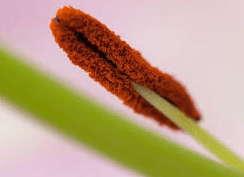
Small grains that contain a plant's male reproductive cells.
a)
stamen
b)
pollen
c)
anther
d)
stigma
2.
Synonym for not active.
a)
dormant
b)
sterile
c)
spry
d)
mobile
3.
Small leaf-like structures forming an outer circle at the base of a flower.
a)
petals
b)
sepal
c)
anthers
d)
dicots
4.
The part of a flower that produces the male reproductive cells.
a)
anther
b)
style
c)
stigma
d)
filament
5.
Their leaves are not veined, and the flower parts are usually in fours or fives.
a)
monocot
b)
dicot
c)
angiosperm
d)
gymnosperm
6.
Plants that produce their seeds in wood-like cones.
a)
gymnosperms
b)
legumes
c)
deciduous 
d)
conifers
7.
Brightly colored parts of flowers that attract insects.
a)
petals
b)
pistils
c)
stamen
d)
filaments
8.
They enclose the egg cells inside the ovaries.
a)
ovules
b)
anther
c)
seeds
d)
angiosperms
9.
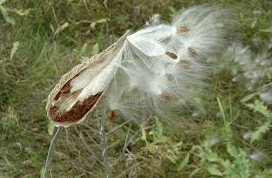
When a seed sprouts and begins the early growth of a young plant.
a)
germination
b)
pollination
c)
seed dispersal
d)
fertilization
10.
All of the following are examples of seed disbursement except:
a)
wind
b)
volcanic eruptions
c)
physical movement (rolling)
d)
animals feces
11.
Which conducting tissue transports and helps circulate water and dissolved minerals from the roots to the leaves of a plant? 
a)
xylem
b)
phloem 
12.
Tell whether it is monocot or dicot.
a)
Monocot
b)
Dicot
13.

Liverworts and Hornworts are kinds of Bryophytes.

a)

True

b)

False

14.

Cycads, ginkgo, and conifers are examples of __________.

a)

Angiosperm

b)

Gymnosperm

c)

Pteridophytes

d)

Bryophytes

15.
Which part of the plant makes the food?
a)
roots
b)
stem
c)
leaf
d)
flower
16.
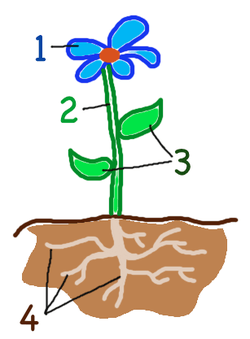
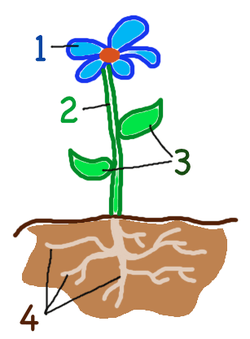
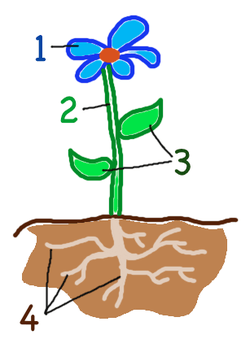
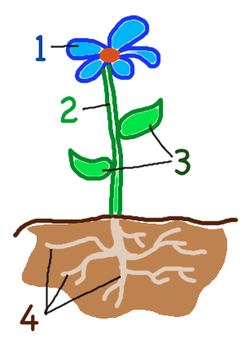
What part of the plant is #1?
a)
flower
b)
stem
c)
root
d)
leaf
17.
What part of the plant is #2?
a)
leaf
b)
flower
c)
stem
d)
root
18.
What part of the plant is #3?
a)
leaf
b)
root
c)
flower
d)
stem
19.
What part of the plant is #4?
a)
leaf
b)
flower
c)
stem
d)
root
20.
The part of the plant that holds the plant in place and absorbs water and minerals from the soil.
a)
stem
b)
roots
c)
leaves
21.
This part of the plant acts like an "elevator" carrying nutrients to the plant.
a)
roots
b)
stem
c)
leaves
d)
flower
22.
who uses photosynthesis 
a)
us
b)
no body
c)
i dont know 
d)
plants
23.
The function of a ___ is to absorb water, store food, and anchor plants. 
a)
flower
b)
leaf
c)
stem
d)
root
24.
The roots absorb what for the plant? 
a)
Water and Nutrients
b)
Soil and Sun
c)
Warmth and Water
d)
Sun and Photosynthesis
25.

What are the needs of plants?

a)

Air

b)

Sunlight

c)

Water

d)

Soil

e)

All of the Above

26.

What is the first stage of the plant life cycle?

a)

seedling

b)

seed

c)

adult plant

d)

germination

27.

When the seed gets the proper amount of sunlight, air, and water the seed is going through _________________.

a)

pollen

b)

watering

c)

germination

d)

metamorphosis

28.

Seeds can move from one place to another by

a)

wind

b)

water

c)

animals

d)

wind, water, and animals

29.

Plants are __________

a)

non-living

b)

living

30.
What part of a plant produces a new plant?
a)
root
b)
stem
c)
leaf
d)
seed
31.
What is the substance in plants that make them green?
a)
stigma
b)
carbon dioxide
c)
photosynthesis
d)
chlorophyll
32.
How do plants get their energy?
a)
through a reaction called chlorophyll 
b)
by a process called photosynthesis 
c)
by absorbing mineral nutrients from soil 
d)
by eating other organisms 
33.
The source of energy plants use to make food
a)
photosynthesis 
b)
air 
c)
sunlight 
d)
soil 
34.
Glucose is ... 
a)
salt 
b)
sugar 
c)
air 
d)
water
35.
Plants are considered producers because 
a)
they produce carbon dioxide 
b)
they produce their own water 
c)
they produce sunlight 
d)
they produce their own food 
36.
Which plant part is responsible for capturing sunlight and carrying out photosynthesis?
a)
leaves 
b)
stem
c)
flower
d)
roots 
37.
All plants need roots to obtain nutrients in order to live and grow. 
a)
true 
b)
false 
38.
Type of root
a)
fibrous root
b)
taproot
39.
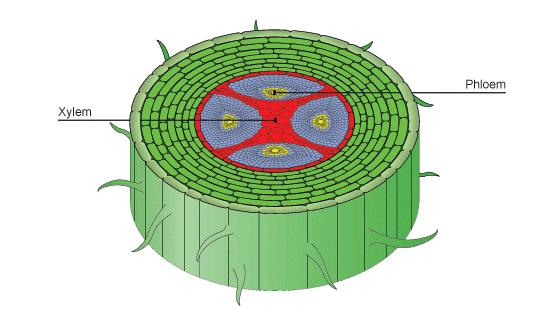
What is this?
a)
Xylem
b)
Phloem
40.
Moves water UP
a)
Xylem
b)
Phloem
41.
Moves sugar from leaves to roots
a)
Xylem
b)
Phloem
42.
Xylem and Phloem are both __.
a)
Transpiration
b)
Absorption
c)
Photosynthesis
d)
Vascular tissue
43.
Both the xylem and phloem are considered-
a)
Stomata
b)
Leaves
c)
Roots
d)
Vascular tissue
44.
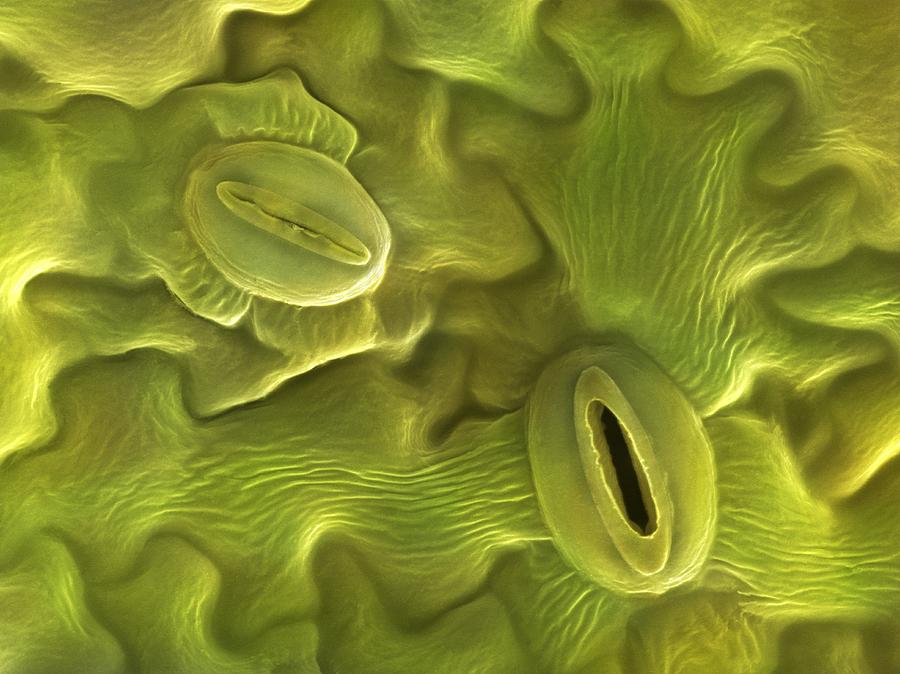
Opening that allows gas exchange
a)
Stomata
b)
Leaves
c)
Roots
d)
Vascular tissue
45.
___ opens and closes the stomata.
a)
Guard cells
b)
Xylem
c)
Roots
d)
Phloem
46.
Type of root
a)
fibrous root 
b)
taproot
47.
The male part of the flower is known as the _____.
a)
stamen
b)
pistil
c)
ovary
d)
petal
48.
The female part of the flower is known as the ____.
a)
stamen
b)
anther
c)
filament
d)
pistil
49.
What is #3 pointing to?
a)
stigma
b)
filament
c)
ovary
d)
anther
50.
What type of root is this?
a)
fibrous root
b)
taproot
51.
The leaf's cuticle
a)
stores water
b)
reduces evaporation
c)
transports water in the leaf
d)
absorbs water for the leaf
52.
What produces egg and sperm cells during the life cycle of a plant?
a)
gamete
b)
gametophyte
c)
sporophyte
d)
zygote
53.
The energy that powers photosynthesis comes from
a)
water
b)
chemicals
c)
oxygen
d)
the sun
54.
All of the following is a root function, except
a)
water absorption
b)
food storage
c)
plant anchoring
d)
food production
55.
What is the function of vascular tissue in plants?
a)
Movement of food and water
b)
Production of seeds
c)
Scattering plant's seeds
d)
Reproduction
56.
Plants are autotrophic. What does this mean?
a)
They reproduce with sperm and egg
b)
They only require water to survive
c)
They hunt for their own food
d)
They make their own food
57.
What do land plants need to develop in order to transport food and water?
a)
Cell wall
b)
Chloroplast
c)
Waxy cuticle
d)
Vascular Tissue
58.
What is true of all plants?
a)
They are unicellular
b)
They have cell walls
c)
They are heterotrophic
d)
They are prokaryotes
59.
Are plants multicellular or single celled?
a)
Single Celled
b)
Multicelled
c)
Both
d)
Neither
60.
What does it mean to be a Eukaryote?
a)
No Nucleus 
b)
Has a nucleus
c)
No Cell Wall
d)
Cell Wall
61.
What is the part of the flower that is brightly colored to attract pollinators?
a)
Petals
b)
Stamen
c)
Pistil
d)
Sepals
62.

Specific type of plant tissue that transports water and minerals from the roots, through the stems, to leaves

a)

vascular plant

b)

nonvascular plant

c)

xylem

d)

phloem

63.

Type of plant that is usually taller (longer) and has vascular tissue (xylem and phloem) that provides support

a)

vascular plant

b)

nonvascular plant

c)

xylem

d)

phloem

64.

Examples of these plants include mosses, liverworts, and other plants with no xylem or phloem

a)

dicot

b)

vascular plant

c)

monocot

d)

nonvascular plant

65.

This is what almost all non-flowering plants reproduce from (except cone bearing plants)

a)

spores

b)

seeds

c)

monocots

d)

dicot

66.

Which of the following plants are considered nonvascular plants?

a)

Monocot Plants

b)

Dicot Plants

c)

Ferns

d)

Moss

67.

What structure on a conifer or evergreen plant produces seeds?

a. Flowers b. Cones c. Spores d. Pine Needles

a)

Flowers

b)

Cones

c)

Spores

d)

Pine Needles

68.

These plants must get nutrients directly from the environment and distribute it from cell to cell.

a)

Vascular

b)

Nonvascular

c)

Seed Producing

d)

Cone Bearing

69.

Almost all flowerless plants reproduce from which of the following:

a)

Spores

b)

Seeds

c)

Water

d)

Vascular

70.
Which type of plants have tubes? 
a)
vascular 
b)
non-vascular 
71.
Trees are...
a)
vascular 
b)
non-vascular
72.
Which type of plants usually has stems, roots, and leaves? 
a)
vascular 
b)
non-vascular
73.
Flowers are...
a)
vascular
b)
non-vascular
74.
A ______ plant does not have any tubes.
a)
angiosperm
b)
gymnosperm
c)
vascular
d)
nonvascular
75.
Which group is the largest in the Plant Kingdom?
a)
Vascular Plants
b)
Nonvascular Plants
76.
a)
Vascular
b)
Nonvascular
77.
a)
Vascular
b)
Nonvascular
78.
Which are small and grow close to the ground?
a)
Vascular
b)
Nonvascular
79.
a)
Vascular
b)
Nonvascular
80.
a)
Vascular
b)
Nonvascular
81.
All of the following are vascular plants EXCEPT:
a)
ferns
b)
oak tree
c)
moss
d)
tulips
82.
A _______ plant has true roots, stems and leaves.
a)
Vascular
b)
Nonvascular
83.
Vascular plants reproduce through ___________.
a)
cells
b)
photosynthesis
c)
seeds
d)
leaves
84.
Which types of plants usually live in damp, shady places...
a)
vascular
b)
non-vascular 
85.
Which types of plants usually grow close to the ground? 
a)
vascular
b)
non-vascular
86.
Which type of plants do not have roots or stems? 
a)
vascular 
b)
non-vascular 
87.
Which type of plants usually has stems, roots, and leaves? 
a)
vascular 
b)
non-vascular
88.
Liverworts and hornworts are...
a)
vascular 
b)
non-vascular
89.
Examine this seed. Would you expect it to produce a dicot or monocot plant?
a)
monocot
b)
dicot
c)
Corn
d)
WI Fast Plant
90.
Examine this seed. Would you expect it to produce a dicot or monocot plant?
a)
monocot
b)
dicot
c)
Neither
d)
Cotyledon
91.
Flower parts in dicots are in multiples of?
a)
4
b)
7
c)
 3
d)
2
92.
A flower is pictured. Can it be classified as a dicot or monocot?
a)
monocot
b)
dicot
c)
Neither
d)
Lily
93.
Is this flower from a monocot or dicot?
a)
monocot
b)
dicot
c)
neither
d)
both
94.
Why is the flower in the picture classified as a dicot?
a)
A.  The petals are arranged in 3 or groups of 3.
b)
B.  The petals are arranged in 4 or 5 or groups of 4 or 5.
c)
C.  The leaves have webbed, scattered or branching veins
d)
D.  Both B and C
95.
Which statement concerning cotyledons is correct?
a)
Monocots have one cotyledon, dicots have two
b)
Monocots have two cotyledons, dicots have one
c)
Monocots have one cotyledon, dicots have more than two
d)
the number of cotyledons does  not matter
96.
Vascular plants with seeds are split into what two groups?
a)
angiosperms & bryosperms
b)
gymnosperms & angiosperms
c)
gametophytes & sporophytes
d)
sporophytes  & gymnosperms
97.
This is a group of vascular plants where their seeds are not surrounded by a fruit?
a)
dicots
b)
monocots
c)
angiosperms
d)
gymnosperms
98.
These produce flowers that produce seeds enclosed in a fruit.
a)
angiosperms
b)
gymnosperms
c)
bryosperms
d)
evergreens
99.
Why is moss a nonvascular plant?
a)
It has true roots, leaves, and stems
b)
It has xylem and phloem
c)
It only has phloem
d)
It does not have true roots, leaves, or stems
100.
What type of tropism is seen here?
a)
hydrotropism
b)
gravitropism
c)
thigmotropism
d)
phototropism
101.
What type of tropism is seen here?
a)
thigmotropism
b)
hydrotropism
c)
phototropism
d)
gravitropism
102.
What type of tropism is seen here?
a)
hydrotropism
b)
phototropism
c)
gravitropism
d)
thigmotropism
103.
Seeds need _______ , warm temperatures, and nutrients in order to start growing.
a)
grass
b)
water
c)
leaves
d)
stems
104.
Seed plants use seeds to reproduce.
a)
True
b)
False
105.
Keeps the seed from drying out
a)
embryo
b)
seed coat
c)
cotyledon
106.
Young plant that develops from the fertilized egg
a)
embryo
b)
cotyledon
c)
seed coat