
 Worksheets
Final Exam Review
Total questions: 109
Worksheet time: 1hrs 2mins
A water molecule has the chemical formula H2O. This means that the water molecule is made up of
Two hydrogen atoms and one oxygen atom
Two oxygen atoms and one hydrogen atom
Two hydrogen atoms and two oxygen atoms
Two molecules of water
Capillary Action is key for
Water moving from roots to leaves in plants
Air moving from mouth to lungs
Ice floating on water
Water moving to lower areas
Cohesive means ........
the water molecules stick to each other
the water molecules stick to other surfaces
the water molecules are less dense
the water molecules are far apart
Adhesive means ........
the water molecules stick to each other
the water molecules stick to other surfaces
the water molecules are less dense
the water molecules are far apart
Water striders can walk on water because of ____________.
capillary action
adhesion
surface tension
universal solvent
Water can bounce on water because of surface tension.
True
False
Why is water so good at dissolving so many substances?
it is polar
it is less dense as a solid
cohesion
adhesion


Which end of the water molecule has a slightly negative charge?

What is the Atmosphere?
A layer of gases that surround the earth.This is a wrong answer
The atmosphere is like a blanket that keeps the earth warm.
It is what allows life to live on the earth.This is a wrong answer
All of these are true.This is a correct answer

Which list contains the layers of the atmosphere in order from closest to Earth to farthest from Earth?
Thermosphere, Exosphere, Stratosphere, Mesosphere, Troposphere
Troposphere, Stratosphere, Mesosphere, Thermosphere, Exosphere
Exosphere, Troposphere, Mesosphere, Thermosphere, Stratosphere

What is the name of the force that air exerts on all objects?
Altitude
Density
Air Pressure
Infrared Radiation

Which 2 gases are most common in Earth's atmosphere?
Carbon Dioxide (C02) & Nitrogen (N2)
Oxygen (O2) & Carbon Dioxide (CO2)
Water Vapor (H2O) & Oxygen (O2)
Nitrogen (N2) and Oxygen (O2)

Which image represents warm air molecules?
High Density
Low Density

As you move from a high altitude to a low altitude, air pressure will
Stay the same
increase
decrease

As you move higher in the Troposphere, the temperature
increases.
decreases.
stays the same.

Why does a hot air balloon rise into the sky?
the heated air inside the balloon is less dense than the cooler air under the balloon.
the heated air inside the balloon is the same density as the air around the balloon.
the heated air inside the balloon is less dense than the cooler air around the balloon.

As an air mass is heated, what happens to its volume?
It will remain the same.
It will increase.
It will decrease.

If you are cooking noodles while camping in the mountains, the noodles would take longer to cook because...
the water will boil at a higher temperature because the air pressure is lower.
the water will boil at a lower temperature because the the air pressure is lower.
the water will boil at the same temperature. You just don't want to eat yet.

As an air mass is heated, what happens to its mass?
MASS STAYS THE SAME.
Mass will decrease.
Mass will increase.

Satellites orbit in which layers of the atmosphere?
Mesosphere
Troposphere
Exosphere and Thermosphere
Stratosphere and Troposphere

Weather happens in which layer of the atmosphere?
Thermosphere
Stratosphere
Trophosphere
Exosphere

In which layer of the atmosphere do most meteors burn up due to friction?
Mesosphere
Thermosphere
Troposphere
Exosphere

This is the hottest atmosphere layer of the earth. Also the auroras are formed here.
Exosphere
Mesosphere
Thermosphere
Stratosphere

This layer has ozone which protects us from harmful UV rays.
Trophosphere
Stratosphere
Exosphere
Mesosphere

Airplanes fly in which layers of the atmosphere?
Mesosphere and Thermosphere
Stratosphere and Troposphere
Exosphere and Mesosphere


What is it called when creeks and smaller rivers join together to make a larger river?
River Systems
Topography
Watershed
Groundwater


Available space for crops


The measurement of soil, silt, and other material that is suspended in water is called
turbidity
salinity
Pesticide
Watershed


Look closely at the map of the watershed below. If water enters the watershed at the top of the mountain where the arrow is pointing, at which point will it stop draining?
Point A
Point B
Point C
Point D

Where are you most likely to find a watershed?
In a lake
On a mountain top
At the bottom of a valley
Everywhere

What definition BEST describes a watershed?
An area where water infiltrates the soil
An area where aquatic plants and animals thrive
An area where snow melts and changes into liquid water
An area that collects precipitation and drains it to the lowest point

The boundaries of a watershed are determined by ___________
Elevation
Soil type
The amount of water that flows
The kinds of organisms found in the area
Which of the following human activities is LEAST likely to affect watersheds?
Flying in an airplane
Cutting down trees
Fertilizing lawns
Reading a book
Which statement about water pollution is TRUE?
Pollution only affects surface water.
Pollution cannot be dissolved in water.
Pollution affects both surface and groundwater.
Pollution cannot travel through soil to groundwater.

Which of the following models BEST represents how water flows in a watershed?
A
B
C
D

Pollutants from a factory that enter the water in a watershed will have a negative effect on which of the following?
Local pond life
Rainfall rates
Direction of river flow
Available space for crops

A neighborhood in a small Texas town had to be evacuated because the houses were sinking due to a problem in the aquifer. What is the most likely cause of this problem?
Heavy rains caused oversaturation of soil foundations.
Overbuilding in the area polluted the ground water.
Runoff from fertilized land created a dead zone.
Excessive removal of water weakened the ground.

The use of pesticides and fertilizers is carefully monitored because of the effect they can have on the environment. Which of the following is a possible negative effect of the use of these chemical on the environment?
These chemicals are expensive to produce.
Runoff carries these chemicals into lakes and streams.
Storage space for these chemicals is limited.
Theses chemicals cannot be purchased in large bulk.

Aquifer is an area of permeable rock on the land surface that holds groundwater.
True
False
All water below the surface of land is called__________.
water table
watershed
groundwater
runoff
The process where water or irrigation runs over land and seeps into the ground, or flows into streams or oceans.
water cycle
runoff
precipitation
evaporation

The picture illustrates nonpoint source pollution.
True
False

Examine the picture provided. Which of the following is true about saturation zone?
It is above the surface water.
It is above the water table
It is a form of precipitation.
It is below the water table.

Which of the following best describes water table?
It is in unsaturated zone.
It is a surface water
it is the top of saturation zone.
It is an aquifer.

The picture shown is an example of______
runoff
point source water pollution
nonpoint source water pollution
ground water

Rapid growth of algae in a pond is often the result of -
loss of habitat due to commercial building.
flooding that causes water levels to rise.
excess nutrients from fertilizer runoff.
clogged river tributaries entering a lake.

Groundwater is recharged when rainwater infiltrates into the ground.
True
False

Runoffs recharge lakes and streams.
True
False
Any material, substance, or organism that is found in nature and used by people is a ?
renewable resource
nonrenewable resources
natural resources
none of the above
Resources that exist in a limited supply and are used up at a faster rate than they can be replaced are?
renewable resources
nonrenewable resources
none of the above
all of the above
rocks, minerals, and metals are?
renewable resources
nonrenewable resources
natural resources
B and C
Resources that are either always available, or can be renewed in a relatively short amount of time are?
renewable resources
nonrenewable resources
none of the above
all of the above
natural resources, such as coal, oil and natural gas are also known as
renewable resources
petroleum
fossil fuels
none of the above
Which of the following are renewable resources?
sunlight
water
air
all of the above
Plants and animals are considered
renewable resources
nonrenewable resources
all of the above
none of the above
The protection, preservation and management of natural resources is known as
recycling
consumption
conservation
restoration
To process previously used materials so they can be used to make something else is known as
renewing
reusing
recycling
reducing
To use less of something is to
renew
reuse
reduce
recycle
To use something again and again is to
renew
reuse
reduce
recycle
_____________ is a natural resource made up of humus, air, water, minerals, and rock particles
soil
coal
petroleum
iron
Which of the following can be recycled?
paper
glass
plastic
all of the above
A product that comes from petroleum is
paper
popsorn
plastic
pollution
Petroleum is consumed or used at a much faster rate than it is renewed.
true
false
Raw materials are materials that come from natural resources and have not been previously processed.
true
false
Which of the following is a characteristic of soil?
color
texture
ability to retain water
all of the above
Nonrenewable resources can never be replenished.
true
false
We can conserve natural resources by
reducing waste
reusing materials
recycling materials
all of the above
It takes more energy to recycle materials than to process them from raw materials.
true
false

What are the 3 main fossil fuels?
Coal, Oil, and nuclear fuel
Coal, Oil, and Natural Gas
Electricity, Gas, Petroleum
Coal, Oil, Non-renewable Resources
Why are fossils fuels so widely used?
They are renewable so they won't run out.
They pollution they produce is less compared to renewable energy sources.
They are easy to obtain and process.
They don't disrupt the environment when mined from the earth.
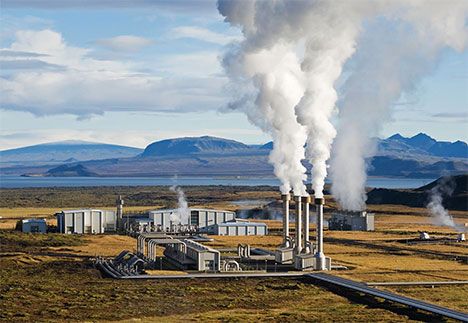
All of the following are considered renewable energy sources EXCEPT –
Wind
Coal
Biomass
Solar

This type of alternative energy is formed from burning living things.
Biomass Energy
Geothermal Energy
Hydropower Energy

This type of alternative energy is formed from energy from moving air.
Solar Energy
Geothermal Energy
Wind Energy
Renewable energy resources produce less_____________ than fossil fuels.
pollution
energy
wind
light
The wise use of natural resources is called
Biomass
Conservation
Production
Restoration

