
 Worksheets
Atwood CBA 1
Total questions: 104
Worksheet time: 2hrs 30mins
What are the three states of matter?
solid, liquid, gas
mass, density, volume
liquid, solid, slime
atoms, molecules, compounds
Anything that has mass and takes up space is...
liquid
density
matter
weight

What state of matter is shown in this picture?
plasma
liquid
solid
gas

What state of matter is shown in the picture?
gas
solid
liquid
plasma

What state of matter is shown in the picture?
gas
plasma
liquid
solid
Which state of matter has a definite shape and volume?
solid
liquid
gas
plasma
Which state of matter has a definite volume but takes the shape of the container?
solid
liquid
gas
plasma
Which state of matter does not have a definite shape or definite volume?
solid
liquid
gas
Particles spread out and move freely in a .....
solid
liquid
gas
Particles are tightly packed and just vibrate in a...
plasma
liquid
gas
solid
Particles are attracted to each other but have room to slide past each other in a....
gas
plasma
liquid
solid
Which particles have the most energy?
liquid
gas
solid
Which particles have the least energy?
liquid
gas
solid

Which state of matter do the particles in the picture show?
solid
liquid
gas

Which state of matter do the particles in the picture show?
gas
solid
liquid

Which state of matter do the particles in the picture show?
solid
gas
liquid
What happens to the particles in a solid when heat is added?
the particles have less energy and slow down
the particles have more energy and speed up
there is no change
the particles stop moving
What is the kinetic theory of matter?
all matter is made up of atoms that are in constant motion
all matter is made of atoms that are sometimes in motion
all matter is made of atoms that never move
matter is not made of atoms
What happens to the particles in matter when heat is taken away?
the particles disappear
the particles gain energy and speed up
the particles lose energy, slow down and move closer
there is no change
What determines the state of matter?
the shape
the motion of the particles
the chemical formula
the physical properties
What type of change occurs when matter changes states?
Physical
Chemical
Which of the following is a pure substance?
Saltwater
Oxygen gas
Salad
Sand and iron filings
Which of the following is a homogeneous mixture?
Oil and water
Air
Sand and gravel
Salad
Which of the following is a heterogeneous mixture?
Vinegar
Saltwater
Salad
Sugar solution
Which of the following best describes a solution?
A mixture where the components are easily distinguishable
A mixture where the components are uniformly distributed
A pure substance
A mixture of solids
Which of the following is an example of a pure substance?
Milk
Carbon dioxide
Soil
Orange juice
Which of the following is NOT a characteristic of a homogeneous mixture?
Uniform composition
Components are not easily distinguishable
Can be separated by physical means
Components are easily distinguishable
Which of the following is a characteristic of a heterogeneous mixture?
Uniform composition
Components are not easily distinguishable
Components are easily distinguishable
Cannot be separated by physical means
Which of the following is an example of a homogeneous mixture?
Salad
Saltwater
Sand and iron filings
Oil and water
Which of the following is a pure substance?
Air
Water
Soil
Milk
Which of the following is an example of a heterogeneous mixture?
Vinegar
Air
Sand and gravel
Saltwater
Which of the following best describes a pure substance?
A material with a fixed composition
A mixture of two or more substances
A material with variable composition
A mixture where the components are uniformly distributed
Which of the following is NOT a pure substance?
Gold
Oxygen
Saltwater
Carbon dioxide
Which of the following is a characteristic of a solution?
Components are easily distinguishable
Components are uniformly distributed
It is always a pure substance
It has variable composition
Which of the following is an example of a pure substance?
Air
Saltwater
Iron
Soil

The picture shows an example of a
heterogenous mixture
homogenous mixture
compound
pure substance


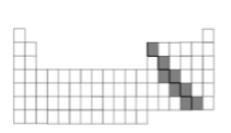
One property of nonmetals is that it they are good conductors of electricity.
true
false
Some characteristics of metals are that they are malleable and ductile.
TRUE
FALSE

A change that results in the formation of new chemical substances
chemical change
physical change

The formation of a solid when two liquids combine is called?
Solidification
Freezing
Precipitate
Solubility
Which is NOT evidence of a chemical change?
Unexpected color change
gas produced
breaking
temperature change (with no outside heat added)
Which is NOT evidence of a chemical change?
Unexpected color change
gas produced
melting
temperature change
Which of the following options provides evidence of a CHEMICAL change?
Wood is burned releasing ash and smoke
Rocks separate when soil is sifted
Boiling water bubbles when heated
Salt dissolves in water
Which of these indicates that a chemical change occured during an experiment?
a solid formed when two liquids were mixed
there was no temperature change during the experiment
there was no change in mass during the experiment
one substance was more dense than the other
In a controlled experiment, acid was dropped on a sample of chalk. Which of the following results would show that a chemical reaction took place?
The sample of chalk formed a wet puddle on its surface
The sample of chalk had partially dissolved.
The sample of chalk formed bubbles, showing a release of gas
The sample of chalk broke into smaller pieces
Which of the following describes a chemical change?
Water goes from liquid to gas when boiling
Ice goes from solid to liquid when melting
Gray iron turns reddish-brown when rusting
Steam loses heat when condensing
The best evidence for the formation of a new substance is the observation of the
solid settling
solid disappearing
liquid remaining clear
bubbles forming
Which of the following is an example of a chemical change?
Dissolving salt
Crushing a juice box
Frying an egg
Melting silver
Which of the following is NOT an indicator of chemical change?
Formation of a gas
Formation of a solid
Change in texture
Change in color
Which of the following is an indicator of chemical change?
Change in shape with the application of some type of force
Change in temperature with no outside heat source applied
The formation of a solid due to freezing
The formation of a gas due to evaporation
Which of the observations of fireworks does NOT indicate that a chemical change has occurred?
Many colors are produced
Bright light is given off
Smoke is produced
Heat is released
Loud sounds are produced
A student pours a glass of soda and observes the formation of clear bubbles. Has a chemical change occurred?
Yes, because a gas was formed from a liquid.
No, because the gas dissolved in the soda just floats to the top of the liquid.
No, because the soda was not heated.
Yes, because the formation of bubbles is always an indicator of chemical change.
Which of these observations from a burning candle are NOT evidence of a chemical change?
The wax is melting
Smoke is produced
Heat is released
Which of these observations from a burning candle are NOT evidence of a chemical change?
The wax is melting
Smoke is produced
Heat is released
What is the smallest unit of an element that has all of the properties of that element?
Molecule
Atom
Compound
Mixture
What is the temperature at which a substance changes from liquid to gas?
Melting Point
Freezing Point
Boiling Point
Sublimation Point
What is a shorthand notation that uses chemical symbols and numbers as subscripts to represent the type of atoms and number of atoms that are present in the smallest unit of the substance?
Chemical Formula
Chemical Equation
Chemical Symbol
Chemical Reaction
What is determined by what colors of light are reflected by a substance?
Density
Color
Mass
Volume
What is matter that is composed of two or more elements that are chemically combined?
Element
Mixture
Compound
Solution
What is the amount of mass in a given amount of space, measured in a unit of mass per unit of volume?
Mass
Volume
Density
Weight
What is a measure of how easily electricity can pass through a substance?
Electrical Conductivity
Magnetism
Thermal Conductivity
Insulation
What is a pure substance that cannot be separated into simpler substances by physical or chemical means?
Mixture
Compound
Element
Solution
What type of mixture has parts that are easy to see and separate?
Homogeneous Mixture
Heterogeneous Mixture
Solution
Colloid
What is a substance so evenly mixed that it is difficult to see the parts and is uniform in composition?
Heterogeneous Mixture
Homogeneous Mixture
Suspension
Colloid
What is a measure of how attracted a substance is to a magnet?
Electrical Conductivity
Magnetism
Density
Thermal Conductivity
What is the temperature at which a substance changes from solid to liquid?
Boiling Point
Freezing Point
Melting Point
Sublimation Point
What is made of two or more substances that are combined but whose atoms are not chemically bonded?
Compound
Element
Mixture
Solution
What is an arrangement of the elements according to their atomic numbers and periodic trends of physical and chemical properties?
Chemical Formula
Periodic Table
Element Chart
Atomic Structure
What is a characteristic of a substance that can be observed or measured without changing the identity of the substance?
Chemical Property
Physical Property
Density
Mass
What consists of just one type of particle and has the same physical properties throughout?
Mixture
Compound
Element
Pure Substance
What is the letter or letters that represent each element on the periodic table?
Chemical Formula
Chemical Symbol
Atomic Number
Element Name
What is the amount of matter in a given space or volume; a relationship between mass and volume (Formula: D = M/V)?
Mass
Volume
Density
Weight
What is a way to measure the volume of a solid by placing it in a known amount of liquid?
Displacement
Density
Mass
Volume
What is a substance that has no fixed shape and is able to flow easily; a gas or a liquid?
Solid
Fluid
Plasma
Mixture
What is the amount of matter a body contains?
Volume
Density
Mass
Weight
What is the term for the upward curve at the surface of a liquid?
Volume
Meniscus
Density
Surface Tension
What is the term for the amount of space a body takes up?
Mass
Density
Volume
Weight
Particles move quickest in:
Solid
Liquid
Gas
Volume
In a sugar solution water is_____ and sugar is_____
water is solute and sugar is solvent
water solute and as well as solvent
water is solvent and sugar is solute

