
 Worksheets
Semester 1 Incredible Interim Review
Total questions: 110
Worksheet time: 28hrs 30mins
Living things are made up of units called
DNA
Cells
Homeostasis
Seeds
If an organism is made entirely of one cell it is called...
Multicellular
Prokaryotic
Unicellular
Eukaryotic
Reproduction that only involves one parent and all offspring are identical; for example, binary fission of bacteria or amoebas.
Asexual
Sexual
Division
Addition
Reproduction that involves two cells from different parents unite to produce the first cell of a new organism.
Asexual
Sexual
Budding
Division
Living things are based on a universal genetic
code. What molecule is responsible for that code?
RNA
Lipid
Protein
DNA
For single-celled organisms, _____ is
mostly an increase in size.
Multicellular organisms go through a
process called __________, where cells
divide and differentiate into different
kinds of cells.
Evolve, respond to stimulus
Expansion, progress
Growth, development
Production, evolution
The combination of chemical reactions through
which an organism builds up or breaks down
materials as it carries out its life processes is called ...
absorption
metabolism
digestion
consumption
A stimulus can be external or internal.
False
True
Maintaining a stable internal
environment is called
homeostasis
equilibrium
balance
evenness
The fluid that surrounds the organelles is... (hint... "Try to pull a fast one and..."
chloroplast
cytoplasm
vacuole
cell wall
Which three statements are part of the cell theory?
Cells are the smallest unit of living things that can perform the processes necessary for life.
The basic components of life consist of a nucleus, cell membrane, and mitochondrion.
All living things are composed of cells
Living cells come only from other living cells
Atoms are composed of cells
Which organelle is much larger in plant cells than animal cells and is used to store food and waste?
Nucleus
Vacuole
Ribosomes
Chloroplasts
What are organelles?
Parts that come together to make an organ system.
A group of similar cells that perform similar functions.
A group of organs that perform similar functions
Tiny structures within a cell that allow the cell to live, grow, and reproduce.
When compared to a prokaryotic cell, a eukaryotic cell ...
does not have a nucleus
has DNA that is circular
has more types of organelles
stores it's DNA in a nucleus rather than in the cytoplasm
There are 3 main differences between a plant and an animal cell. Plant cells contain .....
a cell membrane
a cell wall
a nucleus
a larger vacuole
chloroplasts
Why do plants need mitochondria when they already have chloroplasts?
Plant cells do not have mitochondria.
Mitochondria produce food for the cell.
Mitochondria break down food into energy.
Which organelle produces proteins?
Nucleus
Ribosomes
Mitochondria
Vesicles
Which organelle transports materials?
Cell Membrane
Endoplasmic Reticulum
Golgi Apparatus
Nucleus


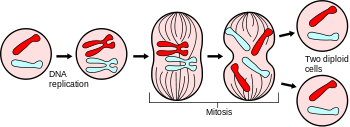
When cells are damaged, new cells are created by cell division. How does the cell theory explain this fact?
It states that all cells have a nucleus which divides.
It states that all living things are made up of one or more cells.
It states that cells come from previously existing cells.
It states that the basic units of structure and function are cells.
The _____________ is a gel-like fluid that fills plant and animal cells. It holds the organelles in place and gives each cell its shape.
Cytoplasm
Cell Membrane
Cell Wall
Chloroplast
What is found in both plant and animal cells but is much larger in plant cells because it helps to provide structure and support?
Nucleus
Mitochondrion
Chloroplast
Vacuole
When we exercise we use a lot more energy than when we are at rest. How to our cells help to maintain homeostasis during periods of exercise?
The cells will die from using too much energy.
The cells won't be able to keep up so they will multiply and create new cells.
The cells will slowly die from using too much energy.
The cells will create more mitochondria over time to produce more energy.
Why is a cell membrane important to both plant and animal cells?
It stores food and water.
It controls the activities of the cell.
It uses energy from the Sun to perform photosynthesis.
It provides a barrier between the cell and its environment.
Different cell organelles perform different functions. Which cells would most likely have the largest vacuoles?
Cells found in a fox
Cells found in a maple tree
Cells found in a desk
Cells found in a butterfly
A vacuole is a membrane-bound sac that plays a role in the storage and the release of cellular products. How do the vacuoles in animal cells differ from vacuoles in a plant cell?
Plant cell vacuoles are usually smaller because plants can make their own food.
Animal cells usually contain less vacuoles because they have an excretory system to eliminate waste.
Plant cell vacuoles are usually larger because they also provide structural support for the plant tissues.
Animal cell vacuoles are usually larger because they have to store a lot of glucose from the food they eat for later use


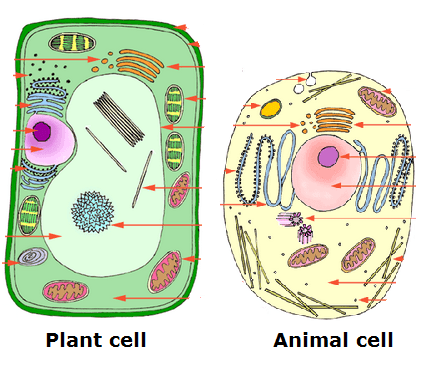
What distinguishes a plant cell from an animal cell? (How do you tell them apart) Hint: There's 3 ways (Check all 3)
Central Vacuole
Mitochondria
Cell Wall
Ribosomes
Chloroplasts

Cellular Respiration occurs within me and I am in BOTH plant and animal cells. I am a....
Nucleus
Golgi Body
Cytoskeleton
Mitochondria


Which type or organism does this sample most likely come from and why?
Animal, becuase it has a vacuole.
Plant, because it has a visible cell wall.
Animal, because it has a cell membrane.
Plant, because it has a nucleus.
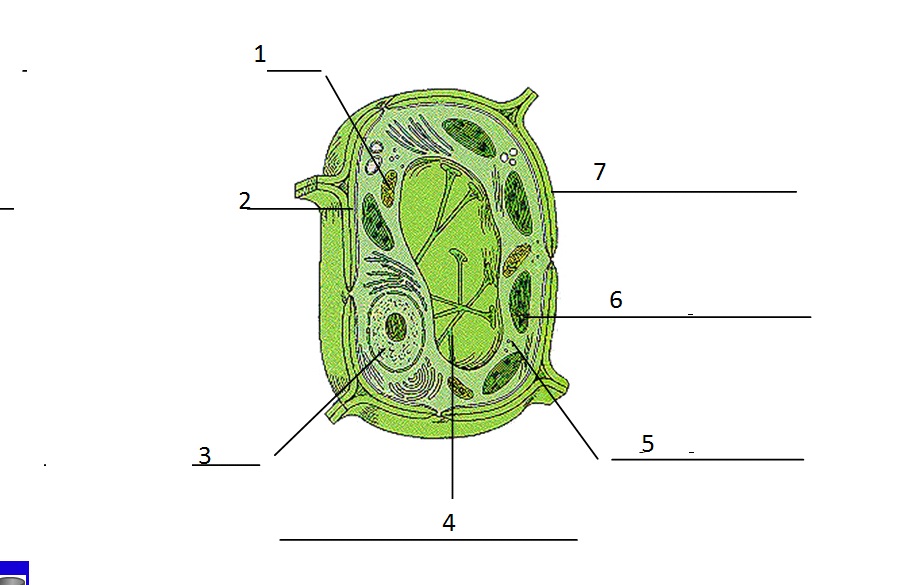
What is number 1?
mitochondrion
cell membrane
nucleus
vacuole
What is number 2?
mitochondrion
cell membrane
nucleus
vacuole
What is number 3?
mitochondria
cell membrane
nucleus
vacuole
What is number 4?
mitochondria
cell membrane
nucleus
vacuole
What is number 5?
chloroplast
cell wall
cytoplasm/cytosol
vacuole
What is number 6?
chloroplast
cell wall
cytoplasm
vacuole
What is number 7?
chloroplast
cell wall
cytoplasm
vacuole
This cell is a
animal cell
plant cell
bacterial cell
This cell is a(n)
eukaryotic cell
prokaryotic cell
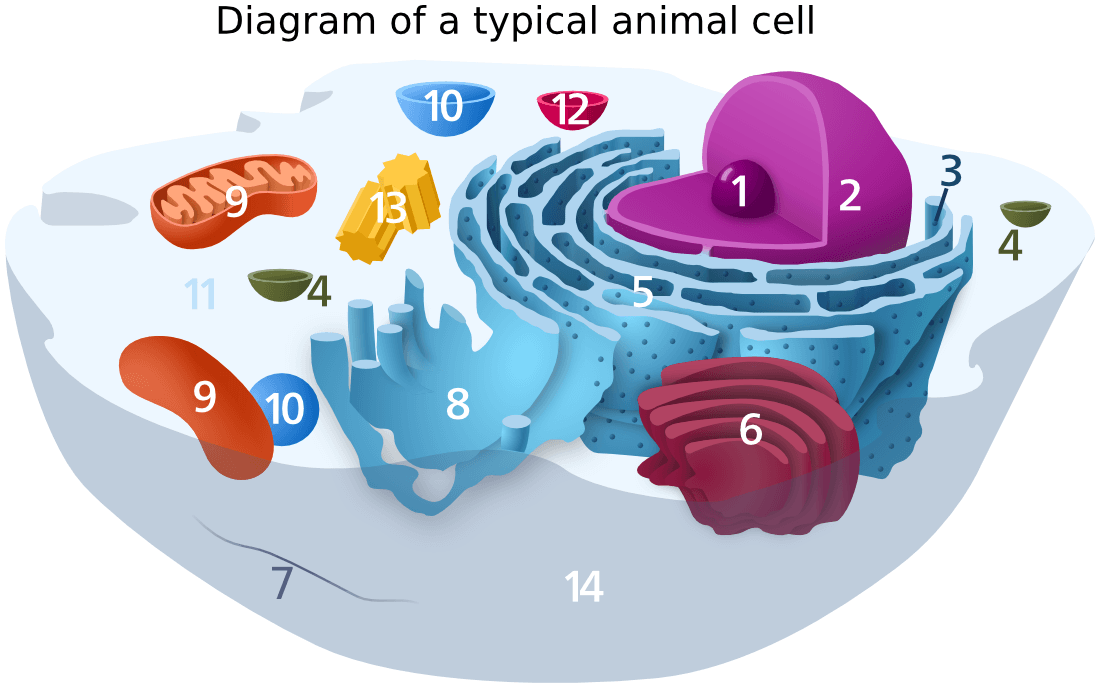
#2
nucleus
nucleolus
Golgi
#6
cell membrane
mitochondria
Golgi
This cell is a(n)_________cell.
prokaryotic
eukaryotic
This cell is a(n)_________cell.
bacteria
animal
plant


A team of scientists think they discovered a new organism while exploring Brazil. Upon bringing the specimen back to their lab in Atlanta, they observe the specimen for several weeks. They take a sample from the specimen to observe it under a microscope and see the sample is composed of many small compartments containing what appears to be nuclei. They shine a bright light to the left of the specimen and observe it slowly turn itself towards the light over multiple days.
What further evidence would support that the newly discovered specimen is alive?
The specimen appears to be breathing.
The specimen observed under the microscope contain various organelles.
When placed in pure water, the specimen seems to swell up, absorbing the water.
The specimen grows in size and develops colorful blooms over the several weeks in which it is being observed.
All living things are made up of one or more cells. Individual cells process all the characteristics of life as stand alone units. Although all living things do not move, they all respond to stimuli from their environment. Two students engaged in the following arguments that plant cells exhibit characteristics of life when they respond to stimuli in their environment.
Student A: After a rain shower, the vacuole (which stores water) in plant cells becomes larger and exerts more pressure in the cell because the plant cell gained water.
Student B: If there is no rain, the vacuole (which stores water) in plant cells becomes smaller and exerts less pressure in the cell because the plant cell uses the reserved water.
Which student has presented the best argument for a plant cell responding to stimuli in its environment?
Only the argument of Student A represents a plant’s response to stimuli in its environment.
Only the argument of Student B represents a plant’s response to stimuli in its environment.
Neither argument of Student A or Student B represents a plant’s response to stimuli in its environment.
Both arguments of Student A and Student B represent a plant’s response to stimuli in its environment.

Which structure in the diagram to the above indicates that this must be a plant cell? (Select ALL that apply!)
cell wall
cell membrane
chloroplasts
mitochondria
central/large vacuole
You are looking at cells under the microscope. You notice one type of cell has many more lysosomes than the others. Your teacher said white blood cells have lots of lysosomes. Why would the white blood cells have an abundance of lysosomes?
White blood cells have many lysosomes because they need lots of ATP to help carry oxygen.
White blood cells have many lysosomes because they need to produce lots of proteins to help build muscle.
White blood cells have many lysosomes because they need to produce a lot of glucose and oxygen.
White blood cells have many lysosomes because they need to destroy pathogens with digestive enzymes.

A student created the following models comparing plant and animal cells. What improvements should the student make to their models?
They need to remove the nucleus from model B because they do not need the organelles to convert materials into nutrients using sunlight.
They need to add mitochondria to both models because they both require energy production.
They need to remove the chloroplasts from model A because they do not need the organelles to convert materials into nutrients using sunlight.
They need to add a cell wall to model B for structure and support.
A child with cystic fibrosis has an mutated protein in his cells which does not behave normally. The mutated protein stops chloride ions from leaving the cells. This causes water to be retained in the cell creating thicker fluids. These fluids cause a buildup of mucus which leads to breathing problems. Which cell structure is most likely being negatively affected by the mutated protein?
The mutated protein is most affecting the cell membrane because the protein is causing water to be stored in the cell and water storage is a function of the cell membrane.
The mutated protein is most affecting the nucleus because the protein is preventing DNA production which is a function of the nucleus.
The mutated protein is most affecting the cell membrane because the protein is not allowing certain materials to leave the cell which is a function of the cell membrane.
The mutated protein is most affecting the ribosomes because the protein is causing the production of excess mucus which is a function of the ribosomes.

