wayground logo

Free Printable Worksheets

Font size

S
M
L
XL
Worksheets

7th Grade Review

Total questions: 115

Worksheet time: 4hrs 47mins

Name
Class
Date
1.

Producers are ...

a)

plants

b)

able to do photosynthesis

c)

also called autotrophs

d)

all of these are true

2.

Arrows in a food web represent...

a)

eating

b)

sunlight

c)

energy

d)

matter

3.

Photosynthesis is important because...

a)

it makes carbon dioxide

b)

it makes food for the food webs

c)

it makes water

d)

it's not important

4.

All of these are types of consumers except...

a)

omnivores

b)

carnivores

c)

decomposers

d)

herbivores

5.

In photosynthesis, which are the products?

a)

carbon dioxide, water

b)

oxygen, glucose

c)

sunlight, oxygen

d)

water, soil

6.

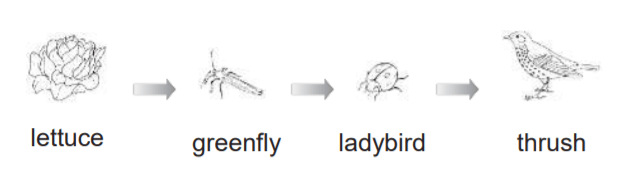
Who is the producer?

a)

lettuce

b)

greenfly

c)

ladybird

d)

thrush

7.
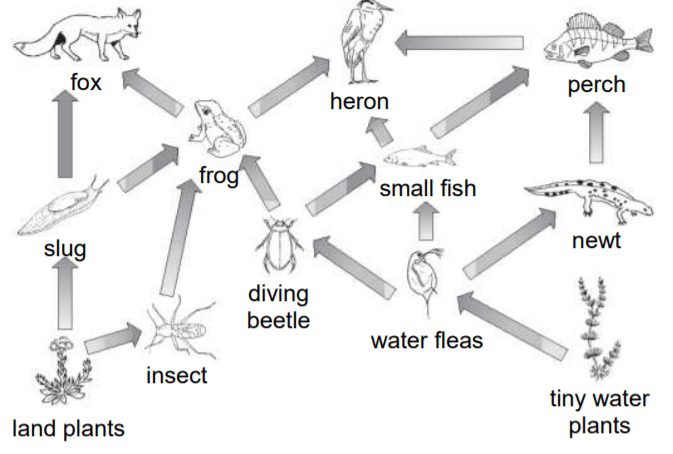
a)

This is a food chain

b)

This is a food web

c)

This is an energy pyramid

8.

The original source of energy for a food web is...

a)

plants

b)

sun

c)

producers

d)

decomposers

9.

The energy transformation for photosynthesis

a)

chemical to water

b)

light to radiant

c)

thermal to chemical

d)

radiant to chemical

10.

Decomposers get energy from...

a)

the sun

b)

eating plants

c)

eating animals

d)

dead things and waste

11.
Example of a consumer
a)
worm
b)
bacteria
c)
mushroom
d)
hawk
12.
Example of a decomposer
a)
fungus
b)
mouse
c)
plants
d)
frogs
13.
A tree is a ....
a)
composer
b)
decomposer
c)
producer
14.
Humans are considered...
a)
consumers
b)
decomposers
c)
producers
15.
What is a producer?
a)
an organism that gets energy from eating other organisms
b)
an organisms that uses sunlight to make its own food
c)
an organism that gets energy from eating dead organisms, non-living material or waste
d)
an organism that uses chemical energy to make its own food
16.
An organism that gets energy from breaking down dead organisms, non-living material or waste
a)
producer
b)
consumer
c)
decomposer
d)
autotroph
17.
Which of the following is NOT a consumer
a)
grass
b)
dog
c)
shark
d)
fish
18.
Where do all life forms get their energy?
a)
Earth's Core
b)
Water
c)
Plants
d)
The Sun
19.
In this food chain, what will happen if the frogs become extinct?
a)
The snakes will increase.
b)
The grasshoppers will decrease.
c)
The eagles will remain the same.
d)
The grasshoppers will increase.
20.
Which of the following would have a negative impact on an ecosystem
a)
constructing highways
b)
planting trees
c)
recycling paper
21.
Flood water pounding against a canyon wall and wearing it down.
a)
weathering
b)
erosion
c)
deposition
22.
Rain washing away soil from a hillside.
a)
weathering
b)
erosion
c)
deposition
23.
A mudslide flowing down a steep hill.
a)
weathering 
b)
erosion
c)
deposition
24.
Caves being formed by acid rain dissolving underground limestone.
a)
weathering
b)
erosion
c)
deposition
25.
Water getting into cracks, freezing, and breaking the rocks or pavement apart. 
a)
weathering 
b)
erosion
c)
deposition
26.
Wind blowing sand from one location to another.
a)
weathering 
b)
erosion
c)
deposition
27.
Wind blasting sand at rock and carving out arches.
a)
weathering 
b)
erosion
c)
deposition
28.
Glaciers scraping rocks across the earth's surface.
a)
weathering 
b)
erosion
c)
deposition
29.
Muddy water being carried away by a fast-moving river.
a)
weathering 
b)
erosion
c)
deposition
30.
Flood waters moving soil from one location to another. 
a)
weathering 
b)
erosion
c)
deposition
31.
A geoscience process that develops slowly, but has a sudden catastrophic event
a)
volcanic eruption
b)
weathering and erosion
c)
delta formation
d)
thunderstorm
32.
One of these does not belong
a)
convergent
b)
divergent
c)
transform
d)
landslide
33.

Natural processes that happen on Earth are called ____ processes.

a)

slow

b)

historic

c)

landmark

d)

Geoscience

34.
The continuous movement of the continents.
a)
geoscience
b)
rain
c)
wind
d)
plate tectonics
35.
What force is responsible for erosion and deposition in landslides?
a)
gravity
b)
ice
c)
wind
d)
temperature
36.
Weathering and erosion occur over many________.
a)
days
b)
years
c)
hours
d)
months
37.
Rocks tumbling down a steep slope would be an example of
a)
creep
b)
landslide
c)
mudslide
38.
Which of the following land features would take the largest amount of time to change?
a)
location of continents
b)
shape of volcano
c)
position of sand dunes
d)
landslides
39.

Which of the following changes to Earth’s surface is most likely to represent the smallest scale of space and time?

a)

formation of rock layers

b)

formation of a canyon

c)

Uplift of mountain ranges

d)

A landslide on a mountain

40.
Huge pieces of Earth’s crust that are constantly moving
a)
folds
b)
Tectonic Plates
c)
continents
d)
ridges 
41.
Earthquakes and volcanoes can cause a landslide
a)
False
b)
True
42.
Erosion is caused by.....
a)
The wind
b)
The sun
c)
cold air
d)
the stars
43.
Sand Andreas Fault formed at this type of boundary-
a)
Transform Boundary
b)
Convergent Boundary
c)
Divergent Boundary
d)
Hot Spot
44.
This is an example of -
a)
convergent
b)
divergent
c)
transform
45.
This is an example of -
a)
convergent
b)
divergent
c)
transform
46.
This is an example of -
a)
convergent
b)
divergent
c)
transform
47.

What is a tectonic plate?

a)

A piece of the earths crust

b)

A piece of the mantle

c)

A piece of the core

d)

A piece of the whole world

48.

Which boundary is most likely to build mountains?

a)

convergent

b)

divergent

c)

transform

49.

Which type of boundary is found in the Atlantic Ocean between Africa and South America?

a)

Convergent

b)

Divergent

c)

Transform

50.

Where is a rift valley formed?

a)

Diverging continental crust

b)

Converging continental crust

c)

Converging continental and oceanic crust

d)

Transform boundary

51.

Earthquakes occur frequently along transform boundaries because....

a)

plates slip past each other in opposite directions.

b)

plates run into each other.

c)

plates are pulling apart from one another.

52.

Where is the ring of fire?

a)

in the Pacific ocean

b)

in the Atlantic ocean

c)

in a volcano

d)

in Africa

53.

Which of the following in NOT an example of a gradual process with a sudden catastrophic event?

a)

earthquakes

b)

volcanos

c)

landslides

54.

Which of the following is not a renewable resource for alternative energy?

a)

solar energy

b)

wind energy

c)

oil

d)

geothermal energy

55.

Select all that are products of Photosynthesis.

a)

Water

b)

Carbon Dioxide

c)

Oxygen

d)

Sunlight (Light Energy)

e)

Glucose (Sugar/food)

56.

How many products are produced during photosynthesis?

a)

1

b)

2

c)

3

d)

4

57.

Is Oxygen a Raw Material (Ingredient) or Product of Photosynthesis?

a)

Product

b)

Raw Material

c)

Niether

d)

What's Photosynthesis?

58.
Why do plants conduct photosynthesis?
a)
To make light
b)
To make mitochondria
c)
To make glucose
d)
To release carbon dioxide
59.

Plants need ________ to conduct photosynthesis

a)

Oxygen

b)

Soil

c)

Carbon dioxide

d)

Sugar

60.
What are the products of photosynthesis (what is made)?
a)
Glucose and Chlorophyll
b)
Glucose and Oxygen
c)
Water and Light
d)
Carbon dioxide and Water
61.
What is the source of energy for photosynthesis?
a)
Carbohydrates (chemical energy)
b)
Light (radiant energy)
c)
Heat (thermal energy)
d)
Wind (kinetic energy)
62.
Which choice correctly shows the gases that enter and exit plants during photosynthesis?
a)
Enter: Oxygen
Exit: Carbon dioxide
b)
Enter: Water vapor
Exit: Glucose
c)
Enter: Carbon dioxide
Exit: Oxygen
d)
Enter: Light
Exit: Water vapor
63.
____________________ provides the energy necessary for photosynthesis.
a)
water
b)
sunlight
c)
glucose
d)
soil
64.
The reactant of photosynthesis are...
a)
sunlight and chlorophyll
b)
glucose and oxygen
c)
carbon dioxide and water
d)
sunlight and water
65.
Which catastrophic event will most likely have the effect of returning an ecosystem to primary succession?
a)
A tornado
b)
A volcanic eruption
c)
A flood
d)
A drought
66.
Which of the following describes large areas of ground that fall or flow on slopes due to gravity?
a)
floods
b)
hurricanes
c)
landslides
d)
wildfires
67.
What catastrophic event would be of greatest risk to a grassland?
a)
hurricane
b)
flood
c)
tsunami
d)
wildfire
68.
How are tsunamis generated?
a)
generated from earthquakes
b)
generated from tornadoes
c)
generated from crazy people
69.
The process of breaking up rocks on Earth's surface is called...
a)
sediment
b)
erosion
c)
weathering
d)
deposition 
70.
What causes damage in a hurricane?
a)
Winds
b)
Flooding
c)
Storm Surge
d)
All of the above
71.
a)
Usually the result of human negligence, but can also be caused by lightning
b)
Created by a weakness in the Earth's crust.  Magma rises up from mantle
c)
Storm surge causes massive flooding.  Wind damage causes structural damage to homes and businesses
d)
High winds cause destruction to everything in its path.
72.
The movement of weathered material on the Earth's surface by wind, water, and ice is
a)
erosion
b)
deposition
c)
landslides
73.
A sudden release of energy under the Earth's surface that makes the ground shake or crack is
a)
weathering
b)
earthquake
c)
landform
74.
The breakdown of rock into smaller particles from the effects of wind, water and ice is
a)
deposition
b)
delta
c)
weathering
75.
When a river flows over the Earth and carves out a hole in the surface it makes a 
a)
hill
b)
mountain
c)
canyon
76.
What natural force formed the Grand Canyon millions of years ago?
a)
a landslide
b)
an earthquake
c)
a river
77.
How long does the weathering process take?
a)
exactly one year
b)
a few days
c)
years and years
78.
What is weathering?
a)
seasons changing
b)
breaking down rock into smaller pieces
c)
pressure building up inside the earth
79.

What happens when hardened lava builds up over a long period of time?

a)

a landslide

b)

a flood

c)

rivers form

d)

mountains form

80.

Most scientists believe the Big Bang Theory explains which of the following questions?

a)

How our planets and moons formed

b)

How our universe began

c)

How the sun turns hydrogen into helium

d)

How fast light travels through space
81.
The universe is ____________ years old.
a)
8.13 billion
b)
13.8 billion
c)
1.83 billion
d)
381 million
82.
all matter is made of what 
a)
energy 
b)
atoms 
c)
electrons 
d)
compounds 
83.
The positive particles of an atom are 
a)
electrons 
b)
positrons 
c)
neutrons 
d)
protons 
84.
Particles in an atom that are neutral and have no charge are 
a)
negatrons 
b)
electrons 
c)
neutrons 
d)
protons 
85.
Neutrons are _______________ particles.
a)
negative
b)
positive
c)
neutral
d)
cows
86.
The central region of an atom where its neutrons and protons are is called the
a)
nucleus 
b)
electron cloud
c)
core 
d)
center 
87.
electrons have this type of charge?
a)
negative
b)
positive
c)
neutral
88.
These particles orbit around the nucleus of an atom.  What are they called?
a)
electrons
b)
protons
c)
neutrons
d)
photons
89.
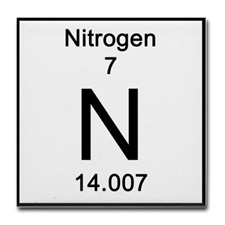
What is the number of protons that the element in this image contain?
a)
14
b)
7
c)
15
d)
18
90.
What is the atomic number for an element with three protons?
a)
2
b)
1
c)
3
d)
6
91.
True or False? Neutrons have a negative charge
a)
True
b)
False
92.
An atom with atomic number 6 would have how many protons 
a)
6
b)
12
c)
3
d)
cannot be determined 
93.
Atoms make up, what?
a)
Everything living and nonliving
b)
Energy
94.
The Modern Periodic Table of Elements is arranged by
a)
atomic mass
b)
atomic number
c)
valence electrons
d)
number of isotopes
95.
The atomic number tells you what?  READ THE ANSWERS CAREFULLY
a)
only the number of electrons
b)
 only the number of protons
c)
only the number of neutrons
d)
the number of both electrons and protons in an atom.
96.
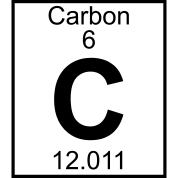
What does the 6 represent?
a)
atomic mass
b)
atomic number
c)
element name
d)
chemical symbol 
97.
What does 12.011 represent?
a)
atomic mass
b)
atomic number
c)
element name
d)
chemical symbol 
98.
What does the C represent?
a)
atomic mass
b)
atomic number
c)
element name
d)
chemical symbol 
99.
These are found on the Periodic Table.
a)
Compounds
b)
Elements
c)
Mixtures
100.
GOLD
a)
Al
b)
Ag
c)
Ar
d)
Au
101.
CHLORINE
a)
C
b)
Ca
c)
Cl
d)
Cu
102.
CALCIUM
a)
C
b)
Ca
c)
Cu
d)
Cl
103.
CARBON
a)
C
b)
Ca
c)
Cl
d)
Cu
104.
COPPER
a)
C
b)
Ca
c)
Cu
d)
Cl
105.
SULFUR
a)
Su
b)
S
c)
Sf
d)
Si
106.
SILVER
a)
Au
b)
Ag
c)
Al
d)
Ar
107.
SILICON
a)
S
b)
Si
c)
Su
d)
Sc
108.
SODIUM
a)
S
b)
So
c)
N
d)
Na
109.
POTASSIUM
a)
P
b)
Ka
c)
K
d)
Pt
110.
Which of the following atomic symbols for bromine is written correctly?
a)
bR
b)
BR
c)
Br
d)
br
111.
What is krypton?
a)
element
b)
compound
c)
mixture
112.
What is the chemical symbol for mercury?
a)
Hg
b)
Mc
c)
My
d)
C
113.

one or two letters that represent the name of an element

a)

element name

b)

element symbol

c)

atomic number

d)

atomic mass

114.

the mass of an atom, calculated by adding the number of protons and neutrons in the nucleus of the atom

a)

element name

b)

element symbol

c)

atomic number

d)

atomic mass

115.

a unique number for each element that equals the number of protons in an atom of that element

a)

element name

b)

element symbol

c)

atomic number

d)

atomic mass