wayground logo

Free Printable Worksheets

Font size

S
M
L
XL
Worksheets

SSA Earth Review 6-8 Part 1

Total questions: 120

Worksheet time: 2hrs 33mins

Name
Class
Date
1.
Limestone reacting with an acid (such as vinegar) is an example of 
a)
mechanical weathering
b)
chemical weathering
c)
erosion
d)
deposition
2.
Which rock layer in the diagram seems to be the oldest?
a)
F
b)
E
c)
B
d)
A
3.
This rock was formed by smaller pieces of rock that settled at the bottom of a lake millions of years ago. What type of rock is this?
a)
Sedimentary
b)
Igneous
c)
Metamorphic
4.
Which of the following occurs because of convection currents?
a)
Tectonic plates on the crust move.
b)
The mantle increases in size.
c)
Pressure in the crust increases.
d)
Pressure in the crust decreases.
5.
Name the boundary
a)
convergent boundary
b)
divergent boundary
c)
transform boundary
d)
sergent boundary
6.
Name the boundary
a)
convergent boundary
b)
divergent boundary
c)
transform boundary
d)
sergent boundary
7.
Name the boundary
a)
convergent boundary
b)
divergent boundary
c)
transform boundary
d)
sergent boundary
8.
A huge slow-moving mass of ice
a)
Mountain
b)
Glacier
c)
Volcano
d)
Delta
9.
This arch was created by pieces of rock being washed away by the waves.  This is an example of 
a)
weathering
b)
erosion
c)
deposition
10.
Limestone reacting with an acid (such as vinegar) is an example of 
a)
mechanical weathering
b)
chemical weathering
c)
erosion
d)
deposition
11.
What is this landform?
a)
lake
b)
peninsula
c)
hills
d)
mountain
12.
Which layer do convection currents occur?
a)
Crust
b)
Lithosphere
c)
Mantle
d)
Core
13.
Deforestation causes....
a)
soil erosion
b)
new plants
c)
reduces pollution
d)
gives new homes to animals
14.
This is part of the....
a)
Geosphere
b)
Biosphere
c)
Cryosphere
d)
Atmosphere
15.
What process causes hot rock to rise in the mantle?
a)
condensation
b)
convection
c)
conduction
d)
radiation
16.
Heat and Pressure
a)
igneous
b)
metamorphic
c)
sedimentary
d)
minerals
17.
Magma cools and hardens and crystalizes
a)
igneous
b)
metamorphic
c)
sedimentary
d)
minerals
18.
Hot rises and Cold sinks
a)
condensation
b)
conduction
c)
convection
d)
radiation
19.
A thunderstorm is a connection between:
a)
Biosphere-Atmosphere
b)
Atmosphere-Hydrosphere
c)
Hydrosphere-Geosphere
d)
Hydrosphere-Biosphere
20.
This picture shows
a)
Atmosphere
b)
Biosphere
c)
Hydrosphere
d)
Geosphere
21.
This volcano is an example of something you would find in the:
a)
Atmosphere
b)
Biosphere
c)
Hydrosphere
d)
Geosphere
22.
Animals, forests, grasslands, and trees all belong to which sphere?
a)
Atmosphere
b)
Biosphere
c)
Lithosphere
d)
Hydrosphere
23.
A force of attraction between any two objects is called _____________.
a)
static electricity 
b)
rotation
c)
gravity
d)
orbit
24.
What is the difference between a solar eclipse and a lunar eclipse? 
a)
The position of the Moon and Earth are different. 
b)
The position of the Sun and Earth are different.
c)
The position of the Sun alone is different
d)
 The position of Earth alone is different.
25.
What is the main cause of ocean tides? 
a)
 the rotation of Earth 
b)
the magnetic fields around Earth 
c)
the gravitational pull of the Moon 
d)
the revolution of Earth around the Sun 
26.

At which moon position would a person on earth see a full moon

a)

A

b)

B

c)

C

d)

D

27.
If the last full moon was on April 4th, when can you expect to see the next full moon? 
a)
April 29th
b)
July 4th
c)
May 4th
d)
September 12th
28.

When a warm air mass and cold air mass come together, like a warm front and cold front, a typical outcome is rain.

What explains why rain forms in this situation?

a)

The cold air causes the moisture in the warm air to condense and precipitate as rain.

b)

The cold air is moving faster than the warm air, which causes rain.

c)

Because the cold air is denser, it causes rain.

d)

The two air masses neutralize each other, which results in clouds that produce rain.

29.

Which letter matches with the OLDEST layer of rock?

a)

W

b)

X

c)

Y

d)

Z

30.

Scientists use radioactive decay to measure...

a)

relative time

b)

absolute time

c)

age of trees

d)

time of day

31.
Which of the following correctly lists the layers in order from oldest to youngest?
a)
A, B, C, D, E
b)
E, B, C, D, A
c)
E, D, C, B, A
d)
C, B, A, D, E
32.

What helps geologists match rock layers, and determine the relative ages of the rocks.

a)

Index fossils

b)

fossil fuels

c)

Index rocks

33.

Warm temperatures and plenty of rainfall cause

a)

micro rings

b)

parallel rings

c)

wide rings

d)

thin rings

34.

The % of the parent isotope remaining after 3 Half Lives.

a)

50%

b)

25%

c)

12.5%

d)

6.25%

35.

The % of the parent isotope remaining after 1 Half Life.

a)

50%

b)

25%

c)

12.5%

d)

6.25%

36.

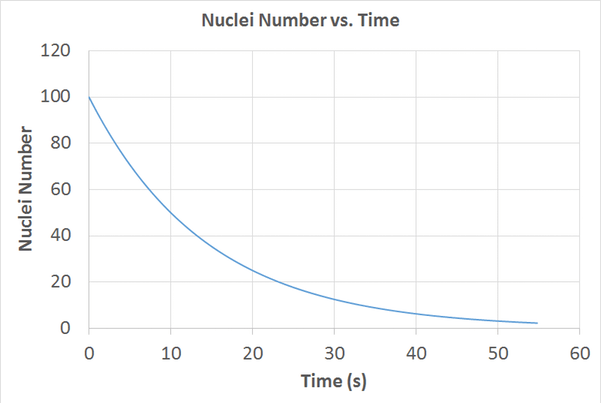
What is the Half life of this isotope?

a)

5 seconds

b)

10 seconds

c)

15 seconds

d)

20 seconds

37.

What is this rock formation an example of?

a)

Original horizontality

b)

lateral continuity

c)

faunal succession

d)

cross cutting relationships

38.

What principle is this rock showing?

a)

original horizontality

b)

cross cutting relationship

c)

inclusion

d)

lateral continuity

39.

The geological time scale was developed to represent

a)

The revolutionary history of Earth

b)

The revolutionary history of Fossils

c)

The revolutionary history of Rocks

40.

Law of Superposition states

a)

Younger rocks are on bottom, Older rocks are on top

b)

Oder rocks are on bottom, Younger rocks are on top

c)

Rocks are spread out evenly

41.

Principle of original horizontality

a)

States that sedimentary rocks are originally laid down in vertical layers

b)

States that sedimentary rocks are originally laid down in horizontal layers

c)

states that sedimentary rocks are originally laid down in diagonal layers

42.

Fire rocks from volcanoes

a)

Igneous

b)

Sedimentary

c)

Metamorphic

43.

A rock changed from other rocks by heat and pressure

a)

Igneous

b)

Sedimentary

c)

Metamorphic

44.

Rocks that are pressed under water for many years

a)

Igneous

b)

Sedimentary

c)

Metamorphic

45.

rocks form from lava at the surface of the Earth

a)

extrusive

b)

intrusive

46.

Rocks that form from the inside of Earth

a)

extrusive

b)

intrusive

47.

Put the eras in the correct order from OLDEST to YOUNGEST.

a)

Precambrian Time, Paleozoic Era, Mesozoic Era, Cenozoic Era

b)

Precambrian Time, Cenozoic Era, Mesozoic Era, Paleozoic Era

c)

Paleozoic Era, Precambrian Time, Mesozoic Era, Cenozoic Era

d)

Cenozoic Era, Mesozoic Era, Paleozoic Era, Precambrian Time

48.

What is an unconformity?

a)

A layer of sedimentary rock

b)

A layer of rocks with unusual fossils

c)

An intrustion

d)

A missing time or gap in the rock record because of erosion

49.

Which technique can be used to determine the exact age of a rock?

a)

Radiometric dating

b)

Relative dating

50.

What are fossils?

a)

the oldest layers of rock in a region

b)

living creatures with habitats in or around rocks

c)

preserved remains or traces of once living things

d)

objects that people of long ago left behind as artifacts

51.

The time that it takes 50% of an element to decay is called what?

a)

the daughter product

b)

the half-wit

c)

the half-life

d)

the half-time

52.

What kind of dating is used to compare the age of a rock to those around it?

a)

Radiometric

b)

Relative

53.
The age of a rock given as the number of years since the rock formed.
a)
relative age
b)
half-life
c)
absolute age
d)
radioactive decay
54.
The age of a rock compared to the ages of other rocks.
a)
relative age
b)
half-life
c)
absolute age
d)
radioactive decay
55.
A type of fossil that provides evidence of the activities of ancient organisms.
a)
trace fossil
b)
mold fossil
c)
petrified fossil
d)
cast fossil
56.
An igneous rock later formed when lava flows onto Earth's surface and hardens.
a)
extrusion
b)
index fossil
c)
intrusion
d)
uncomformity
57.
Which of the following statements about the fossil record is true?
a)
all organisms become fossils
b)
organisms having soft body parts make up most of the fossils
c)
all organisms that have shells become fossils
d)
the fossil record is incomplete
58.
Which period are we currently in?
a)
Quaternary
b)
Holocene
c)
Jurassic
d)
Tertiary
59.
Which radioactive isotope takes the greatest amount of time to undergo radioactive decay? 
a)
Carbon-14
b)
Potassium-40
c)
Uranium-238
d)
Rubidium-87
60.
Letter "A" is an....
a)
inclusion
b)
intrusion
c)
fault
d)
unconformity 
61.
Letter "F" is a....
a)
inclusion
b)
intrusion
c)
fault
d)
unconformity 
62.
The rock formation labeled "P" is a(n)...
a)
fault
b)
intrusion
c)
inclusion
d)
unconformity
63.
The statement "Layer B is younger than layer E" can be determined by using which principle?
a)
Principle of Horizontality
b)
Principle of Cross-Cutting Relationships
c)
Principle of Inclusions
d)
Principle of Superposition
64.
When magma is cooled and solidified it becomes what type of rock?
a)
igneous
b)
metamorphic
c)
sedimentary
d)
conglomerate
65.
If Marble is a rock that has large crystals and formed by exposure to high heat and pressure, what type of rock is it?  
a)
Igneous
b)
Metamorphic
c)
Sedimentary
d)
Sediment
66.
Rock X is produced by "cooling".  What type of rock is Rock X?
a)
Sedimentary Rock
b)
Metamorphic Rock
c)
Sediment
d)
Igneous Rock
67.
Which statement correctly compares techniques used to determine rock ages?
a)
Core rock samples indicate ABSOLUTE age, but radioactive decay indicates RELATIVE ages.
b)
Radioactive dating indicates ABSOLUTE age, but the Law of Superposition indicates RELATIVE age.
c)
The Law of Superposition indicates ABSOLUTE age, but core rock samples indicates RELATIVE age. 
d)
Position of fossils in rocks indicate ABSOLUTE age, but core rock samples indicate RELATIVE age.
68.
Which of these layers is ALL solid iron and nickle?
a)
inner core
b)
outer core
c)
lithosphere
d)
mesosphere
69.
This layer of Earth is the thickest part
a)
crust
b)
outer core
c)
mantle
d)
inner core
70.
As you travel from the inner core to the crust, how would temperature, pressure and density of the material change?
a)
The would all increase
b)
The would all decrease.
c)
They would stay the same.  
d)
Temperature would decrease, but pressure and density would increase. 
71.
What two main factors did scientists claim affect Earth's formation?
a)
Rock explosion and collision
b)
Mass and Volume
c)
Gravity and Density
d)
Magic and chance
72.
What is one difference between layer W and layer X (seen in the diagram)?
a)
Layer W is hotter than layer X
b)
Layer W is less dense than layer X
c)
Layer W is thicker than layer X
d)
Layer W and Layer X are not different
73.

SC.7.E.6.2

Deforestation occurs when large areas of trees are cut down. Which of the following impacts on the environment would result from deforestation?

a)

increased erosion

b)

colder temperature

c)

decreased carbon dioxide

d)

greater oxygen production

74.

SC.6.E.6.1

Many different forces shape the surface of the Earth constantly. Starting with a rock that is exposed to the elements, what order would you expect the following Earth process to affect the rock's shape?

a)

Deposition, eruption and weathering

b)

Deposition, erosion and weathering

c)

Weathering, Erosion and deposition

d)

Weathering, Deposition and Erosion

75.

Weathering and erosion are two processes which shape the surface of the Earth. Which of the following sets of factors cause weathering and erosion?

a)

water, wind and gravity

b)

Water, wind, gravity, glaciers, waves

c)

acids, roots of trees and water only

d)

water and wind only

76.

SC.7.E.6.6

Why would deforestation cause large amounts of erosion on the land?

a)

tree roots hold the ground, dirt and moister and do not let the land erode with wind or water as much

b)

Tree roots do not really make a difference whether the land is eroded or not. It has to do with the pull of water flow

c)

Deforestation only happens in Brazil and does not affect the rest of the world.

d)

Deforestation removes large amounts of trees from the land. This is important for weathering.

77.
Water getting into cracks, freezing, and breaking the rocks or pavement apart
a)
Weathering
b)
Erosion
c)
Deposition
78.
Waves dropping sand on the beach
a)
Weathering 
b)
Erosion
c)
Deposition
79.
Layers of sediment forming at the bottom of the ocean floor
a)
Weathering
b)
Erosion
c)
Deposition
80.

Define delta.

a)

a narrow stretch of land connecting two larger areas

b)

a point of land that extends into a river, lake or ocean

c)

a body of land jutting into a lake or ocean surrounded by water on three sides

d)

a flat, low-lying land built up from soil carried downstream by a river and deposited at its mouth

81.

Find the correct definition of the underlined word, glacier.

a)

a narrow stretch of land connecting two larger areas

b)

a large natural stream of water that runs through the land

c)

a large, thick body of slow moving ice

d)

a narrow stretch of water joining two larger bodies of water

82.

What is a plateau?

a)

an area of level land, usually at low elevation and often covered with grasses

b)

an area of land drained by a given river and its branches

c)

land usually level, at low elevation

d)

an area of flat or rolling land at high elevation

83.

Find the correct definition of the underlined word, valley.

a)

an area of level land, usually at low elevation and often covered with grasses

b)

an area of low land usually between hills or mountains

c)

land usually level, at low elevation

d)

an area of flat or rolling land at high elevation

84.
What landform is this?
a)
delta
b)
canyon
c)
valley
d)
sand dune
85.
What landform is this?
a)
mountain
b)
canyon
c)
valley
d)
sand dune
86.
The rock, dust, soil, and minerals of the Earth's solid crust and outer mantle make up the ____
a)
Biosphere
b)
Geosphere
c)
Cryosphere
d)
Atmosphere
87.
This is part of the....
a)
Geosphere
b)
Biosphere
c)
Cryosphere
d)
Atmosphere
88.
This is part of the....
a)
Geosphere
b)
Atmosphere
c)
Biosphere
d)
Hydrosphere
89.
What part of our atmosphere is where the ozone layer is?
a)
Stratosphere
b)
Troposphere
c)
Mesosphere
d)
Thermosphere
90.
What is the part of our atmosphere that protects us from comets because it acts like a shield.  It  is also very cold.  There are actually ice particles in the air.
a)
Atmosphere
b)
Stratosphere
c)
Mesosphere
d)
Thermosphere
91.
In which part of the atmosphere will we find a tree growing?
a)
Thermosphere
b)
Stratosphere
c)
Mesosphere
d)
Troposphere
92.
Daily temperature, daily rainfall, daily amount of sunshine
a)
Weather
b)
Climate
93.
The boundary between two air masses that meet is called?
a)
front
b)
back
c)
side
d)
air mass
94.
The tropical rainforest has experienced 50 to 260 inches of rainfall annually for the last  few decades.
a)
Weather
b)
Climate
95.

What is climate?

a)

A weather forecaster

b)

Day to day conditions of a particular place

c)

Rain, snow, and sleet

d)

Average weather conditions over a long period of time
96.
The main human activity that releases greenhouse gases is
a)
using bottled water
b)
burning fossil fuels
c)
texting on cellphones
d)
eating meat
97.
Why is the increase of Greenhouse gasses a big issue?
a)
It causes climate change and increase in the global temerature 
b)
It can lead to a major increase in Greenhouses 
c)
It leads to more factories
d)
It causes a major decrease in people
98.
Which of the following is the most troubling greenhouse gas being produced by humans?
a)
Water Vapor
b)
Carbon Dioxide
c)
Methane
d)
Nitrous Oxide
99.
What causes the circulation of air in the atmosphere?
a)
Air in the atmosphere is heated by the sun and sinks to the ground.
b)
The ground is heated by the sun and then heats the air, causing the air to rise.
c)
Air loses heat to the ground and then rises upward to obtain more energy.
d)
The sun heats the clouds which forces the cooler air to move away and sink.
100.

The substance that is melted rock below the ground is called what?

a)

Magma

b)

Sediment

c)

Gas

d)

Water

101.

What are the particles of weathered rock called?

a)

Sediments

b)

Fossils

c)

Rocks

d)

Minerals

102.

This is the type of rock that forms when earth processes change the texture and heat and pressure are applied.

a)

Igneous rock

b)

Sedimentary rock

c)

Metamorphic rock

d)

Rock Cycle

103.

Which missing rock type is the arrow pointing at?

a)

Igneous

b)

Sedimentary

c)

Metamorphic

104.

How does a metamorphic rock become an igneous rock?

a)

Heat and pressure

b)

Melting and cooling

c)

Weathering/Erosion and Cementation

d)

Cycle

105.

How does an igneous rock become a sedimentary rock?

a)

Heat and pressure

b)

Melting and cooling

c)

Weathering/Erosion and Cementation

d)

Cycling

106.

How does a sedimentary rock become a metamorphic rock?

a)

Heat and pressure

b)

Melting and cooling

c)

Weathering/Erosion and Cementation

d)

Cycling

107.

Which material is melting and cooling to become an igneous rock?

a)

Sediments

b)

Sedimentary rocks

c)

Magma

d)

Igneous rocks

108.

Which material is being broken down through weathering and erosion?

a)

Igneous

b)

Magma

c)

Sediments

d)

Sedimentary

109.
What is the theory that states that parts of the Earth's crust slowly drift atop a liquid core.
a)
Theory of Evolution
b)
Heliocentric Theory
c)
Geocentric Theory
d)
Continental Drift Theory
110.
What do you call the supercontinent landmass formed million years ago?
a)
Pangea
b)
Asia
c)
Pantallasa
d)
Eurasi
111.

Two plates spread or move apart at what boundary?

a)

Convergent

b)

Divergent

c)

Transform

112.

Two plates slide past each other at what boundary?

a)

Covergent

b)

Divergent

c)

Transform

113.

When two continental plates converge (collide) what type of crustal feature is formed?

a)

Mid Ocean Ridge

b)

Subduction Zone

c)

Rift Valley

d)

Folded Mountains

114.

A divergent boundary on land creates what feature?

a)

Mid Ocean Ridge

b)

Rift Valley

c)

Subduction Zone

d)

Deep Ocean Trench

115.
Analyze the seashell found in the white layer.  Which statement is true of the rock layer that contains this fossil?
a)
It could also contain a fossil from the bottom layer.
b)
It is older than the layers below it.
c)
It is younger than the layers above it.
d)
It is older than the layers above it.
116.
How does absolute age differ from relative age?
a)
only absolute dating indicates which rock is older than another
b)
only absolute dating finds the age in years
c)
only relative dating finds the age in years
117.
Most earthquakes happen along the _________________. 
a)
coast
b)
faults
c)
desert
d)
directions
118.
Earthquakes under the water can cause _________________________________.
a)
tornadoes
b)
tsunamis
c)
lightening
d)
hailstorms
119.
Many earthquakes happen along the borders of...
a)
Countries
b)
Tetonic Plates
c)
Climate Zones
d)
None of the above.
120.
Why is the increase of Greenhouse gasses a big issue?
a)

It causes climate change and increase in the global temerature 

b)

It can lead to a major increase in Greenhouses 

c)

It leads to more factories

d)

It causes a major decrease in people