
 Worksheets
Chemistry review
Total questions: 111
Worksheet time: 1hrs 4mins

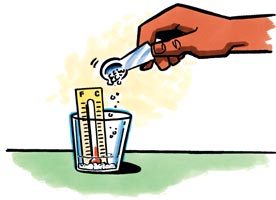
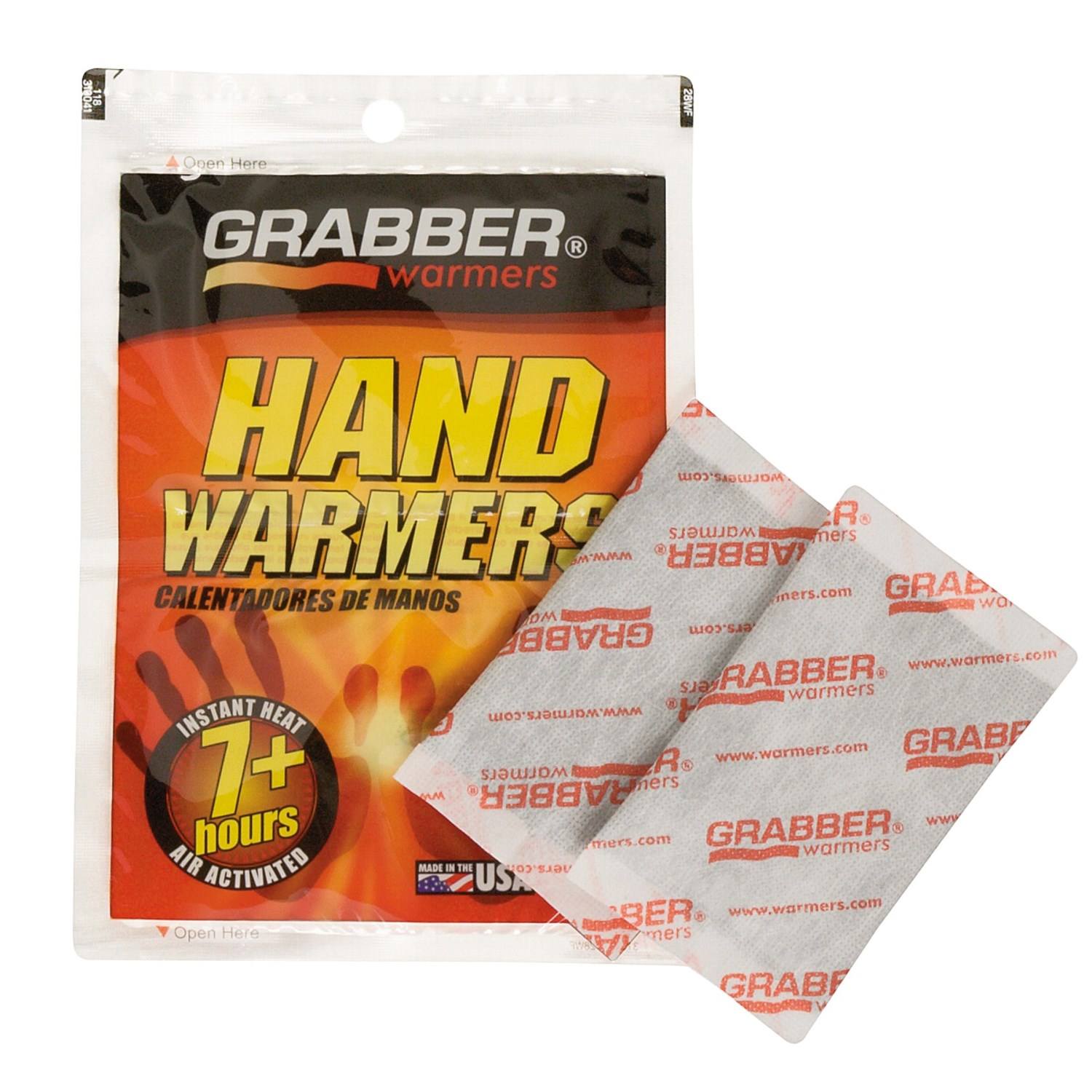

What term is given to a reaction which transfers heat energy to the surroundings?
Endothermic
Reversible
Exothermic
Exotermic
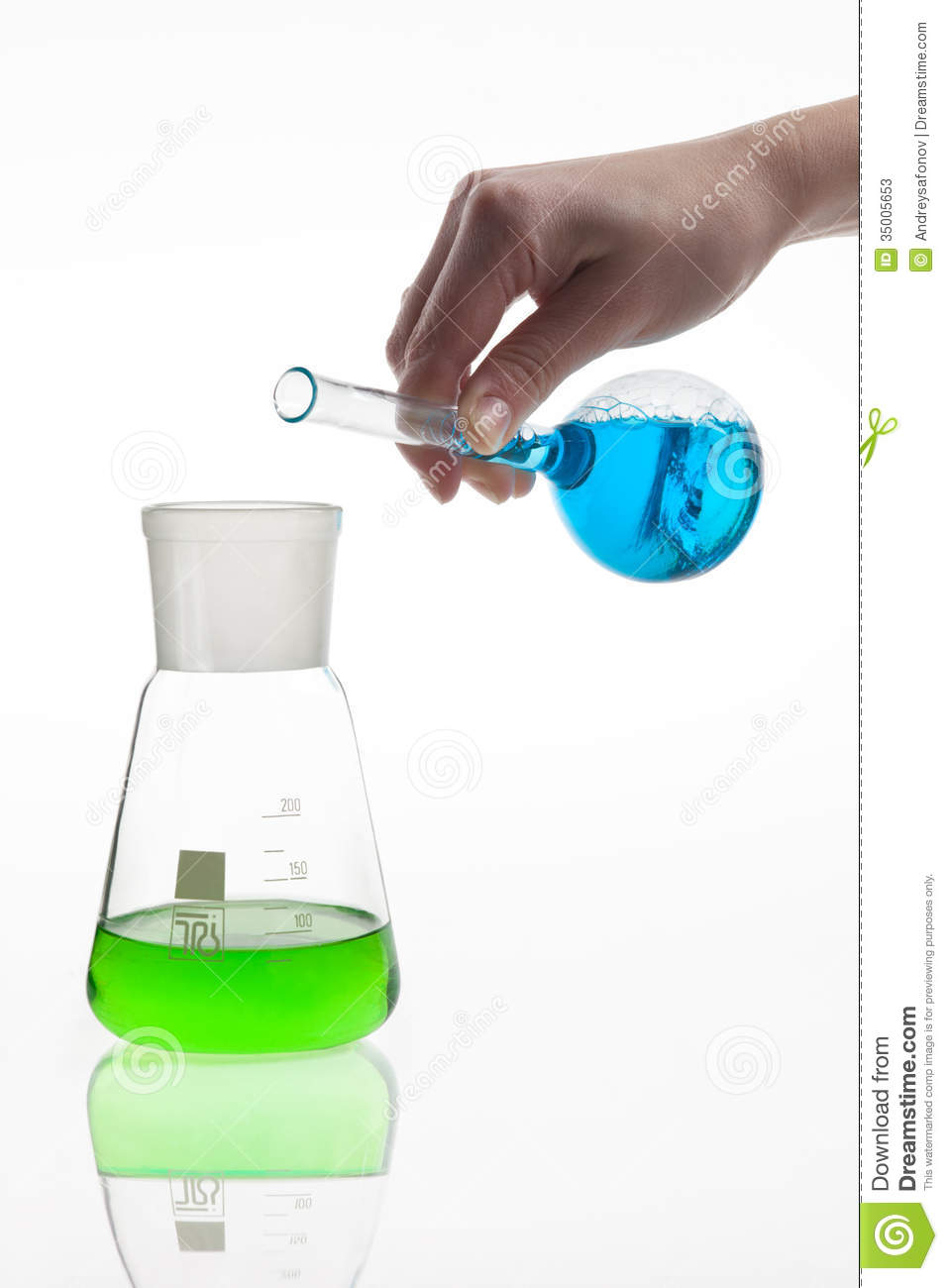
A student mixed two chemicals to allow them to react. The temperature before the reaction was 25 ° C. The temperature after the reaction was 18° C. Which of the following is true?
It is an exothermic reaction
It is an endothermic reaction
Temperature is...
A measure of average kinetic energy in a substance
The same as heat
A measure of the movement of the atoms in a substance
A measure of the average potential energy in a substance

What type of reaction is this?
Exothermic
Endothermic
Kinetic
Potential
What type of change can be easily reversed?
chemical change
physical change
both chemical and physical changes
neither physical or chemical changes
Which of the following is an example of a physical change?
a bike rusting
toast burning
butter melting
food spoiling
Which of the following examples is a physical change but NOT a change of state of matter?
logs burning
water freezing into ice cubes
candle wax melting
paper being cut
Which of the following is an example of a chemical change?
a penny tarnishing
a mirror being scratched
hair being cut
water being boiled
What is the best way to separate a mixture of sugar, sand, and water?
Freeze the mixture, causing the water to be destroyed, then sift the sugar from the sand.
Filter the sand from the sugar and water, then heat the mixture, causing the water to evaporate.
Filter the mixture, causing the sugar and sand to get caught but not the water.
Stir the mixture, causing the water to move above the sugar and sand.

A student is investigating changes with common classroom materials. Which of the following BEST describes the conclusion the student can make about the investigations?
The paperclip shows evidence of a physical change by changing the shape of the object, whereas the pencil eraser and hole puncher show evidence of a physical change by changing the size of the object.
All three investigations show evidence of a physical change due to a change in the color of the original substance.
The paperclip and hole puncher shows evidence of a physical change by changing the chemical properties of the original object, whereas the pencil eraser shows evidence of a physical change by changing the size of the object.
All three investigations show evidence of a physical change due to a change in state of matter.
A 5th grade student places baking soda in a cup. The student then adds vinegar to the cup. The student collects the data below from the experiment. Based upon the results of the experiment, which statement BEST describes whether the change is a physical or chemical change.
The data concludes that a physical change has occurred because it had an increased change in temperature, which resulted in the liquid to start bubbling.
The data concludes that a physical change has occurred because the color of the liquid changed when you mixed two materials.
The data concludes that a chemical change has occurred because there was formation of bubbles when the materials reacted to each other.
The data concludes that a chemical change has occurred because mixing two substances together will always result in a reaction.

Which of the following is a correct statement about the investigations?
All of the situations are examples of physical changes because all of the investigations exhibit changes to the physical properties.
None of the situations are examples of physical changes because they all involve a color change.
Situation 2 is a physical change because rust forming is a natural process.
Situations 1 and 3 are physical changes because no new substances are formed.
What is physical change?
How two chemicals react with one another when combined
A property that we can measure or observe with our 5 senses or other tools
When two chemicals react with one another to form a new substance
When a change occurs but it does not result in the formation of a new substance
What is chemical change?
How two chemicals react with one another when combined
A property that we can measure or observe with our 5 senses or other tools
When two chemicals react with one another to form a new substance
When a change occurs but it does not result in the formation of a new substance
When you increase the energy by heating a liquid what happens to the motion of the molecules
They slow down
They speed up
Heat doesnt change the motion of the molecules
Which of the following is an indication of chemical change
Melting
Freezing
Burning
Evaporating
What do we call the molecules that are present at the end of a chemical reaction?
Reactants
Products
Ingredients
Atoms
What does the number 3 represent in 4NH3?
Subscript
Superscript
Coefficient
What does the number 4 represent in 4NH3?
Subscript
Superscript
Coefficient

How many Nitrogen (N) atoms are in 4NH3?
4
1
3
12

How many Hydrogen (H) atoms are in 4NH3?
4
1
3
12

How many total molecules is 4NH3?
4
1
3
12
How many total atoms make up 4NH3?
4
16
3
12

In the equation shown, what are the reactant(s)?
N2 + H2
NH3
In the equation shown, what are the product(s)?
N2 + H2
NH3

Is this equation balanced?
Yes
No

Is this equation balanced?
Yes
No

Is this equation balanced?
Yes
No

To balance an equation you should:
ONLY change subscripts.
ONLY change coefficients.
Change BOTH subscripts and coefficients.

Which reactant is missing from the equation shown?
(What should go in the place of the "X"?)
One hydrogen atom.
Three hydrogen atoms.
Four oxygen atoms.

Which of the following is a chemical reaction?
Sodium and chlorine atoms bond to form salt molecules.
Ice melts to form water.
Carbon dioxide freezes to form dry ice.
Salt and water mix to form salt water.
In a chemical equation...
a new substance is formed
new atoms are formed
old atoms disappear
a equal sign is always used
Reactants are
new substances
old substances
likely to disappear
likely to appear
Products are
old substances
new substances
atoms that disappear
atoms that do not exist
When writing a chemical equation, reactants are on the _____________ while products are on the _________________.
top, bottom
right, left
left, right
bottom, top
The law of conservation of mass states
chemical reactions create new atoms
atoms cannot be created or destroyed
reactants vanish once a reaction takes place
products appear when a reaction takes place
The amount of atoms on each side of a chemical equation are
different
the same

Is the following equation balanced?
True
False

How many Potassium (K) atom are there?
1
2
3
4

How many Iron (Fe) and Oxygen (O) are there?
Fe = 1, O = 2
Fe = 2, O = 3
Fe = 2, O = 1
Fe = 1, O = 3

How many Hydrogen (H) and how many Chlorine (Cl) are there?
H = 4, Cl = 1
H = 4, Cl = 0
H = 4, Cl = 3
H = 4, Cl = 4

How many molecules are there?
3
6
12
18

Which of the following is true?
H = 6, So = 4
H = 3, So = 4
H = 6, So = 12
H = 6, So = 2
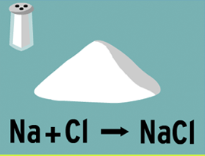
When sodium and chlorine combine to form sodium chloride, sodium chloride is the:
Originator
Reactant
Product
Produce
How many atoms do you have in the compound 2MgCl2?
2 atoms
4 atoms
6 atoms
8 atoms
How many Ca (Calcium) atoms are found in Ca(OH)2?
5 atoms
3 atoms
2 atoms
1 atom
How many atoms do you have in the chemical formula 2Mg(ClO3)2?
2 atoms
7 atoms
9 atoms
18 atoms
Law of conservation of mass states the amounts of atoms in the reactants and the products...
Increase
Decrease
Stay the same
No correct answer
Does the equation H2+O2 →H2O follow the Law of Conservation of Mass?
Yes, because the atoms are equal.
No, because more info is needed.
No, because there are more atoms in the product.
No, because there are more atoms in the reactant.

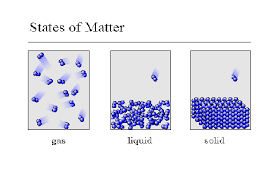

Freezing
Solid to gas
Liquid to solid
Gas to solid

Boiling
liquid to gas
gas to solid
gas to liquid

What is happening when my ice cream changes from a solid to a liquid?
freezing
melting
burning

The state of matter that has no definite size or shape is
Solid
Liquid
Gas

Particles of a liquid
are tightly packed together and stay in a fixed position.
are free to move around one another but still touch.
Solid to Gas
Deposition
Sublimation
Evaporation
What is condensation?
gas to solid
gas to liquid
liquid to solid
The slower the particles in a substance move,
the colder it is.
the warmer it is.
the more energy it has.

Definite shape and definite volume
Solid
Liquid
Gas

Has a definite volume but not a definite shape
Solid
Liquid
Gas
Liquid to Gas
Condensation
Evaporation
Sublimation
Phase change going from Liquid to Solid...
Melting
Freezing
Condensation
Sublimation
Phase change going from a Gas to a Liquid...
Sublimation
Deposition
Ionization
Condensation
Phase change going from a Liquid to a Gas...
Vaporization
Deposition
Condensation
Melting
Phase change going from a Gas to a Plasma...
Melting
Vaporization
Ionization
Freezing
Phase change going from a Solid to a Gas...
Deposition
Sublimation
Condensation
Recombination
Phase change going from a Solid to a Liquid...
Freezing
Condensation
Melting
Sublimation
Phase change going from a Plasma to a Gas...
Ionization
Recombination
Condensation
Sublimation
Phase change going from a Gas to a Solid...
Deposition
Sublimation
Condensation
Vaporization
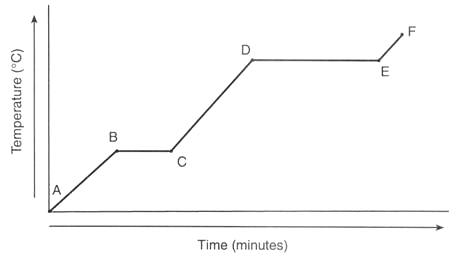
Is the substance gaining or losing energy?
Gaining
Losing
Are the particles moving faster or slower as time goes on?
Faster
Slower
What state/phase is the object likely from points A to B?
Solid
Liquid
Gas
Plasma
What is happening to the particles in the substance between points A and B?
Melting
Freezing
Speeding Up
Slowing Down
What is happening to the particles in the substance between points D and E?
Melting
Freezing
Vaporizing
Sublimating

Is the substance gaining or losing energy?
Gaining
Losing
Kaitlyn is doing an experiment where she wants to learn if using different amounts of fertilizer has an effect on the mass of each apple produced on apple trees at the orchard. What base unit would she use to collect her data?
liters
grams
meters
hectograms
The amount of space (volume) a liquid takes up would be measured in what base unit?
liter
meter
gallon
gram
The Metric System is based on this number.
100
1/10
1/100
10
How is density measured?
With a densometer
By measuring the length, width, and height and calculating using l x w x h
By measuring mass and volume and then calculating using D=m/v
Using a graduated cylinder and water
What is the base metric unit for mass?
meters
liters
grams
g/mL
What is the base metric unit for volume?
meters
liters
grams
g/mL
3,000 cm = _____ dekameters
3
30
0.03
0.003
7.4 L = _____ cL
74 cL
7400 cL
740 cL
0.074 cL
78 dm = _____ m
780 m
0.78 m
7800 m
7.8 m

