
 Worksheets
Year 10 Semester Quiz preparation
Total questions: 116
Worksheet time: 2hrs 2mins


Mercury,Saturn
Jupiter, Uranus, Neptune
Jupiter, Neptune,
Mercury,Saturn,
Uranus
Mars,Jupiter,
Saturn,Uranus
Neptune
Which is the smallest planet?
Mercury
Mars
Earth
Venus
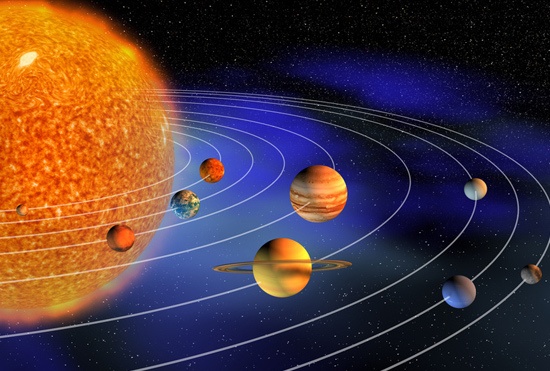
Why do all of the planets orbit the sun rather than Earth?
the sun has more mass
the sun is a star
the Earth is heavier
the sun is in the middle of the milky way
John measures the length of each side of a square. He uses that value to calculate the perimeter.
IV: (a)
DV: (b)
David measures how many inches his tomato plant grows every week.
IV: (a)
DV: (b)
Jake works as a sales representative. He earns $1,275 per month
plus an 8 percent commission on his total sales.
IV: (a)
DV: (b)
According to the Newton’s Universal Law of Gravitation, the force of gravity between two objects is directly proportional to
The distance between the objects.
The product of the masses of the objects.
The gravitational constant.
The square of the distance between the objects.
What is the reason for the motion of the Moon on its orbit?
The gravitational force exerted on the Earth by the Moon.
The gravitational force exerted by the Sun.
The gravitational force exerted by the Planets.
The gravitational force exerted on the Moon by the Earth

A satellite moves around the Earth in its orbit and does not escape from the space because the satellite
Become weightless
Move in vacuum
Always pulled by the Earth gravitational force
Move with highest speed


Nitrogen bases are joined by which type of bond?
polar bonds
hydrogen bonds
phosphate bonds
deoxyribose bonds
Cytosine bonds with ____
Adenine
Thymine
Guanine
Uracil
What does DNA stand for?
Deoxyribonucleic acid
Denitrogenous acid
Deribonucleic acid
Diribonucleic acid

The human body contains ____ chromosomes and ___ cells
23 pairs of chromosomes and 75 million cells
46 pairs of chromosomes and 150 trillion cells
48 pairs of chromosomes and 75 trillion cells
23 pairs of chromosomes and 75 trillion cells

Which of the following is a base pair?
Adenine - Cytosine
Cytosine - Thymine
Deoxyribose - Cytosine
Cytosine - Guanine

During what phase of Mitosis do the chromosomes line up in the Middle
Metaphase
Prophase
Telophase
Anaphase
In which phase of Mitosis do the Chromosomes pull Apart
Metaphase
Prophase
Anaphase
Telophase
What is the purpose of Mitosis?
Growth of an organism and Repair of damaged tissue
To help the body get rid of extra cells
To increase the amount of classwork you have to do
To get rid of the nucleus
For scientific Drawings: True or False
You should make your drawing as large as possible?
True
False
Validity is a concept that... (choose the best answer)
Measures the consistency of the measurement taken under the study.
Covers the the full range of the issue set for the study
Measures the accuracy of the concept that it supposes to measure.
A fair test is a __________ experiment.
reliable
valid
accurate
scientific
To ensure results are reliable the experiment should be
Done once
Repeated
Done as exactly the same as the method outlines
Repeated if necessary
A method is valid if
A list of equipment is provided
Variables are controlled
Variables are not controlled
They are detailed,logical and easy to understand
A reliable experiment produces results which
are consistent
vary greatly
are different from sample answers
are not consistent
Repetition _______________ the effect of outliers and allows them to be removed.
increases
minimises
equals
justifies
Can results be reliable without being valid
True
False
Results collected from repeat trials of an experiment should be
averaged
graphed
added up
subtracted
A faulty thermometer can consistently provide a wrong value therefore providing reliably
Invalid results
Valid results
Accurate results
Weird results
What is the Big Bang theory?
A. A theory about the creation of stars
B. A theory about the origins and evolution of the universe
C. A theory about the formation of galaxies
D. A theory about the expansion of black holes
What does redshift refer to in the context of the Big Bang theory?
A. The shifting of light towards longer wavelengths
B. The shifting of light towards shorter wavelengths
C. The movement of galaxies towards each other
D. The movement of galaxies away from each other
How does redshift provide evidence for the Big Bang theory?
A. It shows that galaxies are stationary and not moving
B. It demonstrates the existence of black holes
C. It indicates that galaxies are moving away from each other, supporting the idea of an expanding universe
D. It supports the concept of a steady-state universe
Which of the following is not a piece of evidence supporting the Big Bang theory?
A. Cosmic microwave background radiation (CMBR)
B. Red shift
C. The presence of helium
D. The existence of black holes
The Big Bang theory suggests that the universe originated from a:
A. Steady-state model
B. White hole
C. An infinitely dense and small point called singularity
D. Black hole
The redshift of distant galaxies indicates that:
A. The universe is contracting
B. The universe is expanding
C. The universe is stationary
D. The speed of light is decreasing

What phase of Meiosis is in this picture?
Prophase I
Metaphase I
Anaphase I
Telophase I

Which phase of meiosis is shown in the picture?
Prophase II
Metaphase II
Telophase I
Telophase II

Which phase of meiosis does the picture on the left happen?
prophase I
prophase II
metaphase I
telophase II
After meiosis II, which of the following is true about the cells that are produced?
Four cells are produced. They are identical to each other and each contains half the number of chromosomes that the parent cell has.
Four cells are produced. Each is unique and contains half the number of chromosomes that the parent cell has.
Four cells are produced. Each is unique and contains the same number of chromosomes that the parent cell has.
Two cells are produced. Each is unique and contains the same number of chromosomes that the parent cell has.
What effect does crossing over has in terms of traits of offspring?
Results in identical traits of offsprings.
Causes variation in the traits of offsprings.
It really does nothing to the traits of offspring.
After meiosis I, which of the following is true about the cells that are produced?
Two cells are produced. They are identical to each other and each contains half the number of chromosomes that the parent cell has.
Two cells are produced. They are unique to each other and each contains half the number of chromosomes that the parent cell has.
Four cells are produced. They are unique to each other and contain the same number of chromosomes that the parent cell has.
Only one cell is produced. It is identical to the parent cell and contains the same number of chromosomes.
The four cells that are produced after Meiosis are _______.
haploid because they contain just half the number of chromosomes as the parent cell.
diploid because they contain as many chromosomes as the parent cell.
diploid because they contain twice as many chromosomes as the parent cell.
What is the purpose of Mitosis?
Growth of an organism and Repair of damaged tissue
To help the body get rid of extra cells
To increase the amount of classwork you have to do
To get rid of the nucleus
How many chromosomes to do most human cells have?
2
46
92
Identical to your age

In mitosis, the two resulting cells are
different from the starting cell and identical to each other.
different from the starting cell and different from each other.
identical to the starting cell and different from each other.
identical to the starting cell and identical to each other.

Fruit fly body cells have 8 chromosomes. After mitosis, you would expect a resulting fruit fly daughter cell to have ...
16 chromosomes.
46 chromosomes.
8 chromosomes.
4 chromosomes.
The two types of alleles are (select two)
dominant
doughnut
expressive
recessive
What does a punnet square show us?
The age of the offspring
The chance of a genotype (trait) showing up in offspring
Numbers
Blue eyes

What are the chances that the offspring will have homozygous recessive traits?
1 in 4
3 out of 4
75%
50%
If the father's genotypes are SS and the mothers are ss, the offspring will have:
All Ss
Half will be SS, half ss
Mostly SS
Only recessive genes
A recessive genotype will show when:
The offspring have both dominant and recessive genotypes
The offspring has two recessive genotypes
The offspring have two dominant genotypes
The mother has blue eyes

What does A indicate?
A male that has the trait.
A female that has the trait.
A female that does not have the trait.
A male that does not have the trait.
What does B indicate?
line that indicates someone likes each other
line that indicates a marriage
line that indicates a relationship of parents and children
A male that does not have the trait.

How many generations are represented in the pedigree?
2
3
4
5

In the diagram, individual III-3 indicates
a female with no freckles
a male with no freckles
a male with freckles
a female with freckles
In the diagram, individual II-1 indicates
a female with no freckles
a male with no freckles
a male with freckles
a female with freckles
What were the first two elements formed after the big bang?
Oxygen
Hydrogen
Helium
Silicon
The universe is
Expanding
Shrinking
Contracting
Name the scientist that discovered the universe is expanding
(a)
What is Edwin Hubbles law known as?
(a)
The single moment when the universe was created is known as
The dawn of man
Big bang
Singularity
Whooosh
What temperature was the universe when it first formed?
Hot
Cold
Cosmic Microwave Background Radiation (CMBR) is the term used to describe the residual microwave radiation observed everywhere in the universe that seems to have no single source. The observation of CMBR is used as evidence of the Big Bang Theory because it is believed to be -
the result of collisions between neighboring galaxies.
particles of dust that have absorbed radioactivity.
radiation left over from the rapid expansion of matter.
light energy emitted from the source of the Big Bang.
The red-shift in the spectral lines of light, reaching us from other galaxies implies that these galaxies ____________.
Are moving closer to one another
Are moving farther apart from one another
Are in rapid rotation
Redshift doesn´t exist
First Scientist to to present observational evidence that supported that the universe is expanding. (aka... red shift)
Edwin Hubble
Albert Einstein
George Gamow
Georges Lemaitre

What color is the longest wavelength?
Green
Yellow
Blue
Red

When objects move towards you, the wavelength....
Increases (gets longer)
Decreases (gets shorter)

When objects move away from you, the wavelength....
Increases (gets longer)
Decreases (gets shorter)

Identify the components in a justified conclusion
Comment on overall relationship (refer to data), link to RQ, link to claim (if applicable) and statement about reliability and validity
Comment on overall relationship, link to RQ, link to claim (if applicable) and statement about reliability and validity
Comment on overall relationship (refer to data), link to RQ, link to claim (if applicable) and statement about validity
Comment on overall relationship (refer to data), link to claim (if applicable) and statement about reliability and validity

