
 Worksheets
IAPS Semester 1 Review
Total questions: 115
Worksheet time: 10hrs 35mins
Most hypotheses of experiments are not accepted until other scientists verify the results. Which process occurs when one scientist carries out the same procedures used by another in order to verify the results?
repetition
replication
trial
validation
You are designing an experiment to determine whether plants grow faster with or without water. Which should be varied in order to conduct a controlled experiment?
the type of soil in which you grow the plants
the temperature of water you give to the plants
the amount of sunlight your plants receive
the amount of water you give to the plants
After conducting an investigation in which Christine tested several objects to determine whether they were magnetic, she concluded that some types of metal are not magnetic. Which observation would have led Christine to this conclusion?
Only metallic objects were attracted to magnets
None of the metallic objects were attracted to magnets.
Some metallic objects were attracted to magnets, but some were not.
Some metallic objects had a stronger attraction to magnets than other metallic objects.

To compare how different types of soil absorbed water, Christian set up an experiment. He poked equal numbers and sizes of holes into the bottoms of three plastic cups. He filled one cup with sand, one with potting soil, and left one empty. He placed each cup in a stand over a beaker. Christian poured 400 mL (milliliters) of water into each of the cups. He then measured the amount of water collected in the beakers beneath each cup at 1 minute intervals for 3 minutes. What is the control in this experiment?
the empty cup
the cup with the sand
the cup with the soil
the amount of water collected in the beaker

For the Science Fair, Alyssa designs an experiment to learn about erosion. First, she sets up three long trays with equal-sized piles of sand at one end of each tray. Then she sets up Tray A so that it lays flat on a table. She elevates the end of Tray B that holds the sand by 5 cm (centimeters). Next, she elevates the end of Tray C that holds the sand by 10 cm. Alyssa slowly pours 200 mL (milliliters) of water onto the sand in each tray. Finally, she observes and measures how far sand is carried by the water poured into each tray.
What is the test variable (independent variable) in Alyssa's experiment?
the volume of water she pours
the speed she pours the water
the height of the tray
the amount of sand
Luis wants to compare the density of three solid objects that are different shapes and sizes. What information does he need to make the comparison?
how flat or round each object is
the relative weights of the objects
the mass and volume of each object
how opaque or transparent each object is
Jane measures a piece of metal and determines it has a mass of 10 grams and a volume of 2 mL. What is the density of the piece of metal?
20 g/mL
10 g/mL
5 g/mL
0.2 g/mL

Your teacher holds up a solid and informs you that this non-magnetic solid is less dense than zinc. Based on this information, the solid could be:
Carbon
Nickel
Zinc
None of the above

Brandon is trying to identify the type of metal that makes up four rectangular metal cubes. He has a cube of iron that has a mass of 15.6 g and a volume of 2.0 cm3. He determines the mass and volume of each unknown. Which unknown is most likely to be iron?
Unknown A
Unknown B
Unknown C
Unknown D
The density of water is 1.00 g/cm3. The density of ethanol is 0.80 g/cm3. What is the volume of ethanol, in cm3 that has the same mass as 100 cm3 of water?
180
125
100
80
Choose the correct statement.
Atoms are the biggest particle in an element.
Atoms are the smallest particle in a molecule.
Atom is the smallest particle in an element.
Atoms are the smallest particle in a mixture
Silver is a white metal that is an excellent conductor. Silver tarnishes when exposed to air and light. The density of silver is 10.49 g/cm3 The melting point is 962oC and the boiling point is 2000oC. A chemical property of silver is
melting point
boiling point
density
tarnishing
Which statement is NOT a description of a chemical reaction?
A solid is dropped into a beaker of liquid and a gas is released.
Two liquids are mixed in a beaker and a solid forms at the bottom of the beaker.
A solid is dropped into a beaker of liquid and an explosion occurs.
A liquid is heated in the sun and half of it evaporates.
A new substance is produced when two substances are mixed. Under what circumstances would you be most certain that the mass of the substances before the mixing was the same as the mass after the mixing?
When the substances involved are solids.
When no change in the volume of the substance occurs.
When the change takes place in a closed container.
When no gas is produced.

Which statement correctly describes an element based on its position in the periodic table?
Element X is a halogen that will form a negative anion by losing electrons.
Element Y is a noble gas that will form positively charged ions called cations.
Element Z is an alkali metal that is very reactive.
Element W is a noble gas that does not readily bond with other elements.
The substance that dissolves in a solution is called the _________________.
solvent
solute
saturated
dilute
_________________ is the liquid from which a substance is dissolved into.
solvent
solute
saturated
dilute
A sample of Acme Metals waste water was found to contain high levels a heavy metal. The heavy metal found in the sample would be considered a _______________________.
Solute
Contaminant
Solvent

Cup A contains 1 gram of salt in 100 mL of water and Cup B contains 5 grams of salt in 100 mL of water. The salt in both cups is completely dissolved. Which of the following statements is correct?
Solution A is more dilute than solution B
Solution A is more concentrated than solution B
Solution A and B have the same amount of solute
Solution A is a saturated solution
How can you increase the concentration of a solution of a solid in water?
By dividing the solution between two containers
By evaporating some of the water
By adding water and Stirring
By vigorously stirring alone

What is the volume of the liquid?
4.2 mL
24 mL
42 mL
58 mL
A magnesium ribbon is burnt in the air to form the grayish oxide of magnesium - magnesium oxide (MgO). How would you classify this oxide?
Element
Compound
Mixture
Lucas used Legos to build different types of molecules. He used Legos because real molecules are too small to see and they are a simple representation for a complex concept. The Legos were used as
Scientific models
Experimentation
Claim, Evidence, Reasoning Statements
Manipulatives to help you develop fine motor skills
Halogens are in column 17 of the periodic table. What property do they share?
each element has seven protons
each element has seven electrons
each element has seven valence electrons
each element has an atomic mass of seven

Sita is making a model of the water cycle. Her diagram of the water cycle is shown. In which stage would the water collect chemical contaminants from fertilizers?
1
2
3
4

Cup 1 in the tray below has a solution that is 1 part salt per 1,000 parts solution. One drop of solution is taken from Cup 1 and added to 9 drops of water in Cup 2, and this process is repeated until all cups are filled. Identify the cup that has 1 ppm.
Cup 2
Cup 4
Cup 6
Cup 8
The center of an atom where its neutrons and protons are is called the _____________.
nucleus
electron cloud
center
The positive particles of an atom are ___________.
electrons
protons
neutrons
An atom with atomic number 6 would have how many protons?
6
12
3
Particles in an atom that are neutral and have no charge are
protons
electrons
neutrons
What is the atomic number for an element with three protons?
6
1
3

What are valence electrons?
Neutrons in the nucleus
Electrons in the outermost shell that affect the atom's reactivity
Isotopes with different neutrons
Which group(s) in the periodic table contain metals?
Group 1 and Group 2
Group 1 and Group 18
Group 17 and Group 18
Group 2 and Group 17
Which is the correct statement to describe starch: 2C6H10O5
Starch has 6 molecules of Carbon, 10 molecules of Hydrogen and 5 molecules of Oxygen
Starch has 12 molecules of Carbon, 20 atoms of Hydrogen and 10 molecules of Oxygen
Starch has 6 atoms of Carbon, 10 atoms of Hydrogen and 5 atoms of Oxygen
Starch has 12 atoms of Carbon, 20 atoms of Hydrogen and 10 atoms of Oxygen
What does the element "Fe" stand for?
Fluorine
Fluorine and Einsteinium
Iron
Because lead (Pb) cannot be broken down into a simpler substance, it is classified as ___________.
an alloy
mixture
compound
element
A student claims that C6H12O6 is a compound. Which of the following correctly describes the student's claim?
The student's claim is correct because a substance that contains more than two of the same atom is a compound.
The student's claim is incorrect because a substance that contains more than one element is always a mixture.
The student's claim is incorrect because the atoms in the substances are physically combined to form a mixture.
The student's claim is correct because the atoms in the substances are chemically combined to form a compound.
What happens to water molecules during the boiling process?
They move faster and move further apart as they absorb heat.
They move faster and remain close together as they absorb heat.
They move more slowly but move farther apart as they lose heat.
They move faster and move farther apart as they lose heat.
Which of these is the least reactive?
Transition Metals
Alkali Metals
Noble Gases
Halogens
Elements in the same column of the periodic table have
similar atomic mass
similar chemical properties
atoms of the same size
the same number of protons
The difference between mixtures and compounds is
mixtures are combined liquids, compounds are combined solids
mixtures are combined physically, compounds are combined chemically
mixtures are combined temporary, compounds are combined permanently
mixtures are combined chemically, compounds are combined physically
All of the following involve chemical changes EXCEPT
Tarnishing of Copper
Souring of milk
Decomposition of an apple
Mixing water and a Kool-Aid packet
Chemical A has a mass of 5 grams, and Chemical B has a mass of 15 grams. If the two chemicals are mixed and a complete reaction takes place, what is most likely the mass of the product?
15 grams
10 grams
20 grams
5 grams
Two different liquids are poured together in an open container. Bubbles begin to form. After the bubbling stops, it is determined that the total weight of the two liquids is less than before they were poured together. Which best describes this observation?
Some of the atoms during the reaction changed to a different kind of atom.
Some of the atoms during the reaction became heavier.
Some of the atoms during the reaction escaped into the air.
Some of the atoms during the reaction were destroyed.
Which chemical equation best represents the Law of Conservation of Mass?
Na + Cl → Na2Cl
Na2 + Cl2→ Na2Cl
2Na2 + Cl2→2Na2Cl
Na2 + Cl2→ 2Na2Cl2
This is a chemical reaction for the decomposition of carbonic acid into water and carbon dioxide.
H2CO3 → H2O + CO2
How does the reaction support the Law of Conservation of Mass?
Several molecules of water are produced.
The mass of carbon atoms is reduced during the reaction.
The mass of the atoms in the reactant equals the mass of the atoms in the product.
The mass of hydrogen atoms is the only thing that remains the same before and after the reaction.

A student places a piece of magnesium metal in a test tube containing acid. The student records four observations during the experiment. Which observation describes a chemical change?
1
2
3
4
Ms. Langsdale masses a sample of playdough on a balance. She successfully creates it into the shape of a sphere, a cube, and a flat circle massing the playdough after each creation. Which playdough creation will have the greatest mass?
sphere
cube
Flat circle
The mass will be the same for all
In the chemical reaction below, how many different elements are used on the product side the equation?
1 element
2 elements
3 elements
4 elements
In the chemical reaction below, what is the total number of atoms on the product side the equation?
7 atoms
24 atoms
36 atoms
42 atoms
A chemical reaction occurs in a closed system. What conclusion can you make about the mass of the substances involved before and after the reaction?
The mass will not change
The mass will go down because some gas will escape
The mass will go up because some gas will escape
The mass will go up because new substances will be made
Copper is a reddish-brown metal that is an excellent conductor. Copper tarnishes and becomes black when exposed to air and light. The density of copper is 8.96 g/cm3 . The melting point is 1,085oC and the boiling point is 2562oC. Check all of the physical properties of copper.
tarnishing
melting point
boiling point
density
Sam wants to test the effect that different concentrations of acid will have on the dissolution of a particular kind of candy. As she sets up and completes her experiment, which of the following experimental designs would be most likely to help her answer her question?
Allow several pieces of candy to soak in different amounts of acid of a single concentration and then measure the amount of dissolution on each.
Prepare solutions of different acid concentrations, measure 50 milliliters of each into different beakers, and place the same number and type of candy into each of the beakers.
After allowing a piece of candy to be exposed to one acid concentration, place it in different acid concentrations, and then measure the surface area that is dissolved.
Prepare solutions of different acid concentrations, measure 50 milliliters of each into different beakers, and place different types and amounts of candies into the beakers.
Barry is convinced that he discovered a new element after only one experiment, but he is frustrated that the Science Journal would not publish his work. What advice could you provide Barry to get his work published in the future?
Conduct multiple trials to verify his findings (repetition)
Add more data tables and graphs to his report
Scrap the whole idea and start over
Send an email to a well respected scientist asking if they will publish the findings under their name
What is an atom?
The biggest particle in an element
The smallest particle in a molecule
The smallest particle in an element
The smallest particle in a mixture
Alkali metals are in column 1 of the periodic table. What property do they share? Check all that apply.
Each element has 1 proton
Each element has 1 electron
Each element has 1 valence electron
Each element has an atomic mass of 1
Fluorine (Fl), Chlorine (Cl), Bromine (Br), and Iodine (I) are all in the same column of the periodic table. Why are these elements in the same column of the periodic table? Check all that apply.
They are the same size
They react with each other
They have similar properties
They have the same number of protons

Which statement correctly describes an element based on its position in the periodic table?
Element Y is a Noble Gas that will lose electrons to form compounds
Element Z is a halogen with 7 valence electrons
Element W is a reactive alkaline earth metal
Element X will lose electrons and form a negative ion
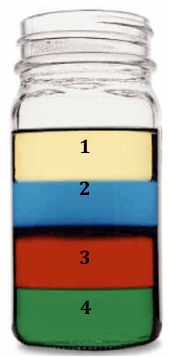
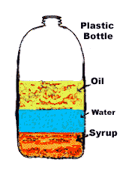


characteristic of a substance that is observed during a reaction in which the chemical composition or identity of the substance is changed. this is the definition of....
Conductivity
Reactivity
Physical Property
Chemical Property
any property that is measurable, whose value describes a state of a physical system. The changes in the physical properties of a system can be used to describe its changes between momentary states.This is the definition of........
physical property
Chemical Property
Hazardous Material
Evidence


A mystery substance has a volume of 2.3 mL and a mass of 3.657 grams. What substance in the data table is most likely the mystery substance?
Salt
Sugar
Baking Soda


Between what two letters is the substance melting?
Between D & E
Between E & F
Between A & B
Between B & C
Between C & D
Between what two letters is the substance completely solid?
Between D & E
Between E & F
Between A & B
Between B & C
Between C & D

How much KNO3 solute is saturated at 40 degrees?
75
55
65
85
How much Ce2(SO4)3 solute is saturated at 80 degrees?
20
15
30
2

What type of a solution is 60g NaNO3 at 40ºC in 100g H2O?
Saturated
Unsaturated
Supersaturated
At what temperature can you fully dissolve 60g of KNO3?
27
30
37
You cannot determine this
What type of a solution is 260g sugar at 50ºC in 100g H2O?
Saturated
Unsaturated
Supersaturated
What type of a solution is 100g KNO3 at 40ºC in 100g H2O?
Saturated
Unsaturated
Supersaturated

When 50 grams of KCl is dissolved at 50 ºC, the solution can be correctly described as:
supersaturated
unsaturated
saturated
Which of the following usually makes a substance dissolve faster in a solvent?
stirring the solution
increasing the particle size of the solute
lowering the temperature
decreasing the number of particles
Identify the solute

What will allow more solute to be dissolved in a solvent?
adding more solute
stiring
cooling solution
heat


Which of these substances has the highest melting point?
Oxygen
Sugar
Water
All of them are the same

Which beaker has the highest particle motion?
1
2
3
Which beaker represents the state of matter with the lowest energy level?
1
2
3
Which beaker represents the state of matter with the highest energy level?
1
2
3

The solubility of two solids, A and B, in three liquids, X, Y, and Z, is shown. Which of the five substances could be the same? (Check all that apply)
A & B
Liquid X & Y
Liquids X, Y, & Z
Liquid X & Z
Liquid Y & Z
Which is the best set of tools to use for separating a mixture of water, salt, and rocks?
a filter and a magnet
a filter and a hot plate
a magnet and a hot plate
a settling tank and a filter
If something is labeled as a weak acid what must be true of its pH?
A very low pH number
A very high pH number
A number slightly less than but close to 7
A number slightly greater then but close to 7
Which statement below best summarizes what happens when you mix acids and a bases?
Two acids react to form water and a salt.
Two bases react to form water and a salt.
An acid and a salt react to form water and a base
An acid and a base react to form water and a salt
Which of the following has the lowest concentration?
5 ppm
20 ppm
50 ppb
100 ppb
Which of the following pH values represents a base?
2.1
4.6
6.8
8.1
Which of these pH values represent an acid?
4
8
10
12

