wayground logo

Free Printable Worksheets

Font size

S
M
L
XL
Worksheets

Unit 1 Study Guide

Total questions: 117

Worksheet time: 1hrs 19mins
Name
Class
Date
1.
all matter is made of what 
a)
energy 
b)
atoms 
c)
electrons 
d)
compounds 
2.
The positive particles of an atom are 
a)
electrons 
b)
positrons 
c)
neutrons 
d)
protons 
3.
the central region of an atom where its neutrons and protons are is its 
a)
nucleus 
b)
electron cloud
c)
core 
d)
center 
4.
the central region of an atom where its neutrons and protons are is its 
a)
nucleus 
b)
electron cloud
c)
core 
d)
center 
5.
electrons have this type of charge?
a)
negative
b)
positive
c)
neutral
6.
What is the mass of an atom if it has 11 protons, 12 neutrons, and 11 electrons?
a)
22
b)
11
c)
34
d)
23
7.
What are the 3 particles that make-up the atom?
a)
protons, neutrons, and isotopes
b)
neutrons, isotopes, and electrons
c)
positives, negatives, and electrons
d)
protons, neutrons, and electrons
8.
Who first proposed that everything in the world was made up of tiny particles?
a)
Aristotle
b)
Democritus
c)
Plato
d)
Socrates
9.
Democritus called the tiniest particles of matter "atomos", which is Greek for _____
a)
empty space
b)
invisible
c)
very small
d)
indivisible
10.
Dalton showed that common substances always broke down into _____
a)
the same elements in the same proportions
b)
elements in equal quantities
c)
hydrogen and oxygen
d)
earth, wind, water and fire
11.
The electron was discovered in 1897.  Who discovered it?
a)
Ernest Rutherford
b)
John Dalton
c)
J. J. Thomson
d)
Niels Bohr
12.
Which scientist became known as "the father of the nuclear age"?
a)
J. J. Thomson
b)
John Dalton
c)
Ernest Rutherford
d)
Niels Bohr
13.
Who drew on the work of Planck and Einstein to develop the planetary model of the atom?
a)
John Dalton
b)
Niels Bohr
c)
J. J. Thomson
d)
Ernest Rutherford
14.

The smallest particles of matter are called

a)

neutrons

b)

atoms

c)

electrons

d)

protons

15.
a)
Periods
b)
Groups
16.
a)
Periods
b)
Groups
17.
a)
energy levels
b)
valence electrons
c)
protons
d)
neutrons
18.
a)
energy levels
b)
valence electrons
c)
protons
d)
neutrons
19.
a)
Same group
b)
Same period
20.
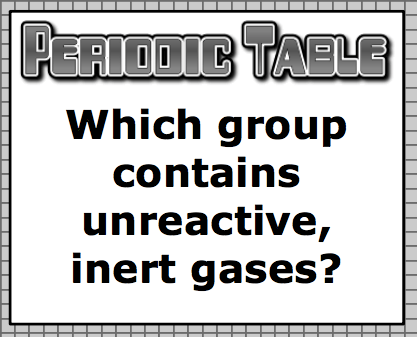
a)
Group 1
b)
Group 17
c)
Group 2
d)
Group 18
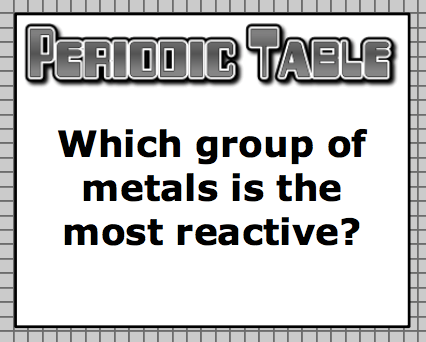
21.
a)
Group 1
b)
Group 17
c)
Group 18
d)
Group 2
22.
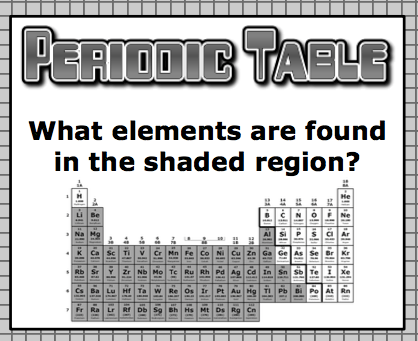
a)
Metals
b)
Nonmetals
c)
Metalloids
23.
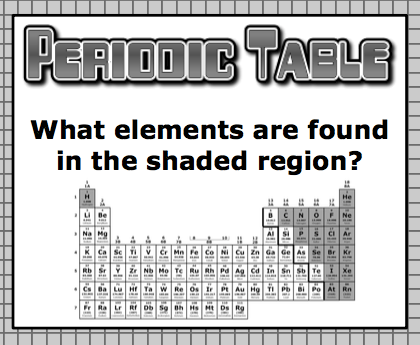
a)
Metals
b)
Nonmetals
c)
Metalloids
24.
a)
Metals
b)
Nonmetals
c)
Metalloids
25.
a)
Metals
b)
Nonmetals
c)
Metalloids
26.
How did Mendeleev arrange the elements?
a)
alphabetical 
b)
density
c)
melting point
d)
atomic mass
27.
A vertical column is called...
a)
group
b)
tower
c)
period
d)
crew
28.
These are found on the Periodic Table.
a)
Compounds
b)
Elements
c)
Mixtures
29.

the basic structural unit of matter

a)

atom

b)

matter

c)

element

d)

nucleus

30.

a collection of atoms of one type that cannot be broken down into simpler substances by ordinary chemical or physical means

a)

element

b)

subatomic particle

c)

electron

d)

matter

31.

a unique number for each element that equals the number of protons in an atom of that element

a)

element name

b)

element symbol

c)

atomic number

d)

atomic mass

32.

the mass of an atom, calculated by adding the number of protons and neutrons in the nucleus of the atom

a)

element name

b)

element symbol

c)

atomic number

d)

atomic mass

33.

What are the three main groups of the periodic table?

a)

groups

b)

metal

c)

nonmetals

d)

metalloids

e)

periods

34.

What does the number of proton tell us?

a)

electrons

b)

atomic number

c)

atomic mass

d)

neutrons

35.

How do you calculate the number of neutrons? *

a)

Mass = Atomic number - Neutrons

b)

Mass - Atomic number = Neutrons

c)

Atomic number = Neutrons

36.

How many valence electrons does the element have?

a)

1

b)

2

c)

3

d)

4

37.

Who proposed a model with electrons moving in specific layers?

a)

Rutherford

b)

Bohr

c)

Thomson

d)

Dalton

38.
The atomic number tells you what?
a)
number of electrons
b)
number of protons
c)
number of neutrons
d)
both electrons and protons in an atom.
39.
Elements which are shiny, conduct electricity and heat are called
a)
metal
b)
nonmetal
c)
metalloid
d)
nonexistent
40.
The atoms along the staircase are called 
a)
metals
b)
nonmetals
c)
metalloids
d)
noble gases
41.
How many electrons does a Copper atom have?
a)
63
b)
29
c)
92
d)
34
42.
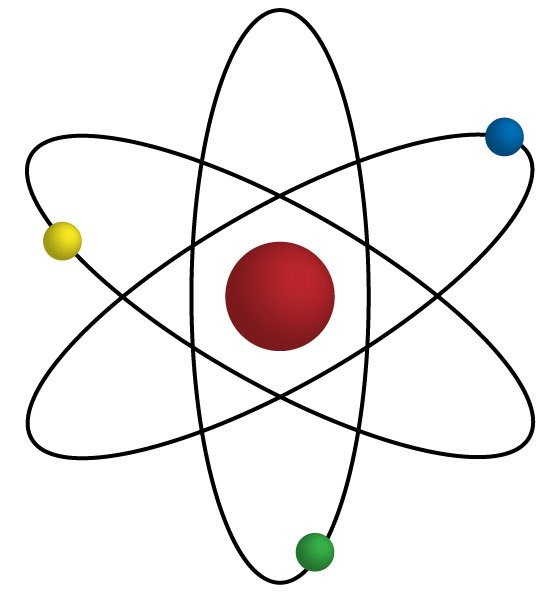
Which is a neutron?
a)
A
b)
B
c)
C
43.
Which is a proton?
a)
A
b)
B
c)
C
44.
Which is an electron?
a)
A
b)
B
c)
C
45.
Which item on this element square is the chemical symbol?
a)
Copper
b)
29
c)
Cu
d)
63.546
46.

Carbon

a)

CA

b)

C

c)

Ca

d)

Cn

47.

Sn

a)

tin

b)

sulfur

c)

iron

d)

sodium

48.

Zinc

a)

Z

b)

Zi

c)

ZN

d)

Zn

49.

Sulfur

a)

Sf

b)

Su

c)

Sr

d)

S

50.

N

a)

Sodium

b)

Nitrogon

c)

Nonium

d)

Nitrogen

51.

Gold

a)

Go

b)

Gl

c)

AU

d)

Au

52.

Pb

a)

Gold

b)

Lead

c)

peanut butter

d)

Paribium

53.

Nickel

a)

Ni

b)

N

c)

Nl

d)

Nc

54.

Potassium

a)

P

b)

K

c)

Pt

d)

k

55.

What is the symbol of iron?

a)

Fe

b)

FE

c)

I

d)

Ir

56.

What is the lightest element?

a)

Helium

b)

Neon

c)

Oxygen

d)

Hydrogen

57.

Silver

a)

Ag

b)

Si

c)

S

58.

What is the atomic number of boron?

a)

3

b)

4

c)

5

d)

6

59.

Who was the first scientist to give the symbol of Elements.

a)

John Dalton

b)

Joseph Proust

c)

Bohr

d)

Rutherford

60.
When __________ form, the elements lose there individual chemical properties and take on new properties.
a)
compounds
b)
atoms
c)
subscript
d)
formula
61.
The smallest unbreakable unit of a compound is called
a)
subscript
b)
proton
c)
formula
d)
molecule
62.
A recipe for a chemical substance is called a ________ _________.
a)
coefficent
b)
chemical formula
c)
Oxygen
d)
atom
63.
H2O2← ?
This number tells the number of atoms present.
a)
coefficient
b)
molecule
c)
subscript
d)
atom
64.
2H2O
This number tells how many molecules are in a chemical equation.
a)
coefficient
b)
subscript
c)
compound
d)
element
65.
 2H2O
How many Hydrogen atoms are present?
a)
2
b)
4
c)
1
d)
10
66.
2H2O
How many H2O molecules are present?
a)
1
b)
4
c)
2
d)
8
67.
What does this image represent?
a)
Atom
b)
Element
c)
Molecule
d)
Marshmallows
68.
Which is an example of a diatomic atom?
a)
NaCl
b)
H20
c)
O2
d)
CO
69.

This forms when one element is stable enough to stand alone without bonding to another element.

a)

monoatomic element

b)

diatomic molecule

c)

compound

70.

How do covalent bonds form?

a)

Donating & receiving valence e- between atoms.

b)

Opposite slight charges attract each other between compounds.

c)

Scientists are still not sure how they form.

d)

Sharing valence electrons between atoms.

71.
Atoms are most stable when their outer shell is complete.
a)
true
b)
false
72.
How are covalent bonds formed?
a)
Sharing of electrons
b)
Transfer of electrons
73.

How many valence electrons does hydrogen have?

a)

4

b)

3

c)

2

d)

1

74.
Which of the following represents an element?
a)
H2O
b)
H2
c)
NaCl
d)
CaCO3
75.
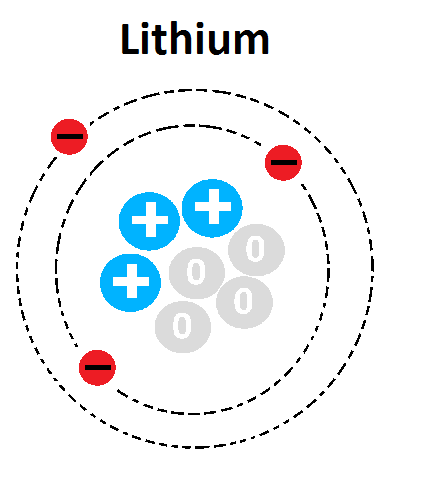
What is the mass number of this atom?
a)
1
b)
3
c)
4
d)
7
76.
What is the atomic number of this atom?
a)
2
b)
4
c)
6
d)
none of the above
77.

What is the atomic number of this element?

a)

17

b)

18

c)

35

d)

35.453

78.

How many electrons can fit on the 1st energy level (orbital) for any Bohr Model?

a)

2

b)

6

c)

8

d)

10

79.

Which element does this Bohr model represent?

a)

Aluminum

b)

Silicon

c)

Magnesium

d)

Cobalt

80.

What is the mass of this atom?

a)

9

b)

10

c)

19

d)

28

81.

Which contains only elements?

a)

A

b)

B

c)

C

d)

D

82.

Which contains a pure substance? (Choose all)

a)

A

b)

B

c)

C

d)

D

83.

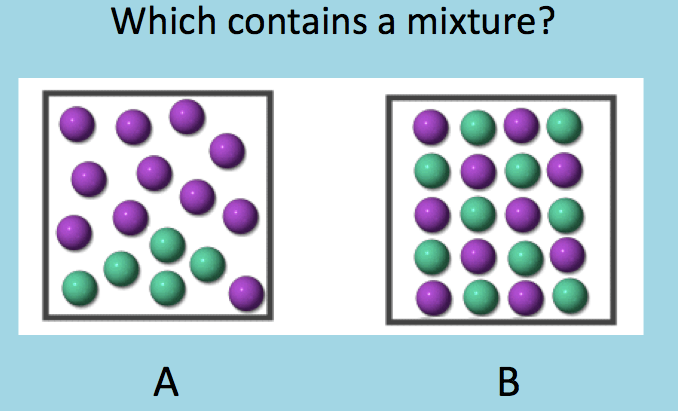
Which contains a mixture? (Choose all)

a)

A

b)

B

84.

Which contains a solution? (Choose all)

a)

A

b)

B

c)

None are solutions

85.

Which contains a solid? (Choose all)

a)

A

b)

B

c)

C

d)

D

86.

Which contains a pure substance? (Choose all)

a)

A

b)

B

c)

C

d)

D

87.

Melting Ice

a)

Physical Change

b)

Chemical Change

88.

Cutting Paper

a)

Physical Change

b)

Chemical Change

89.

Frying Eggs

a)

Physical Change

b)

Chemical Change

90.

Toasting Bread

a)

Physical Change

b)

Chemical Change

91.

Rotting Fruit (Like a brown banana)

a)

Physical Change

b)

Chemical Change

92.

What is the process by which a chemical change occurs?

a)

Conservation of Matter

b)

Physical Change

c)

Chemical reaction

d)

Condensation

93.

What always happens during a chemical change?

a)

The material and its properties change

b)

The material dissolves

c)

The total mass of the material changes

d)

The material changes state from a solid to a liquid

94.

What is the best definition of a chemical change?

a)

A change in the state of matter in which the form changes but the properties stay the same.

b)

A change in the state of matter in which the material changes into an entirely different material with properties that are different from the original material.

c)

A change in the state of matter in which the material is still the same just in a different form.

95.

Which is not evidence that a chemical reaction has occured

a)

Production of flames

b)

Change in temperature or heat

c)

freezing

d)

Production of light

96.

Conservation of matter applies to physical and chemical changes

a)

True

b)

False

97.

Conservation of matter applies to physical and chemical changes

a)

True

b)

False

98.

Which is not evidence that a chemical reaction has occured

a)

Production of flames

b)

Change in temperature or heat

c)

freezing

d)

Production of light

99.

The mixing of two or more substances can result in a new substance.

a)

True

b)

False

100.

A solid that is deposited from a solution

a)

Solid

b)

Liquid

c)

Product

d)

Precipitate

101.

A substance produced during a chemical reaction

a)

Product

b)

Reactant

c)

Properties

102.

A substance that takes part in and undergoes change during a reaction

a)

Product

b)

Molecule

c)

Reactant

103.

A chemical reaction or process that absorbs heat from the surroundings

a)

Endothermic

b)

Exothermic

104.

A chemical reaction or process that releases heat.

a)

Endothermic

b)

Exothermic

105.
Matter can not be created nor destroyed: it can only be
a)
Destroyed a little bit
b)
Invisible
c)
Transformed, changed
d)
None of the above
106.
What will weigh more when a chemical change is complete?  The reactants before the chemical reaction, or the product after the reaction is complete?
a)
They both will weigh the same
b)
The product always weighs more than the reactant
c)
The reactant will weigh more than the product
d)
They both will loose mass after the reaction
107.

According to the Law of Conservation of Mass, what happens to the wood and oxygen when it is burned?

a)

The wood disappears.

b)

It stays the same chemically.

c)

The atoms in the wood and oxygen rearrange and form smoke and ash.

d)

Nothing.

108.

The law of conservation of mass states that ________

a)

the total mass of reactants is more than the total mass of products

b)

the mass of a chemical reaction is not constant

c)

the mass of a chemical reaction remains constant

d)

the total mass of reactants is less than the total mass of products

109.

The Law of Conservation of Mass States

a)

Energy cannot be created nor destroyed, it can only change form.

b)

Mass cannot be created nor destroyed, it can only change form.

c)

Mass can be created or destroyed, it cannot change form.

110.
What are the products of the chemical reaction pictured?
a)
CH4 and CO2
b)
CH4 and O2
c)
CO2 and H2O
d)
O2 and H2O
111.
Consider the chemical equation CH4 + 2 O2 → CO2 + 2 H2O. In this equation, CH4 is a
a)
product
b)
reactant
c)
displacement
112.
What is the left part of a chemical equation called?
H2 + O → H2O
a)
Reactants
b)
Products 
c)
Yields 
d)
Chemical Equation 
113.
What is the right part of a chemical equation called?
H2 + O H2O
a)
Reactants
b)
Products 
c)
Yields 
d)
Chemical Equation 
114.
2H2 + O2 ----> 2H2O What is the product?
a)
------>
b)
2H2O
c)
2H2+ O2
115.
The reactants are on the left side of the chemical equation.
a)
True
b)
False
116.
Which of the following is an example of a chemical reaction?
a)
Water evaporating from a pot on a hot stove
b)
Sand being removed from sea water by filtration
c)
A spoonful of sugar dissolving in a glass of water
d)
A white solid forming when two clear liquids are poured together
117.
Which of the following always results from a chemical reaction?
a)
Fire
b)
Bubbles
c)
A new substance that is a solid
d)
A new substance that can be a solid, liquid, or gas