wayground logo

Free Printable Worksheets

Font size

S
M
L
XL
Worksheets

1st 6-weeks test review

Total questions: 114

Worksheet time: 2hrs 54mins

Name
Class
Date
1.
A pure substance that cannot be broken down into other substances by chemical or physical means. 
a)
compound          
b)
atom
c)
mixture 
d)
element
2.
This is made up of one or more of kind of the SAME kind of atom
a)
Element
b)
Mixture
c)
Compound
d)
Matter
3.
Water is an element
a)
true
b)
false
4.
DIFFERENT kinds of atoms chemically combined to form a substance are
a)
Mixture
b)
Element
c)
Compound
d)
Substance
5.
You are eating a pizza. What type of mixture are you consuming?
a)
homogeneous
b)
heterogeneous
c)
pure substance
d)
The Periodic Table
6.
A mixture that appears to be evenly mixed throughout:
a)
an atom
b)
a compound
c)
a homogeneous mixture
d)
a heterogeneous mixture
7.
Salt is a(n)
a)
element
b)
compound
c)
mixture
8.

This contains a variety of elements and compounds that ARE NOT chemically combined.

a)

Water

b)

Mixture

c)

Elements

d)

Compounds

9.
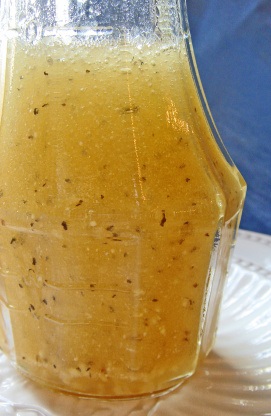
Italian Salad Dressing is a . . .
a)
heterogeneous mixture
b)
homogeneous mixture
c)
Pure Substance
d)
Compound
10.
Which of the following is an element?
a)
Sugar
b)
Salt
c)
Water
d)
Oxygen
11.
Of these mixtures, which one is a solution?
a)
A
b)
B
c)
C
d)
D
12.
A pure substance...
a)
is an element or a compound
b)
is an element or a mixture
c)
is a compound or a mixture
d)
is a mixture
13.
Sugar water is a 
a)
solution
b)
suspension
c)
colloid
14.
Milk is a 
a)
solution
b)
suspension
c)
colloid
15.
A mixture made of parts that separate upon standing is what type of mixture?
a)
suspension
b)
solution
c)
alloy
d)
colloid
16.
Baking soda and vinegar combine to make carbon dioxide
a)
Chemical Change
b)
Physical Change
17.
What is anything that has mass and takes up space?
a)
matter
b)
substance
c)
chemistry
d)
property
18.
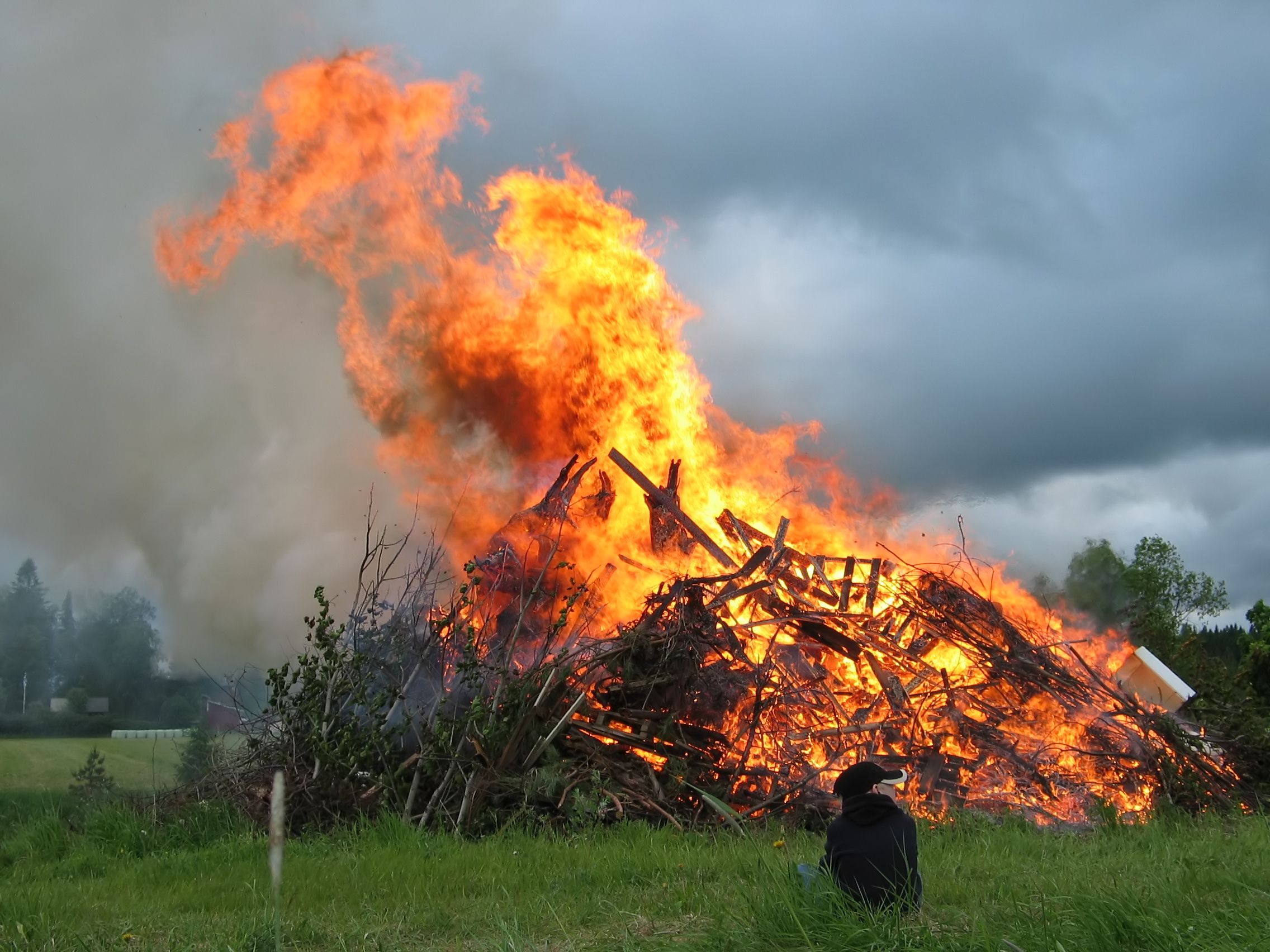
Is wood burning a physical or chemical change?
a)
Physical 
b)
Chemical
19.
Is melting butter for popcorn a chemical or physical change?
a)
chemical
b)
physical
20.

What is a physical change?

a)

I Don't care!

b)

A change in the form or appearance of a substance

c)

a change in a substance to something new

d)

molecules interacting and changing into a new substance

21.

Which of the following are examples of a Chemical Change?

a)

Iron Rusting

b)

Gas Burning

c)

Breaking a glass

d)

Boiling water

e)

Burning Wood

22.

Select the properties of a physical change!

a)

Color

b)

Shape

c)

Size

d)

Bubbles

e)

Temperature

23.

Which is an example of a chemical change?

a)

Cutting paper

b)

Digesting Food

c)

Crumbling paper

d)

Boiling water

24.

Which is an example of a physical change?

a)

Cooking

b)

Buring Wood

c)

Ripping paper

d)

Digesting Food

25.

Which of the following isn't a chemical change?

a)

digesting food

b)

boiling water

c)

fireworks

d)

baking bread

26.

Does a physical change the substance itself?

a)

yes

b)

no

27.

Is this a Chemical or a Physical change?

Fireworks

a)

Chemical

b)

Physical

c)

Both

d)

Neither

28.

Chemical or Physical change?

Ice melting

a)

Chemical

b)

Physical

c)

Neither

d)

Both

29.

Which of the following is a valid reason for using SI units?

a)

more familiar to most citizens of the U.S

b)

most items in the US are recorded in SI units

c)

units are based on powers of 10, making unit conversions easier

d)

meters are just cooler than feet

30.

Which SI unit is used to measure density?

a)

m

b)

m2

c)

m3

d)

kg/m3

31.
To measure the length of a Kleenex box you would use __?__.
a)
kilometers (km)
b)
meters (m)
c)
dekameters (dam)
d)
centimeters (cm)
32.
The SI unit for measuring mass is the
 __?__.
a)
meter (m)
b)
liter (L)
c)
cubic meter (m3)
d)
kilogram (kg)
33.
The volume of a glass of orange juice would be measured in __?__.
a)
liters  (L)
b)
cubic meters  (m3)
c)
milliliters  (mL)
d)
kilograms  (kg)
34.

The mass of a push pen would be measured in __?__.

a)

kilograms (kg)

b)

liters (L)

c)

grams (g)

d)

micrograms (ug)

35.

To measure the volume of a Kleenex box you would use __?__.

a)

cubic kilometers (km3)

b)

cubic meters (m3)

c)

cubic nanometers (nm3)

d)

cubic centimeters (cm3)

36.
The SI unit for time is the __?__.
a)
meter (m)
b)
liter (L)
c)
gram (g)
d)
second (s)
37.
It is a measure of how close measurements come to each other when they are made in the same way
a)
Accuracy
b)
Precision
c)
Error
d)
Extrapolation
38.

How close a measurement is to the accepted value is called..

a)

Accuracy

b)

Precision

c)

Significant

d)

Estimate

39.
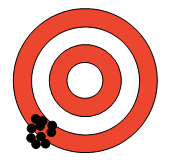
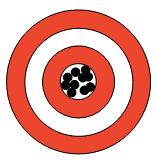
This bullseye demonstrates...
a)
High Accuracy & High Precision
b)
High Accuracy & Low Precision
c)
Low Accuracy & High Precision
d)
Low Accuracy & Low Precision
40.
?
a)
High Accuracy & High Precision
b)
High Accuracy & Low Precision
c)
Low Accuracy & High Precision
d)
Low Accuracy & Low Precision
41.
The students measured length during a science experiement, they got 12 cm. But the actual measurement was 14.25 cm. What was the percent error?
a)
15.79%
b)
18.75%
c)
2.25%
d)
18%
42.

What is the length of the screw?

a)

5.0cm

b)

5.1cm

c)

5.11cm

d)

51mm

43.

Read the graduated cylinder to the appropriate precision. Which answer is most appropriate?

a)

6.3 mL

b)

6 mL

c)

6.61mL

d)

6.31 mL

44.

When converting between SI prefixes, what should you do if you are moving from smaller to larger units?

a)

move the decimal to the left

b)

move the decimal to the right

c)

do not move the decimal

d)

use dimensional analysis

45.
1 meter = _______ cm
a)
1
b)
1,000
c)
100
d)
400
46.
648 g = ____ mg
a)
6,480
b)
64,800
c)
648,000
d)
64.8
47.
How many minutes are in a year?
a)
I can't count that high.
b)
525,600min
c)
52,560min
d)
31,536,000min
48.

How many years are in a 3 months?

a)

0.2 yrs

b)

0.75 yrs

c)

0.50 yrs

d)

0.25 yrs

49.
The length of a desk is 3.5 feet. How many centimeters is the length? 
(there are 2.54 cm in an inch)
a)
60
b)
120.23
c)
106.68
d)
117.12
50.

How many kilograms of calcium are there in 173 pounds of calcium? (1 pound = 454 grams; 1 kg = 1000 g)

a)

1.10 kg

b)

78.5 kg

c)

110 kg

d)

78500 kg

51.
A passenger jet has a speed of 900 km/h.
What is its speed in m/s?
(1 km = 1000 m)
a)
250 m/s
b)
324 m/s
c)
1,500 m/s
d)
2,500 m/s
52.
A bicycle has a speed of 6 m/s. What is its speed in km/h?  (1 km=1000 m)
a)
21.6 km/h
b)
16.67 km/h
c)
2.16 km/h
d)
1.67 km/h
53.

Convert 20 tons/year to ounces/day

a)

.0004 ounces/day

b)

6.8 ounces/day

c)

109.6 ounces/day

d)

1,753.42 ounces/day

54.

Convert 9,500 feet/year to inches/day

a)

2.2 inches/day

b)

312.3 inches/day

c)

3,123.4 inches/day

d)

31.23 inches/day

55.
Jack has a rock. The rock has a mass of 14g and a volume of 2cm3. What is the density of the rock?
a)
7 mL
b)
7 g/cm3
c)
28 g/cm3
d)
1/7 g/cm3
56.
The density of this material is 2 g/cm3.
There are 24 cm3  Find the total mass.
a)
12 grams
b)
48 grams
c)
12 g/cm3
d)
48 g/cm3
57.
How many sig figs are there?
100.00
a)
1
b)
3
c)
4
d)
5
58.
How many sig figs are there?
100000000
a)
1
b)
9
c)
10
59.
How many sig figs are there?
0.000008
a)
1
b)
2
c)
6
d)
7
60.
How many sig figs are there?
0.00400
a)
1
b)
3
c)
5
d)
6
61.
Which of the following numbers has three significant figures?
a)
1014 miles
b)
101 feet
c)
1000 yards
d)
all of the choices
62.
How many sig figs are there?
9009.00
a)
2
b)
4
c)
5
d)
6
63.
How many significant figures does the following number have: 0.002040
a)
6
b)
4
c)
3
d)
2
64.
How many significant figures does the following number have: 1740200
a)
2
b)
1
c)
3
d)
5
65.
Round 0.010229 to four sig figs
a)
1022
b)
1023
c)
0.01023
d)
0.01022
66.
How would you write 564,000,000 in scientific notation?
a)
5.64 x 10⁻⁷
b)
5.64 x 10⁶
c)
5.64 x 10⁸
d)
56.4 x 10⁷
67.
How do you write
1001
in scientific notation?
a)
1.0001 x 10⁴
b)
1.01 x 10⁵
c)
1.001 x 10³
d)
10.1 x 10³
68.
Express the following in scientific notation:
.000457
a)
457 x 106
b)
457 x 10-6
c)
4.57 x10⁴
d)
4.57 x 10⁻⁴
69.
When your exponent is negative, you move your decimal....
a)
to the right
b)
to the left
c)
to both sides
d)
nowhere.... the decimal goes nowhere
70.
Which of the following is correct scientific notation?
a)
20.35 x 10⁴
b)
.2035 x 104
c)
2035 4
d)
2.035 x10⁴
71.

Subatomic particles with a negative charge

a)

Electrons

b)

Neutrons

c)

Protons

d)

Quarks

72.
Subatomic particles with a positive charge
a)
neutrons
b)
atomic mass
c)
protons
d)
isotopes
73.
Value representing the number of protons in an element
a)
Atomic Mass
b)
Mass Number
c)
Valence Electrons
d)
Atomic Number
74.
Subatomic particles that are neutral in charge
a)
Neutrons
b)
Protons
c)
Nucleus 
d)
Electrons
75.
Atoms of the same element with a different number of neutrons
a)
Ion
b)
Gluons
c)
Isotope
d)
Quarks
76.

Discovered the proton of the atom through the Gold Foil Experiment

a)

Rutherford

b)

Chadwick

c)

Thomson

d)

Dalton

77.
What scientist is best known for his "Plum Pudding" model of the atom?
a)
J.J. Thomson
b)
Ernest Rutherford
c)
John Dalton
d)
Democritus
78.
What contribution did John Dalton make to atomic theory? 
a)
He discovered that every atom was positively charged. 
b)
He discovered that every element consisted of one type of atom that couldn't be divided. 
c)
He discovered that atoms had nuclei. 
d)
He discovered that atoms could be divided into smaller parts. 
79.
The first person to propose a theory about an atom called the Atomos Theory was
a)
Democritus
b)
Rutherford
c)
Dalton
d)
Aristotle
80.
He discovered the electron using cathode ray tube experiment.
a)
Joseph Thomson
b)
John Dalton
c)
Ernest Rutherford
d)
Robert Millikan
81.
His atomic model was depicted similar to a planetary/solar system
a)
Niels Bohr
b)
Joseph Thomson
c)
Ernest Rutherford
d)
Democritus
82.
Electrons are not factored into atomic mass because:
a)
They are so small their mass is negligible
b)
They're not in the nucleus
c)
They're too big
d)
They move so quickly their mass is zero
83.
True or False: The majority of an atom is made up of empty space
a)
True
b)
False
84.

Check all of Daltons Postulates

a)

All matter is composed of extremely small particles called atoms

b)

All atoms of a given element are identical, having the same size, mass, and chemical properties. Atoms of a specific element are different from those of any other element.

c)

Atoms cannot be created, divided into smaller particles, or destroyed.

d)

Different atoms combine in simple whole number ratios to form compounds.

e)

In a chemical reaction, atoms are separated, combined, or rearranged.

85.

The current model of an atom today is

a)

Plum pudding model

b)

Quantum mechanical model

c)

Bohr model

d)

Billiard Ball model

86.
How many neutrons does the isotope of lithium have?
a)
8
b)
3
c)
4
d)
5
87.
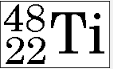
How many protons does this isotope of titanium have?
a)
48
b)
22
c)
26
d)
70
88.
In a correctly written symbol what would be located in the "A" position?
a)
number of neutrons
b)
atomic number
c)
number of electrons 
d)
mass number
89.
How many neutrons in C-14?
a)
6
b)
7
c)
14
d)
8
90.
How many neutrons does the isotope below have?     89 36Kr
a)
53
b)
36
c)
89
d)
125
91.
An atom is electrically neutral when
a)
protons and neutrons are the same
b)
protons and electrons are the same
c)
neutrons and electrons are the same
d)
neutrons balance the protons and electrons
92.
Two isotopes of carbon are carbon-12 and carbon-14.  These isotopes differ from one another by two protons.
a)
true
b)
false
93.

12 protons and 13 neutrons

a)

Mg-12

b)

Mg-13

c)

Mg-25

d)

Mg-24.305

94.

There are two primary isotopes found in any sample of copper: copper-63 and copper-65. The isotope 65Cu composes 69.2% of the sample and 63Cu comprises the other 30.8%. Based on this data, what is the atomic mass of copper?

a)

29 amu

b)

63.546 amu

c)

64.4 amu

d)

63.6 amu

95.
What two types of measurements make up DENSITY
a)
Mass and Volume
b)
Temperature and Mass
c)
Grams and Centimeters
d)
Volume and Weight
96.
Frank has an eraser. It has a mass of 4g, and a volume of 2cm3. What is its density?
a)
8 g/cm3
b)
2 g/cm3
c)
1/2 g/cm3
d)
24 g/cm3
97.
Why do some substances float on water?
a)
they are warmer than water
b)
they are cooler than water
c)
they are more dense than water
d)
they are less dense than water
98.
Helium balloons rise on earth because
a)
helium is less dense than air
b)
helium is more dense than air
c)
helium is cooler than air
d)
helium is warmer than air
99.

A crayon has a mass of 10.0 g and volume of 5.0 cm3. What is the density?

a)

30 g/cm3

b)

1.0 g/cm3

c)

15 g/cm3

d)

2.0 g/cm3

100.
a)

15 cm3

b)

50 cm3

c)

150 cm3

d)

180 cm3

101.

The block of wood has a mass of 2.00 kg and a volume of 5.00 cm3. What is the density of the wood?

a)

4 kg/cm3

b)

.4 kg/cm3

c)

40 kg.cm3

d)

4.5 kg/cm3

102.

A solid ball has a mass of 50 grams and a volume of 20 cm3. What is the density?

a)

2 g/cm3

b)

25 g/cm3

c)

2.5 g/cm3

d)

3 g/cm3

103.

What did Rutherford discover about atoms?

a)

An atom is always negatively charged.

b)

An atom is mostly empty space, but has a dense positively charged center(nucleus).

c)

An atom is always positively charged.

d)

All particles will pass straight through gold foil with no change in path.

104.

Who proposed a model with electrons moving in specific layers?

a)

Dalton

b)

Rutherford

c)

Bohr

d)

Thomson

105.

Rutherford's "gold-foil" experiment using alpha particle scattering concluded that

a)

the center of the atom is empty

b)

atomic mass is spread over the whole atom

c)

the center of the atom has a negative charge

d)

most of the atom is empty

106.
A tiny but very dense, positively charged portion of the atom that holds most of the atomic mass
a)
Electron Shells
b)
Orbitals
c)
Electron Cloud
d)
Nucleus
107.

All of the following are true about Democritus' atomic theory EXCEPT ______.

a)

Everything is made up of atomos and the void.

b)

Atoms vary in size and shape.

c)

Atoms are composed of subatomic particles.

d)

Atoms are infinite in number.

108.

What is the correct order of scientists in order of their work related to the atomic theory from earliest to most recent?

a)

Ernest Rutherford, JJ Thomson, John Dalton, & Democritus

b)

JJ Thomson, John Dalton, Ernest Rutherford, & Democritus

c)

Democritus, John Dalton, JJ Thomson, Ernest Rutherford.

d)

John Dalton, JJ Thomson, Democritus, & Ernest Rutherford

109.

Who discovered the neutron?

a)

JOSEPH JOHN THOMSON

b)

ERNEST RUTHERFORD

c)

NEILS BOHR

d)

JAMES CHADWICK

110.

Where are electrons located in an atom?

a)
Nucleus
b)
Electron Cloud
c)
Within a Proton
d)
Within a Neutron
111.
What scientist is best known for his "Plum Pudding" model of the atom?
a)
J.J. Tomson
b)
Ernest Rutherford
c)
John Dalton
d)
Democritus
112.
Ernst Rutherford discovered which part of the atom through the use of gold foil?
a)
Proton
b)
Neutron
c)
Electron
d)
Orbitals
113.
Subatomic particle that has a negative charge and is located outside of the nucleus.
a)
Electron
b)
Proton
c)
Neutron
d)
Voltron
114.
True or False: The majority of an atom is made up of empty space
a)
True
b)
False