
 Worksheets
Quarter 4 Science Review
Total questions: 112
Worksheet time: 2hrs 46mins
What happens to the light that passes through cornea?
it gets reflected.
it gets shattered.
it gets refracted.
what is the function of iris in the eye?
it detect colours.
it focuses the light.
it controls the size of pupil.
why pupil gets smaller in bright light?
to get as much light as possible.
to prevent damaged to eye due to bright light.
to make sure light gets refracted.
The image formed on the retina is _____________
upside
upside down
rotated at 90 degrees angle.
The transparent covering of eye is called ___________.
pupil
iris
cornea
Which part of the camera focuses light?
sensor
shutter
lens
special cells in the retina change the light energy into electrical impulses called ___________
optic impulses
nerve impulses
connective impulses
Nerve impulses are sent to the brain along the _____________
optic nerve
nasal nerve
pulmonary nerve
The retina of the eye has how many specialised cells?
three
four
two
Which specialised cells are found on the outer parts of retina?
cone cells
rod cells
nerve cells
What is the function of rod cells?
to detect colours in bright light.
to detect colours in dim light.
to detect secondary colours.
What is the function of cone cells?
to detect colours in dim light.
to detect secondary colours in dim light.
to detect colours in bright light.
Which colour light is formed when all three primary colours mix?
yellow
purple
white
Which one of the following is not true for human eye?
the picture that forms on retina is upside down.
the pupil size changes due change in amount of light.
the iris is the transparent part of the eye.
The light energy transferred by sensor into electrical signals is stored on _________________ in a digital camera.
shutter
aperture
memory card

What would happen to your pupils if it's extremely bright outside?
They would let a lot of light into your eyes
They would expand and become very large
They would contract and become very small
They would close up completely

How are rods different from cones?
Rods are sensitive to light, while cones can detect color.
Cones are sensitive to light, while rods can detect color.
Cones send images to the brain, while rods do not.
Rods send images to the brain, while cones do not.

Which part of your eye is most like the film in a camera?
The iris
The retina
The pupil
The lens

What role does your brain play in the process of seeing?
It puts blurry images into focus.
It turns black-and-white images into color.
It flips upside-down images rightside-up.
It flips backwards images over so you see them the correct way.

What might happen if the lens of your eye became damaged?
Your eyes wouldn't be able to focus properly.
You wouldn't be able to see in color.
You wouldn't be able to see at night.
All the images you saw would be upside-down.

What is the best synonym for "photoreceptive?"
Tissue-covered
Camera-like
Color-detecting
Light-sensitive
Farsightedness
Myopia
Hyperopia
both
Nearsightedness
Myopia
Hyperopia
both

Identify the part of the eye labeled as 1 on the diagram.
pupil
cornea
lens
iris

Identify the part of the eye labeled as 3 on the diagram.
pupil
cornea
lens
iris

Identify the part of the eye labeled as 5 on the diagram.
retina
optic nerve
pupil
lens

Identify the part of the eye labeled as 6 on the diagram.
optic nerve
retina
lens
pupil
Which type of vision allows you to see nearby objects clearly but distant objects appear blurry?
farsighted
nearsighted
What is the ring of muscle that contracts and expands to change the size of the pupil?
iris
retina
cornea
optic nerve
What kind of lens can enable a nearsighted person to see more clearly?
concave lens
convex lens
plane lens
What kind of lens can enable a farsighted person to see more clearly?
concave
convex
How does a concave lens differ from a convex lens?
A convex lens is another way to describe a plane mirror; a concave lens is curved
A concave lens is curved inward on both sides; a convex lens is on only one side
A convex lens has a thick center and thin edges, a concave lens has a thin center and thicker edges
A convex lens has a thin center and thick edges. a concave lens has a thick center and thinner edges


Any device that helps us do work is called.
A producer
A machine
A blessing
A contraption
A system is a group of parts that work together to perform a function.
True
False
Input and output forces are measured in...
Grams
Pounds
Newtons
Joules
The formula for finding the mechanical advantage is...
Input / output
output / input
speed / height
angle / speed
The formula for finding the speed ratio is...
input distance / output distance
object slope / height
object slope / speed
output distance / input distance
The formula for finding the speed ratio is...
input distance / output distance
object slope / height
object slope / speed
output distance / input distance
____________________ is a force that opposes motion.
Angle
Twisting
Friction
Speed
lever
a fixed point
mass of the object lifted by the lever
a rigid bar or plank that can rotate around a fixed point
work unit
fulcrum
mass of the object lifted by the lever
a rigid bar or plank that can rotate around a fixed point
is done when a force acts on an object to make that object move, a transfer of energy
a fixed point
work
work unit
is done when a force acts on an object to make that object move, a transfer of energy
the work needed to use, or operate the machine
the work done by the machine on the object
joule
the ratio of the output to the input of any system
makes it easier to move a load higher than it is, but, it has to be moved over a much longer distance.
work unit
the comparison of the force produced by a machine to the force applied to the machine. (the size of the load vs the size of the force needed to move the load)
work input
the ratio of the output to the input of any system
is the work needed to use, or operate the machine
the rate of motion that an object changes position
a group of parts that work together to perform a function
work output
is the work done by the machine on the object
how the machine affects the speed of the job being done
Within a machine are groups of parts that perform specific functions, such as braking or steering
a pair of wheels that have teeth that interlink. When they rotate together, one gear wheel transfers turning motion and force to the other
efficiency
the rate of motion that an object changes position
the ratio of the output to the input of any system
a group of parts that work together to perform a function
consists of a wire, rope, or cable moving on a grooved wheel. One or more combinations of wheels and ropes can be fixed in place or moveable, help you lift larger loads
speed
a group of parts that work together to perform a function
the rate of motion that an object changes position
energy of motion
stored energy
subsystem
Within a machine are groups of parts that perform specific functions, such as braking or steering
consists of a wire, rope, or cable moving on a grooved wheel. One or more combinations of wheels and ropes can be fixed in place or moveable, help you lift larger loads
stored energy
energy is transferred from one place to another, and no energy is changed or converted
kinetic energy
stored energy
the rate of motion that an object changes position
the ratio of the output to the input of any system
energy of motion
potential energy
stored energy
force that opposes motion
used to overcome the frictional force of the machine
a measure of the amount of force applied to a given area
pressure
energy is transferred from one place to another, and no energy is changed or converted
a measure of the amount of force applied to a given area
consists of a wire, rope, or cable moving on a grooved wheel. One or more combinations of wheels and ropes can be fixed in place or moveable, help you lift larger loads
a group of parts that work together to perform a function

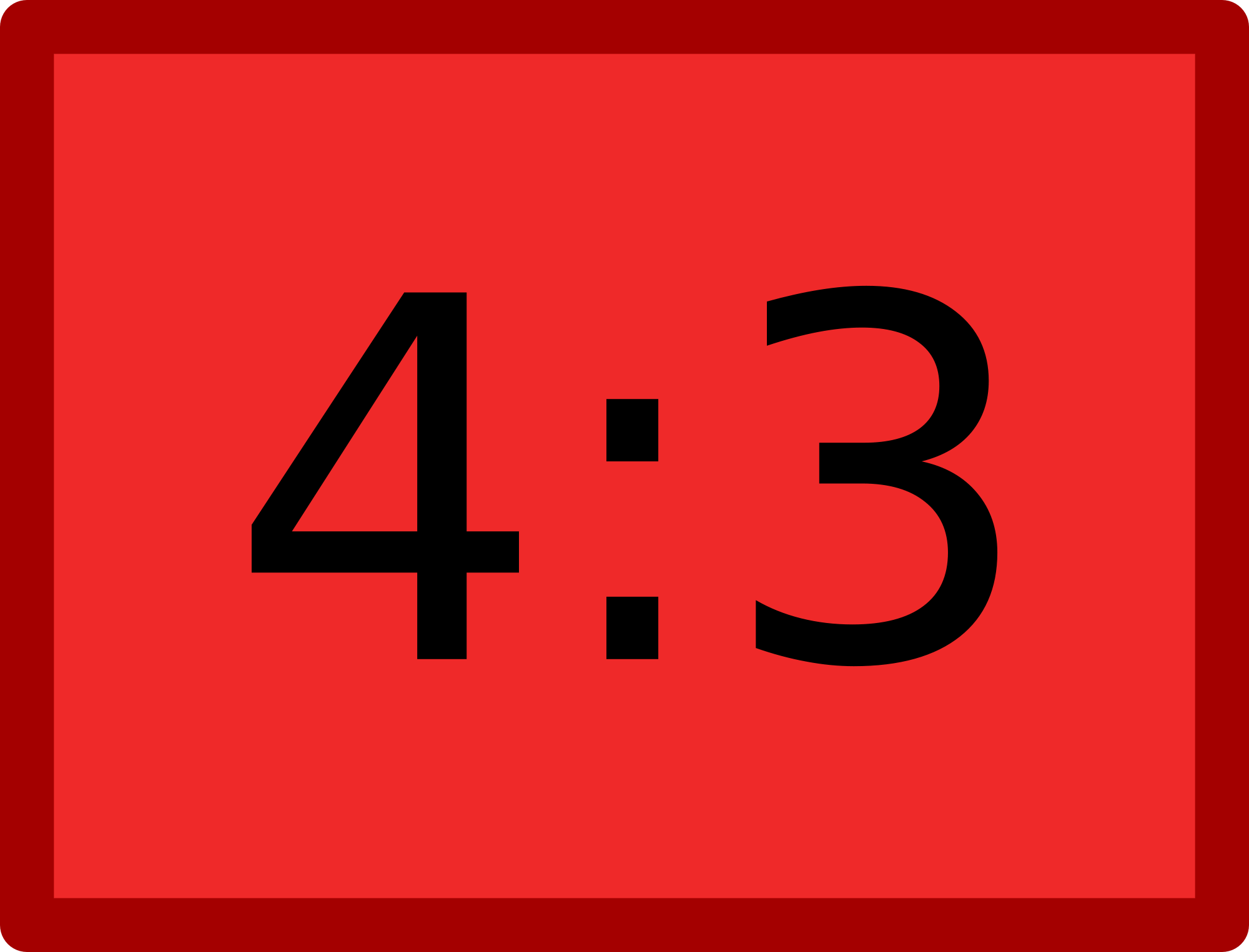

# of teeth input gear = 8
# of teeth output gear = 40
What is the gear ratio (in lowest terms)?
5:1
40:8
1:5
8:40


# of teeth input gear = 30
# of teeth output gear = 60
What is the gear ratio (in lowest terms)?
1:2
3:2
2:1
2:5
A lever used to lift a heavy box has an input arm of 4 meters and an output arm of 0.8 meters. What is the mechanical advantage of the lever?
1
2.5
5
10
A teacher applies a force to a wall and becomes exhausted.
the percentage of the input work that is converted to output work
mechanical advantage
efficiency
joule
machine
What are some other terms that can be used to refer to resistance force?
load, resistance, and weight.
resistance, effort force, and weight
weight, mechanical advantage, and efficiency
load, mechanical advantage, and ideal machine
A machine with a ratio greater than 1:
multiplies the input force so the machine would be good to help move heavy objects.
does not multiply the force, but increases distance and speed.
is good for lifting and moving objects quicker.
Is not good for lifting or moving objects quicker.
A machine with a ratio less than 1:
multiplies the input force so the machine would be good to help move heavy objects.
does not multiply the force, but increases distance and speed.
is good for lifting and moving objects quicker.
Is not good for lifting or moving objects quicker.
Real machines:
actually exist
have an efficiency less than 100%
lose energy due to friction
all are correct
Using an inclined plane to move a piano into a truck:
does not reduce the amount of work, but does make the work easier by using less force to move the piano.
does not reduce the amount of force, but does make the work easier to move the piano.
does reduce the amount of work and makes the work easier by using less force to move the piano.
increases the amount of work by using more force to move the piano.
As you increase the length of an inclined plane, you would need ____ to move a piano.
less force
more force
less work
more work


Out of these which one is an inclined plane, that can make work most easier?
1
2
both
none

What is the mechanical advantage for this lever?
1
2
1/2
8
Hydraulic systems use ________ to transfer force from one point to another.
Air
Liquid
Solid
Gas
The basic idea behind any hydraulic system is very simple: Force that is applied at one point is trasmitted to another point using________
A compressible fluid
An incompressible fluid
A cold compress
A hot compress
Air is compressible and liquid is incompressible.
True
False
If an object is compressible it can be squeezed to fit into a smaller space than it normally does.
True
False
Where can you look on your car to see a good example of a basic piston-driven hydraulic system?
The power steering system
The brake system
The instrument panel
The radio system
The spacing of molecules in ______ is much larger than ______.
solids, liquids
liquids, gases
solids, gases
gases, liquids
The scientific principle that makes hydraulic systems possible is
The fluid flow principle
Bernoulli’s principle
Pascal’s principle
Boyle’s law
What is pressure?
Somebody convincing you to jump into a pool.
How deep a well is.
Amount of force applied to a given area.
Amount of water in a cup of water.
Force is measure in Newtons.
True
False
To find the pressure on an object you need to calculate:
pressure = F/A
pressure = A/F
pressure = F x A
pressure = A x F
Pneumatic means it uses:
Wood
Gasoline
Air
Water
A pneumatic system would be found in a dentist drill, air brakes of a big truck, jake hammer and paint sprayers.
True
False
If there is a leak in a hydraulic or pneumatic system, the pressure will increase.
True
False

What does this image represent?
A pulley
A wedge
A lever
A wheel and axle

What are two types of pulleys?
wings, fries
load. weight
fixed, movable
effort, force

Pulleys make work:
Easier
Rigorous

Identify the type of pulley
fixed
moveable
block and tackle or pulley system

Identify the type of pulley
Fixed
Moveable
Block and Tackle or pulley system


A load of 650 newtons is lifted with this pulley. What is the effort required to do this work?
300
325
600
650


