
 Worksheets
Chemistry Unit Review
Total questions: 117
Worksheet time: 39mins
A(n) ______________________________ mixture is formed when two or more substances are so evenly mixed that you can't see the different parts.
homogeneous
heterogeneous

A single kind of matter that always has a specific composition
substance
mixture
combination
association

Characteristics of substances that can be observed without changing it into another substance.
physical properties
chemical properties
molecular properties
elemental properties

A group of two or more atoms held together by chemical bonds.
molecule
substance
element
nucleus

Weight is the measure of the force of _______ on an object.
gravity
mass
air
molecules

Length x width x height =
volume of a solid
density of a solid
volume of a liquid
density of a solid

The measure of how hot or cold an object is.
temperature
electrolysis
tarnishment
molecular density
Anything that has mass and takes up space is called
mass
matter
volume
weight
The amount of matter in an object is called
mass
matter
volume
weight
__________ is a measure of the gravitational force on an object.
weight
mass
matter
volume
____________ is a measure of the amount of mass in a given volume.
Density
Weight
Volume
Displacement
The formula for density is _______________________.
m x v (mass times volume)
mass / volume (mass divided by volume)
volume / mass (volume divided by mass)
l x w x h (length times width times height)
The study of properties of matter and how matter changes is called
chemistry
physiology
biology
botany
What is the simplest, pure substance that cannot be broken down into another substance?
element
atom
mixture
compound
What are the smallest particles of matter that make up elements?
molecules
compounds
mixtures
atoms
When atoms combine, these types of bonds form.
physical
chemical
When two atoms of the same element combine, they form these
molecules
compounds
mixtures
substances
What is a substance that is made of two or more elements in a set ratio?
Atoms
Compounds
Mixtures
Molecules
What is the law of conservation of mass?
Matter can be made but not destroyed.
Matter can be destroyed but not made.
We can be created and destroyed.
Matter cannot be created or destroyed.
What are the 4 ways to separate mixtures? Check all of the answers you think are correct.
Distillation
Heat
Evaporation
Filtration
Magnetic Attraction

The ratio of hydrogen atoms to sulfur atoms in sulfuric acid is...(use the picture)
2 Hydrogen to 4 Sulfur
1 Hydrogen to 2 Sulfur
2 Hydrogen to 1 Sulfur
1 Hydrogen to 4 Sulfur
A balloon filled with air does not rise as high as a balloon filled with helium. What does this tell you about the density of helium?
Helium is more dense than air.
Helium is less dense than air.
The two gases have the same density.
When heated, helium becomes more dense.
Which of the following statements about the mass of an object is correct?
Mass changes with location.
Mass remains constant.
Mass changes with altitude.
Mass changes with gravity.
The four measurable properties of matter are mass, weight, volume, and...
pressure
gravity
density
kilogram
A(n)___________ change releases energy.
exothermic
endothermic
physical
temporal
A(n) ______________ change absorbs energy.
exothermic
endothermic
physical
temporal
Measure of the average kinetic energy of the particles in an object
thermal energy
temperature
kinetic energy
Changing from a liquid to a gas
condensation
vaporization
sublimation
melting
Changing from a gas to a liquid
condensation
vaporization
sublimation
melting
Changing directly from a solid to a gas
condensation
vaporization
sublimation
melting
Evaporation and boiling are two kinds of _______
condensation
vaporization
sublimation
melting
Vaporization that occurs within a liquid is _________
boiling.
evaporation.
sublimation.
condensation.
Solid particles are able to...
Move around
Move in random directions
Vibrate in a fixed position
Be compressed
What is the name given to a substance changing state from a liquid to a solid?
Boiling
Condensation
Melting
Freezing
The reason that liquids can take the shape of the container that they are in is because...
The particles have a random structure
The particles have space between them
The particles can move around each other
The particles are closer together so take up less space
A solid
has particles that are far apart
has a size and shape of its own
takes the shape of its container
An inverse relationship is when:
both go up or both go down
one goes up and the other goes down
sometimes they both go up and sometimes one goes up and the other goes down
they both only go down
A substance's ________________ is when it changes from a liquid to a gas
boiling point
melting point
freezing point
triangle point
Boyle's law tells us that when volume increases at a constant temperature.........
temperature decreases
pressure increases
pressure decreases
temperature increases
Charles' Law tells us that when temperature increases at a constant pressure.......
volume decreases
volume increases
pressure decreases
pressure increases
What is the resistance of a liquid to flowing?
surface tension
viscosity
sublimation
condensation
What is an inward pull, or force, among the molecules in a liquid that brings the molecules on the surface closer together?
viscosity
surface tension
sublimation
condensation
What type of solid does not have a distinct particle pattern and does not have a distinct melting point?
amorphous solid
crystalline solid
amazing solid
sublime solid
What type of solid has a distinct particle pattern and a distinct melting point?
amorphous solid
crystalline solid
amazing solid
sublime solid
A directly proportional relationship is when:
both go up or both go down
one goes up and the other goes down
sometimes they both go up but sometimes one goes up and the other goes down
If you have a sealed container filled with gas in a sunny room, what happens to the gas in the container as the room gets hotter?
The gas slows down.
The gas starts to form bonds.
The gas moves faster.
The gas changes state.

If an atom gains an electron, then the atom will become _____________________.
a positive ion.
a negative ion.
a neutral atom.
an isotope.
If an atom is neutral, it has an equal number of ________________________ and ______________________________.
electrons and neutrons.
protons and neutrons.
protons and electrons.
protons, neutrons, and electrons.
In the following process, Na --> Na+ what has taken place?
loss of a proton
gain of a proton
loss of an electron
gain of an electron
How many atoms are in the chemical formula FeC5O5?
5
11
15
26
The number of ________________ in the atom of an element determines its chemical properties.
Protons
Neutrons
Valence Electrons
Atomic Number
How can you find the number of protons an atom of an element has?
Looking at its atomic mass.
Looking at its charge.
Looking at its atomic number.
Looking at the number of neutrons.
Ions that are made of more than one atom are called_____________.
ionic compounds
crystals
polyatomic atoms
ionic bonds
Which of the following is the correct name for MgCl2 (the 2 is subscripted)
magnesium chloride
magnesium chlorine
magnesium dichlorine
magnesium dichloride
In order to have a stable arrangement of 8 valence electrons, metal atoms are likely to _____________ electrons.
gain
take
bond
lose
Because the force of attraction between the positive and negative ions is so strong, ionic compounds have ______________ melting points.
low
neutral
high
odd
In an electron do diagram, two pairs of shared electrons represents a __________________.
single bond
double bond
triple bond
quadruple bond
Compared to ionic compounds, molecular compounds generally have...
good conductivity
greater densities
more chemical bonds
a low boiling point
Compared to ionic compounds, molecular compounds generally have...
stronger chemical bonds
poor conductivity
a high melting point
lower densities
Covalent bonds usually form when a nonmetal combines with a(n) _________________.
halogen
metal
nonmetal
alkali
A(n) ____________ is a neutral group of atoms joined by covalent bonds.
ion
compound
ionic compound
molecule
How is a periodic table organized?
Increasing by atomic number.
By the number or energy levels in an atom.
By the number of valence electrons in an atom.
All of these choices.
Group 18 on the periodic table has 8 valence electrons making them stable. What is this group called?
Alkali Metals
Metalloids
Halogens
Noble Gases

Where would you find this element on the periodic table?
Group 1 Period 4
Group 4 Period 3
Group 14 Period 3
Group 3 Period 14
When an atom loses a valence electron, it becomes a(n) _____________________ ion.
negative
positive
neutral
overcharged
A nitrogen molecule has one triple bond. How many electrons do the nitrogen atoms share?
2
8
4
6
If a molecule contains polar bonds, the molecule ______________ be polar overall.
is going to be
may or may not be
is not going to be
According to the Law of Conservation of Mass,
matter is always created in a chemical reaction
matter is always destroyed in a chemical reaction
matter is created and then destroyed in a chemical reaction
matter is not created or destroyed in a chemical reaction
Examine the following chemical reaction: H20 + CO2 → C6H12O6 + O2 What are the reactants?
H20 + CO2
→
C6H12O6 + O2
H20 + CO2 → C6H12O6 + O2
Examine the following chemical reaction: H20 + CO2 → C6H12O6 + O2 What are the products?
H20 + CO2
→
C6H12O6 + O2
H20 + CO2 → C6H12O6 + O2
Examine the following chemical reaction: H2O2 → H2O + O2 What are the products?
H2O2
→
H2O + O2
H2O2 → H2O + O2
Examine the following chemical reaction: H2O2 → H2O + O2 What are the reactants?
H2O2
→
H2O + O2
H2O2 → H2O + O2
Substances that start a chemical reaction are known as the
reactants
products
chemicals
substances
Substances created, or made, during a chemical reaction are known as the
reactants
products
chemicals
substances
In which of the following examples has a chemical reaction occurred?
After putting liquid batter into a hot pan, the batter solidifies and begins to turn brown.
After turning on a blender filled with fruits, the fruit is chopped up and mixed together.
After taking a tray filled with ice cubes out of the freezer, the cubes begin to melt.
After adding a spoonful of sugar to a mug of hot coffee, the sugar dissolves completely.

An gel ice pack getting cold after you put it in the freezer for an hour.
Chemical Change
Physical Change
How is a chemical change different from a physical change?
there is no difference
a physical change creates a new substance
a chemical change creates a new substance
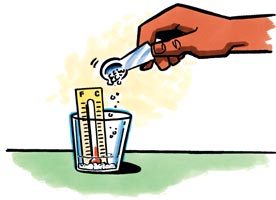
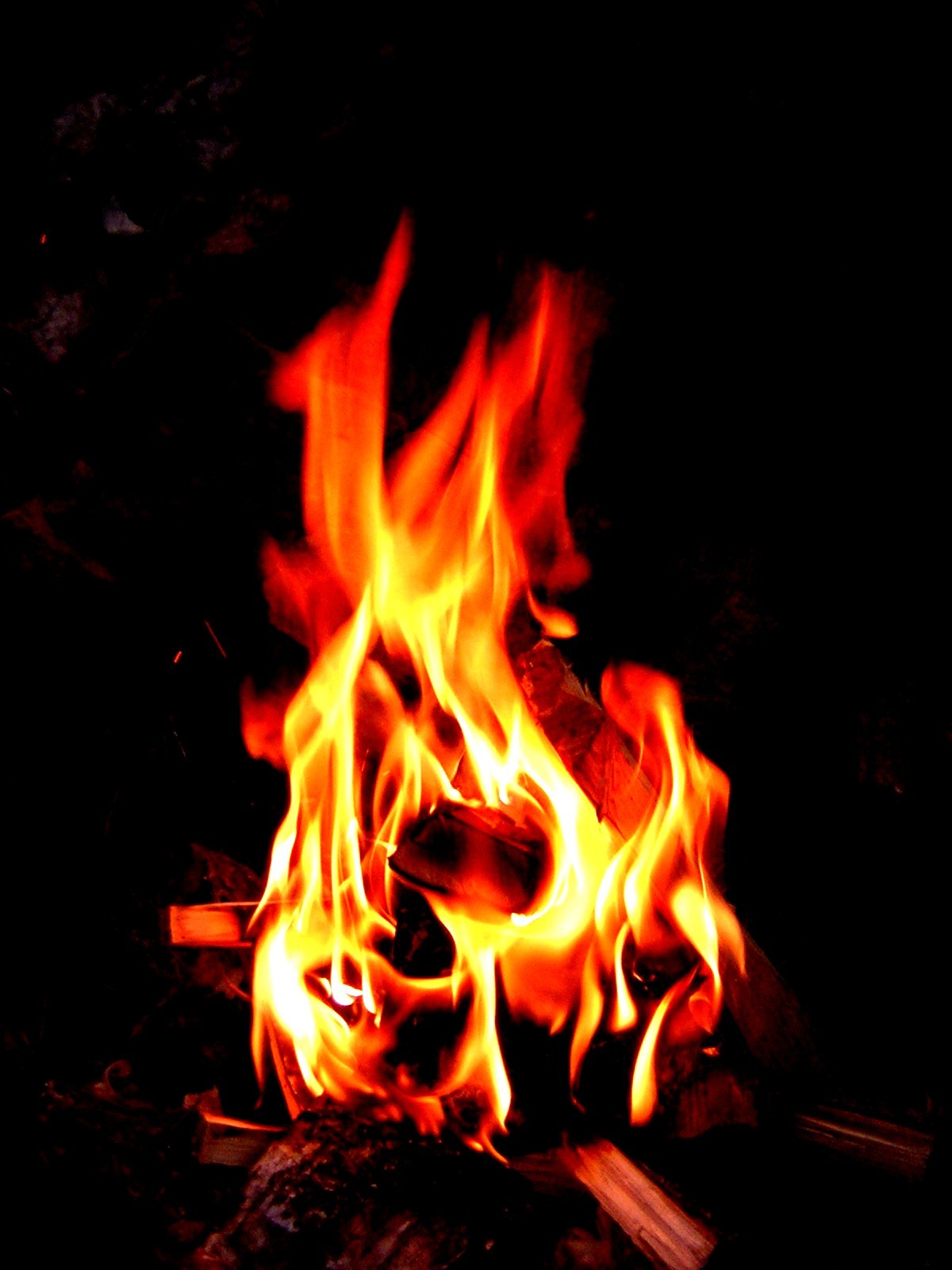
_____ reactions usually feel hot!
endothermic
exothermic
How does a catalyst work in speeding up a reaction?
By lowering the activation energy or reaction
by giving them more energy
by making them more available
The minimum amount of energy needed for colliding particles to react is called the
Chemical Energy
Kinetic Energy
Activation Energy
Potential Energy
What is the name given to a catalyst in the human body?
Biology
Catalyst
Chemical
Enzyme
2Al+Fe2O3→ 2Fe+Al2O3 is an example of what type of reaction?
replacement
decomposition
synthesis
double replacement
A number written in front of a chemical formula is a(n) ____________________.
subscript
superscript
product
coefficient
Substances formed as a result of a chemical reaction are called...
catalysts
precipitates
products
reactants
The ability to react with oxygen is an example of a ____________________.
physical property
physics
chemical property
state of matter
In an exothermic reaction, products have ____________ energy than the reactants.
more
the same
greater
less
Which of the following are ways to tell if a chemical reaction has occurred?
Gas Production
All choices are correct
Precipitate is formed
Color has changed
Increasing the surface area of the reactants will _____________ the rate of the reaction.
decrease
increase
not affect
destroy
The amount of a substance in a given volume is the _________________ of the substance.
concentration
surface area
catalyst
inhibitor
A(n) ____________ decreases the rate of a reaction.
inhibitor
enzyme
catalyst
block chain
Increasing the temperature of a reaction will ____________ the rate of the reaction.
increase
decrease
not change
adversely affect
What is necessary for a chemical reaction to get started?
products form
a catalyst is present
minimum amount of activation energy is reached
gases combine with solids
How does the law of conservation of mass explain why chemical equations must be balanced?
The compounds involved have to be present on both sides.
The molecules have to be the same because they cannot break apart
The compounds are rearranged to make it look equal
The atoms of each element involved cannot be created nor destroyed.
The production of carbon dioxide during the burning of a fuel is an example of a(n) __________________ reaction.
physical
synthesis
replacement
decomposition

