wayground logo

Free Printable Worksheets

Font size

S
M
L
XL
Worksheets

Final Exam Review 1

Total questions: 121

Worksheet time: 2hrs 50mins

Name
Class
Date
1.
The physical appearance of an organism based on traits
a)
Genotype
b)
Phenotype
c)
Meiosis
d)
Genetics
2.
The allele combinations
a)
genetics
b)
mitosis
c)
genotype
d)
phenotype
3.
This trait will always be expressed if present because it will mask the expression of others
a)
stem cells
b)
heterozygous
c)
dominant
d)
recessive
4.
Having blue eyes is an example of
a)
genotype
b)
phenotype
5.
The genotype of:  bb   will have the PHENOTYPE of...
a)
black fur
b)
white fur
c)
course hair
d)
fine hair
6.

Which of the following is an example of a homozygous genotype?

a)

Rr

b)

rr

c)

NN

d)

Nr

7.
Which of the following is heterozygous
a)
FF
b)
tt
c)
Gg
d)
RR
8.
Which of the following is homozygous recessive?
a)
rr
b)
AA
c)
TT
d)
Ff
9.
Which of the following is homozygous dominant?
a)
Jj
b)
Rr
c)
MM
d)
ee
10.
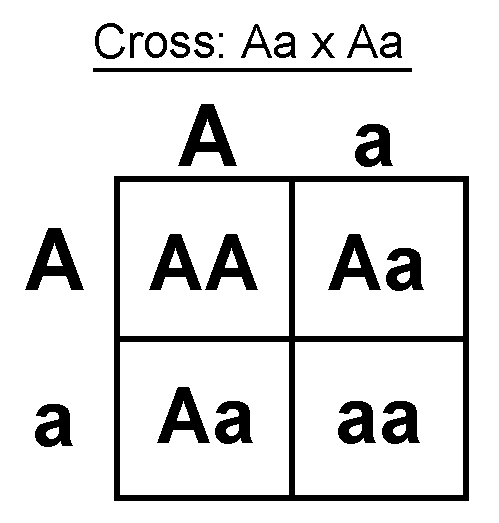
What is the phenotype of the heterozygous parent in the punnett square?
a)
green
b)
yellow
c)
hybrid
d)
purebred
11.
What percentage of the offspring in the punnett square are shown as a hybrid?
a)
100%
b)
75%
c)
50%
d)
25%
12.
having two of the same genes for the trait (sometimes called purebred).
a)
homozygous
b)
hetrozygous
c)
protein
d)
chromosome
13.

having two alleles that are different for a trait

(Ww)

a)

heterozygous

b)

homozygous

c)

hybrid

d)

purebred

14.

an organism that has two identical alleles for a trait

(WW or ww)

a)

heterozygous

b)

homozygous

c)

hybrid

d)

purebred

15.

What are the proper complementary base-pairs?

a)

A--T and G--C

b)

A--G and C--T

c)

G--T and A--C

d)

A--C and T--G

16.
What determines the code, or information, of a DNA molecule?
a)
the shape (structure) of the nitrogen bases
b)
the order (sequence) of the nitrogen bases
c)
the color of the nitrogen bases
d)
the frequency (number) of nitrogen bases
17.
DNA codes for...
a)
bases
b)
proteins
c)
amino acids
d)
phosphates
18.
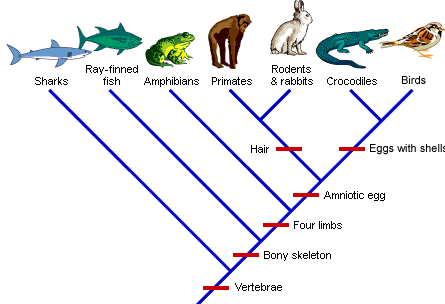
According to this cladogram, primates are most closely related to -
a)
Amphibians
b)
Rodents and rabbits
c)
Crocodiles
d)
Birds
19.
According to this cladogram, birds are LEAST related to -
a)
Amphibians
b)
Sharks
c)
Ray Finned Fish
d)
Crocodiles
20.

In which ways can genetic engineering can improve crops

a)

Make them pest or drought resistant

b)

Make them more nutritious

c)

Make them larger

d)

All answers are correct

21.
Making changes in the DNA of an organism is
a)
selective breeding
b)
artificial selection
c)
genetic engineering
d)
genetic transformation
22.
Which term refers to a farmer choosing the best corn from this year to plant next year?
a)
natural selection
b)
selective breeding
c)
genetic engineering
d)
genetic transformation
23.
Someone has a wild cat breed with a house cat in order to have a cat that looks wild but is more gentle. This is__.
a)
Genetic Modification
b)
Gene Therapy
c)
Animal Husbandry
d)
Selective breeding
24.
Choosing which organisms can have offspring is_____.
a)
Selective Breeding
b)
Gene Modification
c)
Gene Therapy
d)
Animal Husbandry
25.
A new organism is produced from one parent organism.
a)
Sexual Reproduction
b)
Asexual Reproduction
26.
Mitosis is a type of ________________ reproduction.
a)
Sexual
b)
Asexual
27.
Which of the following lists, in order, the phases of mitosis?
a)
interphase, metaphase, anaphase, telophase
b)
prophase, metaphase, anaphase, telophase
c)
prophase, metaphase, anaphase, interphase
d)
prophase, anaphase, metaphase, telophase
28.
How many daughter cells are produced in mitosis?
a)
1
b)
2
c)
4
d)
6
29.
What causes genetic variation in meiosis?
a)
chromosomes lining up
b)
crossing over of chromosomes
c)
separation of chromosomes
d)
chromosomes pulling apart
30.
What kind of cells are made in MEIOSIS?
a)
Haploid cells
b)
Diploid Cells
c)
Skin Cells
d)
Liver Cells
31.
If the Diploid number of Carrots is 18, the haploid number is
a)
18
b)
9
c)
27
d)
36
32.
Which cellular process is shown?
a)
meiosis
b)
endocytosis
c)
mitosis
d)
phagocytosis
33.
products of meiosis are genetically
a)
different
b)
identical
34.
Meiosis makes sperm and egg cells. In humans, sperm and egg cells each have _____ chromosomes. Therefore a fertilized human egg cell (sperm and egg cell combined) would create a cell with _____ chromosomes.
a)
23, 46
b)
46, 23
c)
2, 4
d)
50, 100
35.
Fruit fly body cells have 8 chromosomes. After mitosis, you would expect a resulting fruit fly daughter cell to have ...
a)
16 chromosomes.
b)
46 chromosomes.
c)
8 chromosomes.
d)
4 chromosomes.
36.
In mitosis, the two resulting cells are
a)
different from the starting cell and identical to each other.
b)
different from the starting cell and different from each other.
c)
identical to the starting cell and different from each other.
d)
identical to the starting cell and identical to each other.
37.

What is the correct order to make a protein?

a)

Protein, DNA, RNA

b)

RNA, DNA, Protein

c)

DNA, RNA, Protein

d)

Protein, RNA, DNA

38.
The process by which the genetic code of DNA is copied into a strand of RNA is called
a)
translation
b)
transcription
c)
transformation
d)
replication
39.

What is the order for Protein Synthesis?

a)

Transcription -> Translation -> Protein

b)

Translation - > Transcription -> Protein

c)

Protein -> Transcription -> Translation

d)

Translation -> Protein -> Transcription

40.
Amino acids are joined together in order to form
a)
DNA
b)
ribosomes
c)
proteins 
d)
RNA
41.
Process in which amino acids are assembled into proteins at the ribosome?
a)
Translation
b)
Transcription
c)
Meiosis
d)
Replication
42.
What is a gene?
a)
A bundle (like a hot dog bun) that the DNA is packed into
b)
something inside the nucleus
c)
a piece of DNA
d)
all of your DNA
43.
What determines the code, or information, of a DNA molecule?
a)
the shape (structure) of the nitrogen bases
b)
the order (sequence) of the nitrogen bases
c)
the color of the nitrogen bases
d)
the frequency (number) of nitrogen bases
44.
A change in DNA or chromosomes
a)
Mitosis
b)
Meiosis
c)
mutation
d)
Osmosis
45.
What is the phenotype of the offspring? (A-Brown hair; a-blond hair) 
a)
50 % Brown Hair and 50% Blond Hair 
b)
25 % Brown Hair and 75% Blond Hair 
c)
75 % Brown Hair and 25% Blond Hair 
d)
0% Brown Hair and 100% Blond Hair 
46.
There is a segment of DNA that codes for every trait that a person has. These segments of DNA are found on
chromosomes and are called ________.
a)
Deoxyribonucleic acid
b)
Genes
c)
Heredity
d)
Recessive Traits
47.
A single piece of coiled DNA found in the cells; contains genes that encode traits.
a)
gene
b)
chromosome
c)
trait
d)
DNA
48.
Which statement about DNA is true?
a)
Different people can have the same copy of DNA in their cells.
b)
DNA is made up of genes that carry hereditary information.
c)
DNA controls the genotype but not the phenotype of an organism.
d)
DNA controls the genotype only in the second and third generations.
Question
49.
What is the relationship between DNA and chromosomes?
a)
Chromosomes are made of DNA
b)
DNA is made of chromosomes
c)
DNA and chromosomes are the same thing.
d)
All of the above are correct
50.

What is the term that refers to changes in the DNA sequence of a single gene?

a)

Mutagen

b)

Mutation

c)

Diversity

d)

Replication

51.
What causes mutations?
a)
Mistakes in replication or environmental substances
b)
The amino acids
c)
Passed down by genetics
d)
It's how your born
52.

ATTTGAGCC- Original

ATTGAGCC - Mutated

The example above is an example of a

a)

Insertion

b)

Point mutation

c)

Deletion

d)

Substitution

53.

What is a type of Mutation?

a)

Deletions

b)

Insertions

c)

Base Substitutions

d)

All of the Above

54.
What mutation has occurred here? 
T-G-A-C-C-A
T-G-A-G-C-A
a)
Substitution
b)
Deletion
c)
Insertion
d)
Frameshift 
55.

Each rung of the DNA ladder is made of

a)

a pair of nitrogen bases

b)

a single nitrogen base

c)

a pair of carbon bases

d)

a single carbon base

57.
What are the blood types of the possible children that a woman (type O) and man (type AB) can have?
a)
O and AB
b)
O and A
c)
O and B
d)
A and B
57.
What are the blood types of the possible children that a woman (type O) and man (type AB) can have?
a)
O and AB
b)
O and A
c)
O and B
d)
A and B
58.

Which of the following explains why the antibiotic resistance of certain bacteria is a good example of natural selection in action?

a)

It shows how a population of organisms can just grow parts as they become necessary when the environmental factors change.

b)

It shows how less suitable traits are reduced in a population while more suitable traits survive and thrive in a population.

c)

It shows that some creatures have the ability to make intentional changes to their genome in order to better survive harsh conditions.

d)

It shows organisms mutate in order to survive when demands are increased and food is not readily available for consumption.

59.

What is it called when a change in environmental conditions causes organisms with the best traits in a population to survive and reproduce more, changing the overall genetic makeup of the population?

a)

adaptation

b)

gene mutation

c)

natural selection

d)

diversity

60.

As Darwin sailed around the Galapagos Islands, he noticed several populations of distinctly different finches spread throughout the islands. These various populations of finches are believed to once have been part of a single original population, but are no longer thought to interbreed. These new populations of finches are an example of which process?

a)

convergent evolution

b)

macroevolution

c)

coevolution

d)

speciation

61.
Structures with different mature forms that develop from the same embryonic tissue 
a)
Vestigial Organs
b)
Adaptations
c)
Homologous Structures
d)
Common organs
62.

More offspring produced than are needed to simply survive and replace parent generation is called....

a)

Finite resources

b)

Natural Selection

c)

Overproduction

d)

Survival of the fittest

63.

On the Galapagos Islands, different finches evolved on different islands to fit their environment. When a species develops unique traits because it is trapped in one area this is called:

a)

Geographic isolation

b)

Geologic separation

c)

General relocation

d)

Genetic differentiation

64.
Darwin's studies of finches on the Galapagos Island suggests that the finches' differences in beak structure were most directly due to:
a)
acquired characteristics in the parent finches
b)
the size of the island where the finches live.
c)
mating behaviors of the different finch species
d)
geographic isolation and adaptations of the finches to different environments 
65.
Which of the following sets of factors did Darwin identify as affecting natural selection?
a)
adaptation, predation, and evolution
b)
overproduction, variation, and competition
c)
adaptations, traits, and variations
d)
predation, competition, and mutualism
66.
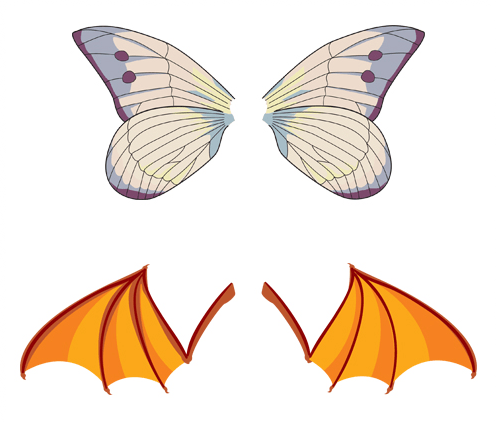
Bird wings and butterfly wings are an example of
a)
Homologous structure
b)
Analogous structure
c)
Mimicry
d)
Camoflague
67.
Shark fins and dolphin fins are examples of analogous structures.
a)
True
b)
False
68.
How would you describe this evolution?
a)
Homologous structure
b)
Analogous structure
c)
Structural adaption
d)
Functional adaption
69.
Rock that forms when sediment from older rocks get pressed and cemented together.
a)
Sedimentary Rock
b)
Metamorphic Rock
c)
Igneous Rock
70.
The process by which igneous rocks are formed...
a)
heat and pressure
b)
melting and cooling
c)
weathering and erosion
71.
Rock that forms when pressure and temperature change existing rock.
a)
Igneous Rock
b)
Sedimentary Rock
c)
Metamorphic Rock
d)
Rock Cycle
72.
Cooling & crystalization produce
a)
igneous rocks
b)
metamorphic rocks
c)
sedimentary rocks
73.

Two plates come together or collide at what boundary?

a)

Convergent

b)

Divergent

c)

Transform

74.

Two plates spread or move apart at what boundary?

a)

Convergent

b)

Divergent

c)

Transform

75.

Two plates slide past each other at what boundary?

a)

Covergent

b)

Divergent

c)

Transform

76.

New oceanic crust (sea floor) is created at this boundary.

a)

Divergent Oceanic

b)

Divergent Continental

c)

Convergent Oceanic

d)

Transform

77.

Oceanic crust (sea floor) is destroyed at this boundary.

a)

Convergent Oceanic

b)

Divergent Oceanic

c)

Convergent Continental-Continental

d)

Divergent Continental

78.

The process where oceanic crust slides under another plate and is melted is called ___________.

a)

seafloor spreading

b)

subduction

c)

continental drift

d)

recycling

79.

What two crustal features occur near every subduction zone?

a)

Volcanoes and Trenches

b)

Rift Valleys and Mid Ocean Ridges

c)

Volcanoes and Rift Valleys

d)

Mid Ocean Ridges and Trenches

80.

A divergent boundary on land creates what feature?

a)

Mid Ocean Ridge

b)

Rift Valley

c)

Subduction Zone

d)

Deep Ocean Trench

81.

When two continental plates converge (collide) what type of crustal feature is formed?

a)

Mid Ocean Ridge

b)

Subduction Zone

c)

Rift Valley

d)

Mountains

82.

The process that occurs at a divergent oceanic boundary that creates new crust (sea floor) is called?

a)

Subduction

b)

Seafloor Spreading

c)

Continental Drift

d)

Volcanism

83.

What is the only event associated with transform boundaries?

a)

Volcanoes

b)

Subduction Zones

c)

Tsunamis

d)

Earthquakes

84.

What is the only event associated with ALL plate boundaries?

a)

Volcanoes

b)

Earthquakes

c)

Subduction

d)

Deep Trenches

85.

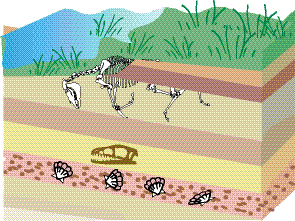
The Law of Superposition helps scientists to determine what?

a)

The absolute age of rock layers

b)

The age of fossils

c)

The relative age of rock layers

d)

the super powers of squirrels

86.
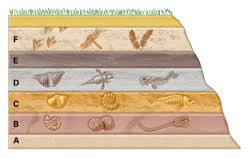
According to the law of superposition, which layer is the youngest?
a)
A
b)
B
c)
C
87.
Which of the following orders the rock layers accurately from youngest to oldest?
a)
1, 2, 3, 4, 5
b)
5, 4, 3, 2, 1
c)
2, 3, 4, 5, 1
d)
1, 2, 3, 5, 4
88.
Which rock layer contains the newest fossils?
a)
F
b)
E
c)
B
d)
C
89.
According to the law of superposition, the oldest fossils are found 
a)
At the top of the rock layers
b)
Near the bottom of the rock layers
c)
In the middle of the rock layers
d)
Somewhat near the surface
90.
Which rock layer in the diagram seems to be the oldest?
a)
F
b)
E
c)
B
d)
A
91.
Which rock layer most likely contains fossils of the most recently evolved organisms?
a)
1
b)
2
c)
3
d)
4
92.

Main type of seismic waves that can only travel through the surface of the Earth.

a)

seismic waves

b)

surface waves

c)

body waves

d)

primary waves

93.

It can travel through solids only

a)

Love waves

b)

Rayleigh waves

c)

Primary waves

d)

Secondary waves

94.
P Waves travel through...
a)
Solids
b)
Liquids
c)
Both
95.

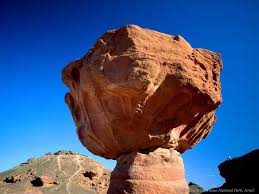
What is the process that breaks down rocks?

a)

Erosion

b)

Weathering

c)

Convection current

d)

Equilibrium

96.
In what layer are the convection currents, shown in the diagram, occurring?
a)
oceanic crust
b)
Moho discontinuity
c)
asthenosphere
d)
outer core
97.
Wind, water, and ice breaking down rock is called
a)
Erosion
b)
Deposition
c)
Compaction
d)
Weathering
98.
What do geologists call the Earth’s crust and upper mantle?
a)
mesosphere
b)
lithosphere
c)
asthenosphere
d)
atmosphere
99.
Example: Rain washing away soil from a hillside
a)
Weathering
b)
Erosion
c)
Deposition
100.
What is the process of the removal and movement of sediment from one location to another?
a)
erosion
b)
weathering
c)
compaction
d)
deposition
101.
Which layer of Earth is characterized by rock that is plastic, or soft enough to flow?
a)
asthenosphere
b)
crust
c)
lithosphere
d)
inner core
102.
This is the outermost, rigid layer of the Earth, made up of two parts, is divided into pieces call tectonic plates.
a)
Inner Core
b)
Asthensophere
c)
Lithosphere
d)
Outer Core
103.
The process that breaks down rocks and other materials on Earth's surface is called
a)
Weathering
b)
Erosion
c)
Deposition
d)
Decomposition
104.
What is the process that picks up and moves weathered rocks?
a)
Deposition
b)
Landslide
c)
Weathering
d)
Erosion
105.
Deposition changes the Earth’s surface because bits of broken rock and soil _____.
a)
stop rivers from flowing.
b)
make rich farmlands.
c)
are dropped in new places.
d)
move very slowly.
106.
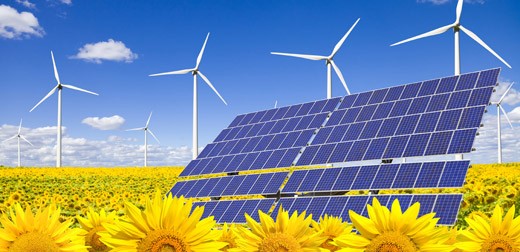
__________ is an energy resource that WILL NOT run out in the next several hundred years.
a)
Renewable Energy Resource
b)
Nonrenewable Energy Resource
107.
__________ is an energy resource that WILL run out in the next several hundred years.
a)
Renewable Energy Resource
b)
Nonrenewable Energy Resource
108.

What is the best reason to use renewable resources?

a)

The are inexpensive

b)

They are always available

c)

They are expensive

d)

They create pollution

109.
Why do we use non-renewable resources instead of renewable resources? 
a)
Less Expensive 
b)
More Energy
c)
All of the above
110.
Why don't we use solar energy or geothermal energy as much as we could?
a)
The sun and geothermal energy are limited.
b)
The sun and geothermal are too weak in certain areas.
c)
The set-up cost is too expensive.
d)
The machines are too large.
111.
Why are fossil fuels considered nonrenewable resources if they are still forming beneath the surface today?
a)
They are being formed as a type of methane which we cannot use.
b)
They are being formed too far beneath the surface.
c)
The fossil fuels are being broken down by a natural process.
d)
We are depleting the fossil fuels much faster than they can form.
112.
The material through which a wave travels is called the —
a)
medium
b)
matter
c)
substance
d)
vacuum
113.
Which of the following can sound travel through?
a)
solid
b)
liquid
c)
gas
d)
all of the above
114.
Where is a place a person would hear no sound?
a)
in a cave
b)
in a forest
c)
in space
d)
in water
115.
Material that allows light to pass through allowing you to see "clearly" to the other side
a)
opaque
b)
translucent
c)
transparent
116.
Can travel through matter (gas, liquid, solid) and empty space. 
a)
sound
b)
light
117.
What happens to frequency when the energy increases?
a)
it increases
b)
it decreases
c)
it stays the same
118.
Which wave has the most energy?
a)
top wave
b)
bottom wave
119.
When the frequency of a wave increases, what happens to the wavelength?
a)
The wavelength is not directly affected by the frequency of a wave.
b)
The wavelength increases.
c)
The wavelength decreases.
d)
More specific information is needed to form a conclusion about the wavelength.
120.
As wavelength increases, its
a)
frequency decreases
b)
frequency stays the same
c)
frequency increases
d)
volume increases
121.
The longer the _____________  the ______________ the frequency.
a)
wavelength, lower
b)
wavelength, higher
c)
amplitude, lower
d)
amplitude, higher