
 Worksheets
REVIEW- Science 8 (Astronomy 1)
Total questions: 118
Worksheet time: 2hrs 39mins
This is the first planet from the Sun; it is very hot in the day and very cold in the night.
Mercury
Neptune
Earth
Jupiter
What are large chunks of rocks and metal in space?
Earth
comet
asteroids
gibbous
The fourth planet from the Sun; also known as the "red planet."
Neptune
Mercury
Earth
Mars
The sixth planet from the Sun; known for its large rings.
Saturn
Mercury
Earth
Mars
This is the eighth (last) planet from the Sun; it is deep dark blue in color.
Earth
Neptune
Mercury
Jupiter
These are the 4 planets (Mercury, Venus, Earth, Mars) are known as
terrestrial planets
gas giants
dwarf planets
solar planets
These are the four planets the Sun; Jupiter, Saturn, Uranus, and Neptune are classified as
terrestrial planets
jovian planets
solar planets
ice giants
Which of the following is an accurate model of how the Sun, Earth, and Moon move?
Sun and moon orbit Earth
Earth and moon orbit Sun
Earth orbits the Sun and the moon orbits Earth
Earth and sun orbit moon

Which planet is NOT one of the
"Gas Giants"?
Uranus
Venus
Neptune
Saturn
What factor causes one planet to have more gravity than other planets
The planets mass
The planets size
Terrestrial planets have more gravity
Gas giants have more gravity
Which planet has the most gravity?
Earth
Mars
Neptune
Jupiter
Where is the Asteroid Belt located in the Solar System?
near Neptune
between Mercury and Venus
between Mars and Jupiter
around the Sun
Which of these has the strongest gravitational field?
sun
earth
saturn
jupiter
The HOTTEST stars are usually what color
yellow
orange
blue
pink
How long does Earth's orbit around the sun take?
365 and 1/4 days
360 days
24 hours
2 years

As our sun continues through its life cycle, it will _________ and turn into a _______________.
gradually get smaller and smaller until it dies out/ black hole
Gradually get larger until its outer layers drift off/ white dwarf
become denser and denser/ protostar
become hotter and hotter blue/ hypergiant.
How many stars are there in the universe?
thousands
millions
hundreds
ten
What is the biggest kind of star in a galaxy called?
blue giant star
the sun
super giant star
red dwarf star
What are stars made of?
hot gases
ice
hydraulic gas
dust and clouds
What sizes can stars be?
only medium sized
all different sizes
only tiny sized
medium and large only
Why does the sun look so big to us?
It is the closest star to Earth.
It is the biggest star.
It is farthest star from Earth.
It is the hottest.
Why do most stars look so small in the sky?
They are close to us.
They are far away from us.
They are running out of gas.
They are new stars.

All stars begin their life in a
Main Sequence
Nebula
Protostar
Black Dwarf

Average size stars will turn into a _____ star next.
protostar
red giant
supergiant
black hole

What is the diagram called that shows the relationship between star size and temperatures?
bar graph
HR diagram
star chart
Star diagram

What is the north star called?
Dubhe
Ursa
Polaris
Sun


Our sun is currently in what star stage?
Protostar
Nebula
Main Sequence
Red Giant
Felix examined several photos of stars. To compare their temperatures, he looked at the colors of the stars. He organized the photos in order from coolest to hottest. Which of these answers shows the correct order?
red, yellow, white, blue
white, blue, yellow, red
yellow, white, blue, red
blue, yellow, white, red
Which of the following is a name used for stars:
Main Sequence
Supergiant
White dwarf
All of the above
Which type of light has more energy?
infrared
visible
ultraviolet
microwave
Which type of light has less energy?
gamma rays
x-rays
infrared
radio waves
There are many different colors of stars. Which characteristic determines the color of stars?
A) Temperature
B) Size and shape
C) Actual brightness
D) Distance from Earth

The H-R diagram classifies stars based on what factors?
Temperature and luminosity
Number of planets
What constellation they're in
Temperature and fusion

Our sun is what kind of star?
Blue giant
Red giant
Main sequence
White dwarf

Compared to a red giant star, a blue supergiant is...
Hotter and brighter
Hotter and not as bright
Colder and brighter
Colder and not as bright

Compared to a white dwarf, a red supergiant is...
Hotter and brighter
Hotter and not as bright
Colder and brighter
Colder and not as bright

Stars that are brighter are usually...
Hotter
Bigger
More massive
Smaller

Our sun is yellow. A star colder than our sun would be...
Red
Yellow
White
Blue


sort of cool, dim (not too much light), and red?


What small, hot, faint objects are found at B?
neutron stars
black holes
white dwarfs
brown dwarfs

What objects are found at C?
Blue giants
Red giants
White dwarfs
Main sequence stars


Use the Hertzsprung-Russell Diagram to answer the following question. Spica is a _____
Hot and Bright Star
Cool and Bright Star
Hot and Dim Star
Cool and Dim Star


Use the Hertzsprung-Russell Diagram to answer the following question. Sirius B is a _____
Hot and Bright Star
Cool and Bright Star
Hot and Dim Star
Cool and Dim Star

Use the Hertzsprung-Russell Diagram to answer the following question. Epsilon Eridani is a _____
Hot and Bright Star
Cool and Bright Star
Hot and Dim Star
Cool and Dim Star
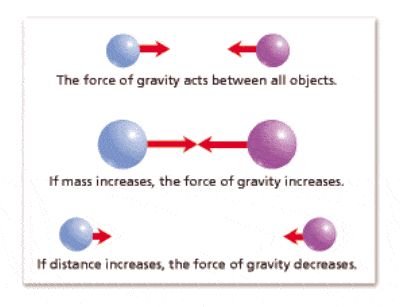
Where would you have to travel to reduce the force of gravity, but not lose any mass?
The moon
The Sun
Jupiter
Saturn
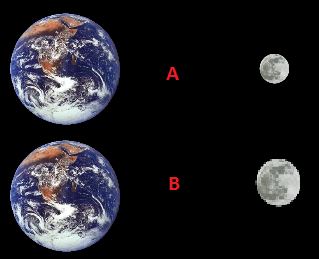
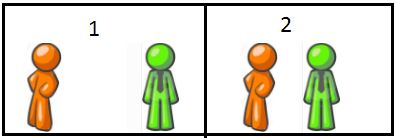
When will the forces of gravity between two objects be the GREATEST?
when the masses of both objects are small and the objects are far apart
when the masses of both objects are large and the objects are close together
when the masses of both objects are small and the objects are close together
when the masses of both objects are large and the objects are far apart
What two things determine the gravity of an object?
mass & weight
mass & distance
density & mass
volume & distance
When will the gravity between two objects be the LEAST?
when the masses of both objects is small and the objects are close together
when the masses of both objects is small and the objects are far apart
when the masses of both objects is large and the objects are close together
when the masses of both objects is large and the objects are far apart
Which statement about gravity is true?
gravity causes objects to pull towards one another
gravity causes objects to push away from each other
gravity only takes place between planets
the moon doesn't have any gravity




SCENARIO:
You are at the height of the International Space Station (ISS). Compared to that at Earth's surface, Gravity is _____
Always the Same
about 9% as strong
about 90% greater
about 90% weaker
What two things determine the gravity of an object?
mass & weight
mass & distance
density & mass
volume & distance

What does the picture below illustrate?
Visible Light Spectrum
Electromagnetic Spectrum
Frequency Indicator
Color Line
What is the saying that can help you remember the order of the visible spectrum?
ROYGBIV
RYOBIVG
ROYBVIG
RIBYOVG
How are we able to see the color white?
All colors except red are absorbed
All colors are absorbed
All colors are reflected
All colors except red are reflected
Of the visible spectrum, what color has the longest wavelength?
Blue
Green
Yellow
Red
Violet
A prism can be used to...
separate visible light into colors
make a beam of light brighter
measure the speed of light
make UV light visible
___________ is a form of energy that we can see with our eyes.
Radio Waves
Visible Light
Ultraviolet
Reflection
Which color has the shortest wavelength and highest frequency?
Violet
Yellow
Orange
Green
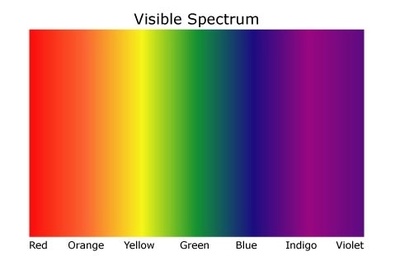
What color of light has the shortest wavelength?
red
indigo
yellow
violet
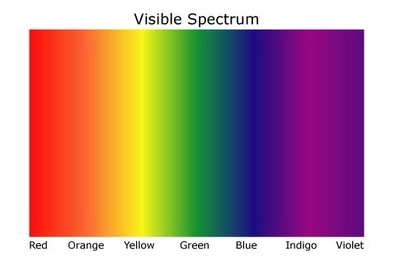
What color of light has the longest wavelength?
red
green
yellow
violet
Which color ABSORBS all wavelengths of light?
Red
Black
White
Pink
What happens if a planet is too hot?
The water will be nice and warm
The water will boil away
The water will be too cold
The water will freeze and make ice
What does most every living thing need to survive?
Steam
Ice
Plasma
Liquid water
What happens if a planet is too cold?
The water will be nice and warm
The water will be cold
The water will boils away
It will be like a giant snowball
What is the average temperature of a planet that is 1 astronomical unit (AU) away from the Sun?
-360o F
32o F
-61o C
61o F
What determines where the habitable zone is located for each star?
The star's distance from Earth
The size of the star
How many planets the star has
The size of the planet
Can planets be too big for life to exist?
Yes
No



