wayground logo

Free Printable Worksheets

Font size

S
M
L
XL
Worksheets

SEMESTER ONE EXAM LIVE SESSION REVIEW

Total questions: 120

Worksheet time: 2hrs 4mins

Name
Class
Date
1.

The _ is an organized set of investigation procedures used by scientists.

a)

scientific method

b)

scientific law

c)

scientific theory

2.

A factor that changes in a science experiment.

a)

constant

b)

control

c)

independent variable

3.

Process that uses observations and investigation to gain knowledge about events in nature is called _.

a)

science

b)

predicting

c)

inferring

4.

Justin blows his nose, but mucus seems to leak through the tissue.  He decides to test which tissue holds up the best while sneezing.  What is the variable?

a)

sneezing

b)

Justin

c)

amount of tissue

d)

type of tissue

5.

Read the law of conservation of energy in the box below.

The total energy of an isolated system

is constant; energy may be changed from one form to another, but may not be

created nor destroyed.

Why is this a scientific law?

a)

because it explains a concept in science, and any topic in science can be turned into a scientific law

b)

because it describes a something in science that has been tested and is true

c)

because it can be controlled by human actions

d)

because it describes energy and how it transfers and changes from one form to another

6.
What step does every scientific experiment begin with?
a)
hypothesis
b)
question/problem
c)
procedures
d)
conclusion
7.

Why do we use models?

a)

Building something by hand makes science more fun

b)

to represent things that are too small to see, or that are too large to see.

c)

to determine the difference between the independent and dependet variable

d)

to encourage better peer review

8.

Molecules are closest together in a ...

a)

Solid

b)

Liquid

c)

Gas

d)

plasma

9.
Which state of matter has particles arranged like this?
a)
solid
b)
liquid
c)
gas
10.
Which state of matter has particles arranged like this?
a)
solid
b)
liquid
c)
gas
11.
Which of the following statements describes a solid?
a)
It has a fixed shape
b)
It takes the shape of it's container
12.
Which of the following statements describes a liquid?
a)
It has a fixed shape
b)
It takes the shape of it's container
13.
A chemical change
a)
doesn't really change much.
b)
creates a new substance
c)
is a change in the state of matter
14.

Q6: Anything that has mass or takes up space is known as...

a)

matter

b)

objects

c)

physical properties

d)

science

15.

What is mass?

a)

anything that takes up space

b)

the amount of matter an object has

c)

the amount of space an object takes up

d)

the measure of how warm something is

16.
What is the volume of the fish?
a)
18.0 cm3
b)
6.0 cm
c)
38.0 cm3
17.
Hot air rising from a campfire is...
a)
Conduction
b)
Convection
c)
Radiation 
18.
Temperature is the measurement of the average ________ energy of the molecules in an object
a)
Kinetic 
b)
Heat
c)
Motion
d)
None of the above
19.
The roller coaster cart has the most gravitational potential energy at position-
a)

W

b)

X

c)

Y

d)

Z

20.

People get energy from the food that they eat and transform that energy as they move. Which energy transformations occurs?

a)

mechanical to thermal to electrical

b)

chemical to mechanical

c)

mechanical to chemical to sound

d)

chemical to sound to electrical

21.
Which example below is an example of radiation?
a)
Standing on a hot metal bridge
b)
The attic is warmer than the basement
c)
The Sun heating the Earth
d)
Touching hot sand with your feet
22.

Scientists frequently repeat the experiments of others scientists. Why is this important in science?

a)

Scientists often ask each other for help in performing experiments.

b)

Replication of experiments helps to confirm and verify results.

c)

Scientists frequently perform other scientists’ experiments in order to practice their technique.

d)

Repeating experiments is an effective way to make sure a laboratory is in optimal condition.

23.

Helen is studying the growth of two different types of plants. She planted two of each type of plant in locations with different levels of sunlight: full sun, partial shade, and full shade. For five weeks, Helen records the number of new leaves on each plant.

Which of the following statements correctly describes the independent and dependent variables in Helen's experiment?

a)

The independent variable is the kind of plant, and the dependent variable is the amount of sunlight.

b)

The independent variable is the amount of sunlight, and the dependent variable is the number of new leaves.

c)

The independent variable is the amount of sunlight, and the dependent variable is the kind of plant.

d)

The independent variable is the number of new leaves, and the dependent variable is the amount of sunlight.

24.
Contains only one kind of atom.
a)
Element
b)
Compund
c)
Mixture
25.
Contains two or more atoms combined
a)

Elements

b)

Compounds or Molecules

c)

Mixtures

26.
The air is a _________. 
a)
element 
b)
mixture 
c)
compound 
d)
energy 
27.
Is sugar (C12H22O11) an element or a compound?
a)

Element

b)

Compound

28.
What is salad?
a)
element
b)
compound
c)
mixture
29.
The building block of matter is
a)
Mixture
b)
Atom
c)
Element
d)
Substance
30.
A pure substance...
a)
is an element or a compound
b)
is an element or a mixture
c)
is a compound or a mixture
d)
is a mixture
31.
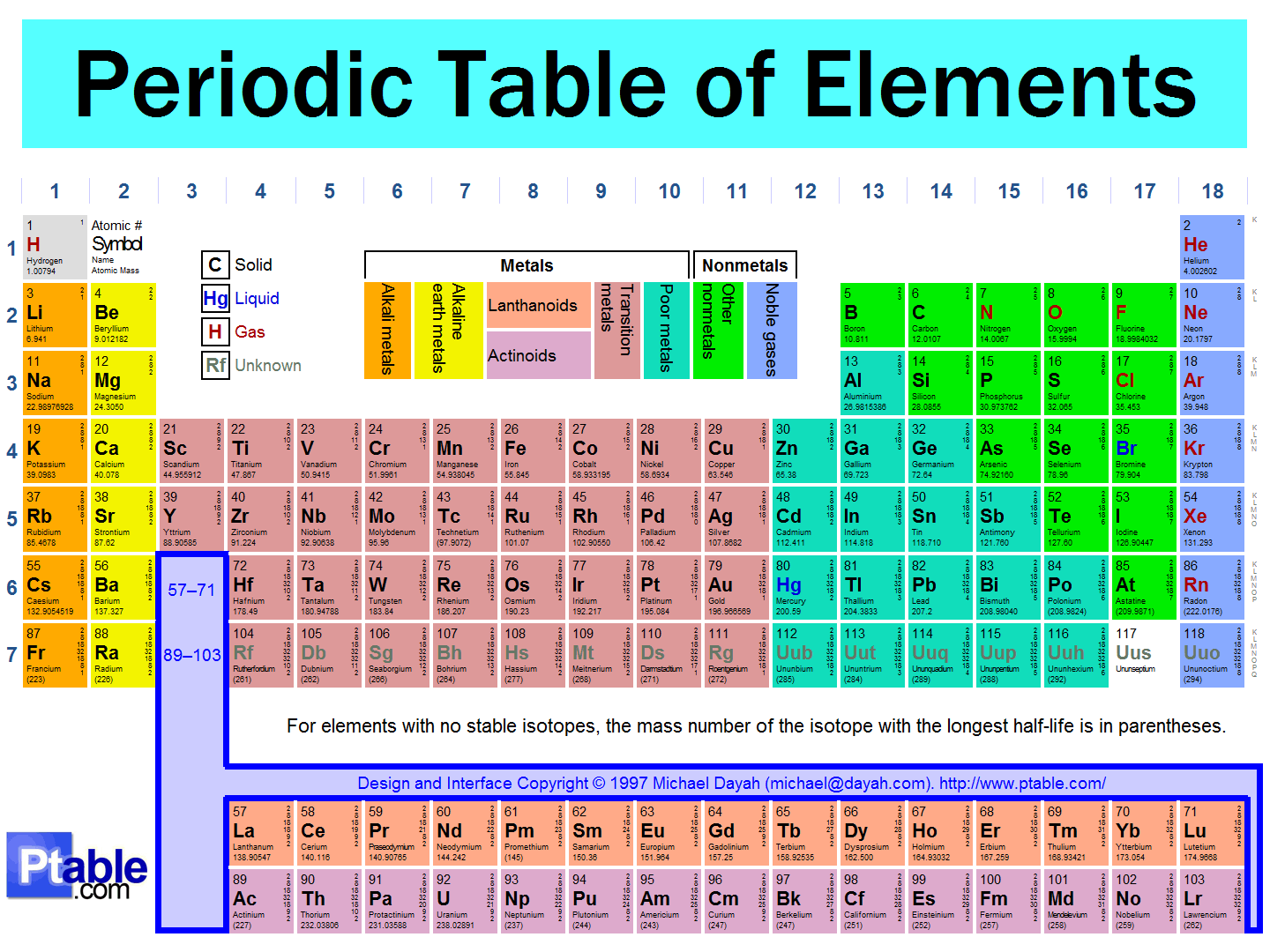
The horizontal row on the periodic table is called a
a)
group
b)
family
c)
period
d)
atomic number
32.
A vertical column is called...
a)
group
b)
tower
c)
period
d)
crew
33.
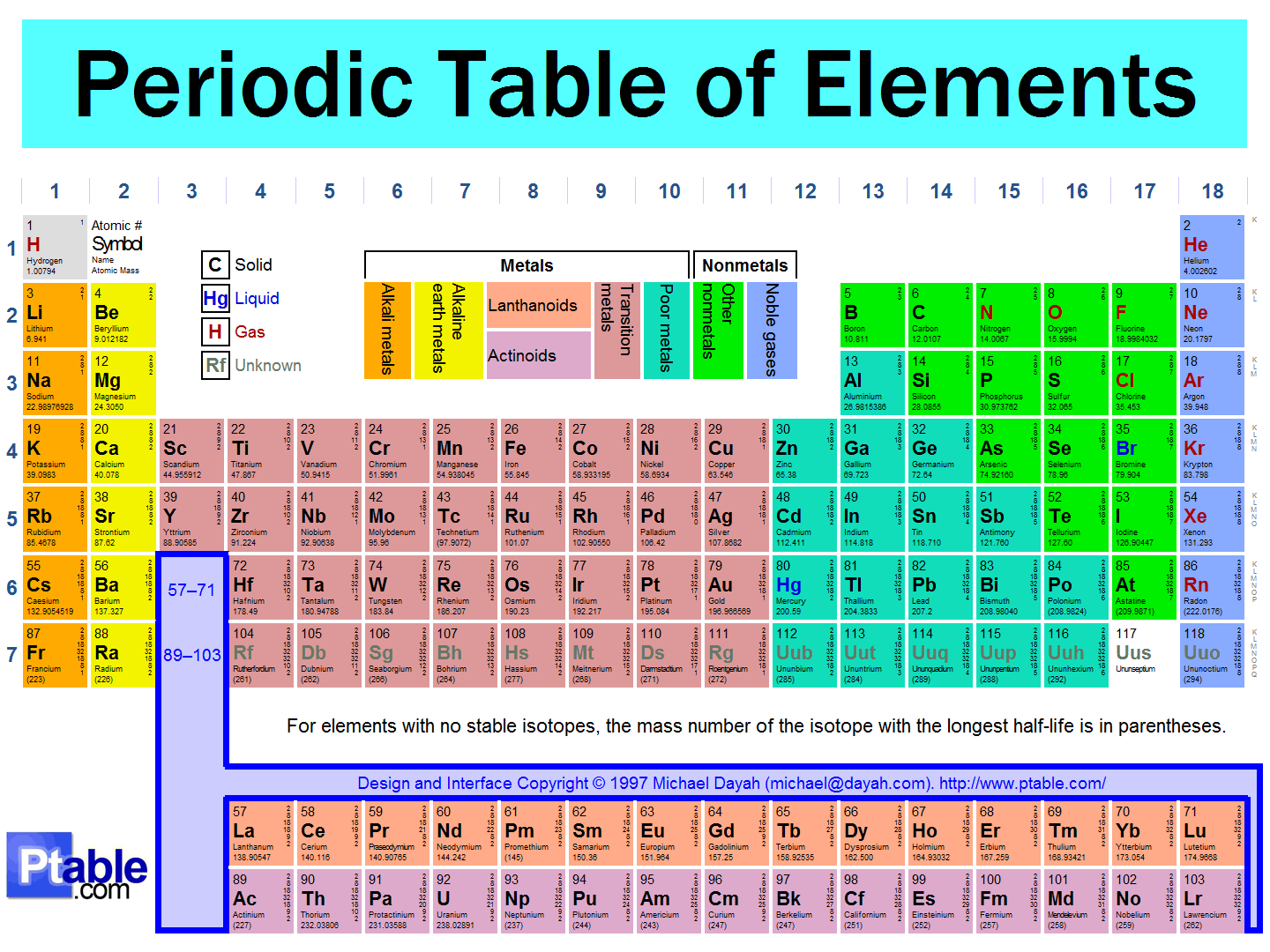
The number at the bottom of each square on the periodic table is the ...
a)
atomic number
b)
atomic mass
c)
chemical symbol
d)
element name
34.

As you move left to right on a row or period what happens?

a)

Atomic number increases by 1

b)

Electrons decrease

c)

Number of shells decrease

d)

Nothing

35.

All elements in the same row have the same number of shells.

a)

True

b)

False

c)

Sometimes

36.
Sodium (Na) is found in period 
a)
3
b)
2
c)
4
d)
1
37.

The atomic number of and atom is really... 

(READ THE ANSWERS CAREFULLY)

a)

only the number of electrons

b)

 the number of protons

c)

only the number of neutrons

d)

the number of both electrons and protons in an atom.
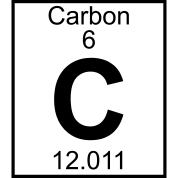
38.
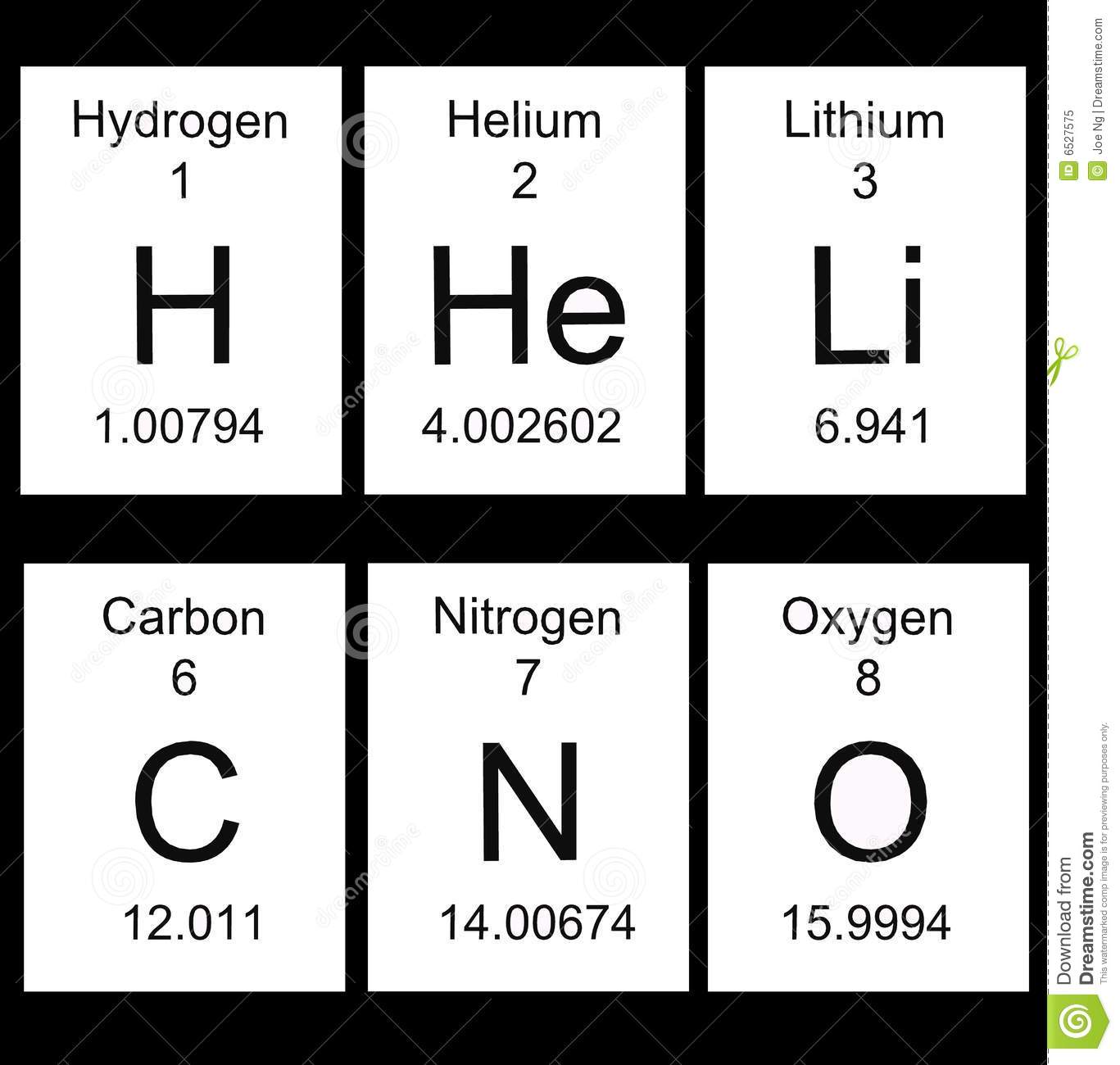
What does the 6 represent?
a)
atomic mass
b)
atomic number
c)
element name
d)
chemical symbol 
39.

A subatomic particle that has a negative charge

a)

noble gases

b)

protons

c)

electrons

d)

neutrons

40.
Helium balloons rise on earth because
a)
helium is less dense than air
b)
helium is more dense than air
c)
helium is cooler than air
d)
helium is warmer than air
41.
When something new is created or a substance is broken down into diffrent chemicals, you have a chemical change.
a)
True
b)
False
42.
Is burning wood a chemical or physical change?
a)
chemical
b)
physical
43.
Which is a physical change?
a)
burning match 
b)
vinegar in baking soda 
c)
melting butter
d)
cooking an egg
44.
What type of mixture is this?
a)
heterogeneous 
b)
homogeneous
45.

In a solution the substance that dissolves in the solvent.

a)

Solute

b)

Suspension

c)

Colloid

d)

Solvent

46.

In a solution the substance which the solute dissolves

a)

solvent

b)

suspension

c)

colloid

d)

solution

47.

Which statement is true about compounds?

a)

a pure substance where two or more elements are chemically combined

b)

a homogenous mixture of 2 or more elements

c)

a pure substance containing only one type of atom

d)

a heterogeneous mixture of 2 or more elements chemically combined

48.

2. Which element has the most similar properties with boron?

a)

A) Silicon

b)

B) Gallium

c)

C) Carbon

d)

D) Fluorine

49.

This atom has....

a)

4 protons

b)

5 electrons

c)

6 protons

d)

6 neutrons

50.

Most of the mass of an atom is because of the total mass of the .......

a)

The electrons and protons

b)

The protons & neutrons

c)

The electrons and neutrons

d)

The electron cloud

51.

How many electrons does an atom of silver have?

a)

107.87

b)

60.87

c)

60

d)

47

52.

The element in period 5, group 4 is?

a)

Dubnium (Db)

b)

Antimony (Sb)

c)

Tin (Sn)

d)

Zirconium (Zr)

53.

Which of these particles is the smallest?

a)

electron

b)

neutron

c)

atom

d)

proton

54.

All atoms of the periodic table are considered to be neutral because.....

a)

They all have neutrons which are neutral in charge

b)

Electrons and protons do opposite things in the atom

c)

Neutrons and electrons have the same charge

d)

The number of electrons equal the number of protons

55.

Pure substances include:

a)

Elements

b)

Homogeneous Mixtures

c)

Compounds

d)

Heterogeneous Mixtures

56.
What are the 3 particles that make-up the atom?
a)
protons, neutrons, and isotopes
b)
neutrons, isotopes, and electrons
c)
positives, negatives, and electrons
d)
protons, neutrons, and electrons
57.
What's a valence electron?
a)
electrons in the second energy level
b)
electrons in the outermost energy level
c)
the atomic number
d)
electrons in the first level
58.

In a ______________, one substance is dissolved in another substance.

a)

solution

b)

suspension

c)

colloid

59.

_____________is a measure of the average kinetic energy of all particles in an object

a)

Weight

b)

Volume

c)

Mass

d)

Temperature

60.
Combustion is another word for __________.
a)
Transportation
b)
Respiration
c)
Fossil Fuels
d)
Burning
61.
Which of the following is determined by both mass and velocity?
a)

Potential Energy

b)

Kinetic Energy

c)

Work

d)

Mechanical Advantage

62.
Which of the following transfers energy from one object to another?
a)
Power
b)
Acceleration
c)
velocity
d)
Work
63.
The sound of your voice is caused by
a)
the movement of your lips
b)
an EM wave
c)
your vocal cords vibrating
d)
the bones in your ear
64.
Which of these is an example of matter?
a)
The sound of thunder
b)
Sunlight
c)
Heat from the oven
d)
Smoke from a fire
65.
The weight of a camera is
a)

How much matter the camera contains

b)

The pull of gravity on the camera

c)

The amount of space the camera takes up

d)

The number of molecules in the camera

66.
An atom is
a)

made up of several compounds bonded together

b)

made up of several molecules bonded together

c)

the largest unit of matter

d)

the smallest unit of matter

67.
Which of these is an example of a molecule?
a)
a small nugget of pure gold
b)
the smallest grain of salt in a salt shaker
c)
two oxygen atoms joined to a carbon atom
d)
a small drop of sugar water
68.
The atoms that make up gas can move,
a)

but the atoms that make up solids and liquids do not.

b)

but the atoms that make up solids do not.

c)

and so do the atoms that make up solids and liquids.

d)

but they only shake back and forth in place.

69.
Which one of these is a pure substance?
a)
a bar of gold
b)
sea water
c)
soil
d)
blood
70.
A drop of melted wax falls onto a table. It cools and becomes a solid. How is it different now that it is a solid?
a)

It is no longer a fixed volume.

b)

Its atoms have stopped moving

c)

It has a fixed shape

d)

Its mass has increased

71.
Gas molecules apply more pressure against their container when
a)

temperature is increased

b)

temperature is decreased

c)

the container is larger

d)

the container is smaller

72.
Which action would result in a chemical change?
a)
crumpling several sheets of paper
b)
pounding a nail into a piece of wood
c)
peeling and slicing a carrot
d)
making blueberry muffins
73.
The amount of matter in an object is called its
a)

weight

b)

gravity

c)

mass

d)

force

74.
A chemical change for a piece of metal would be
a)
being bent in half
b)
getting cut into two pieces
c)
being painted
d)
getting rusty
75.

Which symbolizes a molecule or compound?

a)

He

b)

Be

c)

N2

d)

NaCl

76.
Putting sand and salt together makes
a)
a coumpound
b)
an element
c)
a mixture
d)
a solution
77.
Plastic, wood, and iron are all made up of
a)
cells
b)
atoms
c)
carbon
d)
plants
78.
Water is
a)
a compound
b)
an element
c)
a solution
d)
a mixture
79.

On the periodic table, nitrogen is represents by N. N represents an atomic....

a)

equation

b)

period

c)

symbol

d)

group

80.
All of the substances on the Periodic Table are classified as elements because they
a)
are pure substances
b)
are composed of atoms
c)
cannot be broken down into other substances
d)
cannot be dissolved in water or other liquids
81.
A difference between a Physical Change and a Chemical Change is that
a)
chemical change involved energy while physical change does not
b)
physical change involves energy while chemical change does not
c)
different kinds of molecules are present after a physical change but not after a chemical change
d)
different kinds of molecules are presents after a chemical change but not after a chemical change
82.
Each element on the Periodic Table is assigned an atomic number. This number is the same as
a)
the number of electrons in the atom's nucleus
b)
the number of Protons in the atom's nucleus
c)
the number of neutrons in the atom's nucleus
d)
the number of protons and neutrons in the atom's nucleus
83.
Which statement is true about the electrical properties of metals?
a)
Metals have high electrical resistance
b)
Lightweight metals are the best conductors
c)
Metals and plastics are both good conductors
d)
Metals are good electrical conductors
84.
Salt (NaCl) is a common substance. Salt is which of these?
a)
atom
b)
element
c)
compound
d)
mixture
85.
Tom places four objects in a tank of water. He makes the following observations: - A cork floats - A rock sinks - A soda can floats - A piece of chalk sinks Which statement is correct based on Tom's observations?
a)
The rock and chalk have a density greater than water.
b)
The rock and chalk have a densoty less than water.
c)
The cork and can of soda have a density equal to water.
d)
The cork and the can have a density greater than water.
86.
Silver is a white metal that is an excellent conductor of heat and electricity. The density of silver is 10.49 g/cm3. Silver does not react with water but does react with nitric acid. Silver tarnishes when exposed to air. A physical property of silver is
a)
Silver reacts with Nitric Acid
b)
Silver does not react with water
c)
The density of silver is 10.49 g/cm3
d)
Silver tarnishes when exposed to air
87.
During the science lab, some students added small pieces of magnesium to hydrochoric acid. They noticed that bubbles formed, the test tube got hot, and the magnesium disappeared. Which of the following is a sign that. chemical reaction has take place in this experiment?
a)
odor
b)
formatio of gas
c)
increase of temperature
d)
formation of a precipitate
88.
What two subatomic particies are located in the nucleus?
a)
Proton
b)
Neutron
c)
Electron
89.
Which of these properties can be used to find the volume of a juice box?
a)
length x width x height
b)
mass divided by volume
c)
mass x weight x length
d)
mass divided by weight
90.
Two oxygen atoms bond with one carbon atom to form Carbon Dioxide. Carbon Dioxide is a(an)
a)
element
b)
atom
c)
molecule
d)
mixture
91.
What is the substance that contains only one type of atom?
a)
Conpound
b)
Element
c)
Heterogeneous Mixture
d)
Homogeneous Mixture
92.
Melted candle wax has no fixed shape, but it does have a fixed volume. Thus, melted candle wax is a
a)
Solid
b)
Pure Substance
c)
Liquid
d)
Gas
93.
A sealed metal container holds a gas. What happens when the container is heated?
a)
The gas exerts more pressure
b)
The gas decreases in volume
c)
The mass of the gas increases
d)
The weight of the gas increases
94.
Which of these is a physical change, not a chemical change?
a)
A wax candle burns.
b)
An old can rusts.
c)
A scrambled egg cooks.
d)
An aluminum can melts.
95.
Which of these is a chemical property, not a physical property?
a)
Mass
b)
Color
c)
Ability to burn
d)
Ability to be shaped
96.
What is the temperature at which a solid becomes a liquid?
a)
Sublimation
b)
Melting Point
c)
Condensation
d)
Boiling Point
97.
The process of a solid changing directly to a gas is called
a)
Evaporation
b)
Freezing
c)
Condensation
d)
Sublimation
98.
Which of the following is an example of boiling?
a)
A puddle of water dries up slowly in sunlight.
b)
Gas in a soft drink escapes as bubbles float upward.
c)
Heated water forms bubbles of water vapor inside it.
d)
Water in a freezer becomes an ice cube.
99.
When a gas changes into a liquid, the process is called
a)
Evaporation
b)
Sublimation
c)
Condensation
d)
Freezing
100.
The ability to cause change is called
a)
energy
b)
atoms
c)
mass
d)
state
101.
Laurie has the most kinetic energy when she is
a)
Sitting in a chair
b)
Standing on the roof
c)
Walking slowly
d)
Riding a bicycle
102.
The energy stored in food is a form of
a)

Kinetic Energy

b)

Potential Energy

c)

Thermal Energy

d)

Chemical Energy

103.
Which type of energy is stored in the nucleus of atoms?
a)
Electromagnetic Energy
b)
Thermal Energy
c)
Kinetic Energy
d)
Nuclear Energy
104.
An automobile changes energy into different forms. The total amount of energy does not change due to the
a)
Law of Conservation of Energy
b)
Law of Conservation of Mass
c)
Concept of Kinetic Energy
d)
Measure of Energy Efficiency
105.
Chris's new clothes dryer is more energy efficient than his old one. This means that it
a)
dries fewer clothes at the time.
b)
loses a higher percentage of energy to other forms.
c)
loses a lower percentage of energy to other forms.
d)
needs more energy to dry clothes.
106.
In many energy conversions, the largest amount of wasted energy often ends up as
a)
light
b)
heat
c)
sound
d)
vibrations
107.
When a rock falls from a cliff potential energy changes into
a)

Nuclear Energy

b)

Electromagnetic Energy

c)

Kinetic Energy

d)

Chemical Energy

108.
Temperature is usually measured in degrees with a(n)
a)

Thermometer

b)

Metric Ruler

c)

Triple Beam Balance Scale

d)

Expansion Joint

109.
According to the kinetic theory of matter, particles of a gas move
a)
only when energy is added to a gas.
b)
less freely than those of a solid.
c)
in only one direction.
d)
more freely than those in a liquid.
110.
A metal spoon is used to stir a pot of hot soup. The spoon is warmed by
a)
Radiation
b)
Insulation
c)
Conduction
d)
Convection
111.
Suppose that you are at the beach. Energy from the Sun reaches you mainly through
a)
Conduction
b)
Insulation
c)
Convection
d)
Radiation
112.
Why do many people wear hats in the winter?
a)
Hats are insulators
b)
Hats conduct energy to heat
c)
Hats are radiators of energy
d)
Hats have a low specific heat
113.
The most common element in the universe is
a)
Carbon
b)
Hydrogen
c)
Nitrogen
d)
Silicon
114.
Atoms of an element always have a certain number of
a)
Protons
b)
Neutrons
c)
Electrons
d)
Ions
115.
The total number of protons and neutrons in the nucleus determines the atom's
a)
Atomic Numnber
b)
Atomic Mass
c)
Symbol
d)
Size
116.
A chemist tests an element and finds that it does not react with any other element. What type of element is it most likely to be?
a)
Metal
b)
Non-Metal
c)
Noble Gas
d)
Halogen
117.
An element that has some properties of both metals and nonmetals is referred to as a(n)
a)
Metal
b)
Non - Metal
c)
Metalloid
d)
Halogen
118.
A substance has a shiny surface. It is easy to shape by drawing it into a long thin wire. What is it?
a)
Metal
b)
Non - Metal
c)
Metalloid
d)
Noble Gas
119.
An element has a dull surface. It does not conduct electricity well. What is it?
a)
Metal
b)
Non - Metal
c)
Metalloid
d)
Noble Gas
120.
This group is at the far left of the periodic table.
a)

Halogens

b)

Transitio Metals

c)

Alkali Metals

d)

Noble Gases