wayground logo

Free Printable Worksheets

Font size

S
M
L
XL
Worksheets

Week 3 JC - Periodic Table, Chem Reac, Common Gases, Materials

Total questions: 116

Worksheet time: 4hrs 53mins
Name
Class
Date
1.
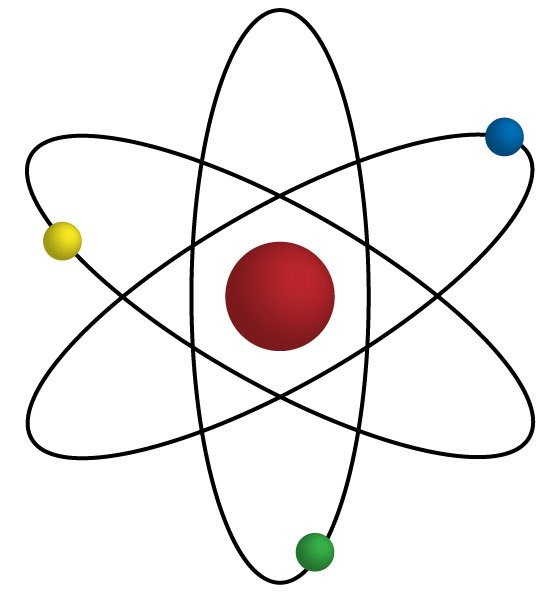
all matter is made of what 
a)
energy 
b)
atoms 
c)
electrons 
d)
compounds 
2.
The positive particles of an atom are 
a)
electrons 
b)
positrons 
c)
neutrons 
d)
protons 
3.
the central region of an atom where its neutrons and protons are is its 
a)
nucleus 
b)
electron cloud
c)
core 
d)
center 
4.
an atom with atomic number 6 would have how many protons 
a)
6
b)
12
c)
3
d)
cannot be determined 
5.
Particles in an atom that are neutral and have no charge are 
a)
negatrons 
b)
electrons 
c)
neutrons 
d)
protons 
6.
A particle that moves around the nucleus is a(n)...
a)
Proton
b)
Neutron
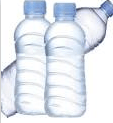
c)
Electron
d)
Quark
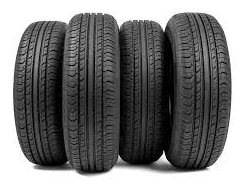
7.
Neutrons are _______________ particles.
a)
negative
b)
positive
c)
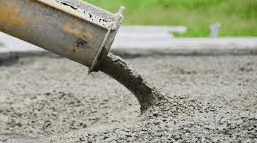
neutral
d)
cows
8.
electrons have this type of charge?
a)
negative
b)
positive
c)
neutral
9.
How does the size of a proton compare to the size of a neutron?
a)
larger
b)
smaller
c)
equal
10.
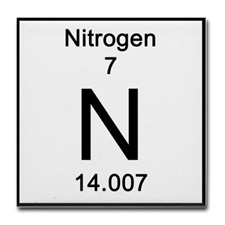
What is the number of protons that the element in this image contain?
a)
14
b)
7
c)
15
d)
18
11.
Most of the mass in an atom is concentrated in the...
a)
electrons
b)
nucleus
c)
protons
d)
empty space
12.
What are the 3 particles that make-up the atom?
a)
protons, neutrons, and isotopes
b)
neutrons, isotopes, and electrons
c)
positives, negatives, and electrons
d)
protons, neutrons, and electrons
13.
The yellow atoms are called 
a)
metals
b)
nonmetals
c)
metalloids
d)
noble gases
14.
The atoms along the staircase are called 
a)
metals
b)
nonmetals
c)
metalloids
d)
noble gases
15.
Each column in the periodic table is called a 
a)
period
b)
group
c)
cluster
d)
unit
16.
Rutherford's experiment showed that most of an atom is made up of _____.
a)
a nucleus
b)
an electron cloud
c)
empty space
d)
alpha particles
17.
Rows on the period table are called _____ while columns are called _____.
a)
groups, families
b)
groups, periods
c)
periods, groups
d)
families, groups
18.
The periodic table has __ groups.
a)
8
b)
7
c)
18
d)
2
19.
What does the 6 represent?
a)
Atomic mass
b)
atomic number
c)
chemical symbol
d)
element name
20.
The atomic number of this pictured element is
a)
28
b)
58.6934
c)
Ni
d)
Nickel
21.
Which section are the metals in? 
a)
dark blue
b)
light blue
c)
purple
d)
pink
22.
Which part is known as the atomic mass?
a)
N
b)
7
c)
14.00643-14.00728
d)
nitrogen
23.
Element is a
a)
pure substance
b)
compound
c)
mixture
d)
molecule
24.
Electrons are
a)
negative and in the nucleus
b)
positive and at the edge of the atom
c)
not in an atom
d)
negative and at the edge of the atom
25.
Which of the following is not a compound?
a)
HCl
b)
Cl
c)
NaCl
d)
CO2
26.

A substance that is formed as the result of a chemical reaction is a __________________

a)

Product

b)

Reactant

c)

Starters

d)

Enders

27.

A change in the shape of an object is an example of _________________.

a)

a chemical change

b)

energy

c)

an endothermic change

d)

a physical change

28.
Which of the following is an example of a chemical change?
a)
rusting of a bicycle
b)
painting a house
c)
washing a dog
d)
tearing up a newspaper
29.

Which one shows that a chemical reaction has occurred?

a)

dissolving

b)

melting

c)

formation of a gas

d)

bending

30.
Which of the following IS a physical change?
a)
Getting a haircut
b)
Rusty metal
c)
sour milk
d)
A compound
31.
a copper penny turning greenish after a few years.
a)
Chemical Change
b)
Physical Change
32.
What is the left part of a chemical equation called?
2H2 + O2 --> 2H2O
a)
Reactants
b)
Products 
c)
Yields 
d)
Chemical Equation 
33.
What is the right part of a chemical equation called...
2H2 + O2 --> 2H2O
a)
Reactants
b)
Products 
c)
Yields 
d)
Chemical Equation 
34.
How many atoms of carbon (C) are in C6H12O6?
a)
3
b)
6
c)
12
d)
24
35.
The rate of a chemical reaction is NOT affected by which of the following:
a)
temperature
b)
concentration
c)
particle size (surface area)
d)
All of these affect reaction rates
36.
The rate of a reaction increases as temperature__________________.
a)
Decreases
b)
Increases
c)
Stays the Same
37.
Products will form faster if____________
a)
the particle size of the reactants are larger.
b)
temperature is decreased.
c)
concentration of the reactants are increased.
d)
the reaction is not stirred.
38.
A ______________ is a substance that increases the rate of a reaction without being used up during the reaction. 
a)
catalyst
b)
product
c)
reactant
d)
solute
39.
Usually lowering the temperature will slow down a reaction.
a)
false
b)
true
40.

Increasing the ____ causes the particles (atoms

or molecules) of the reactants to move more quickly so that

they collide with each other more frequently and with more

energy.

a)

Catalyst

b)

Surface Area

c)

Temperature

d)

Concentration

41.

________ is the measure of how much area of an

object is exposed.

a)

Surface Area

b)

Catalyst

c)

Temperature

d)

Concentration

42.

An enzyme's role is to...

a)

speed up biological chemical reactions.

b)

balance chemical reactions.

c)

reorganize groups of atoms into different substances.

d)

tell the cell when to start making more energy.

43.

The ____________ states that atoms, ions, or molecules must collide in order to react.

a)

transition state

b)

activation energy

c)

rate law

d)

collision theory

44.

Which of the following would increase the rate of a chemical reaction?

a)

Freezing the chemicals

b)

Increasing the temperature of the reagents

c)

Removing a catalyst

d)

Using less chemicals

45.

Which of the following would increase the rate of a chemical reaction?

a)

Removing a catalyst

b)

Diluting the chemicals

c)

Decreasing the temperature

d)

Adding a catalyst

46.

Which of the following would increase the rate of a chemical reaction?

a)

Lowering temperatrure

b)

Removing a catalyst

c)

Making the chemicals more concentrated

d)

Using less chemicals

47.

Which colour on the graph would represent the solution with the higher temperature?

a)

Red

b)

Blue

c)

None

d)

Both

48.

Which colour on the graph would represent the solution with a catalyst?

a)

Red

b)

Blue

c)

Both

d)

None

49.

Which of the following would increase the rate of CO2 made using marble chips and HCl?

a)

Lowering the temperature

b)

Crushing the marble chips

c)

Using less acid

d)

Using bigger marble chips

50.

Which of the following is not made when marble chips are mixed with HCl?

a)

CO2

b)

CaCl2

c)

H2O

d)

O2

51.

Which of the following lines represents the chemical with the lower concentration?

a)

Red

b)

Blue

c)

Both

d)

None

52.

Which of the following colours represent the solution with the largest particle size?

a)

Red

b)

Blue

c)

Both

d)

None

53.
The burning of fuels , such as coal, natural gas, or oil involves a(n) __________reaction.
a)
chemical
b)
physical
54.
Increasing the surface area of the reactants will increase the rate of the reaction.
a)
True
b)
False
55.
The effect of a catalyst on a reaction is to raise the activation energy.
a)
True
b)
False
56.
All reactions require activation energy.
a)
True
b)
False
57.

An enzyme (biological catalyst) increases the rate of a reaction.

a)

True

b)

False

58.
Increasing the temperature of a reaction will __________ the rate of the reaction.
a)
increase
b)
decrease
59.
In an ____________reaction, energy is released.
a)
exothermic
b)
endothermic
60.

The water cycle is powered by what 2 sources?

a)

Gravity

b)

Earth's tectonic plates

c)

The sun

d)

Earth's internal heat

61.

Transpiration is...

a)

the process by which surface water seeps into the ground through the soil and rock layers

b)

the transport of water from plant roots to leaves, where it evaporates into the atmosphere

c)

the process by which water falls to the ground from clouds in the atmosphere in the form of rain, sleet, snow, or hail

d)

the change in state from a liquid to a gas

62.

The change in state from a gas to a liquid is...

a)

Transpiration

b)

Evaporation

c)

Condensation

d)

Infiltration

63.

True or false: Ice or any frozen liquid is NOT apart of the water cycle?

a)

True

b)

False

64.

Which is an example of a renewable natural source?

a)

Wood

b)

Plastic

c)

coal

d)

oil

65.

What two categories are natural resources divided into?

a)

common and precious

b)

rare and common

c)

inexpensive and expensive

d)

renewable and nonrenewable

66.

Geothermal energy can be harnessed for energy production by transferring energy from hot rocks to _________.

a)

sand

b)

water

c)

oil

d)

iron

67.

What is the last step in ordering soil formation?

a)

Bacteria and fungi break the rock down chemically. They also decompose the remains of plants and animals, adding organic matter and nutrients to the sediment.

b)

Rock is weathered and forms sediment.

c)

More organic matter is added to the soil. Plants and burrowing animals add air to the soil.

68.

True or False: Most of earth's groundwater is nonrenewable

a)

True: some areas of the world have plentiful supplies of groundwater, while others do not, but it is a resources that is used up faster than it is replenished

b)

False: It is not a resource that is used up faster than it is replenished, or exists in a limited supply.

69.

_____ is a natural resource that formed millions of years ago from the burial of marine organisms.

a)

Petroleum

b)

wood

c)

groundwater

d)

geothermal energy

70.

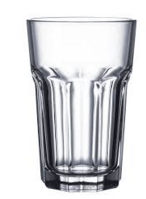
What is this material?

a)

Plastic.

b)

Metal.

c)

Glass.

d)

Cardboard.

71.

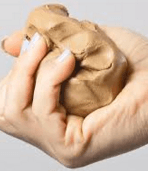
Which picture is showing us clay?

a)
b)
c)
d)
72.

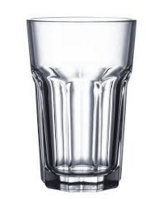
Which object is made of glass?

a)
b)
c)
d)
73.

What is the window made of?

a)

It is made of wood and wool.

b)

It is made of wool and glass.

c)

It is made of paper and fabric.

d)

It is made of wood and glass.

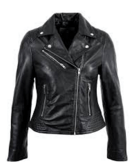
74.

What is this object made of?

a)

It is made of rubber.

b)

It is made of cotton.

c)

It is made of leather.

d)

It is made of glass.

75.

What is this?

a)

It is cement.

b)

It is rubber.

c)

It is fabric.

d)

It is glass.

76.

What is this?

a)

Paper.

b)

Praprer.

c)

Cotton.

d)

Glass.

77.

What are the curtains made of?

a)

They are made of gold and glass.

b)

They are made of fabric.

c)

They are made of glass.

d)

They are made of wood.

78.

Which material is gold?

a)
b)
c)
d)
79.

Which material is cardboard?

a)
b)
c)
d)
80.

What is this object made of?

a)

It is made of cardboard.

b)

It is made of glass.

c)

It is made of rubber.

d)

It is made of clay.

81.

Which material is the cement?

a)
b)
c)
d)
82.

What is that sofa made of?

a)

It is made of fabric.

b)

It is made of wool.

c)

It is made of leather.

d)

It is made of cotton.

83.

What is this material?

a)

It is wood.

b)

It is silver.

c)

It is cardboard.

d)

It is concrete.

84.

Which of this materials is bendy?

a)
b)
c)
d)
85.

Which of this materials is hard and rigid?

a)
b)
c)
d)
86.

Which of this materials is soft and bendy?

a)
b)
c)
d)
87.

Choose the correct option:

a)

Glass isn't transparent and rigid.

b)

Glass is bendy and soft.

c)

Paper is transparent.

d)

Glass is transparent and rigid.

88.

Choose the correct option:

a)

You can squash a stone.

b)

You can squash silver.

c)

You can squash clay.

d)

You can squash glass.

89.

Choose the material you can stretch.

a)
b)
c)
d)
90.
oxygen is a gas produced by _ and used by  _ 
a)
plants and animals 
b)
photosynthesis and carbon dioxide 
c)
animals and plants 
d)
carbon dioxide and photosynthesis
91.
All of the carbon in existence is continually recycled in the carbon cycle
a)
True
b)
False
92.
How is the burning of fossil fuels related to global warming?
a)
Magic
b)
Fuels are hot
c)
Greenhouse effect
d)
Photosynthesis
93.
Which of the following removes carbon from the atmosphere?
a)
Combustion
b)
Respiration
c)
Photosynthesis
d)
Death
94.
Organisms that do not decompose can be buried and become what?
a)
water
b)
nutrients
c)
air
d)
fossil fuels
95.

If the plant population decreased, the amount of carbon in the atmosphere would _________.

a)

Stay the same

b)

Increase

c)

Decrease

96.

oxygen is a gas produced by _____ and used by ________

a)

plants and animals

b)

photosynthesis and carbon dioxide

c)

animals and plants

d)

carbon dioxide and photosynthesis

97.
carbon dioxide is a gas produced  by ________ and used by __________
a)
plants and animals 
b)
carbon and photosynthesis
c)
animals and plants 
d)
photosynthesis
98.

Which is a true statement?

a)

Humans depend on oxygen, plants depend on carbon dioxide

b)

Plants produce carbon dioxide

c)

Humans depend on carbon dioxide, plants depend on oxygen

d)

Humans don't depend on plants for the air they need

99.

Plants use ____________ to make their own food

a)

Water

b)

Sunlight

c)

Carbon dioxide

d)

All of these

100.

Choose all the items made out of carbon

a)

Food

b)

Animals

c)

Plants

d)

Tennis Racket

e)

Pretty much everything

101.

How does carbon get from animals and back into the atmosphere? (CHOOSE ALL THAT APPLY)

a)

Respiration (breathing)

b)

After they die, they are broken down by decomposers

c)

Photosynthesis

d)

None of these

102.

How do animals get carbon?

a)

Photosynthesis

b)

They absorb it from the atmosphere

c)

The sun

d)

They eat other plants and animals

103.

What is CO2?

a)

Air

b)

Oxygen

c)

Carbon Dioxide

d)

Dioxide

104.

What are the top things that contribute to global warming? (Choose more than one)

a)

Cow Farts

b)

Burning Gas in cars and factories

c)

Cutting down Trees

d)

Solar Power

105.

What are some ways we can fight global warming? (Choose all that apply)

a)

Eat chicken instead of beef

b)

Plant trees

c)

Recycle

d)

Tell others to help fight

106.
During which stage do clouds form?
a)
condensation
b)
evaporation
c)
precipitation
107.
Which stages does liquid water from the ocean turn into water vapor?
a)
condesantion
b)
evaporation
c)
precipitation
d)
run off
108.
Which stage does ground water try to return to the ocean or soak into the ground?
a)
condensation
b)
evaporation
c)
precipitation
d)
run off
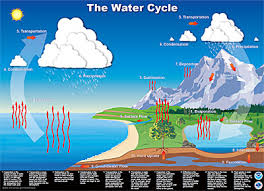
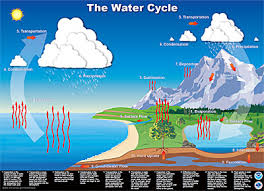
109.
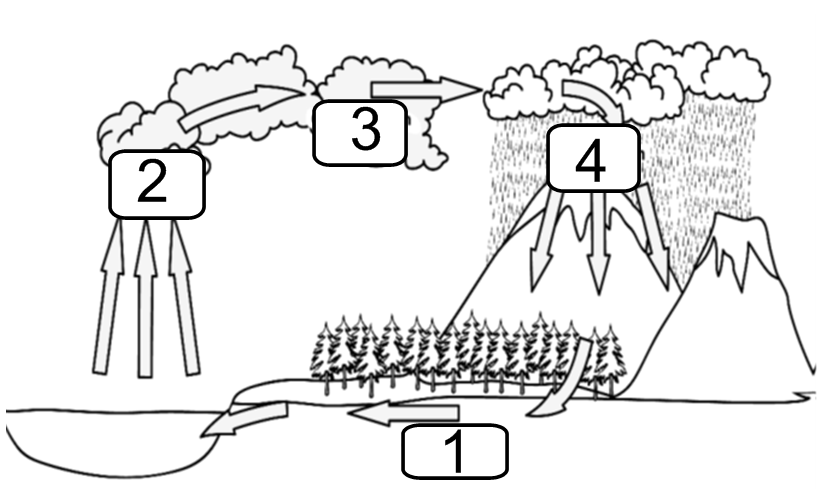
Which stage does the #2 show in the diagram?
a)
condensation
b)
evaporation
c)
precipitation
d)
run off
110.
Which stage does the #3 show in the diagram?
a)
condensation
b)
evaporation
c)
precipitation
d)
run off
111.
what does the #4 show in the diagram?
a)
condensation
b)
evaporation
c)
precipitation
d)
run off
112.
What is the water cycle?
a)
the 3 forms of water
b)
the movement of water on, above, or below the surface of the Earth
c)
when water melts
d)
when clouds form
113.
What follows evaporation during the water cycle? How does this occur?
a)
Water evaporates into water vapor
b)
Water vapor condenses and forms a  cloud
c)
Water precipitates to the ground
d)
Water runs down into the hydrosphere
114.
The sun will cause water in the puddle to change from
a)
a gas to a liquid
b)
a liquid to a gas
c)
solid to a liquid
d)
a liquid to a solid
115.
The ______________is the beginning source of energy for the water cycle.
a)
sun
b)
wind
c)
geothermal
d)
volcano
116.
Water begins to evaporate when you add _______ to it.
a)
cold
b)
ice
c)
water cycle
d)
heat