wayground logo

Free Printable Worksheets

Font size

S
M
L
XL
Worksheets

Heat transfer

Total questions: 115

Worksheet time: 2hrs 49mins
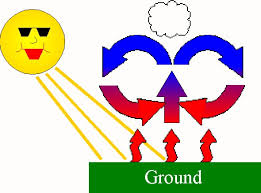
Name
Class
Date
1.
What kind of heat transfer happens when the sun is heating your body?
a)
Conduction
b)
Radiation
c)
Convection
d)
Density
2.
What heat transfer happens when you burn your hand by touching a fire?
a)
Radiation
b)
Conduction
c)
Convection
d)
I don't know!!!!!!!!!!!
3.
Warm air rises and the cool air sinks demonstrates this type of heat transfer. 
a)
conduction
b)
convection
c)
radiation
d)
Insolation 
4.
Ironing a shirt is an example of...
a)
condensation
b)
conduction
c)
convection
d)
radiation
5.
Warm air is __________ dense than cold air and rises creating convection currents.
a)
more
b)
less
6.
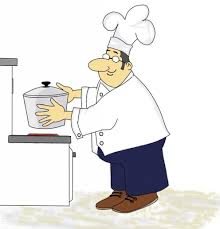
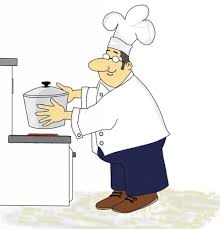
The man goes to take the hot pot off the stove with his bare hands.
a)
conduction
b)
convection
c)
radiation
7.
What happens when ice cubes melt in a glass?
a)
Heat travels from the ice to the warmer water.
b)
No energy is transferred.
c)
Heat is transferred from the warmer water to the ice cubes.
d)
The water warms up due to the humidity
8.
Johnny accidentally grabbed the handle of the hot pot.
a)
conduction
b)
convection
c)
radiation
9.
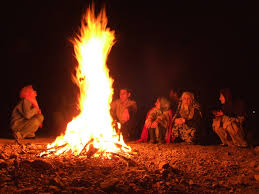
A group of friends gather around a fire to stay warm.
a)
conduction
b)
convection
c)
radiation
10.
Transfer of thermal energy through "space"
a)
conduction
b)
convection
c)
radiation
11.
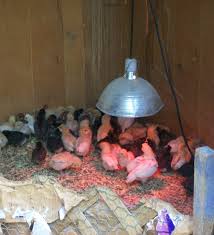
The baby chickens are kept warm from the heat lamps demonstrates this type of heat transfer. 
a)
conduction
b)
convection
c)
radiation
12.
An aluminum plate and a plastic plate have been in the freezer all night long.  When you remove them the next morning, 
a)
the plates have the same temperature.
b)
the plastic plate has a higher temperature.
c)
the plastic plate has a lower temperature.
d)
the aluminum plate has a lower temperature.
13.
Why do we wear sweaters in cold weather?
a)
To keep cold out.
b)
To generate heat.
c)
To reduce heat loss.
d)
All of the above.
14.
Near the ceiling of a room the air is warmer; the warm air rises because of
a)
conduction
b)
convection
c)
radiation
15.
A house burns down. The vinyl siding of the house next door warps due to
a)
conduction
b)
convection
c)
radiation
16.
In what way does the Sun warm Earth? 
a)
radiation
b)
convection
c)
conduction
d)
condensation
17.
How many kinds of heat transfer are there?
a)
1
b)
2
c)
3
d)
4 or more
18.
In heat transfer, heat always flows from the _______________ substance to the _______________ substance.
a)
Hotter to colder
b)
Colder to hotter
c)
Hotter to hotter
d)
Colder to colder
19.
The type of heat transfer that happens through direct contact of molecules or particles with each other is ___________________.
a)
Convection
b)
Conduction
c)
Radiation
d)
insulation.
20.
The kind of heat transfer that travels through space in electromagnetic waves is ______________________.
a)
insulation.
b)
Radiation
c)
Conduction
d)
Convection
21.
The kind of heat transfer that travels through space in electromagnetic waves is ______________________.
a)
insulation.
b)
Radiation
c)
Conduction
d)
Convection
22.
___________________ is the type of heat transfer that occurs in fluids, such as warm air rising and cold air sinking; creating wind.
a)
Convection
b)
Conduction
c)
Radiation
d)
insulation.
23.
___________________ is the type of heat transfer that occurs in fluids, such as warm air rising and cold air sinking; creating wind.
a)
Convection
b)
Conduction
c)
Radiation
d)
insulation.
24.

Which statement is true?

a)

The quicker a molecule moves, the colder it is.

b)

The slower a molecule moves, the warmer it is.

c)

The quicker a molecule moves, the warmer it is

d)

The movement of molecules don't affect temperature
25.
When you use a microwave, what is the main way that heat is transferred?
a)
Convection
b)
Conduction
c)
Radiation
d)
insulation.
26.
The handle of a metal spoon warms up when it is placed in a hot bowl of soup because of
a)
Convection
b)
Conduction
c)
Radiation
d)
insulation.
27.
Which of the following is the best example of conduction?
a)
A light bulb warming a lampshade
b)
An egg cooking in a frying pan
c)
Water boiling in a pot
d)
Gases circulating in the atmosphere
28.
What kind of heat transfer happens when the sun is heating your body?
a)
Conduction
b)
Radiation
c)
Convection
d)
Density
29.
Which of the following is an example of convection?
a)
A hair dryer is drying up your hair.
b)
When the AC or heater changes the temperature.
c)
When a car engine turns hot after being turned on.
d)
When you are making soup and the water is rising and lowering.
30.
What kind of heat transfer happens when the sun is heating your body?
a)
Conduction
b)
Radiation
c)
Convection
d)
Density
31.
What heat transfer happens when you burn your hand by touching a fire?
a)
Radiation
b)
Conduction
c)
Convectio
d)
I don't know!!!!!!!!!!!
32.
Warm air rises and the cool air sinks demonstrates this type of heat transfer. 
a)
conduction
b)
convection
c)
radiation
d)
Insolation 
33.
Ironing a shirt is an example of...
a)
condensation
b)
conduction
c)
convection
d)
radiation
34.
Warm air is __________ dense than cold air and rises creating convection currents.
a)
more
b)
less
35.
Transfer of thermal energy through "space"
a)
conduction
b)
convection
c)
radiation
36.
Hot coffee is stirred with a spoon; the spoon gets hot due to
a)
conduction
b)
convection
c)
radiation
37.
A chair is several feet from a fireplace. The side of the chair facing the fireplace gets warm due to
a)
conduction
b)
convection
c)
radiation
38.
"Lava lamps" contain colored liquids. These liquids form globs that rise to the top due to
a)
conduction
b)
convection
c)
radiation
39.
Near the ceiling of a room the air is warmer; the warm air rises because of
a)
conduction
b)
convection
c)
radiation
40.
In a swimming pool, water near the surface is slightly warmer. The warm water rises because of
a)
conduction
b)
convection
c)
radiation
41.
How many kinds of heat transfer are there?
a)
1
b)
2
c)
3
d)
4 or more
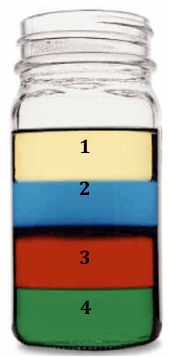
42.
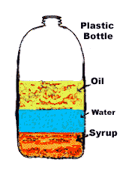
Put the liquids in order from most dense to least dense?
a)
4, 3, 2, 1
b)
1, 2, 3, 4
c)
3, 4, 2, 1, 
d)
4, 3, 1, 2
43.
Which liquid is the least dense?
a)
oil
b)
water
c)
syrup 
d)
plastic bottle
44.
Which box has a higher density?  
a)
Box A
b)
Box B
c)
cannot be determined
d)
they are the same
45.
In general what is the most dense form of matter?
a)
solid
b)
liquid
c)
gas
d)
plasmas
46.
Why do some substances float on water?
a)
they are warmer than water
b)
they are cooler than water
c)
they are more dense than water
d)
they are less dense than water
47.

As an object is heated its density

a)

increases

b)

decreases

c)

remains the same

48.
T/F? Your weight is different on the moon.
a)
true
b)
false
49.
T/F? Your mass is different on the moon.
a)
true
b)
false
50.

What happens when a cold drink sits in a hot room?

a)

It remains cold

b)

It gets warmer

c)

It starts boiling

d)

It starts to freeze

51.

Which of the following best describes temperature?

a)

Number of molecules

b)

Motion of molecules

c)

Size of molecules

d)

Type of molecules

52.

When two things are the same temperature:

a)

They have the same number of molecules

b)

Their molecules stop moving

c)

Their molecules move at the same average speed

d)

Heat transfer between the two things stops

53.

Which of the following best describe a vacuum?

a)

Hot

b)

Cold

c)

Shiny

d)

Empty

54.

Thermoses work because they minimize which kinds of heart transfer?

a)

Conduction and convection

b)

Conduction and radiation

c)

Convection and radiation

d)

Conduction, convection, and radiation

55.

Heat from the Sun reaches Earth through which type of heat transfer?

a)

Conduction

b)

Radiation

c)

Convection

d)

All of the above

56.

Convection currents occur:

a)

Only in liquids

b)

When a dense substance is warmer than a less dense substance

c)

In both liquids and gases

d)

Weakly in solids

57.

All of the following are examples of convection currents, excerpt:

a)

Warm air rising in a house

b)

Cold water sinking to the bottom of the lake

c)

Water flowing through pipes

d)

Steam from hot soup rising into the air

58.

Which most often occurs when a pot of water boils?

a)

Condensation

b)

freezing

c)

melting

d)

evaporation

59.

How is heat transferred in radiation?

a)

through solids

b)

through liquids

c)

through time

d)

through air

60.

Which best explains why a wooden spoon can be used to stir hot soup on the stove?

a)

Wood is a good conductor of heat and transfers energy to the spoon.

b)

Wood is a poor conductor of heat and transfers energy to the spoon.

c)

Wood is a good conductor of heat and does not allow the transfer of energy to the spoon.

d)

Wood is a poor conductor of heat and does not allow the transfer of energy to the spoon.

61.

Which shows an example of convection?

a)

Jose cooks an egg in a pot of boiling water.

b)

Clara burns her hand by touching a light bulb.

c)

Lucy wraps herself in an electric blanket to keep warm.

d)

Ben holds the end of a metal rod in a fire to cook hot dogs.

62.

Which is an example of radiated heat for cooking?

a)

cooking a pot of soup

b)

scrambling eggs on the stove

c)

grilling hot dogs over a campfire

d)

frying hamburgers in a frying pan

63.

Which substance will conduct the least amount of heat?

a)

glass

b)

copper

c)

plastic

d)

aluminum

64.

Which substance will conduct the least amount of heat?

a)

glass

b)

copper

c)

plastic

d)

aluminum

65.

Which is an example of radiation?

a)

boiling a pot of noodles for dinner

b)

getting hot from lying in the sun

c)

feeling warm while taking a shower

d)

burning yourself after touching a hot plate

66.

Why does an ice cube melt when dropped into hot liquid?

a)

The liquid absorbs heat from the ice.

b)

Heat from the liquid transfers to the ice.

c)

Heat from the ice transfers to the liquid.

d)

Cold from the ice transfers into the liquid.

67.

Which is the best example of conduction?

a)

boiling a pot of water

b)

feeling heat from a fireplace

c)

a hot air balloon rising and falling

d)

touching a hot handle and getting burned

68.

Which best describes the transfer of heat due to the movement of gases and liquids?

a)

radiation

b)

convection

c)

evaporation

d)

condensation

69.
Hot coffee is stirred with a spoon; the spoon gets hot due to
a)
conduction
b)
convection
c)
radiation
70.
Near the ceiling of a room the air is warmer; the warm air rises because of
a)
conduction
b)
convection
c)
radiation
71.
Warm air over the beach rises while cooler, dense air from the ocean rushes in due to
a)
conduction
b)
convection
c)
radiation
72.
The way the heat is moving from the hot coffee is called...
a)
convection
b)
radiation
c)
insulation
d)
conduction
73.
Carole owns a two story house with a heating and cooling unit on each floor. In the winter she mostly uses the downstairs unit because the volume of warm air __________ and __________ warming the whole house through __________.
a)
expands, rises, convection
b)
expands, sinks, conduction
c)
contracts, rises, conversion
d)
contracts, sinks, contraption
74.
A toaster toasting bread is an example of 
a)
condensation
b)
conductio
c)
convection
d)
radiation
75.
In how many ways does heat move around the universe?
a)
One
b)
Three
c)
Two
d)
Ten
76.
A microwave oven uses which of the following to heat foods.
a)
Microwave elves
b)
Radiation
c)
Convection
d)
Conduction
77.
Molecules in cold things move more _________
than in hot things.
a)
quickly
b)
slowly
c)
happily
d)
merrily
78.
In heat transfer, heat always flows from the _______________ substance to the _______________ substance.
a)
Hotter to colder
b)
Colder to hotter
c)
Hotter to hotter
d)
Colder to colder
79.
The type of heat transfer that happens through direct contact of molecules or particles with each other is ___________________.
a)
Convection
b)
Conduction
c)
Radiation
d)
insulation.
80.
The kind of heat transfer that travels through space in electromagnetic waves is ______________________.
a)
insulation.
b)
Radiation
c)
Conduction
d)
Convection
81.
Which statement is true?
a)
The quicker a molecule moves, the colder it is.
b)
The slower a molecule moves, the warmer it is.
c)
The quicker a molecule moves, the warmer it is
d)
The movement on molecule don�t affect its temperature
82.
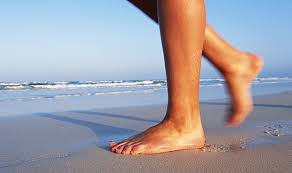
Walking on the warm sand sand with your bare feet demonstrates this type of heat transfer. 
a)
conduction
b)
convection
c)
radiation
83.
What is the transfer of heat by movement of liquids or gases?
a)
Radiation
b)
Convection
c)
Conduction
d)
Heat
84.
What are waves that can transfer heat through the vacuum of empty space?
a)
Electromagnetic waves
b)
Convection
c)
Conduction
d)
Heat
85.
What is a transfer of heat energy by electromagnetic waves?
a)
Radiation
b)
Convection
c)
Conduction
d)
Heat
86.
What is the transfer of heat by direct contact?
a)
Convection
b)
Electromagnetic waves
c)
Radiation
d)
Conduction
87.
What is the measurement of the average kinetic energy of a substance?
a)
Kinetic energy
b)
Temperature
c)
Thermal energy
d)
Potential energy
88.
What is a substance that DOES conduct heat well?
a)
Conductor
b)
Insulator
c)
Convector
d)
Radiator
89.
What is the energy of the movement of particles in a substance?
a)
Potential energy
b)
Kinetic energy
c)
Thermal energy
d)
Temperature
90.
What  is the original source of most of the energy that people use?
a)
By radiation from the Sun.
b)
By convection from the Sun.
c)
By radiation from the Earth's core.
d)
Conduction from Earth's core.
91.
Which best explains how roasting marshmallows happens?
a)
Heat from the fire is conducted into the marshmallow.
b)
Heat from the fire is radiated into the marshmallow.
c)
The coolness of the marshmallow is conducted into the fire.
d)
The coolness of the marshmallow is radiated into the fire.
92.
Which best describes heat transfer by radiation?
a)
A slice of bacon frying in a pan.
b)
A pot on a stove boiling water.
c)
Cooking a hotdog in a microwave.
d)
A hot air balloon.
93.
When choosing materials to build a fireplace, why is brick a better choice than metal?
a)
Brick is a conductor.
b)
Brick is heat resistant.
c)
Metal is a conductor.
d)
Metal is heat resistant.
94.
What enables firemen to enter buildings that are on fire and return from them safely?
a)
Convection cells keep fire away
b)
The heat makes the building expand so there is no more room
c)
Firemen wear heat resistant suits
d)
They are really fast
95.
Which best explains why there are gaps between the concrete sidewalks?
a)
When it's cold the gaps allow expanding without cracking.
b)
When it's hot the gaps allow expanding without cracking.
c)
When it's cold the gaps allow contracting without cracking.
d)
When it's hot the gaps allow contracting without cracking.
96.
Popcorn is made from corn kernels. What occurs when kernels are heated in the microwave?
a)
The kernels expand.
b)
The kernels dissolve.
c)
The kernels become hard and brittle.
d)
The kernels stick together to form a ball.
97.
Why does a balloon on top of a water bottle expand when the bottle is placed in hot water?
a)
Heat causes gases to expand.
b)
Heat causes gases to contract.
c)
As air cools, currents flow clockwise.
d)
As air cools, currents flow counterclockwise.
98.
If you cannot open a jar, why will placing the metal lid under hot water help to loosen the lid?
a)
Glass contracts when it is heated.
b)
Metals expand when they are heated.
c)
Metals are easier to grip when they are warm.
d)
Hot water reduces friction between metal and glass.
99.
A spoon is placed into a mug of hot coffee.  As the spoon sits in the coffee it begins to get warm.  The heat from the coffee moves to the cool spoon. The spoon is an example of:
a)
Conductor
b)
Insulator
c)
Radiator
d)
Contractor
100.
Ms. Smith uses her lunch box to keep her lunch warm. Her lunch box is an example of:
a)
Conductor
b)
Insulator
c)
Radiator
d)
Contraction
101.
Hot air rising and cool air sinking is an example of
a)
Evaporation
b)
Radiation
c)
Convection
d)
Conduction
102.
If you pour hot water into a bathtub with cold water, what will be created?
a)
Conductor
b)
Insulator
c)
Convection Cell
d)
Conduction
103.
What is the definition of CONDUCTION?
a)
When heat is transferred from objects like rays of light or electromagnetically.
b)
a  hot liquid or air that  expands, becomes less dense, and rises or becomes more dense, and sinks.
c)
When heat transfers from objects that are touching.
d)
When heat transfers through the heater or AC in your house.
104.
What is the definition of CONVECTION
a)
When heat transfers through the heater or AC in your house.
b)
When heat transfers from objects that are touching.
c)
a  hot liquid or air that  expands, becomes less dense, and rises or becomes more dense, and sinks.
d)
 hot liquid or air that  expands, becomes less dense, and rises or becomes more dense, and sinks.
105.
What kind of heat transfer happens when the sun is heating your body?
a)
Conduction
b)
Radiation
c)
Convection
d)
Density
106.
What heat transfer happens when you burn your hand by touching a fire?
a)
Radiation
b)
Conduction
c)
Convectio
d)
I don't know!!!!!!!!!!!
107.
This is a lava lamp. When the light bulb heats the wax, the wax rises. When the wax cools, it falls. This cycle of rising/falling is an example of:
a)
Conduction.
b)
Convection.
c)
Radiation.
108.
Heat transfers from an area of ____temperature to an area of ___ temperature.
a)
high to low
b)
low to high
c)
high to high
d)
It can travel high to low and low to high. 
109.
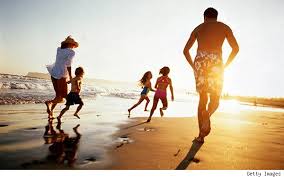
The sun shines down on this family as the play on the beach.
a)
conduction
b)
convection
c)
radiation
110.
A group of friends gather around a fire to stay warm.
a)
conduction
b)
convection
c)
radiation
111.
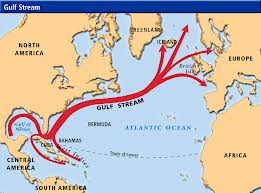
The Gulf Stream is a current that brings warm ocean water from the south to the north.
a)
conduction
b)
convection
c)
radiation
112.
Walking on the warm sand sand with your bare feet.
a)
conduction
b)
convection
c)
radiation
113.
Which direction will the heat flow while this person holds a hot cup of tea?
a)
from the cup to her hand
b)
from her hand to the cup
c)
no heat is transferred
114.
Which direction will the heat flow while this ice cap melts?
a)
there is no heat transfer
b)
from the icecap to the water
c)
from the water to the icecap
115.
The man goes to take the hot pot off the stove with his bare hands.
a)
conduction
b)
convection
c)
radiation