
 Worksheets
SCI 110 - Earths Processes and Human Activity Final Core Review
Total questions: 114
Worksheet time: 57mins
What are the main processes of the water cycle?
evaporation, condensation, precipitation, sublimation, evaporation, runoff
infiltration, filtration, and evaporation.
How does the Sun drive the water cycle?
What is evaporation, and how does it contribute to the water cycle?
What happens during condensation, and where can we observe this process in nature?
How does precipitation form, and what are the different types of precipitation?
What is transpiration, and how do plants contribute to the water cycle?
How does groundwater become part of the water cycle?
What is the difference between runoff and infiltration?
How can human activities impact the water cycle?
Why is the water cycle considered a closed system on Earth?
How does the Sun’s energy drive the water cycle, and why is this important for weather patterns?
What is evaporation, and how does it contribute to the water cycle?
What happens during condensation, and where can we observe this process in nature?
How does precipitation form, and what are the different types of precipitation?
What is transpiration, and how do plants contribute to the water cycle?
How does groundwater become part of the water cycle?
Some precipitation soaks into the ground and is stored in aqueducts.
What is the difference between runoff and infiltration?
How can human activities impact the water cycle?
Why is the water cycle considered a closed system on Earth?
How does the Sun’s energy drive the water cycle, and why is this important for weather patterns?

What role does the Sun play in creating wind on Earth?

How does the angle at which sunlight hits Earth affect temperature differences around the world?

Why do the equator and the poles experience different climates, even though they both receive sunlight?
The equator is warmer and more consistent in climate due to direct sunlight, while the poles are colder with more seasonal variation due to oblique sunlight.

How does the Sun’s energy cause convection currents in the atmosphere and ocean?

What is the greenhouse effect, and how does sunlight contribute to it?

How do seasonal changes occur due to the tilt of Earth’s axis and the Sun’s position?

Why do coastal areas usually have milder temperatures than inland areas, even at the same latitude?

How do solar flares and changes in the Sun’s activity affect Earth’s climate over time?
Match the following scenarios with their effects on Earth's climate and weather patterns.
A decrease in solar output would lead to hotter summers and milder winters.
A sudden decrease in the Sun's energy output.
An increase in solar output would lead to warmer temperatures and altered weather patterns, while a decrease would cause cooler temperatures and potentially harsher winters.
A sudden increase in the Sun's energy output.
Increased solar output would cause more rainfall and flooding.
Increased solar activity leading to more solar flares.
Changes in solar output would have no effect on Earth's climate or weather patterns.
No change in the Sun's energy output.
What is evaporation, and what conditions can speed up this process?
How does the sun play a role in the evaporation of water from oceans, lakes, and rivers?
What happens to water vapor when it cools down in the atmosphere?
How do clouds form through the process of condensation?
Why do water droplets form on the outside of a cold glass on a warm day?
What are the four main types of precipitation, and how do they form?
Why does precipitation occur when clouds become too heavy with condensed water droplets?
How does temperature affect whether precipitation falls as rain, snow, sleet, or hail?
How do evaporation, condensation, and precipitation work together in the water cycle?
What role do clouds play in the water cycle?
How does wind affect the movement of clouds in the atmosphere?
Explain how clouds form and what they are made of.
Describe how wind helps distribute moisture across different regions of the Earth.
What happens to water droplets in a cloud when they become too heavy?
How do different types of clouds indicate changes in weather and precipitation?
Why do some areas receive more rainfall than others based on wind patterns?
How does wind influence the rate of evaporation in the water cycle?
Match the following statements with their correct explanations about cloud formation and air pressure changes:
Clouds form exclusively in cold air without pressure changes.
Clouds form when there is no change in air pressure and the air is cold.
Cloud formation is facilitated by decreasing air pressure, which allows warm air to rise and cool.
Decreasing air pressure allows warm air to rise, leading to cloud formation.
Air pressure has no effect on cloud formation.
Clouds form regardless of air pressure changes.
Cloud formation occurs only with high air pressure.
High air pressure is necessary for cloud formation.
How do global wind patterns, such as the jet stream, impact the movement of storms and precipitation?
What is transpiration, and how does it contribute to the water cycle?
How does temperature, humidity, and wind speed affect the rate of transpiration in plants?
What adaptations do plants have to reduce excessive water loss through transpiration?
How does sublimation differ from evaporation, and what are some examples of sublimation in nature?
How do transpiration and sublimation each play a role in the movement of water in Earth's systems?
What is air convection, and how does it contribute to heat transfer in the atmosphere?
How does the process of convection create wind and weather patterns?
How does air convection play a role in ocean currents and the global climate system?
How does temperature difference affect the movement of air in convection currents?
What role does air pressure play in influencing convection in the atmosphere?
How does the presence of moisture (humidity) impact the strength and behavior of air convection?
In what ways do surface characteristics, such as land and water distribution, influence air convection?
How does wind and the Coriolis effect, alter convection patterns in the atmosphere?
Why does altitude affect the rate and intensity of air convection?
How does heat affect the movement of air molecules in a convection current?
What role does pressure play in the formation of convection currents in the atmosphere?
How do differences in temperature between Earth's surface and the atmosphere contribute to convection?
Why does warm air rise and cool air sink in a convection cycle?
What would happen to atmospheric convection if there were no variations in heat and pressure?
What happens to air pressure as altitude increases?
How does the change in air pressure at higher altitudes affect weather patterns?
Why do mountain climbers sometimes struggle to breathe at high altitudes?
If you were designing an experiment to measure air pressure at different altitudes, what equipment would you need, and how would you conduct it?
How do airplanes and spacecraft compensate for changes in air pressure to keep passengers safe?

What causes air to rise at the equator, forming the Hadley cells?

How does the Sun’s energy at the equator contribute to the movement of Hadley cells?

What happens to the warm air after it rises at the equator in a Hadley cell?

Hadley cells affect weather patterns near the equator, such as in tropical rainforests, by creating (a) .

Why does the rising air at the equator create a low-pressure zone?

How do Hadley cells influence global wind patterns like the trade winds?
Hadley cells create trade winds by driving air from high-pressure zones at 30 degrees latitude towards the equator.

What is the Coriolis effect, and what causes it?

How does the Coriolis effect influence the direction of winds in the Northern and Southern Hemispheres?

Why do hurricanes and cyclones rotate in different directions depending on the hemisphere they form in?
If the Earth did not rotate, what would happen to global wind and ocean current patterns?
Global wind and ocean current patterns would become calmer and , the Coriolis effect would not happen.

How does the Coriolis effect impact ocean currents and the movement of water on Earth?

If you were to throw a ball a long distance across a field on a rotating platform, how would the Coriolis effect change its path?

What is the rain shadow effect, and how does it impact the climate on both sides of a mountain range?

Why is the windward side of a mountain typically wetter than the leeward side?
The windward side is wetter due to the rise of water vapor which eventually condenses causing precipitation.

What happens to air as it rises over a mountain, and how does this lead to precipitation?

Can you name or describe a real-world example of a place affected by the rain shadow effect?
How might the rain shadow effect influence plant and animal life on the leeward side of a mountain?
What is the difference between weather and climate?
Why can weather change from day to day, but climate stays more consistent over long periods?

If a city experiences an unusually hot summer, does that mean the climate is changing?
How do scientists determine the climate of a region?
What are some factors that can affect the climate of a particular area?
How do human activities influence both weather and climate?
Human activities influence weather and climate by increasing greenhouse gas emissions, leading to global warming and altered weather patterns.

What is wind, and how is it created?

How do differences in air pressure cause wind to blow?

What role does the Sun play in creating wind on Earth?

How do land and water heat up differently, and how does this affect wind patterns?

How do mountains and valleys affect local wind patterns?
Why is it important to conserve natural resources like water, soil, and trees?

How does pollution affect ecosystems, and what can we do to reduce it?

What are renewable and nonrenewable energy sources, and why is it important to use more renewable energy?

How does deforestation affect Earth's atmosphere, land, and water systems?
How does the burning of fossil fuels contribute to climate change, and what are some possible solutions?

What are the effects of agriculture on soil health and water quality?
What is the greenhouse effect, and how does it contribute to warming the Earth's surface?
Which gases in the atmosphere are responsible for the greenhouse effect, and why are they important?
The increase in greenhouse gases from human activities affects the Earth's climate by (a) .
What role does the Sun play in the greenhouse effect, and how does it interact with Earth's atmosphere?

What do the arrows on a weather map tell you?
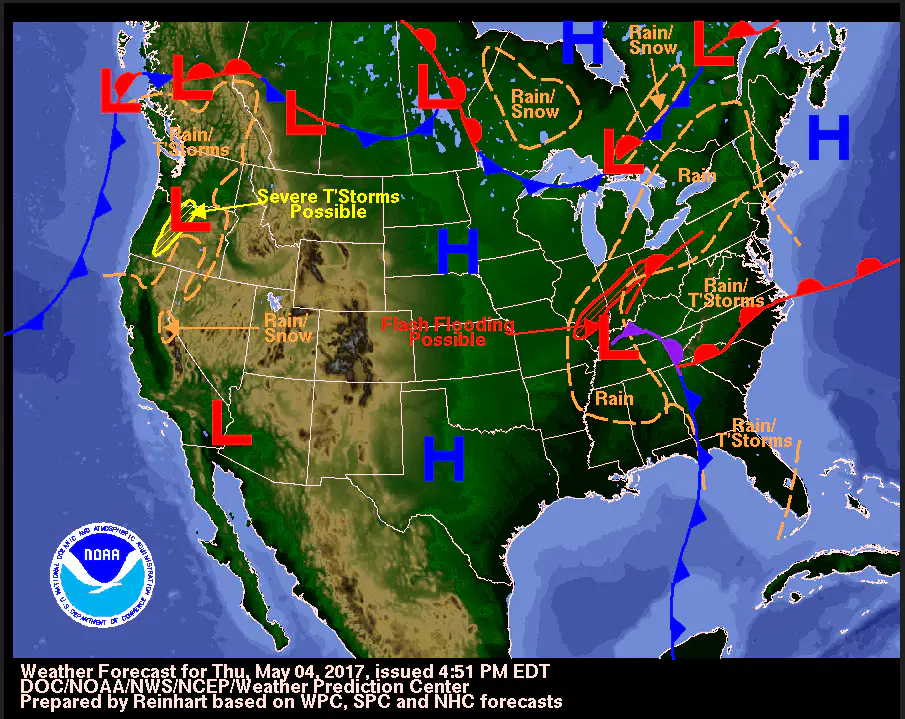
What does the giant H and L represent on a weather map?
What would a low pressure high humidity front look like on a weather map?
What is commonly shown on a weather map of New Mexico in the spring?

