wayground logo

Free Printable Worksheets

Font size

S
M
L
XL
Worksheets

PMA-2 6th Grade Science

Total questions: 118

Worksheet time: 2hrs 51mins

Name
Class
Date
1.
What is the net force?
a)
20 N 
b)
0 N 
c)
400 N 
d)
40 N 
2.

What is the unit to MEASURE force?

a)

Kilogram

b)

Meter

c)

Pounds

d)

Newton

3.

A ____________ is a push or a pull on an object.

a)

friction

b)

force

c)

magnet

d)

gravity

4.
What is the net force?
a)
10 N
b)
0 N
c)
25 N
d)
1 N
5.
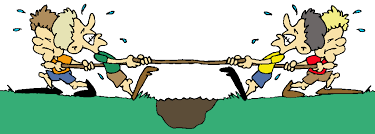
If these teams are pulling with the same amount of force what will happen?
a)
The boy in blue will win.
b)
They will not move at all.
c)
The boy in red will win.
d)
Both will fall down.
6.
Balanced or unbalanced?
a)
balanced
b)
unbalanced
7.

Forces that have a net force of zero Newtons

a)

Balanced force

b)

Unbalanced force

8.
What will cause an object to move?
a)
Applied forces
b)
Balanced forces
c)
Unbalanced forces
9.
You and your dad are moving the couch from one side to another. Your dad pushes with a force of 35 N to the right and you push with a force of 25 N right. What is the net force on the couch?
a)
60 N right
b)
10 N left
c)
60 n right
d)
50 N left
10.
Which could be an example of an unbalanced force?
a)
A plate sitting on a dining table
b)
A ball at the top of a hill that is not moving
c)
Earth orbiting the Sun 
d)
A baseball that has been thrown to home plate.
11.
This sphere includes the continents, the ocean floor, all the rocks on the surface, and all of the sand in the deserts. 
a)
Hydrosphere 
b)
Biosphere 
c)
Atmosphere 
d)
Geosphere 
12.
Composed of all the water on or near the earth
a)
Hydrosphere 
b)
Biosphere 
c)
Atmosphere 
d)
Geosphere 
13.
This sphere is composed of all the living things 
a)
Hydrosphere 
b)
Biosphere 
c)
Atmosphere 
d)
Geosphere 
14.
Body of air surrounding our planet. 
a)
Hydrosphere 
b)
Biosphere 
c)
Atmosphere 
d)
Geosphere 
15.
Water evaporating from the surface of a lake moves from the...
a)
Atmosphere to the geosphere 
b)
Geosphere to the hydrosphere 
c)
Hydrosphere to the atmosphere 
d)
Atmosphere to the hydrosphere 
16.
When living things breathe, they interact with which of Earth's spheres? 
a)
Geosphere 
b)
Hydrosphere 
c)
Atmosphere 
d)
Biosphere 
17.
When dead plants decompose and nitrogen is returned to the soil, the interaction is between which two spheres? 
a)
The biosphere and atmosphere 
b)
The atmosphere and geosphere 
c)
The geosphere and atmosphere 
d)
The biosphere and geosphere 
18.
What might happen if the earth didn't have an atmosphere? 
a)
Everything would go flying off into space 
b)
The seasons would be longer 
c)
The earth's rotation would stop 
d)
We wouldn't be able to breathe 
19.
When carbon dioxide dissolves from the air into the ocean- the interaction is between...
a)
The atmosphere and geosphere 
b)
The atmosphere and hydrosphere 
c)
The atmosphere and biosphere 
d)
The atmosphere and atmosphere 
20.
Oceans, rivers, lakes, and the moisture in the air are all part of which of Earth's spheres? 
a)
Hydrosphere 
b)
Biosphere 
c)
Atmosphere 
d)
Geosphere 
21.
When a plants takes carbon dioxide from the air which two spheres are interacting? 
a)
Biosphere and atmosphere 
b)
Geosphere and atmosphere 
c)
Hydrosphere and atmosphere 
d)
Atmosphere and atmosphere 
22.
When volcanoes erupt, dust and ash particles spread through much of the air blocking the sun.  Which two spheres are interacting? 
a)
Hydrosphere and atmosphere 
b)
Geosphere and atmosphere 
c)
Biosphere and atmosphere 
d)
Atmosphere and atmosphere 
23.
Energy from the sun is stored by plants. When animals eat the plants, they acquire the energy originally captured by the plants. Between which two spheres is the above interaction? 
a)
Hydrosphere and biosphere 
b)
Atmosphere and biosphere 
c)
Biosphere and biosphere 
d)
Geosphere and biosphere 
24.
When plants draw nutrients from the soil, the interaction is between which two spheres? 
a)
The atmosphere and the geosphere 
b)
The geosphere and the hydrosphere 
c)
The hydrosphere and atmosphere 
d)
The biosphere and the geosphere 
25.

Which of the following best describes weather?

a)

day to day conditions of the atmosphere at a place in regards to heat, dryness, sunshine, wind, rain, etc.

b)

long-term conditions (months/years) of the atmosphere at a place in regards to heat, dryness, sunshine, wind, rain, etc.

26.

Which of the following best describes climate?

a)

day to day conditions of the atmosphere at a place in regards to heat, dryness, sunshine, wind, rain, etc.

b)

long-term conditions (months/years) of the atmosphere at a place in regards to heat, dryness, sunshine, wind, rain, etc.

27.
It is raining.
a)
weather
b)
climate
28.
The high temperature today will be near 75 C.
a)
weather
b)
climate
29.
The average winter temperature is 45 C.
a)
weather
b)
climate
30.

It is raining outside right now.

a)

weather

b)

climate

31.

Over the last decade we have had an increase in the amount of rain in our area.

a)

weather

b)

climate

32.

The average winter temperature is 30 degrees F.

a)

weather

b)

climate

33.

Which of the following best describe the term 'climate'?

a)

the day to day changes in the atmosphere around us

b)

is taken over a long period of time

c)

precipitation

d)

is taken over a short period of time

34.

I hear Australia is warm all year round! Let's go to Australia for vacation!

a)

weather

b)

climate

35.

Sandra visited her grandma in Florida over Thanksgiving. She noticed that they were selling bathing suits at the stores. Her grandma said they sell bathing suits all year because Florida is warm.

a)

climate

b)

weather

36.
The short-term condition of the atmosphere .
a)
Climate
b)
Weather
37.
These multiple sources (rain fall, lake levels and satellite data) are averaged to measure changes in:
a)
Climate
b)
Weather
38.
What can change entire ecosystems and create extinctions in species?
a)
Climate
b)
Weather
39.
Blizzards, Heatwaves, High winds are all examples of __________________ events.
a)
Climate
b)
Weather
40.
Human activities and burning fossil fuels have released excessive amounts of greenhouse gases into the atmosphere.  This has increased Global Warming. THESE ACTIONS HAVE CHANGED THE...
a)
Climate
b)
Weather
41.

78% of the Earth's atmosphere is ___________ and 21% of the Earth's atmosphere is _____________.

a)

Oxygen, Nitrogen

b)

Nitrogen, Oxygen

c)

Nitrogen, Carbon Dioxide

d)

Oxygen, Carbon Dioxide

42.

In what layer of the atmosphere do all weather events occur?

a)

Stratosphere

b)

Exosphere

c)

Mesosphere

d)

Troposphere

43.

In the troposphere, the temperature _____ as altitude increases.

a)

Increases

b)

Decreases

c)

Stays the same

d)

Goes up and down

44.

As altitude increases, air pressure....

a)

Increases

b)

Decreases

c)

Stays the same

d)

Goes up and down

45.

The ozone layer is a sublayer of the ________ layer.

a)

Troposphere

b)

Stratosphere

c)

Exosphere

d)

Mesosphere

46.

Why is the ozone layer vital to life on Earth?

a)

Planes fly in the ozone layer

b)

It is made up of oxygen (O2)

c)

It shields the Earth from ultraviolet (UV) rays from the sun

d)

It causes clouds to be created

47.

In which layer of the atmosphere do meteors burn up?

a)

Troposphere

b)

Mesosphere

c)

Thermosphere

d)

Exosphere

48.

This layer is the hottest layer of the atmosphere?

a)

Troposphere

b)

Stratosphere

c)

Mesosphere

d)

Thermosphere

49.

This layer is the outermost layer of the atmosphere. Satellites orbit the atmosphere in this layer.

a)

Exosphere

b)

Mesosphere

c)

Thermosphere

d)

Ozone Layer

50.

What is the order of the layers of the atmosphere, starting with the layer closest to Earth's surface?

a)

Stratosphere, Troposphere, Exosphere, Mesosphere, Thermosphere

b)

Troposphere, Stratosphere, Mesosphere, Thermosphere, Exosphere

c)

Troposphere, Stratosphere, Mesosphere, Exosphere, Thermosphere

d)

Troposphere, Stratosphere, Thermosphere, Exosphere, Mesosphere

51.

Which explanation correctly describes the greenhouse effect?

a)

The process of the atmosphere keeping the Earth's surface dense

b)

The process of the atmosphere trapping the sun's radiation, and making the Earth warm and livable for humans

c)

The process of the atmosphere keep us from floating into space

d)

The process of the atmosphere reflecting all of the Sun's heat back into space

52.

Which atmospheric layer is the Aurora Borealis located in?

a)

Troposphere

b)

Mesosphere

c)

Exosphere

d)

Thermosphere

53.

As altitude increases, density.....

a)

Increases

b)

Decreases

c)

Stays the same

d)

Goes up and down

54.
Wind is caused mainly by air pressure differences that result from...
a)
a. uneven heating of the Earth's atmosphere.
b)
b. absorption of ultraviolet radiation by Earth's land masses.
c)
c. radiation of heat from Earth's land masses to water bodies.
d)
d. rotation of Earth on its axis.
55.
What kind of breeze is this & what time of day/night would it form?
a)
Land breeze - daytime
b)
Land breeze - nighttime
c)
Sea breeze - daytime
d)
Sea breeze - nighttime
56.
Which statement correctly defines wind?
a)
Wind is the movement of air from areas of low pressure to areas of high pressure
b)
Wind is the movement of air to a colder area in the atmosphere.
c)
Wind is the movement of air from areas of high pressure to areas of low pressure.
d)
Wind is the movement of air pushed around and bouncing off Earth's surface.
57.
Where does the initial source of energy come from that creates winds?
a)
the moon
b)
the sun
c)
the Earth's surface
d)
the rotation of the Earth
58.
Land and water absorb and release the sun’s heat in different ways. One result of this is a sea breeze. Which statement is true of sea breezes?
a)
They originate in the day and blow toward the land.
b)
They originate in the day and blow toward the water.
c)
They originate in the evening and blow toward the land.
d)
They originate in the evening and blow toward the water.
59.
Which term is best described as the movement of air from land to sea?
a)
global winds
b)
sea breeze
c)
land breeze
d)
local winds
60.
What causes global winds and convection in the atmosphere? 
a)
continental deflection
b)
the rotation of the Earth
c)
Moon's gravity
d)
unequal heating of the Earth by the sun
61.

What causes differences in air pressure?

a)

even heating of the Earth

b)

Even cooling of the earth

c)

uneven heating of the earth

d)

global warming

62.
Why does warm air rise?
a)
Warm air is more dense than cooler air.
b)
Warm air has more pressure than cooler air.
c)
Warm air is less dense than cooler air.
d)
Warm air has a higher dew point than cooler air.
63.
Use the diagram to determine which statement is correct.
a)
The air at location 3 is more dense than the air at location 6.
b)
The air at location 2 is rushing in to take the place of the colder air at location 3.
c)
Location 1 heats up and cools down slower than location 7.
d)
High pressure air at location 2 is taking the place of the low pressure air at location 3.
64.
Wind belts are always named according to...
a)
how strong they are
b)
what temperature they are
c)
where they blow to
d)
where they come from
65.
The wind belts that surround the equator cause large amounts of hot air to rise and converge together causing what type of weather?
a)
rain
b)
dry
c)
snow
d)
clear skies
66.

Moving _________ is called wind

a)

rain

b)

force

c)

vapor

d)

air

67.
What causes warm air to rise?
a)
the fact that it's less dense than cold air 
b)
The fact that it weighs more than cold air 
c)
The fact that it has higher pressure than cold
d)
the fact that its more dense than cold air 
68.
Which term best describes how the earth's atmosphere is heated?
a)
Spirally
b)
Unevenly
c)
Circularly
d)
Kinetically
69.
What creates the air pressure difference between the equator and the poles?
a)
The length of the seasons
b)
The shape of the earth 
c)
the duration of the solar year
d)
The amount of direct sunlight each area receives 
70.
if you wanted to find the jet steam, where would you go? 
a)
the area around the poles 
b)
the area around the equator 
c)
10 km above the earth's surface 
d)
1 km above the earth's surface 
71.
How do jet streams influence the weather? 
a)
by creating clouds 
b)
by increasing the moisture in the atmosphere 
c)
by moving weather from one area to another very quickly 
d)
by drying out the atmosphere 
72.
When heat rises cools then sinks 
a)
high pressure 
b)
convection current 
c)
low pressure 
d)
stratospheric pressure  
73.

Which of the graphs shows that one of runners started 10 yards further ahead of the

other?

a)
b)
c)
d)
74.

In which of the following graphs below are both runners moving at the same speed?

a)
b)
c)
d)
75.

Match the description to the graph:

"The car is stopped."

a)
b)
c)
d)
76.

Match the description to the graph:

"The car is traveling at a constant speed."

a)
b)
c)
d)
77.

Match the description to the graph:

"The speed of the car is decreasing."

a)
b)
c)
d)
78.

Match the description to the graph:

"The car is coming back."

a)
b)
c)
d)
79.

Segment O-A The bus is _________________.

a)

at rest

b)

returning (to original position)

c)

moving forward

80.

Segment A-B The bus is _________________.

a)

at rest

b)

returning (to original position)

c)

moving forward

81.

Segment B-C The bus is _________________.

a)

at rest

b)

returning (to original position)

c)

moving forward

82.

Segment C-D The bus is _________________.

a)

at rest

b)

returning (to original position)

c)

moving forward

83.

Which runner won the race?

a)

Albert

b)

Bob

c)

Charlie

84.

Which runner stopped for a rest?

a)

Albert

b)

Bob

c)

Charlie

85.

What is the role of the sun in the water cycle?

a)

provide heat energy for evaporation

b)

provide heat energy for condensation

c)

dry out the soil for runoff to occur

d)

provide thermal energy for accumulation

86.

What process is shown by letter B in the diagram?

a)

condensation

b)

transpiration

c)

evaporation

d)

precipitation

87.

During evaporation, water changes from a _________ to a __________.

a)

solid, liquid

b)

gas, liquid

c)

liquid, gas

d)

liquid, solid

88.

Which part of the water cycle changes liquid water to water vapor?

a)

condensation

b)

evaporation

c)

precipitation

d)

transpiration

89.

What do we call water in its gas state?

a)

rain

b)

snow

c)

ice

d)

water vapor

90.

What process is show by letter A in the diagram?

a)

condensation

b)

evaporation

c)

accumulation

d)

precipitation

91.

Which of the following is an example of precipitation?

a)

sleet

b)

hail

c)

snow

d)

all of the above

92.

What is it called when plants release water vapor through their leaves?

a)

sublimation

b)

respiration

c)

transpiration

d)

precipitation

93.

Water that is constantly moving and recycled above, on, and under the Earth is called ___.

a)

evaporation

b)

infiltration

c)

run off

d)

water cycle

94.
The heat from a lamp allows a lizard to remain warm. This is an example of which type of heat transfer?
a)
radiation
b)
conduction
c)
convection
d)
insulation
95.
Which will most likely occur when raw egg is placed on black pavement on a hot, summer day?
a)
The pavement will conduct the heat and cook the egg.
b)
The egg will reflect the heat and make the pavement hotter underneath.
c)
The egg will absorb the heat  and leave the pavement hotter underneath.
d)
The pavement will absorb the heat from the egg, and the egg will stay raw.
96.
Which best describes the process of convection?
a)
Convection is the primary way  heat travels  through rays.
b)
Convection is the primary way heat travels  through metals.
c)
Convection is the primary way heat travels  through appliances.
d)
Convection is the primary way heat travels  through liquids and gasses.
97.
How is heat transferred when boiling a pot of water on the stove?
a)
conduction
b)
convection
c)
combustion
d)
radiation
98.
Which is an example of heat being transferred by conduction?
a)
a furnace heating the air in a school
b)
an ice cube melting in a person’s hand
c)
a pot of water on a stove boiling
d)
the sun heating water in a swimming pool
99.
Which best explains how bacon is fried on a stove burner?
a)
The bacon creates a convection current, the  heat rises to the pan, and then rises to the stove burner.
b)
The bacon transfers heat directly to the pan, and the pan transfers heat directly to  the stove burner.
c)
The stove burner radiates heat to the pan,  and the pan radiates heat to the bacon.
d)
The stove burner transfers heat directly  to the pan, and the pan directly  transfers heat to the bacon.
100.
When warm and cool water mix, winds will...
a)
Stay the same
b)
Get slower
c)
Intensify and cause storms
d)
Change directions
101.
Land breezes blow from the land towards the sea because-
a)
Conduction of the ocean
b)
The land cools off faster than the ocean
c)
Ocean currents blow the wind that way
d)
Breezes are created by the rotation of the earth
102.
The heat source for covection in the atmosphere is the:
a)
Core
b)
Water
c)
Land
d)
Sun
103.
Thunderstorms are more common in areas where:
a)
Cold water is near
b)
There are lakes
c)
Warm water is near
104.
A low pressure system "L" will bring what type of weather?
a)
Warm
b)
Dry
c)
Clear
d)
Wet
105.
A high pressure system "H" will bring what type of weather?
a)
Sunny
b)
Cloudy
c)
Rainy
d)
Wet
106.
What type of weather would an area get if it were experiencing a cold front and a low pressure system?
a)
Cold and Dry
b)
Warm and Dry
c)
Warm and Wet
d)
Cold and Wet
107.
What type of weather would and area get if it were experiencing a high pressure system and a cold front?
a)
Cold and Dry
b)
Cold and Wet
c)
Warm and Dry
d)
Warm and Wet
108.

What is the most common gas in the atmosphere?

a)

Oxygen

b)

Nitrogen

c)

Water Vapor

d)

Carbon Dioxide

109.

What is the 2nd most common gas in the atmosphere?

a)

Oxygen

b)

Nitrogen

c)

Water Vapor

d)

Carbon Dioxide

110.

What is density?

a)

How much matter is in a space

b)

How much space is in matter

111.

How does temperature affect density?

a)

When something is hotter, it is less dense

b)

When something is hotter, it is more dense

c)

Density is always the same

d)

Temperature does not affect density

112.

How does temperature affect density?

a)

When something is colder, it is less dense

b)

When something is colder, it is more dense

c)

Density is always the same

d)

Temperature does not affect density

113.

How does density affect movement in a convection current? Choose all that apply.

a)

More dense will sink

b)

Less dense will sink

c)

More dense will rise

d)

Less dense will rise

114.

What do scientists use to decide when a new layer of atmosphere begins?

a)

Altitude

b)

Elevation

c)

Temperature

d)

Sunlight

115.

How are pressure and density related?

a)

As pressure increases density decreases

b)

As pressure increases density increases

c)

As pressure increases density stays the same

116.

Where are temperatures the coldest?

a)

Troposphere

b)

Stratosphere

c)

Mesosphere

d)

Thermosphere

117.

Where are temperatures the hottest?

a)

Troposphere

b)

Stratosphere

c)

Mesosphere

d)

Thermosphere

118.

Hydrosphere refers to

a)

All life on Earth

b)

All water on Earth

c)

All rock on Earth

d)

All air on Earth