wayground logo

Free Printable Worksheets

Font size

S
M
L
XL
Worksheets

Geological Processes Test Review

Total questions: 123

Worksheet time: 4hrs 45mins

Name
Class
Date
1.

Continental drift is the idea that ___________

a)

continents were once together and have moved apart

b)
oceans have expanded over time.
c)
climate has remained constant throughout history.
d)
mountains have formed from tectonic shifts.
2.

What were the OBSERVATIONS that Alfred Wegener used to support his theory of continental drift?

a)

Continent shapes fit like puzzle pieces

b)

Fossils from distant areas matched

c)

Rock and mountain structures across ocean matched

d)

Climate from the past was very different from present

e)

All of the above

3.
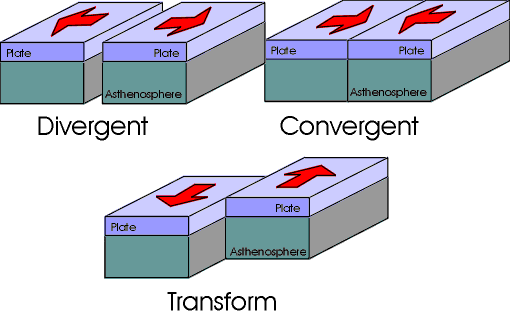
What type of plate boundary is this?
a)
Plate
b)
Divergent
c)
Convergent
d)
Transform
4.

Most geologists think that the movement of Earth’s plates is caused by _______

a)

convection.

b)

continental drift.

c)

subduction.

d)

conduction.

5.

The process by which the ocean floor sinks beneath a deep-ocean trench and back into the mantle is known as _______

a)

convection.

b)

continental drift.

c)

subduction.

d)

conduction.

6.
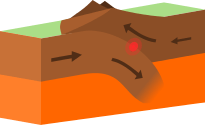
The model below shows two continental   plates.  The folded mountains in this   model form at which type of plate   boundary?
a)
Divergent boundary
b)
Convergent boundary
c)
Transform boundary
d)
Subduction boundary
7.
Name the boundary
a)
convergent boundary
b)
divergent boundary
c)
transform boundary
d)
sergent boundary
8.
Name the boundary
a)
convergent boundary
b)
divergent boundary
c)
transform boundary
d)
sergent boundary
9.
Name the boundary
a)
convergent boundary
b)
divergent boundary
c)
transform boundary
d)
sergent boundary
10.
Earth's crust is broken up into several large rocky pieces called ...
a)
plates
b)
faults
c)
fossils
d)
puzzle pieces
11.
This type of plate boundary is when two plates crash into each other.
a)
Convergent
b)
Transform
c)
Divergent
d)
Subductive
12.

What type of plate boundary is shown in the picture

a)

convergent

b)

divergent

c)

transform

d)

faults

13.
The San Andrea's Fault in California is which type of boundary?
a)
Convergent
b)
Divergent
c)
Subductive Zone
d)
Transform
14.

What is happening in the picture?

a)

layers of the Earth are changing positions

b)

the inner and outer core are solid

c)

convection currents are causing the tectonic plates to move

d)

the mantle is growing

15.

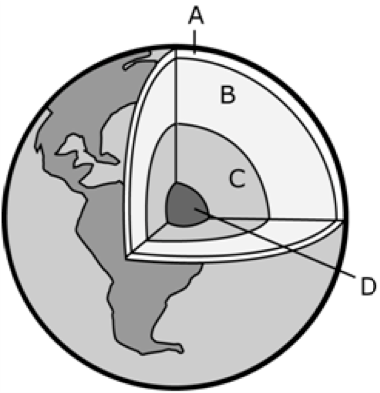
What letter in the diagram identifies the layer that is composed of moving continental and oceanic plates?

a)

layer A

b)

layer B

c)

layer C

d)

layer D

16.

Why was Wegener's hypothesis not accepted?

a)

He could not explain what force was moving the continents

b)

He was a meteorologists, so no one took him seriously

c)

He did not have enough types of fossils to support his theory

d)

Because scientists thought Harry Hess' theory was better

17.

Peru and Chile are part of South America, which sits on the South American tectonic plate. The Nazca plate is moving toward the South American plate. It is pushed downward, which causes it to slide under the South American plate. Based on this information, what feature could we expect to see off the coast of Peru and Chile?

a)

new Continent formation

b)

Poor fishing conditions

c)

Deep ocean trench

d)

Severe tropical storms

18.
When two plates are moving away from each other they are called (often forming rifts or valleys)?
a)
Divergent Plates
b)
Convergent Plates
c)
Transform Boundaries
d)
Mountain ranges
19.

Associated with transform boundaries.

a)

Volcanoes

b)

mountains

c)

trenches

d)

earthquakes-faults

20.
Which answer below correctly describes the formation of a volcanic island arc?
a)
Islands are created along the mid ocean ridge as new oceanic crust is formed.
b)
Islands are created one at a time as the plate moves across a hot spot in the mantle.
c)
Islands are created along a subduction zone as oceanic crust is forced back down in to the mantle.
d)
Islands are created as pressure is released when two tectonic plates are pulled apart.
21.

At which of these boundaries would you find a deep sea trench?

a)

transform

b)

divergent

c)

oceanic-oceanic convergent

22.

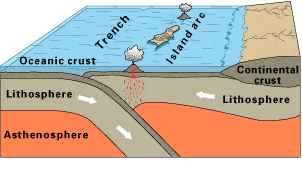
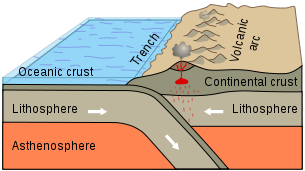
Observe this diagram of a plate boundary. One statement BEST describes what is happening. It is that

a)

the oceanic crust is melting.

b)

the denser ceanic crust is subducting under the less dense oceanic crust

c)

volcanic islands are forming.

d)

the tectonic plates are moving away from each other.

23.
Which of the following causes Earth's tectonic plates to move?
a)
Energy from the Sun
b)
Magnetic Pole Reversal
c)
Convection currents in the mantle
d)
Faults in Mountain Ranges
24.
What type of event will occur at this boundary?
a)
Earthquake
b)
Volcano Eruption
c)
Tornado
d)
Mountain Building
25.

Which of the following is the name of the ancient supercontinent formed 280 Million Years ago.

a)

Pangea

b)

Gondwanda

c)

Laurasia

d)

Neverland

26.
Which of the following is NOT evidence to support the theory of plate tectonics?
a)
Fossils
b)
Mountains
c)
Glaciers
d)
Sand Erosion
27.
What geologic feature/event would you most likely to find at a divergent boundary between two pieces of oceanic crust?
a)
Rift Valley
b)
Mid-Ocean Ridge
c)
Island Arc
d)
Flat land
28.
The core is mostly made up mostly of which elements?
a)
Oxygen and Silicon
b)
Silicon and Magnesium
c)
Nickel and Iron
d)
Iron and Magnesium
29.
Convection currents in the mantle are thought to be the driving force behind tectonic movement. At which location do the convection currents cause the plates to diverge?
a)
strike-slip fault
b)
subduction zone
c)
mid oceanic ridges
d)
folded mountains.
30.
Mountains form from ...
a)
plates sliding past one another
b)
collision of plates
c)
plates moving away from each other
31.
The cooled and hardened magma from volcanoes form what rocks?
a)
igneous
b)
sedimentary
c)
metamorphic 
d)
fossils
32.

Which rocks are made by heat and pressure?

a)

IGNEOUS

b)

SEDIMENTARY

c)

METAMORPHIC

33.

The rock type that forms when magma cools and becomes solid is

a)

metamorphic

b)

igneous

c)

sedimentary

d)

marble

34.

Which type of rock is formed when heat or pressure deep underground changes existing rock?

a)

igneous

b)

metamorphic

c)

sedimentary

d)

marble

35.

Formed by heat and pressure

a)

Sedimentary

b)

Metamorphic

c)

Extrusive Igneous

d)

Intrusive Igneous

36.
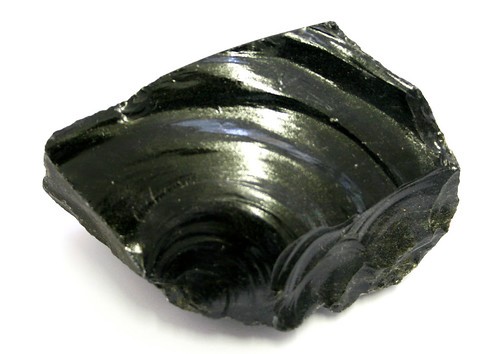
This rock cooled on the outside of a volcano and contained air bubbles when it was forming. What type of rock is this?
a)
Sedimentary
b)
Igneous
c)
Metamorphic
37.
This rock started as molten magma. What type of rock is this?
a)
Sedimentary
b)
Igneous
c)
Metamorphic
38.

Which type of rock is formed from cooled magma or lava?

a)

Sedimentary rock

b)

Igneous rock

c)

Metamorphic rock

d)

Mineral rock

39.
This rock was formed by lots of fossils that settled on top of each other over time. What type of rock is this?
a)
Sedimentary
b)
Igneous
c)
Metamorphic
40.

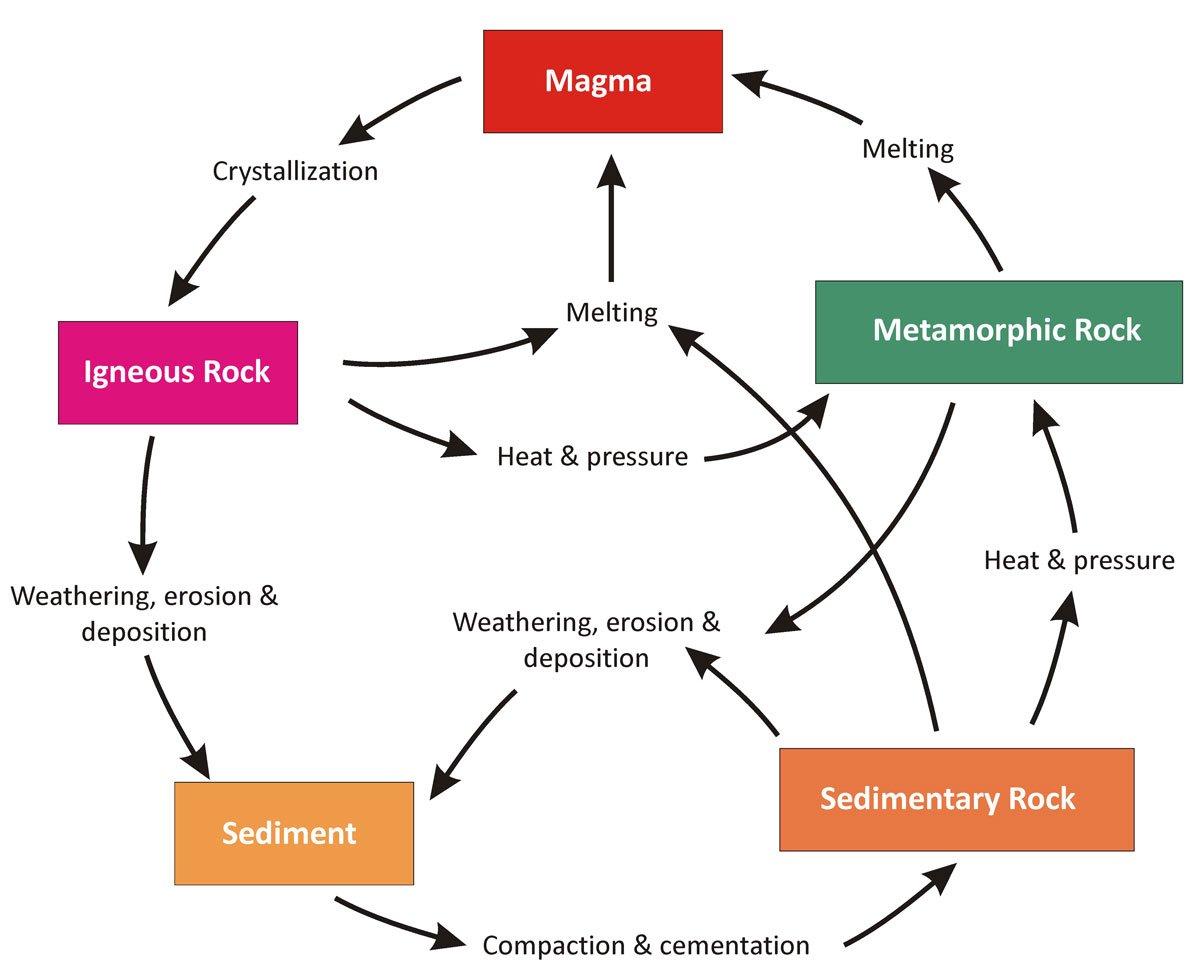
What is the process called that forms new rock from old rock?

a)

the water cycle

b)

the erosion cycle

c)

the carbon cycle

d)

the rock cycle

41.

When magma cools and becomes solid, it becomes which type of rock?

a)

metamorphic

b)

striped

c)

igneous

d)

sedimentary

42.

Rocks that change on Earth can change into all three types of rock.

a)

True

b)

False

43.

What changes rocks deep inside the Earth?

a)

weathering

b)

heat and pressure

c)

deposition

d)

water

44.

What is hot, liquid rock from Earth's core called?

a)

lava

b)

fire

c)

magma

d)

really hot stuff

45.

New rock that forms from old rock is called?

a)

plate movement

b)

rock cycle

c)

water cycle

d)

igneous rock

46.

What are two geological processes that change rock from one type to another?

a)

texture and composition

b)

condensation and evaporation

c)

weathering and melting/cooling

d)

uplift and deposition

47.
What are the puzzle pieces of the Earth's surface called?
a)
Tectonic plates
b)
Puzzles
c)
Earthquakes
48.

Tectonic plates are made of?

a)

The mantle

b)

Continental and oceanic lithosphere

c)

The outer core

d)

The mesosphere

49.
The cracks in Earth's crust are called ___________.
a)
tectonic plates
b)
faults
c)
magma
d)
lava
50.

Where are the youngest rocks on Earth found?

a)

Along mid-ocean ridges

b)

Along transform boundaries

c)

On the edges of the continents

d)

Near ocean trenches

51.

How far do tectonic plates move each year?

a)

Meters per year

b)

Centimeters per year

c)

Kilometers per year

d)

Feet per year

52.

Where does seafloor spreading take place?

a)

Convergent boundaries

b)

The continentals shelves

c)

Transform boundary

d)

Mid-ocean ridges

53.

What is the process of convection?

a)

The process of hot material rising and cooler material sinking in circular patterns

b)

The process of hot rock solidifying and forming new crust

c)

The process of explaining what goes up must come down

d)

Strong ocean currents moving tremendous amounts of material

54.

What is the driving force behind the movement of the tectonic plates?

a)

Gravity

b)

Convection

c)

Wave motion

d)

Seismic activity

55.

Subduction zones occur along

a)

Transform boundaries

b)

Continental-Continental boundaries

c)

Divergent boundaries

d)

Oceanic-Continental boundaries

56.
What feature is formed on the continental crust at an oceanic-continental convergent boundary?
a)
volcanoes
b)
mid-ocean ridge
c)
ocean trench
d)
none of these features are formed at a oceanic-continental convergent boundary
57.
Mountains form at a ___________ boundary.
a)
transform
b)
divergent
c)
convergent
d)
subduction
58.
A fault forms at a _________ boundary.
a)
transform
b)
divergent
c)
horizontal
d)
convergent
59.
Subduction zones occur on Earth where dense oceanic crust dives under more buoyant continental crust. These boundaries are characterized by a deep ocean trench next to a high continental mountain range, large numbers of earthquakes and volcanoes. All of this is further evidence for the
a)
big bang theory.
b)
theory of plate tectonics.
c)
origin of the species.
d)
theory of natural selection.
60.
What is the process in which two plates move toward each other but one sinks under the other?
a)
subduction
b)
convection
c)
divergence
d)
transformation
61.
When an oceanic plate and a continental plate collide, which one will subduct?
a)
oceanic
b)
continental
c)
neither
62.
There are three types of plate boundaries. Which choice is NOT a type of plate boundary?
a)
convergent
b)
thrust
c)
divergent
d)
transform
63.
The area where two tectonic plates meet.
a)
mantle
b)
focus
c)
plate boundary
d)
convection
64.
An underground layer of rock or sediment that holds water?
a)
Reservoir
b)
Aquifer
c)
Groundwater
d)
Watershed
65.
Water stored below the Earth's surface is called:
a)
Groundwater
b)
Bogs
c)
Water in the ground
66.
An aquifer is a(n)
a)
well in which water rises because of pressure
b)
underground layer of rock or sediment that holds water
c)
type of hot spring from which the water periodically erupts
d)
place where groundwater bubbles or flows out of cracks in the rock
67.

Which of the following is NOT a natural hazard?

a)

Hurricane

b)

Tornado

c)

House Fire

d)

Earthquake

68.
A natural hazard occurs when natural physical processes become...
a)
dormant and inactive.
b)
extreme and unpredictable.
c)
scary!
d)
faster than usual. 
69.
Earthquakes are caused by all of the following EXCEPT...
a)
movement of tectonic plates.
b)
tsunamis.
c)
volcanic activity. 
d)
underground collapses. 
70.
One region of the world that is very exposed to volcanoes, tsunamis, and earthquakes is...
a)
the Ring of Fire.
b)
the North and South Pole.
c)
the United States.
d)
Eastern Europe.
71.
A natural disaster occurs when a natural hazard...
a)
causes major damage and harms humans.
b)
poses a danger to any part of the earth.
c)
changes the physical features of the earth.
d)
impacts everyday life for humans.
72.

You have a major fear of earthquakes. What state would be the worst to visit?

a)

California

b)

Ohio

c)

New York

d)

Florida

73.

Which state has had significant Earthquakes in the past? Select all that are true.

a)

California

b)

Alaska

c)

Michigan

d)

Oregon

74.
Engineers are designing a bridge that will withstand earthquake forces. What is the process called when engineers use a computer to see what happens to their design during an earthquake?
a)
variables
b)
modeling
c)
prediction
d)
navigation
75.

Which natural hazard is caused from an underwater earthquake?

a)

waterspout

b)

mass wasting

c)

volcanic eruption

d)

tsunami

76.
An earthquake is usually caused by a _________.
a)
glacier
b)
landslide
c)
very large storm
d)
a movement along a fault
77.
What is a volcano? 
a)
a chemical reaction that produces fire
b)
a valley under the ocean
c)
an atmospheric condition
d)
an opening in Earth’s crust
78.
What measures the waves of earthquakes?
a)
seismic wave
b)
seismograph
c)
seismology
d)
a scientist
79.
Rock underground suddenly breaks along a fault causing tectonic movement, causing what natural hazard? 
a)
Volcanic Eruption 
b)
Cyclone
c)
Earthquake
d)
Hurricane
80.
Scientists can predict exactly when a volcanic eruption will occur. 
a)
True
b)
False
81.
Why is it beneficial to be able to predict when and where natural hazards will occur? 
a)
Communities can be notified to evacuate 
b)
So that we can stop them from happening again 
c)
So that scientists know where to go in order to study them 
d)
So that we can harness their power for renewable energy
82.

How can some of the impacts of earthquakes be reduced?

a)

by building structures that can sway with the motion

b)

by building structures that do NOT move with the motion

c)

by using thermometers to measure ground temperatures

d)

by using satellites to monitor warning buoys in the ocean

83.

Which statement is true of earthquakes?

a)

All of them can be prevented.

b)

Weak ones can be prevented.

c)

Some of them can be prevented.

d)

None of them can be prevented.

84.

Carlos's family lives close to an active volcano. What is the best way that he and his family can reduce the impact of an eruption and stay safe?

a)

Listen to the local news and follow evacuation instructions.

b)

Always wear masks to cover their mouths.

c)

Protect their home with lava-proof building materials.

d)

Evacuate when they see a lava flow reaching their home.

85.

What is one hazard that can be cause by a volcanic eruption?

a)

tornadoes

b)

air pollution

c)

weathering of rocks

d)

blizzards

86.

What is the order of layers of Earth, starting from the outermost layer of Earth?

a)

crust, mantle, inner core, outer core

b)

crust, inner core, mantle, outer core

c)

crust, mantle, outer core, inner core

d)

crust, outer core, inner core, mantle

87.

What do we call the solid sphere of iron and nickel inside the Earth?

a)

crust

b)

mantle

c)

outer core

d)

inner core

88.

What do we call the layer of Earth made of liquid nickel and iron?

a)

inner core

b)

outer core

c)

mantle

d)

crust

89.

What do we call the layer of Earth between the crust and the core where convection currents happen?

a)

crust

b)

mantle

c)

outer core

d)

inner core

90.

What we do we call the layer that contains the crust and upper part of the mantle?

a)

Asthenosphere

b)

Lithosphere

c)

Mesosphere

d)

Atmosphere

91.

This layer of Earth has plasticity and is right below the lithosphere.

a)

crust

b)

inner core

c)

asthenosphere

d)

outer core

92.

Which does NOT increase as you go deeper in the Earth?

a)

heat

b)

pressure

c)

water

d)

density

93.

These are the layers of Earth, starting with the innermost layer.

a)

Outer core, inner core, crust, mantle

b)

crust, mantle, outer core, inner core

c)

inner core, outer core, mantle, crust

d)

mantle, inner core, outer core, crust

94.

Which layer has lithospheric plates that cover the Earth?

a)

Asthenosphere

b)

Lithosphere

c)

Atmosphere

d)

Mesosphere

95.
Massive pieces of land that are part of the Earth's crust and upper mantle
a)
Tectonic plates
b)
Trenches
c)
Divergent boundary
d)
Continental shelves
96.
True or False : Sea-floor Spreading adds new material to the ocean floor?
a)
True
b)
False
97.
What happens when Subduction occurs?
a)
Parts of the crust fall into the mantle
b)
Parts of the crust fall into the core
c)
Parts of the crust fall into space
d)
None of these
98.
What did scientists use to map the oceans floor?
a)
Echo-location
b)
Sonar
c)
Space Shuttles
d)
Animals
99.

What is the force that causes continents to move?

a)

conduction

b)

convection

c)

radiation

d)

conveyor belts

100.
___________ help explain why Earth is not getting any larger even though the tectonic plates are always moving.
a)
earthquakes
b)
subduction zones
c)
fossils
d)
volcanoes
101.
True or False : Sea-floor Spreading adds new material to the ocean floor?
a)
True
b)
False
102.
What are Mid-Ocean Ridges?
a)
A chain of underwater waterfalls 
b)
A chain of underwater volcanos
c)
A chain of underwater mountains
d)
A chain of underwater rocks
103.
What process takes place at the trenches? 
a)
divergent boundaries
b)
subduction
c)
new crust is formed
d)
mountain ranges
104.
The oceanic crust is pushed aside on both sides of the 
a)
Continent's edge
b)
Deep-ocean trench
c)
Mid-ocean ridge
105.
The oceanic crust _________ when it reaches the continental crust.
a)
sinks
b)
rises
c)
expands
106.
New crust is always formed at the...
a)
mid-ocean ridge
b)
deep-ocean trench
c)
asthenosphere
107.
If there are MORE mid-ocean ridges than subduction zones, what happens to the ocean?
a)
It gets larger
b)
It gets smaller
c)
It sinks
108.
Where do Earth's plates meet?
a)
Mid-ocean ridges
b)
Boundaries
c)
Faults
d)
At the dinner table. (Get it?  Plates.)
109.
Which theory describes the motion of the Earth's plates?
a)
First law of motion
b)
continental drift
c)
plate tectonics
d)
third law of motion
110.
Which of the following work together?
a)
Divergent Boundaries and Mid-Ocean Ridges
b)
Sea-Floor Spreading and Pangaea
c)
Subduction and Pangaea
d)
Subduction and Sea-Floor Spreading
111.
Mountains form from ...
a)
plates sliding past one another
b)
collision of plates
c)
plates moving away from each other
d)
the shrinking of Earth
112.
Which feature forms when two continental plates converge?
a)
mountain ranges
b)
deep ocean trench
c)
rift valley
d)
mid-ocean ridges
113.

What is the relationship between magma and lava?

a)
Magma is solid rock; lava is a type of gas released during eruptions.
b)
Magma is underground molten rock; lava is magma that erupts onto the surface.
c)
Magma is found only in volcanoes; lava is found in oceans.
d)
Magma is a type of mineral; lava is a form of sedimentary rock.
114.

According to the continental drift hypothesis, the presence of similar fossils in South America and Africa supports which scientific idea?

a)

Animals easily and frequently travel from Africa to South America.

b)

Species of animals probably traveled between continents on natural rafts (such as trees destroyed in tsunamis).

c)

Land bridges once existed that connected the continents.

d)

South America and Africa were once connected together.

115.
What do you call the supercontinent landmass formed million years ago?
a)
Pangea
b)
Asia
c)
Pantallasa
d)
Eurasi
116.

Wegener noticed that the Appalachian Mountains and Caledonian Mountains line up and are made of the same rock types. This was a type of ....

a)

Fossil Evidence

b)

Rock Formation Evidence

c)

Climate Evidence

d)

Objective Evidence

117.
What are the remains of organism noticed by Wegener that are found the same in two continents?
a)
Leaves and flowers
b)
Ice and mountains
c)
Plants and animals
d)
Dinosaurs and reptiles
118.

A force caused the continents to drift apart over time. Once scientists figured out what that force was, the theory of plate tectonics was born! The image above shows what Geologists think the Earth looked like millions of years ago. What name was given to this land mass.

a)

Plate Tectonics

b)

Oceana

c)

Pangea

d)

North America

119.
The presence of the same ________ on several continents supports the idea of continental drift.
a)
rocks
b)
fossils
c)
both fossils and rocks
d)
neither fossils nor rocks
120.

The theory that the continents have not always been in their present locations but have moved there over millions of years

a)

Continental Drift Theory

b)

Plate Tectonics

c)

Alfred Wegener

d)

Lystrasaurus

121.

What was Alfred Wegener's theory called?

a)

one earth

b)

jigsaw puzzle moves

c)

continental drift

d)

none of the above

122.
What was the main reason Wegener’s continental drift hypothesis was rejected?
a)
He did not have any evidence
b)
His proposed mechanisms were physically impossible
c)
He did not propose any mechanisms.
123.

What evidence did Alfred Wegener use to support his theory of continential drift?

a)

Fossil discoveries

b)

The Himalayan Mountains

c)

Ancient maps of the world

d)

Charts of seismic activity