

wayground logo

Free Printable Worksheets

Font size

S
M
L
XL
Worksheets

Practice Final Test

Total questions: 120

Worksheet time: 1hrs 3mins

Name
Class
Date
1.

On the line before each definition, write the letter of the term that matches it correctly. Each term is used only once. System that contains all Earth’s water.

a)

hydrosphere

b)

atmosphere

c)

biosphere

d)

core

e)

crust

2.

Naturally occurring solid made mainly of minerals.

a)

atmosphere

b)

crust

c)

rock

d)

core

e)

biosphere

3.

Mixture of gases that forms a layer around Earth.

a)

atmosphere

b)

geosphere

c)

biosphere

d)

core

e)

crust

4.

Innermost layer of geosphere.

a)

core

b)

biosphere

c)

geosphere

5.

Solid part of Earth.

a)

atmosphere

b)

biosphere

c)

geosphere

6.

Thick, middle layer of geosphere.

a)

atmosphere

b)

crust

c)

mantle

d)

core

e)

biosphere

7.

Most common gas in atmosphere.

a)

core

b)

biosphere

c)

atmosphere

d)

crust

e)

nitrogen

8.

Earth system that contains all living things.

a)

biosphere

b)

atmosphere

c)

geosphere

d)

core

e)

crust

9.

Outermost layer of geosphere.

a)

crust

b)

geosphere

c)

biosphere

10.

Inorganic, naturally occurring solid with crystal structure and definite chemical composition.

a)

biosphere

b)

core

c)

crust

d)

atmosphere

e)

mineral

11.

Through the process of uplift, plants release water vapor
from their leaves. True or False

a)

True

b)

False

12.

The rock cycle moves water through the hydrosphere,
atmosphere, geosphere, and biosphere.

a)

True

b)

False

13.

Mountains may be formed by uplift, which moves large
bodies of Earth materials to higher elevations.

a)

True

b)

False

14.

The water cycle produces igneous, sedimentary, and
metamorphic rocks.

a)
False
b)

True

15.

Evaporation is an interaction between Earth’s

a)
Hydrosphere
b)
Lithosphere
c)
Atmosphere
d)
Biosphere
16.

             is the release of water vapor into the air by plant leaves.

a)
Precipitation
b)
Condensation
c)
Evaporation
d)
Transpiration
17.

Clouds form as the result of      

a)
the mixing of different air masses
b)
the condensation of water vapor in the atmosphere
c)
the freezing of atmospheric gases
d)
the evaporation of ocean water
18.

             is any form of water that falls to Earth form the clouds.
a)
Evaporation
b)
Transpiration
c)
Condensation
d)
Precipitation
19.


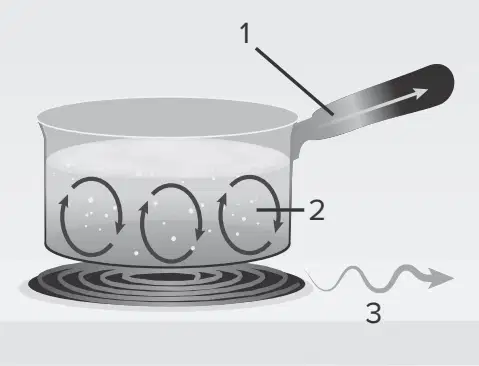
In the image above, which type of heat transfer is represented by the number 3?

a)
Conduction
b)
Radiation
c)
Insulation
d)
Convection
20.

How is energy transferred when objects are in contact? 

a)

Thermal Energy

b)

Conduction

c)

Convection

d)

Radiation

21.

UV LIGHT HAS SHORT WAVELENGHTS AND CAN BREAK CHEMICAL BOND.

a)

False

b)

True

22.

Infrared radiation has shorter wavelengths than visible light.

a)

False

b)

True

23.

What is the Coriolis effect?

a)
The Coriolis effect is the apparent deflection of moving objects due to the Earth's rotation.
b)
The Coriolis effect is the gravitational pull on ocean currents.
c)
The Coriolis effect is the change in temperature due to altitude.
d)
The Coriolis effect is the speed of wind in a vacuum.
24.

What temperature of surface air do polar jet streams transport?

a)

cold

b)

warn

25.


In the US, which way do jet streams flow?

a)
North to south
b)
West to east
c)
Upward to downward
d)
East to west
26.

What are jet streams?

a)
Jet streams are stationary air masses that do not affect weather.
b)
Jet streams are high-altitude, fast-moving air currents that influence weather and climate.
c)
Jet streams are low-altitude, slow-moving air currents.
d)
Jet streams are ocean currents that regulate sea temperatures.
27.

The amount of energy an area receives depends largely on 

a)
the angle of sunlight and atmospheric conditions
b)
the presence of water bodies
c)
the type of vegetation in the area
d)
the time of day and season
28.

True or False: ocean current is a small volume of water flowing in a certain direction

a)

True

b)

False

29.

What are gyre?

a)
Gyres are underwater volcanoes that erupt periodically.
b)
Gyres are large systems of circulating ocean currents in the ocean.
30.

True or False: Wind is the movement of air from areas of high pressure to areas of low pressure

a)

FALSE

b)

TRUE

31.

....................... are steady winds that flow from east to west between 30°N latitude and 30°S latitude.

a)
Monsoon winds
b)
Jet streams
c)
Polar winds
d)
Trade winds
32.

_______________are steady winds that flow from west to east between latitudes 30°N and 60°N, and 30°S and 60°S.

a)
Westerlies
b)
Polar Easterlies
c)
Trade Winds
d)
Jet Streams
33.

__________ are cold winds that blow from the east to the west near the North Pole and the South Pole.

a)
tropical westerlies
b)
equatorial winds
c)
subpolar gales
d)
polar easterlies
34.

_________is wind that blows from the sea to the land due to local temperature and pressure differences.

a)
Land breeze
b)
Sea breeze
c)
Mountain breeze
d)
Valley breeze
35.

________________ is a wind that blows from the land to the sea due to local temperature and pressure differences. A

a)
Sea breeze
b)
Land breeze
c)
Valley breeze
d)
Mountain breeze
36.

Which term refers to the atmospheric conditions of a certain place at a certain time? SC.6.E.7.6

a)
weather
b)
temperature
c)
humidity
d)
climate
37.

Which provides energy for the water cycle? SC.6.E.7.2

a)
Ocean tides
b)
Wind currents
c)
The moon
d)
The sun
38.

Which water cycle processes are directly related to cloud formation?

a)
Evaporation and condensation
b)
Sublimation and deposition
c)
Transpiration and runoff
d)
Precipitation and infiltration
39.

What is the dew point?

a)
The dew point is the pressure exerted by water vapor in the air.
b)
The dew point is the temperature at which water boils.
c)
The dew point is the amount of moisture in the air.
d)
The dew point is the temperature at which air becomes saturated with moisture.
40.

What are the types of precipitation?

a)
Rain, Snow, Sleet, Hail
b)
Fog
c)
Clouds
d)
Mist
41.

What is fog?

a)
Fog is a thick cloud of tiny water droplets suspended in the air near the ground.
b)
Fog is a weather phenomenon that occurs only in winter.
c)
Fog is a solid form of water found in glaciers.
d)
Fog is a type of precipitation like rain or snow.
42.

What is the relationship between temperature and relative humidity? SC.6.E.7.2

a)
Lower temperatures lead to lower relative humidity.
b)
Relative humidity is unaffected by temperature changes.
c)
Higher temperatures increase relative humidity.
d)
Higher temperatures generally lead to lower relative humidity, and lower temperatures lead to higher relative humidity.
43.

Relative humidity is reported as a _____

a)
ratio
b)
percentage
c)
fraction
d)
decimal
44.

As warm air rises in the atmosphere, it________

a)
contracts and heats
b)
sinks and warms
c)

cools

45.

Which pressure systems is represent it in this picture?

a)
Tropical cyclone
b)
Low pressure system
c)
High pressure system
46.

What types of air masses affect Florida?

a)
Maritime polar (mP) and continental tropical (cT) air masses.
b)
Maritime equatorial (mE) and continental arctic (cA) air masses.
c)
Maritime tropical (mT) and continental polar (cP) air masses.
d)
Continental tropical (cT) and maritime polar (mP) air masses.
47.

Why are air masses that form over land are drier than those that form over oceans?

a)
Air masses over oceans are always warmer than those over land.
b)
Air masses over land contain more humidity than those over oceans.
c)
Air masses over land are drier because they have less moisture compared to those over oceans.
d)
Air masses over land are colder than those over oceans.
48.

A(n) __________ front forms when the boundary between two air masses stalls. It brings cloudy skies and light rain.

a)
occluded front
b)
stationary front
c)
warm front
d)
cold front
49.

___________air masses are warm and humid

a)
maritime tropical
b)
continental tropical
c)
maritime polar
d)
continental polar
50.

How do jet streams influence local weather? SC.6.E.7.3

a)
Jet streams are caused by volcanic activity.
b)
Jet streams only affect ocean currents.
c)
Jet streams have no impact on temperature changes.
d)


They push air masses around and move weather systems.

51.

Which type of weather is associated with a maritime polar air mass?

a)
Warm and humid weather with thunderstorms.
b)
Hot and dry weather with clear skies.
c)
Cold and dry weather with snow.
d)

cloudy and rainy

52.

What are characteristics of a blizzard?

a)
Visibility greater than 1 mile
b)
Mild temperatures and clear skies
c)


low temperatures, strong winds, blowing snow

d)
Rainfall with no wind
53.

A thunderstorm would likely cause severe flooding during its___________ stage.

a)
mature
b)
initial
c)
dissipating
d)
developing
54.

When would a thunderstorm likely cause severe flooding?

a)
When temperatures are below freezing during the storm.
b)
When there is a light drizzle in well-drained areas.
c)

during its mature stage

d)
When thunderstorms occur in the winter months.
55.

An __________front brings several days of steady rain or snow into an area.

a)
dry
b)
stationary
c)
warm
d)
cold
56.

What happened during dissipation stage in a thunderstorm?

a)
The storm dissipates but lightning activity increases.
b)
The storm remains unchanged with steady rainfall.
c)
The storm weakens and precipitation decreases.
d)
The storm intensifies and hail increases.
57.

What is a violent whirling column of air that contacts the ground?

a)
Hurricane
b)
Cyclone
c)
Dust Devil
d)
Tornado
58.

How long a thunderstorm can last?

a)
Less than 10 minutes
b)
30 minutes to several hours
c)
All day long
d)
1 to 2 weeks
59.

What is a maritime tropical (mT) air mass?

a)
A maritime tropical (mT) air mass is a cold, dry air mass from polar regions.
b)
A maritime tropical (mT) air mass is a warm, dry air mass originating over deserts.
c)
A maritime tropical (mT) air mass is a cool, moist air mass that forms over land.
d)

Wet and warm air mass that forms over water

60.

True or False:

an air mass is A huge body of air that has similar temperature, humidity, and air pressure at any given height

a)
True
b)

False

61.

Mechanical weathering changes the size of a rock.

a)
Mechanical weathering increases the weight of a rock.
b)
True
62.

Ice wedging is a chemical weathering process.

a)
False
b)
True
63.

Oxidation is a type of mechanical weathering.

a)
Oxidation is a type of biological weathering.
b)
Oxidation is a form of erosion.
c)
False
d)
Oxidation is a chemical process.
64.

Two types of chemical weathering

a)

Acid Rain and Oxidation

b)
Erosion and Sedimentation
c)
Evaporation and Precipitation
d)
Sublimation and Condensation
65.

What does mechanical weathering do?

a)
Mechanical weathering breaks down rocks into smaller fragments.
b)
Mechanical weathering causes rocks to melt.
c)
Mechanical weathering increases the size of rocks.
d)
Mechanical weathering transforms rocks into soil.
66.

What combines during oxidation?

a)
A substance combines with nitrogen.
b)
A substance combines with carbon.
c)
A substance combines with oxygen.
d)
A substance combines with hydrogen.
67.

Rain weathers rock because rain is slightly

a)
acidic
b)
alkaline
c)
basic
d)
neutral
68.

Explain how ice wedging causes weathering.

a)
Ice wedging melts ice, causing rocks to become smoother.
b)
Ice wedging creates heat that strengthens rocks.
c)
Ice wedging causes weathering by repeatedly freezing and expanding water in rock cracks, leading to rock fragmentation.
d)
Ice wedging has no effect on rock structure.
69.

Deposition can occur where wind or running water slows down.

a)

False

b)

True

70.

How does a hoodoo form?

a)
A hoodoo is created by the accumulation of sediment over time.
b)
A hoodoo is formed by the freezing and thawing of water in rock crevices.
c)

differing rates of erosion

d)
A hoodoo forms from volcanic activity.
71.

In which environment would well-sorted sediment be present?

a)
Desert landscapes
b)
Mountainous regions
c)
Swampy areas
d)
River or beach environments
72.

Which factor is NOT an agent of weathering?

a)
Temperature
b)

Water

c)

Plants

73.

Large grains of sediment can only be transported and deposited in a(n)
            -energy environment.

a)
low-energy
b)
high-energy
c)
medium-energy
d)
static-energy
74.

             can occur where wind and running water lose energy and
slow down.

a)
Erosion
b)
Deposition
c)
Weathering
75.

During erosion, rocks become less rounded and develop rough edges.(True or False)

a)

False

b)

True

76.

List two other features formed by an alpine glacier

a)
Cirques, Horns
b)
Valleys
c)
Plateaus
d)
Deltas
77.

How are landforms created by melting glaciers?

a)
Landforms are created by volcanic eruptions.
b)
Landforms are shaped by tectonic plate movements.
c)
Landforms are created by the erosion and deposition of materials as glaciers melt.
d)
Landforms are formed solely by wind erosion.
78.

A pile of angular rocks and sediment from a rockfall is till.

a)
gravel
b)
talus
79.

Contrast a rockfall and slump.

a)
A rockfall is a rapid, free-fall movement of rocks, while a slump is a slower, rotational movement of material along a curved surface.
b)
A rockfall occurs only in wet conditions, whereas a slump can happen in dry conditions.
c)
A rockfall is a slow, sliding movement of rocks, while a slump is a rapid, free-fall movement of material.
80.

Describe how a U-shaped valley is formed

a)
A U-shaped valley is formed by wind erosion.
b)
A U-shaped valley is formed by glacial erosion.
c)
A U-shaped valley is formed by river erosion.
d)
A U-shaped valley is formed by volcanic activity.
81.

What is the process by which plants release water vapor into the atmosphere?

a)

Precipitation

b)

Condensation

c)

Evaporation

d)

Transpiration

82.

Which layer of the atmosphere contains the ozone layer?

a)

Troposphere

b)

Mesosphere

c)

Thermosphere

d)

Stratosphere

83.

What is the term for the boundary between two different air masses?

a)

Front

b)

Cyclone

c)

Breeze

d)

Jet stream

84.

A pendulum bob swings back and forth in an arc. Which describes the energy conversion process as the pendulum moves from left to right? SC.6.P.11.1

a)

potential energy to kinetic energy back to potential energy

b)

potential energy to kinetic energy to electromagnetic energy

c)


kinetic energy to potential energy back to kinetic energy

d)


kinetic energy to chemical energy to potential energy

85.

According to the law of conservation of energy, what happens to the total amount of energy in the universe? SC.6.P.11.1

a)
The total amount of energy in the universe remains constant.
b)
The total amount of energy fluctuates randomly.
c)
Energy can be created and destroyed in the universe.
d)
The total amount of energy increases over time.
86.

A girl drops the ball she is holding. Which best explains the energy transformation taking place in the system? SC.6.P.11.1

a)


The ball in her hands has potential energy. When it falls, the potential energy changes to kinetic energy.

b)

The ball in her hands has kinetic energy. When it falls, the kinetic energy remains constant.

c)


The ball in her hands has potential energy. When it falls, the potential energy remains constant.

d)

The ball in her hands has kinetic energy. When it falls, the kinetic energy changes to potential energy

87.

Which statement about energy transformations is not true? SC.6.P.11.1

a)
Energy can be transformed from one form to another.
b)
Energy can be stored and released.
c)
Energy can be converted into mass.
d)

Potential chemical energy always transforms into kinetic energy.

88.

A(n)                  is the starting point used to locate another place
or thing.

a)
destination marker
b)
reference point
c)
starting point
d)
location identifier
89.

             describes an object’s distance and direction from a
reference point.

a)
location
b)
altitude
c)
velocity
d)
position
90.

If an object is moving, it is changing                                                 .

a)
speed
b)
direction
c)
velocity
d)
position
91.

               is a change of position

a)
Rest
b)
Stillness
c)
Stability
d)
Motion
92.

             is a measure of the change in velocity during a period
of time.

a)
force
b)
momentum
c)
velocity
d)
acceleration
93.

   The football player ran from the 50-yard line to the 10-yard line. There was a difference
of 40 yards between his starting and ending position.

a)


displacement

b)


reference point

94.

We all watched as the fire engine raced at over 80 mph to the house burning at the
north end of town.

a)


velocity

b)

position

95.

What does a horizontal line on a speed-time graph represent?

a)
Constant speed
b)
Variable speed
c)
Decreasing speed
d)
Increasing speed
96.

On a distance-time graph, a line that changes direction is used to show

a)


changing speed.

b)
A stationary object.
c)
An increase in distance only.
d)
A constant speed of motion.
97.

On a distance-time graph, time is shown on the y-axis.

a)
True
b)
False
98.

On a speed-time graph, a horizontal line at y = 0 means an object is at rest.

a)
True
b)
False
99.

A distance-time graph does show the actual path an object takes.

a)
True
b)
False
100.

What does a line sloping downward on a speed-time graph indicate?

a)
The object is decelerating.
b)
The object is at rest.
c)
The object is speeding up.
d)
The object is moving at a constant speed.
101.

What is the primary cause of wind?

a)

The presence of mountains

b)

The gravitational pull of the moon

c)

The rotation of the Earth

d)

Differences in air pressure

102.

Which layer of the atmosphere contains the ozone layer?

a)

Troposphere

b)

Thermosphere

c)

Stratosphere

d)

Mesosphere

103.

What is the main component of Earth's atmosphere?

a)

Oxygen

b)

Carbon Dioxide

c)

Nitrogen

d)

Argon

104.

What is the primary cause of wind?

a)

The rotation of the Earth

b)

The gravitational pull of the moon

c)

Differences in air pressure

d)

The movement of ocean currents

105.

True or False: The ozone layer absorbs most of the Sun's harmful ultraviolet radiation.

a)

True

b)

False

106.

Which layer of the atmosphere is closest to Earth?

a)

Stratosphere

b)

Mesosphere

c)

Troposphere

d)

Thermosphere

107.

What process is responsible for the cooling effect when sweat evaporates from the skin?

a)

Condensation

b)

Convection

c)

Radiation

d)

Evaporation

108.

What is the thickest layer of the Earth?

a)

Crust

b)

Mantle

c)

Outer Core

d)

Inner Core

109.

Which layer of the Earth is liquid Iron and Nickle?

a)

Crust

b)

Mantle

c)

Outer Core

d)

Inner Core

110.

What layer of the atmosphere contains most of our air and weather?

a)

Troposphere

b)

Stratosphere

c)

Mesosphere

d)

Thermosphere

e)

Exosphere

111.
All frozen water on Earth is...
a)
Hydrosphere
b)
Geosphere
c)
Cryosphere
d)
Atmosphere
112.

A particle that has equal amounts of positive charge and negative charge is

a)
charged particle
b)
neutral particle
c)
ionized particle
113.

Which material is an insulator in which electric charges cannot easily move?

a)
Aluminum
b)

Plastic

c)
Iron
114.

Which material is a conductor in which electric charges easily move?

a)
Copper
b)
Glass
c)
Rubber
d)
Wood
115.

How do objects become electrically charged?

a)
Objects can only become charged through chemical reactions.
b)
Objects become charged by gaining or losing protons.
c)
Objects become electrically charged by gaining or losing electrons.
d)
Objects are charged by exposure to sunlight.
116.

The loss of an unbalanced electric charge

a)

electric discharge

b)

Electric force

c)

electric field

117.

the push or pull between charged objects

a)
Magnetic force
b)
Electric force
c)
Frictional force
d)
Gravitational force
118.

he invisible region around any charged object

a)
Electric field
b)
Electric potential
c)
Gravitational field
d)
Magnetic field
119.

Which layer of the Earth is liquid Iron and Nickle?

a)

Crust

b)

Mantle

c)

Outer Core

d)

Inner Core

120.

What is the thickest layer of the Earth?

a)

Crust

b)

Mantle

c)

Outer Core

d)

Inner Core
