wayground logo

Free Printable Worksheets

Font size

S
M
L
XL
Worksheets

8th Grade Winter Diagnostic Review

Total questions: 120

Worksheet time: 2hrs 4mins

Name
Class
Date
1.

For her science project, Suzanne made an animal cell using a rectangular shoe box, pipe cleaners, and construction paper. One comment that the teacher made was that Suzanne should not have used a shoe box. Why did the teacher make this comment?

a)

Animal cells are more round and do not have a rigid cell wall.

b)

Animal cell shape is more round than a rectangle.

c)

Plant cell shape is more round than rectangular.

d)

Plant and animal cells have a similar shape.

2.

Which organelle is nicknamed “the powerhouse or the brain” of the cell and generates the cell’s energy-rich molecules?

a)

Nucleus

b)

Mitochondrion

c)

Chloroplast

d)

Cell Wall

3.
I have a nuclear membrane, can do photosynthesis and am multicellular. What kingdom do I belong to?
a)
Animalia
b)
Archaebacteria
c)
Plantae
d)
Protista
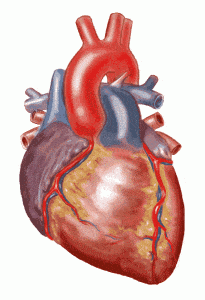
4.
This is a example of ........
a)
cell
b)
organ system
c)
organ
d)
tissue
5.
The ___________ is the basic unit of life
a)
organ
b)
cell
c)
atom
d)
tissue
6.

An animal cell has the following except a/an...

a)

Nucleus

b)

Lysosome

c)

Cell Wall

d)

Endoplasmic reticulum

7.

This cell can produce it's own food through photosynthesis. Making it an autotroph.

a)

Animal

b)

Plant

8.

Which statement was NOT included in cell theory?

a)

All living things are composed of cells.

b)

Living cells come only from other living cells.

c)

Each cell contains a cell membrane, cytoplasm, nucleus, mitochondria, and endoplasmic reticulum.

d)

Cells are the smallest structure of living things that can perform the functions necessary for life.

9.

SC.7.N.1.2

Scientists frequently repeat the experiments of others scientists. Why is this important in science?


a. Scientists often ask each other for help in performing experiments.

b. Replication of experiments helps to confirm and verify results.

c. Scientists frequently perform other scientists’ experiments in order to practice their technique.

d. Repeating experiments is an effective way to make sure a laboratory is in optimal condition.

a)

a

b)

b

c)

c

d)

d

10.

What is the BEST reason you always repeat an experiment?

a)

Make sure your data is consistent and accurate which will decrease bias results

b)

Make sure your data supports your prediction

c)

Make sure your experiment is easy to do

d)

Make sure your experiment has lots of data

11.
Steve wanted to see if the type of fertilizer made sunflowers grow larger. What is the independent variable 
a)
Type of fertilizer
b)
Size of sunflower
c)
type of sun flower
12.
Sam wanted to know if the color of the chair you sat in when taking a test affected your test grade. What is the dependent variable.
a)
Color or chair
b)
Grade on test
c)
Age of students
13.
How many variables can be tested in a controlled experiment?
a)
one
b)
two
c)
three
d)
as many as possible
14.

Scientific hypothesis have to be...

a)

Testable 

b)
Easy
c)
Interesting
d)

Long

15.
Scientific theories do not change once they have been written down.
a)
True
b)
False
16.

Which of these can change when new evidence is presented?

a)

theory

b)

law

17.

Which of these explain how a natural phenomenon works or happens?

a)

theory

b)

law

18.

Which of these can be represented mathematically and provide no explanation why a phenomenon occurs?

a)

theory

b)

law

19.

The distance light can travel in one year is ______________

a)

15,000 kilometers

b)

1 light-year

c)

15 Astronomical Units

d)

6,000 miles

20.

What unit of measurement is used to calculate distance in our universe?

a)

astronomical units

b)

kilometers

c)

light years

d)

parsecs

21.

The brightness of a star as seen from earth

a)

Apparent magnitude

b)

Awesome magnitude

c)

Absolute magnitude

d)

Amazing magnitude

22.
What color are the coolest stars?
a)
blue-white
b)
yellow
c)
red
d)
orange
23.
The brightness the star would have if it were a standard distance from earth.
a)
Apparent Brightness
b)
Absolute Brightness
c)
Brightness
d)
Candid Brightness
24.
What color of star is the hottest?
a)
Blue
b)
Red
c)
Yellow
d)
Orange
25.

The types of gases that make up a star is also known as the star's _______________.

a)

composition

b)

temperature

c)

size

d)

luminosity

26.
A _____________________ is something that scientists use to represent an object or process
a)
mass
b)
matter
c)
model
d)
weight
27.
Sal is studying the solar system. He makes a physical model using different-sized foam balls to represent the planets. Which best describes why a physical model is a useful tool for studying the solar system?
a)
Solar system models can be used to study a system that is too big to study directly.
b)
A model of the solar system eliminates the need for scientists to study the solar system directly.
c)
A model of the solar system provides an exact replica of the actual solar system, so scientists can experience what each planet is like.
d)
A model of the solar system can provide more data about the solar system than direct observations.
28.
Which planet is closest to the sun?
a)
Earth
b)
Venus
c)
Mercury
d)
Mars
29.
Gravity attracts all objects towards one another.
a)
False
b)
True
c)
It depends
30.
The solar system includes the planets, the moons of those planets, and the sun. Which of the following is true about the solar system?
a)
no gravity exists between earth and the other planets on their moons
b)
other planets exert gravity on earth but do not exert gravity on earth’s moon
c)
gravity exists among all parts of the solar system and holds it together
31.
The phase of the moon that occurs between the sun and Earth
a)
Full moon
b)
Waxing crescent
c)
Waning Crescent
d)
New Moon
32.

An imaginary line that a space object spins on is...

a)

Rotation

b)

Revolution

c)

Axis

33.
CHALLENGE
When the moon is lined up exactly between the sun and Earth, it is called a ______ ______. 
a)
Solar Eclipse
b)
Lunar Eclipse
34.

What is a way of describing how the moon looks when the earth, moon, and sun are in a 90 degree angle?

a)

Full Moon

b)

Crescent (Waxing or Gibbous)

c)

A Half Moon (1st or 3rd quarter)

d)

New Moon

35.
A low area between hills and mountains.
a)
canyon
b)
valley
c)
delta
36.
The movement of pieces of weathered rock by water, wind, ice, or gravity.
a)
erosion
b)
mountains
c)
delta
37.
The process by which eroded materials settle out in another place.
a)
deposition
b)
erosion
c)
landslide
38.
A high, uplifted area with steep slopes.
a)
hills
b)
floodplain
c)
mountain
39.
A fan-shaped deposit at the mouth of a river.
a)
delta
b)
creep
c)
valley
40.
Why is it important to examine fossils from different places and ages?
a)
so we can gain a better understanding of the ancient environments that they lived in
b)
so that we can put them in museums 
41.
In a sequence of rock layers, the oldest layer of rock is _______________ and the youngest layer of rock is ___________________ .
a)
at the bottom; at the top
b)
at the top; at the bottom
42.
What is the definition of "weight"?
a)
measure of the force of gravity on your body
b)
the time it takes to get on a ride 
c)
the amount of matter in an object
d)
the size of an object
43.
A measure of how much matter an object has is--
a)
weight
b)
gravity
c)
mass
d)
volume
44.
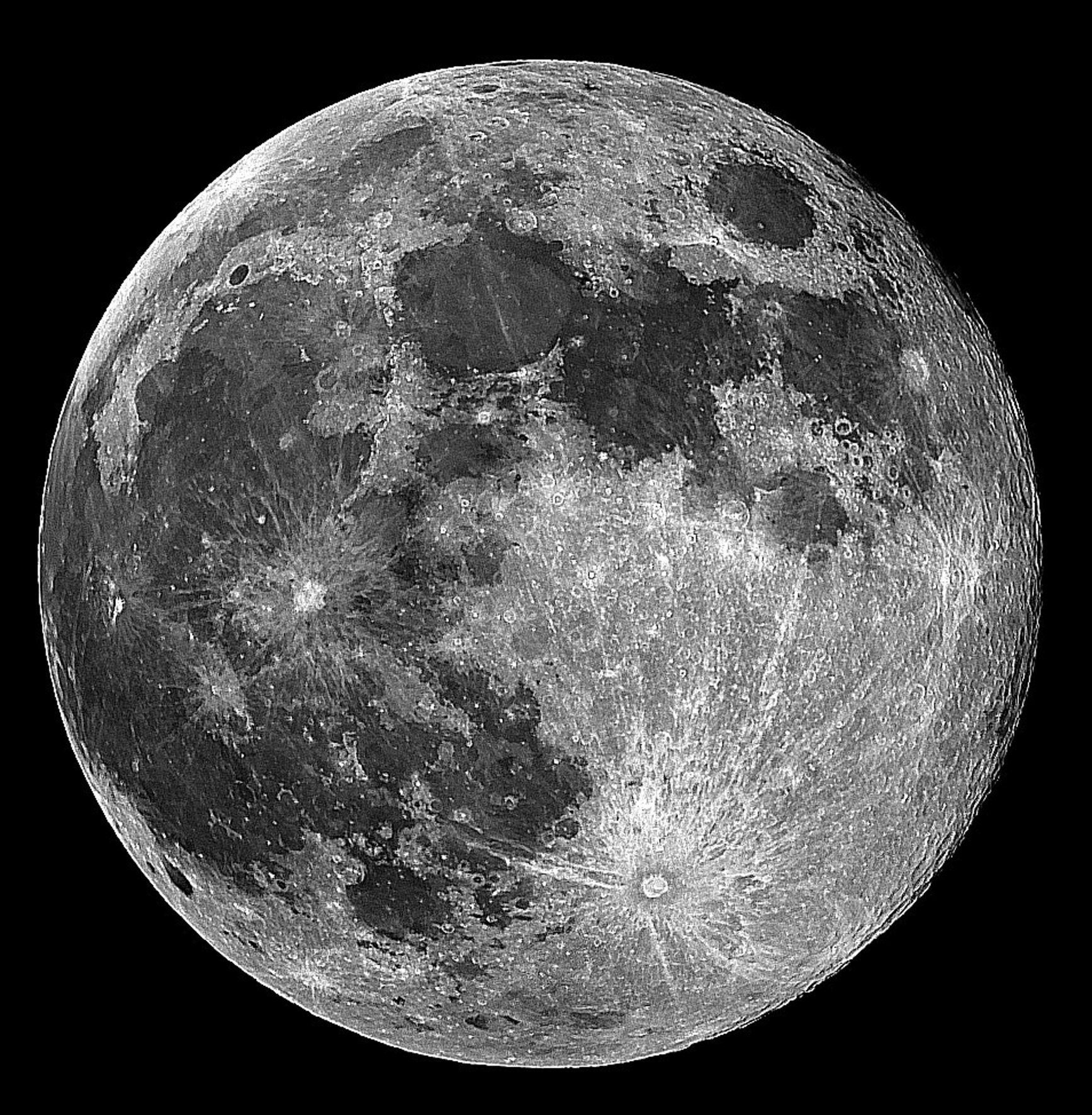
Why would you weigh less on the moon compared to Earth?
a)
less air
b)
less sunlight
c)
more gravitational pull
d)
less gravitational pull
45.

Water has a density of 1 g/mL. An object with a density greater than 1 will _____ in water.

a)

Sink

b)

Float

46.

What is the volume of the button?

a)

2

b)

20

c)

18

d)

15

47.

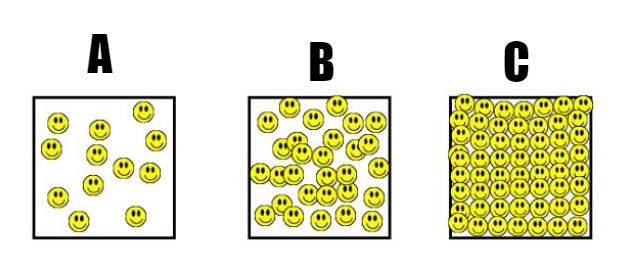
Which box shows the particles of an object that is the MOST DENSE?

a)

A

b)

B

c)

C

d)

they are all the same

48.

What happens to the mass and weight of an object that is launched into space, where the pull of gravity is less?

a)

The mass decreases while the weight stays constant.

b)

The mass stays constant while the weight decreases.

c)

The mass stays constant while the weight increases.

d)

The mass increases while the weight decreases.

49.

Density is a physical property of matter and can be used to classify substances. Density is calculated by which of the following?

a)

d=v/m

b)

d=m/v

c)

d=w/v

d)

d=m/w

50.
What subatomic particles would you find in the nucleus of an atom?
a)
Protons only
b)
Protons and Neutrons
c)
Neutrons and Electrons
d)
Protons and Electrons 
51.
What subatomic particle is electrically neutral (no charge)?
a)
Proton
b)
Ion
c)
Neutron
d)
Electron
52.
What subatomic particle(s) would be found orbiting the nucleus?
a)
Neutrons only
b)
Electrons only
c)
Protons and Neutrons
d)
Protons and Electrons
53.
The positive particles of an atom are 
a)
electrons 
b)
positrons 
c)
neutrons 
d)
protons 
54.
Which of the following pH numbers indicates a neutral substance?
a)
1
b)
5
c)
7
d)
14
55.

WHAT ARE THE PROPERTIES OF ACID ?

a)

Acids are corrosive, sour,

b)

Lemon

c)

Mint

d)

tastes bitter

56.
Bases are located where on the pH scale?
a)
any number can be a base
b)
below 7
c)
above 7
d)
number 7 is a base
57.
At what location on the pH scale can you find acids?
a)
number 7 on the pH scale is acidic
b)

below 7

c)
above 7
d)
you can find acids all throughout the scale
58.
A combination of two or more substances that cannot easily be separated--
a)
mixture
b)
solution
c)
solute
d)
solvent
59.

Mixture or Pure Substance?

a)

Mixture

b)

Pure Substance

60.

Mixture or Pure Substance?

a)

Mixture

b)

Pure Substance

61.

Mixture or Pure Substance?

a)

Mixture

b)

Pure Substance

62.
Light is a form of 
a)
energy
b)
radiation
c)
reflection
63.

What does reflection mean?

a)

Soaks up light

b)

Passes through

c)

light bounces off

64.
What does refract mean?
a)
To shrink
b)
To bend
c)
To widen
d)
To enlarge
65.

Heat is another name for

a)

thermal energy

b)

electrical energy

c)

mechanical energy

d)

gravitational energy

66.

What is an object’s total amount of energy called?

a)

total energy

b)

potential energy

c)

mechanical energy

d)

kinetic energy

67.

Potential energy is energy of position and is also sometimes called ______________ energy.

a)

stored

b)

chemical

c)

radiant

d)

elastic

68.

Energy of motion

a)

radiant

b)

chemical

c)

potential

d)

kinetic

e)

sound

69.

heat

a)

thermal

b)

electrical

c)

sound

d)

kinetic

e)

potential

70.

Energy from the sun

a)

radiant

b)

chemical

c)

potential

d)

kinetic

e)

sound

71.

travels in waves

a)

potential

b)

electrical

c)

sound

d)

kinetic

72.

If the temperature is above the melting point of a substance and above the boiling point of a substance what state will it be in?

a)

Solid

b)

Liquid

c)

Gas

73.
When a liquid reaches the temperatures of its ___, it can become a gas.
a)
melting point
b)
freezing point
c)
boiling point
d)
density
74.
Two girls are pulling on opposite ends of a thick rope. Both girls pull on the rope with the same force but in opposite directions. If both girls continue to pull with the same force, what will most likely happen? 
a)
One girl will pull the other toward her.
b)
Both girls will stay in the same place. 
c)
Gravity will cause the rope to sag. 
d)
The rope will break.
75.
What is speed?
a)
Speed is how far something travels in one hour.
b)
Speed is how fast it takes something to travel a set distance
c)
Speed is the distance something travels in a set amount of time.
d)
Speed is the change in velocity of something.
76.
 If an unbalanced force acts on a stationary object, the object will:.
a)
remain stationary
b)
move away from the force
c)
accelerate in the direction of the force
d)
accelerate in the opposite direction of the force
77.

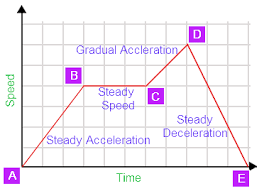
At what point is the speed the greatest?

a)

C-D

b)

B-C

c)

A-B

d)

D-E

78.

What is happening during point A to B?

a)

not moving

b)

increasing speed at a constant rate

c)

moving at a constant speed

d)

moving at 10 m/s2 acceleration

79.

Living things that are made of a single cell are _____.

a)

multicellular

b)

eukaryotic

c)

prokaryotic

d)

unicellular

80.

Living things that are made of many cells working together are _____.

a)

multicellular

b)

eukaryotic

c)

prokaryotic

d)

unicellular

81.

Which of the following is the correct order of organization in living things from most basic (simple) to most complex?

a)

organ, tissue, cell, organism, organ system

b)

cell, tissue, organ, organ system, organism

c)

tissue, cell, organ, organ system, organism

d)

organism, organ system, organ, tissue, cell

82.

This organelle turns food into energy

a)

Chloroplast

b)

Mitochondria

c)

Cell wall

d)

Nucleus

83.

This organelle turns radiant energy into sugar. This is where photosynthesis occurs.

a)

cell wall

b)

chloroplast

c)

cell membrane

d)

nucleus

84.

This organelle is LARGER in plant cells than animal cells. It stores food, water and waste.

a)

nucleus

b)

cell membrane

c)

cell wall

d)

vacuole

85.

The cell wall is found in which cell

a)

bacteria

b)

animal cell

c)

plant cell

d)

virus

86.
Plants and animal cells both have a nucleus.
a)
True
b)
False
87.
Which of the following is directly involved in the transportation of materials inside/within the cell?
a)
Endoplasmic Reticulum
b)
Vacuole
c)
Lysosome
d)
Mitochondria
88.
What is the name of the genetic material that is inside the nucleus?
a)
ER
b)
ATP
c)
YOLO
d)
DNA
89.
Which of the following is the correct equation for PHOTOSYNTHESIS?
a)
CO+ light + H2O --> O+ Sugar
b)
CO+ sugar + H2O --> O+ light
c)
O2 + light + H2O --> CO+ Sugar
d)
CO+ O2 + H2O --> Light+ Sugar
90.
Cellular Respiration's goal is to
a)
make water
b)
make ATP
c)
make glucose
d)
make  oxygen
91.
The powerhouse of the cell is the...
a)
Mitochondrion
b)
Golgi body
c)
Nucleus
d)
Ribosomes
92.
Where are proteins made?
a)
Golgi body
b)
Mitoichondrion
c)
Chromosomes
d)
Ribosomes
93.
The image is an example of ..... 
a)
Animal Cell
b)
Plant Cell 
94.
You might think of me as the trash collector or recycler. What am I?
a)
cytoplasm
b)
lysosme
c)
vacuole
d)
ribosome
95.
What is the correct equation for cellular respiration?
a)
6O2 + C6H12O6 -> 6CO2 + 6H2O + Energy
b)
6O2 + C6H12O6 + Energy -> 6CO2 + 6H2O
c)
6CO2 + 6H2O -> 6O2 + C6H12O6 + Energy
d)
6CO2 + 6H2O + Energy -> 6O2 + C6H12O6
96.

Asexual Reproduction requires...

a)

One Parent only.

b)

Two Parents.

97.
a)
Mitosis
b)
Meiosis
98.
a)
Mitosis
b)
Meiosis
99.

A tick living on a dog

a)

mutualism

b)

commensalism

c)

parasitism

100.

Bees and a flower

a)

mutualism

b)

commensalism

c)

parasitism

101.
A relationship between two organisms in which both organisms benefit. 
a)
Mutualism 
b)
Competition
c)
Parasitsm 
d)
Commensalism 
102.

This is any close relationship between any two different species in an ecosystem

a)

symbiosis

b)

parasitism

c)

mutualism

d)

commensalism

103.

One species benefits, the other is unaffected

a)

symbiosis

b)

parasitism

c)

mutualism

d)

commensalism

104.
Two male Giraffes are fighting over the last green leaf of a tree that is dying.  
a)
Competition
b)
Mutualsim
c)
Predation
d)
Commensalism
105.
A coyote captures, kills, and eats a rabbit. What type of symbiotic relationship is this?
a)
mutualism
b)
commensalism
c)
parasitism
d)
predation
106.
How many cells are found in Archaebacteria?
a)
Unicellular
b)
Multicellular
c)
Both
107.

A pine tree is a member of the kingdom

a)

Animalia

b)

Protista (Protists)

c)

Fungi

d)

Plantae (Plant)

108.
How many kingdoms are there?
a)
2
b)
3
c)
6
d)
8
109.
Examples are mushrooms and yeast
a)
Fungi
b)
Protista
Protista
c)
Plantae
d)
Animalia
110.

All of the following have a nucleus except...

a)

Bacteria

b)

Animalia

c)

Plantae (Plant)

d)

Protista (Protist)

111.

Which kingdom is known as the "odds and ends" kingdom?

a)

Animalia

b)

Plantae (Plant)

c)

Protista (Protist)

d)

Fungi

112.
This domain is characterized by bacteria that can live in extreme environments, such as hot springs.
a)
Archaea
b)
Bacteria
c)
Eukarya
d)
Prokarya
113.

Which 2 kingdoms has organisms that are all multicellular and eukaryotes?

a)

Animal and Plant

b)

Fungi and Animal

c)

Eubacteria and Plant

d)

Fungi and Plant

114.
At one point in time, many people thought disease was caused by fate or by incorrect behavior. Following the invention of the microscope, bacteria were discovered. After this, a new theory of what causes disease arose that was known as the germ theory.  Why was the original theory modified? 
a)
It quickly became obvious that germs cause disease.
b)
The person who invented the microscope became ill.
c)
New evidence prompted revision to the original ideas.
d)
The proponents of the germ theory had political power.
115.
Why is it important that scientists modify scientific theories when important new information is discovered?
a)
to confuse other scientists
b)
to keep the theory interesting and fresh
c)
to keep the theory as accurate and effective as possible
d)
to make sure the general public does not understand the theory
116.
Eduardo is a conservation biologist. He needs to develop a plan to preserve wetlands. He begins his project by studying the data in the following chart. How is Eduardo using scientific methods in developing a plan?
a)
He is analyzing data about causes and effects.
b)
He is analyzing a hypothesis about causes and effects.
c)
He is proposing an experiment about causes and effects.
d)
He is using intuition to determine causes and effects.
117.

All the measurements and data scientists gather in support of a scientific explanation.

a)

empirical evidence

b)

explains

c)

evidence

118.
A series of steps used by scientists to solve a problem or answer a question. 
a)
scientific method
b)
recipe
c)
data collection
d)
metric system
119.

What is a hypothesis?

a)

An educated prediction or answer to a testable question

b)

A random guess

c)

An observation based on feelings or emotions

d)
120.
In this graph, what is the dependent variable? 
a)
Walla Walla Island
b)
Time
c)
Number of Deer