
 Worksheets
Earth Science Finals Review
Total questions: 124
Worksheet time: 1hrs 10mins
What is a tsunami?
A large storm with heavy rain and strong winds
A series of ocean waves caused by underwater disturbances
A type of earthquake that occurs on land
A volcanic eruption that happens underwater
Which of the following can cause a tsunami?
Tornadoes
Underwater earthquakes
Forest fires
Hurricanes
What is the primary factor that determines the size of a tsunami?
The depth of the ocean
The magnitude of the underwater disturbance
The temperature of the water
The distance from the shore
How fast can tsunami waves travel in the open ocean?
10 km/h
50 km/h
100 km/h
800 km/h
Which ocean is most commonly associated with tsunamis?
Atlantic Ocean
Indian Ocean
Arctic Ocean
Pacific Ocean
What should you do if you are at the beach and you feel an earthquake?
Stay where you are and wait for instructions
Run towards the water to see what is happening
Move to higher ground immediately
Go to the nearest building for shelter
What is the term for the phenomenon when the sea level recedes dramatically before a tsunami?
Sea withdrawal
Ocean retreat
Coastal drawdown
Tsunami drawback
Which instrument is used to detect tsunamis in the deep ocean?
Seismograph
Barometer
DART buoy
Anemometer
Which of the following is NOT a sign of an impending tsunami?
A sudden rise or fall in sea level
A loud roaring sound from the ocean
Unusual animal behavior
Heavy rainfall
How do tsunamis differ from regular ocean waves?
Tsunamis are caused by wind
Tsunamis have longer wavelengths and travel faster
Tsunamis are smaller in height
Tsunamis occur only during the day
What is the main purpose of a tsunami warning system?
To predict the exact time of an earthquake
To alert people of potential tsunami threats
To measure the depth of the ocean
To track the movement of fish
Which of the following regions is least likely to experience a tsunami?
Coastal areas near tectonic plate boundaries
Islands in the Pacific Ocean
Inland areas far from the coast
Coastal areas near volcanic activity
What is the best way to stay safe during a tsunami?
Stay indoors and close all windows
Move to higher ground or inland
Drive away from the coast as fast as possible
Swim to safety
When a Tsunami approaches shore, the waves
Speed Up
Slow Down
Stay the Same Speed
Most waves get their energy (size/speed/shape) from __________ but tsunamis get their energy from ___________ ___________.
Rain
Lightning Strikes
Fire
Thunderstorms
Wind
Tornado Winds
Wind
Underwater Forces
What caused the massive tsunami that killed more than 200,000 people across Asia in 2004?
A rogue wave
A typhoon
The eruption of Krakatoa
An earthquake
A tsunami will always give you a warning of when it's coming.
True
False
Which of the following terms best fits this definition: a series of large waves in a large body of water, often caused by a volcanic eruption or earthquake?
Tsunami
Monsoon
Alluvial Plain
Subcontinent
Most tsunamis occur in the
Amazon River
Atlantic Ocean
Indian Ocean
Pacific Ocean
Which natural hazard can NOT cause a tsunami?
Earthquake
Landslide
Volcanic Eruption
Tornado
How does Japan protect itself from Tsunamis?
Early warning system technology
Decrease population density so fewer people are affected
Prohibit people from living close to the ocean
Build stronger concrete that can withstand the waves
Which of the following is an effective flood preparedness measure?
Keeping electronics on the floor
Making sure you evacuate the area if you are told to do so
Avoiding the purchase of flood insurance
What is the main cause of a tsunami?
Wind
Underwater volcanic eruptions
Underwater earthquakes
Heavy rainfall
Which of the following is a common effect of a tsunami?
Increased fish population
Coastal flooding
Decreased ocean salinity
Formation of new islands
What should you do if you hear a tsunami warning while at the beach?
Ignore it and continue swimming
Move to higher ground immediately
Wait for the waves to arrive
Go to the nearest building for shelter
What happens to tsunami waves as they travel inland?
They decrease in height
They increase in height
They disappear
They remain the same
What determines the speed of tsunami waves?
Distance from the source
Ocean depth
Wind speed
Temperature
What causes the energy for tsunami waves?
Tornadoes
Volcanic eruptions
Thunderstorms
Earthquakes
What happens to tsunami wavelengths as they travel?
They decrease
They remain the same
They increase
They disappear
How are tsunami waves slowed down when approaching the coastline?
By the wind
By the rising sea floor
By the moon
By the sun
What happens to the wavelength of tsunami waves as they approach the shore?
It remains the same
It becomes longer
It disappears
It becomes shorter
What is the amplitude of tsunami waves when they reach the shore?
Disappears
Remains the same
Increases
Decreases
What causes major damage when tsunami waves collide with the shore?
Giant wave
Rain
Hail
Snow
What continues the destruction after the collision of tsunami waves with the shore?
Earthquakes
Tornadoes
Strong winds
Outflow of water
What is the place where the ocean meets land called?
Shore
Harbor
Coast
Beach
What term is associated with the moons that are increasing in size (more light on them) each day?
Waxing moons
Waning moons
Crescent moons
Gibbous moons
The different phases of the Moon are caused by:
The days of the months
The angle at which we see the lit Moon as it revolves around the Earth
The position of the Earth in its orbit around the Sun
The tides of the ocean
Where does the moon get its light?
It reflects the Earth's light
It reflects the other stars' light
It reflects the Sun's light
It makes its own light
About how long does it take the Moon to complete its cycle?
around 1 week
around 1 month
around 1 year
around 1 day

What phase of the moon is shown?
waning gibbous
1st quarter
waxing crescent
Waxing gibbous
The moon seems to change shape from day to day in a cycle that lasts about a month as it goes through _.
revolutions
phases
rotations
eclipses
As the moon's shape appears to get smaller, we say that the moon is _.
swelling
waxing
waning
disappearing
About how long does it take the moon to make one complete cycle around the earth?
65 days
8 days
365 days
28 days
Which moon phase is when you can't see the moon at all?
Waning crescent
Full moon
Waxing gibbous
New moon
Winter and Summer occur during ___.
solstices
equinoxes
Full Moons
New Moons
When it is spring in the Northern Hemisphere, the Southern Hemisphere has ___________.
Summer
Spring
Winter
Autumn

What happens on solstice days?
The Sun's rays shine straight down on the equator
Day and night hours are equal
Earth's North Pole leans toward or away from the Sun
Tides are caused mainly by what?
Moon’s gravitational pull
Sun’s gravitational pull
Earth’s gravitational pull
What tool would you use to study stars and space?
microscope
oscilloscope
telescope
nanoscope
Which of the following is true?
Earth is the center of the solar system
The sun orbits the earth
Gravity exists only on Earth
The sun is the center of the solar system
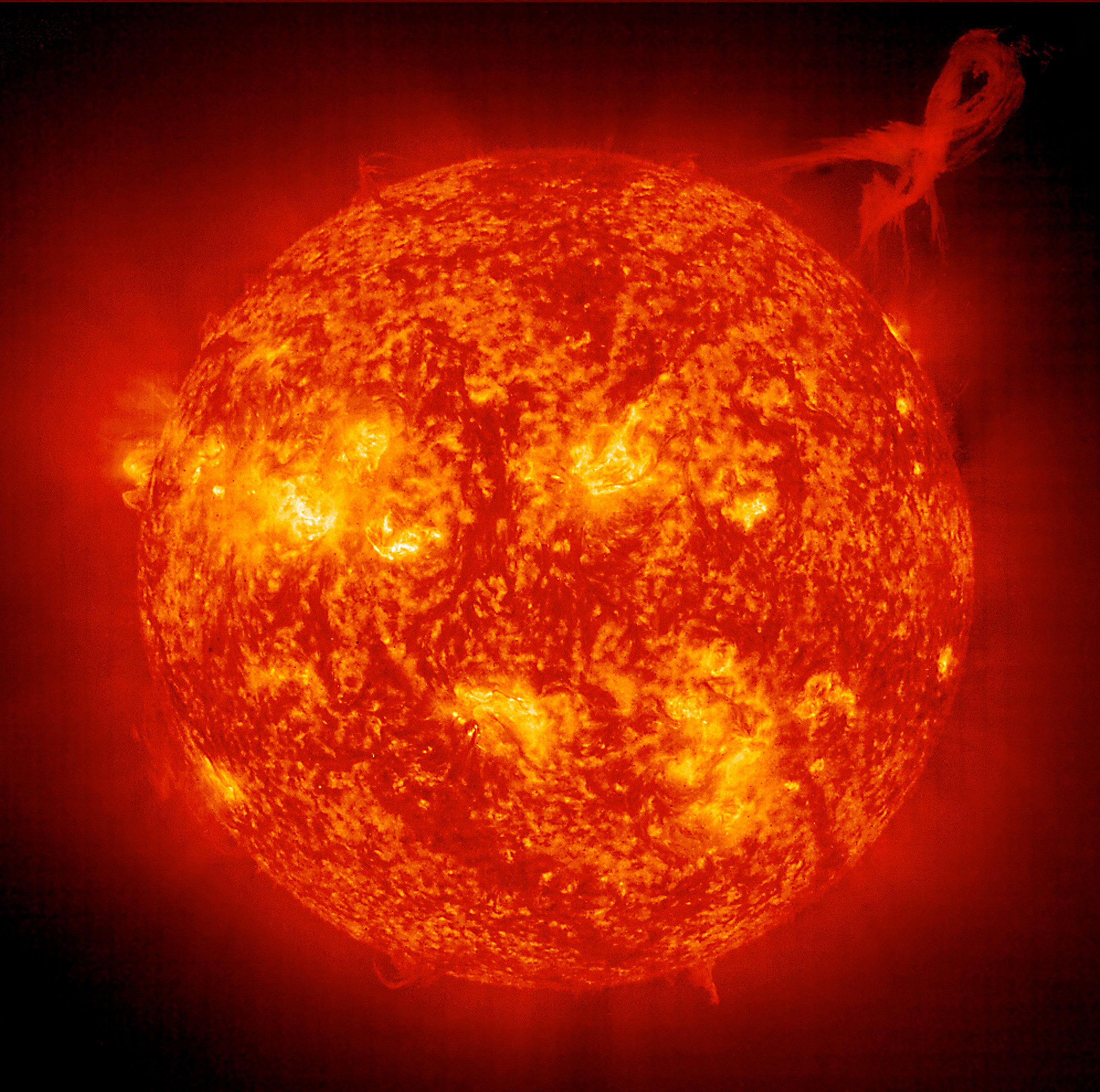
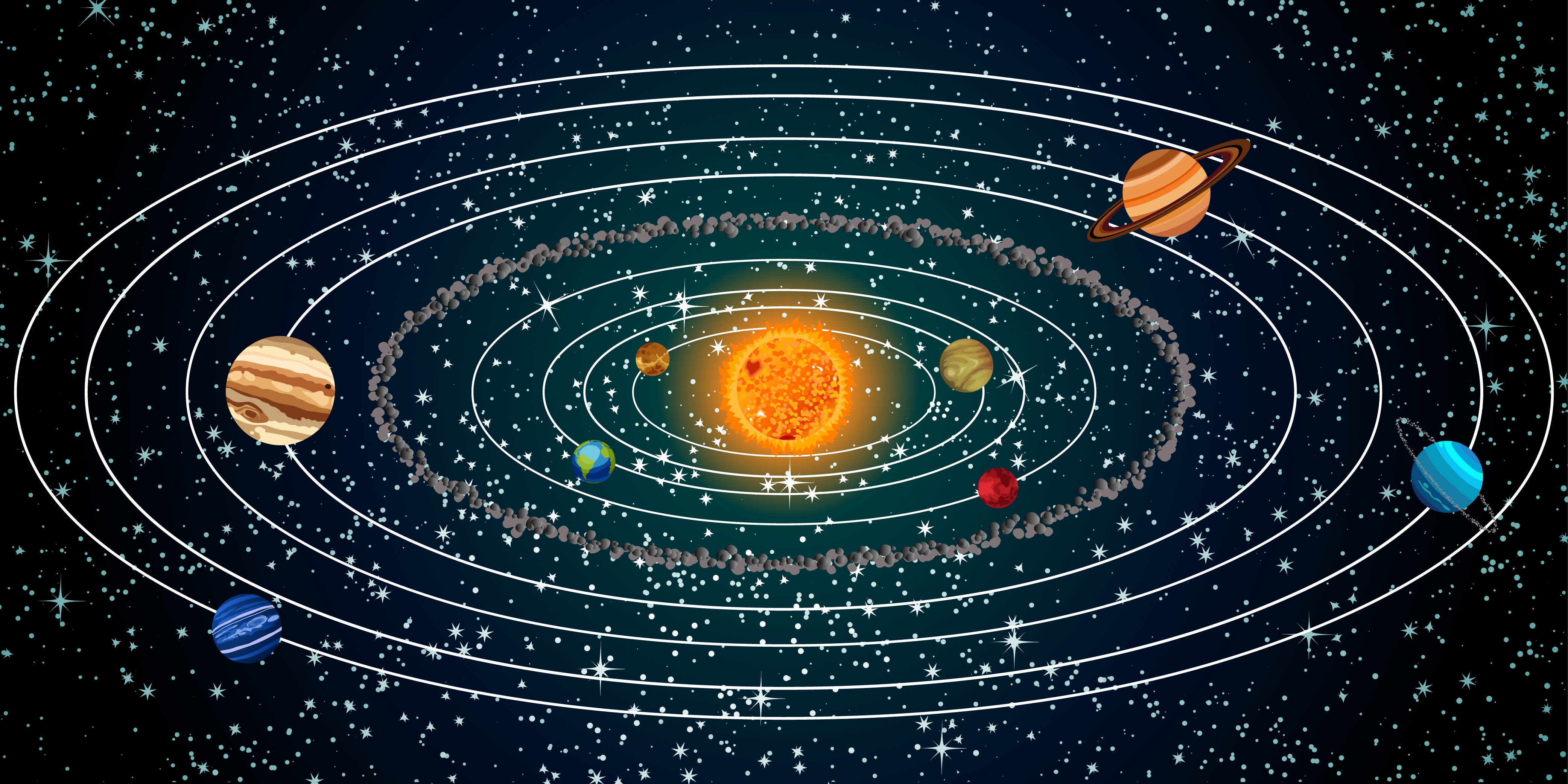
An object that revolves around another object in space (natural or manmade)
mirror
microscope
oscilloscope
satellite

The sun rises in the ______ and sets in the ___________.
rocky, metallic tiny object that orbits the sun


Which planet has rings?
Saturn
Earth
Venus
Mars

What Galaxy is Earth located?
Andromeda
Milky Way
Sagittarius
Snickers
A Group of stars, and or star systems, star clusters, dust and gas held together by gravity is known as:
Universe
Galaxy
Solar System
Planet

What is the correct order of the planets?
Mercury, Earth, Venus, Saturn, Neptune, Uranus, Jupiter, Mars
Mercury, Venus, Earth, Mars, Jupiter, Saturn, Uranus, Neptune
Neptune, Jupiter, Earth, Mars, Saturn, Venus, Mercury, Uranus
What is the relationship between gravity and size?
The smaller an object is the more gravity it has.
The larger an object is the less gravity it has.
Size does not matter when it comes to gravity.
The larger an object is the more gravity it has.
What is the relationship between distance from the sun an orbital path?
The further an object is from the sun the shorter its orbital path
The further an object is from the sun the longer its orbital path.
Distance does not affect orbital path.
The closer an object is from the sun the longer its orbital path.
Why does the moon revolve around the Earth instead of the Sun?
The moon revolves around the Earth because it has more gravity then the sun.
The moon revolves around the Earth because Earth’s orbital period is shorter than the suns.
Because the moon is closer to the Earth then the sun, the moon revolves around Earth instead of the sun.
The ___________ mass an object has the more gravity it will have.
less
more
Mercury is closest planet to the sun so it has an orbital path that is
very long
very short
irregular
moves backwards
Neptune is the planet that is furthest from the sun so it has an orbital path that is...
very short
very long
overlaps another planets
moves backwards
The four planets closest to the sun are known as the
terrestrial planets
gas giants
largest planets
liquid planets
The four planets furthest from the sun are known as the
terrestrial planets
gas giants
small planets
land planets
What force is responsible for keeping the planets revolving around the sun?
normal force
friction
gravity
speed



