wayground logo

Free Printable Worksheets

Font size

S
M
L
XL
Worksheets

Norris Quizizz

Total questions: 124

Worksheet time: 1hrs 28mins

Name
Class
Date
1.

All of the living and nonliving components that interact in an environment.

a)

population

b)

ecosystem

c)

community

d)

organism

2.

Any living thing is called a.................

a)

ecosystem

b)

community

c)

population

d)

organism

3.

Plants need _____ to make food.

a)

light

b)

protection

c)

to stay warm

4.

Some animals migrate as seasons change.

a)

true

b)

false

5.

What organisms eat plants and animals to gain energy?

a)

Producers

b)

Consumers

c)

Decomposers

d)

The sun

6.

What is this?

a)

Food Web

b)

Food Chain

7.
Which level of organization is the most complex?
a)
organism
b)
population
c)
community
d)
ecosystem
8.
Multiple organisms of the same species describes a
a)
organism
b)
population
c)
community
d)
ecosystem
9.
What do ecosystems have that the other three levels of organization do not have?
a)
living things
b)
biotic factors
c)
abiotic factors
d)
organisms
10.
A forest full of many kinds of trees and grasses is an example of a
a)
group
b)
organism
c)
population
d)
community
11.
Which is an example of an organism?
a)
a beetle
b)
a lake
c)
a rock
d)
a shell
12.
Which is an example of an ecosystem?
a)
Jungle animals
b)
forest plants
c)
The tundra
d)
Savanna temperatures
13.
Which level of organization is more complex than a population and less complex than an ecosystem?
a)
organism
b)
population
c)
community
d)
ecosystem
14.
Which level of organization is more complex than a population and less complex than an ecosystem?
a)
organism
b)
population
c)
community
d)
ecosystem
15.
Which is an example of a population?
a)
different kinds of bacteria
b)
A group of fish and sharks
c)
deer, bear, and rabbits
d)
A herd of cattle
16.
which is the correct order of the levels of organization from simple to complex?
a)
organism, population, community, ecosystem
b)
ecosystem, community, population, organism
17.
which is another word for an organism?
a)
abiotic factor
b)
biotic factor
c)
nonliving thing
18.
Which is the definition of a community
a)
multiple organisms of the same species
b)
all the living and nonliving things in an area
c)
a living thing
d)
multiple organisms of different species
19.

What is a cell?

a)

the basic unit of life

b)

a group of tissues working together to perform a function

c)

the largest level of biological organization

20.

The picture of this lady bug represents a(n)

a)

individual

b)

population

c)

ecosystem

21.

The picture of these lady bugs represents a(n)

a)

individual

b)

population

c)

community

d)

biome

22.

The picture of the lion represents a(n)

a)

individual

b)

population

c)

community

23.

The picture of the lions below represent a(n)

a)

individual

b)

population

c)

ecosystem

24.

The animals below represent a(n)

a)

individual

b)

biome

c)

community

25.

The picture of the fish shows a(n)

a)

population

b)

individual

c)

community

26.

The picture of the fish shows

a)

individual

b)

population

c)

community

27.

Why is it important to recycle?

a)

to help our planet

b)

to destroy our planet

28.

The picture of all the different fish represents

a)

individual

b)

population

c)

community

29.

The study of how all forms of life interact is....

a)

ecology

b)

chemistry

c)

geology

30.

The picture of all the different fish represents

a)

individual

b)

population

c)

community

31.

What is the SMALLEST level of organization?

a)

individual

b)

population

c)

ecosystem

32.
Temperature, light, air, water, and soil are all  _____  parts of the environment
a)
alive
b)
biotic 
c)
abiotic
d)
living
33.
What is an example of a biotic factor?
a)
skunk
b)
rocks
c)
soil
d)
water
34.
Is a deer an abiotic or biotic factor? 
a)
abiotic
b)
biotic
35.

Which is the simplest level of organization within the environment?

a)

cell

b)

organism

c)

population

d)

community

36.
Which term refers to the job an organism plays within its environment?
a)
biosphere
b)
ecology
c)
habitat
d)
niche
37.

All the alligators in a swamp are an example of a(n) _______________.

a)

organism

b)

community

c)

population

d)

group

38.
The correct order of ecological organization from the smallest to the largest is _______________.
a)
organism, community, population, ecosystem, biosphere, biome
b)
biosphere, biome, ecosystem, community, population, organism
c)
organism, population, community, ecosystem, biome, biosphere
d)
population, organism, biosphere, community, ecosystem, biome
39.
What are the abiotic factors in this image? 
a)
water, sunlight, dirt, air
b)
birds and plants
c)
water, plants, and birds 
40.
The people in this picture represent which level of environmental organization. 
a)
Organisms 
b)
Community
c)
Biosphere
d)
Population 
41.
The people in this picture represent which level of environmental organization. 
a)
Organisms 
b)
Community
c)
Biosphere
d)
Population 
42.
How many levels of organization are ecologists concerned with?
a)
9
b)
7
c)
6
d)
5
43.
What is it called when a group of the same organisms living together in the same place at the same time?
a)
An organism
b)
A population
c)
A community
d)
A biome
44.
When all the ecosystems on Earth are combined it is called...
a)
a community.
b)
a biome.
c)
a biosphere.
d)
an Earthsphere.
45.
A (or more than one) biotic community plus the abiotic features.
a)
Population
b)
Community
c)
Ecosystem
d)
Biome
46.
Any of the non-living factors that make up the environment in which living organisms occur.
a)
abiotic
b)
biotic
c)
abiology
d)
antibiotic
47.
What term best describes this group of bison?
a)
Species
b)
Community
c)
Ecosystem
d)
Population
48.
What term best describes all the plants and animals in this image?
a)
Species
b)
Population
c)
Ecosystem
d)
Community
49.
The ___________ is all the area on and around earth where living things exist.
a)
Biome
b)
Biosphere
c)
Ecosystem
d)
Ecosphere
50.

Which DOES NOT represent an Ecosystem?

a)

A

b)

B

c)

C

d)

D

51.
a)

An organism

b)

A population

c)

A community

d)

A biome

e)

ecosystem

52.
a)

An organism

b)

A population

c)

A community

d)

A biome

e)

ecosystem

53.
a)

An organism

b)

A population

c)

A community

d)

A biome

e)

ecosystem

54.
a)

An organism

b)

A population

c)

A community

d)

A biome

e)

ecosystem

55.
a)

An organism

b)

A population

c)

A community

d)

A biome

e)

ecosystem

56.
The smallest unit of life that can sustain itself is called...
a)
an organism.
b)
the biosphere.
c)
a population.
d)
a community.
57.
What is it called when a group of the same organisms living together in the same place at the same time?
a)
An organism
b)
A population
c)
A community
d)
A biome
58.
What is it called when a group of the same organisms living together in the same place at the same time?
a)
An organism
b)
A population
c)
A community
d)
A biome
59.
What are groups of different populations living togther in the same place at the same time called?
a)
An organism
b)
A population
c)
A community
d)
A biosphere
60.
What are groups of different populations living togther in the same place at the same time called?
a)
An organism
b)
A population
c)
A community
d)
A biosphere
61.
What is it called when you have groups of different populations along with their abiotic factors?
a)
An organism
b)
A population
c)
A community
d)
An ecosystem
62.
What is it called when you have groups of different populations along with their abiotic factors?
a)
An organism
b)
A population
c)
A community
d)
An ecosystem
63.
When all the ecosystems on Earth are combined it is called...
a)
a community.
b)
a biome.
c)
a biosphere.
d)
an Earthsphere.
64.
When all the ecosystems on Earth are combined it is called...
a)
a community.
b)
a biome.
c)
a biosphere.
d)
an Earthsphere.
65.
A duck, a dragonfly, a morel mushroom and a bobcat are all examples of...
a)
organisms.
b)
populations.
c)
communties.
d)
ecosystems.
66.
Andrea is on the grils cross country tream. She is heading out for a run when she comes across 20 Canadian geese.  What level of organization is this group of Canadian geese?
a)
organism
b)
population
c)
community
d)
biome
67.
Jacob is going out to his grandparents fram.  On the farm is a stream that he likes to fish at. When he is fishing he sees many differernt speacies of fish as well as maple and oak trees and dragonflies.  What Jacob is seeing is an example of what level of organization?
a)
organism
b)
population
c)
community
d)
ecosystem
68.
All of the student, faculty and staff at Hazelwood West high school are considered what level of organization?
a)
A population
b)
A community
c)
A biome
d)
An ecosystem
69.
The smallest unit of life that can sustain itself is called...
a)
an organism.
b)
the biosphere.
c)
a population.
d)
a community.
70.

A group of the same organisms living together in the same place at the same time is:

a)

An organism

b)

A population

c)

A community

d)

A biome

71.

What are groups of different populations living togther in the same place at the same time called?

a)

An organism

b)

A population

c)

A community

d)

A biosphere

72.

What is it called when you have groups of different populations along with their abiotic factors?

a)

An organism

b)

A population

c)

A community

d)

An ecosystem

73.

Together, all the ecosystems on Earth form...

a)

a community.

b)

a biome.

c)

a biosphere.

d)

an Earthsphere.

74.
A duck, a dragonfly, a morel mushroom and a bobcat are all examples of...
a)
organisms.
b)
populations.
c)
communties.
d)
ecosystems.
75.
Andrea is on the grils cross country tream. She is heading out for a run when she comes across 20 Canadian geese.  What level of organization is this group of Canadian geese?
a)
organism
b)
population
c)
community
d)
biome
76.
Water temperature would be an example of ...
a)
a biotic factor.
b)
an abiotic factor.
77.

The organisms in a community, as well as all of the nonliving aspects of the environment are a(n):

a)

Population

b)

Community

c)

Habitat

d)

Ecosystem

78.

Living factors or organisms that affect an ecosystem are

a)

abiotic factors

b)

species

c)

trophic level

d)

biotic factors

79.

What are the biotic factors in this image?

a)

sunlight, elephants, and grasses

b)

sunlight, water, and air

c)

elephants, plants, trees

80.

What are the abiotic factors in this image?

a)

water, sunlight, dirt, air

b)

birds and plants

c)

water, plants, and birds

81.

An ecosystem contains living and nonliving things.

a)

True

b)

False

82.

An ecosystem contains living and nonliving things.

a)

True

b)

False

83.

Which of the following is a population?

a)

hawks, barred owls, and eagles on NC coast

b)

mountain stream

c)

all the frogs in a pond

d)

blue-tailed skinks (lizards) around a barn

84.

Which of the following is a population?

a)

hawks, barred owls, and eagles on NC coast

b)

mountain stream

c)

all the frogs in a pond

d)

blue-tailed skinks (lizards) around a barn

85.

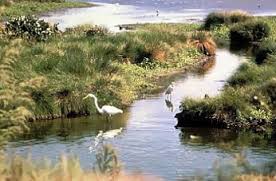
What level of organization can be seen here?

a)

Species

b)

Population

c)

Community

d)

Ecosystem

86.
What level of organization can be observed in the image?
a)
Species
b)
Population
c)
Community
d)
Ecosystem
87.

Which of the following levels of organization is the most complex?

a)

organism

b)

population

c)

community

d)

ecosystem

88.
Multiple organisms of the same species describes a
a)
organism
b)
population
c)
community
d)
ecosystem
89.
A __________ includes all living and non-living things in an environment. 
a)
population
b)
niche
c)
abitotic
d)
ecosystem
90.
Identify the examples as: a organism, population, community, or ecosystem.
A beautiful butterfly.
a)
Organism
b)
Population
c)
Community
d)
Ecosystem
91.
Identify the examples as: a organism, population, community, or ecosystem.
Water, Fish, Turtles, Oxygen, Rocks and Moss interacting in a river system.
a)
Organism
b)
Population
c)
Community
d)
Ecosystem
92.
Identify the examples as: a organism, population, community, or ecosystem.
Chicken, Cow, Grass, Buffalo, and Mouse living on farmland.
a)
Organism
b)
Community
c)
Population
d)
Ecosystem
93.
All organisms of the same species living in the same area.
a)
Population
b)
Community
c)
Ecosystem
d)
Organism
94.
A large geographical area that is characterized by its climate, flora (plants), and fauna (animals).
a)
Biome
b)
Ecosystem
c)
Habitat
d)
Community
95.
All of the different biotic organisms found in the same area.
a)
Organism
b)
Population
c)
Community
d)
Ecosystem
96.
Identify the examples as: a organism, population, community, or ecosystem.
All speckled sting-ray that live in the Pacific Ocean
a)
Organism
b)
Population
c)
Community
d)
Ecosystem
97.
The study of organisms and how they interact with one another and their environment is best described as
a)
Biology
b)
Ecology
c)
Zoology
d)
Botany
98.
The study of organisms and how they interact with one another and their environment is best described as
a)
Biology
b)
Ecology
c)
Zoology
d)
Botany
99.
The smallest unit of life that can sustain itself is called...
a)
an organism.
b)
the biosphere.
c)
a population.
d)
a community.
100.

A group of the same organisms living together in the same place at the same time is:

a)

An organism

b)

A population

c)

A community

d)

A biome

101.

What are groups of different populations living togther in the same place at the same time called?

a)

An organism

b)

A population

c)

A community

d)

A biosphere

102.
A __________ includes all living and non-living things in an environment. 
a)
population
b)
niche
c)
abitotic
d)
ecosystem
103.
Identify the examples as: a organism, population, community, or ecosystem.
A beautiful butterfly.
a)
Organism
b)
Population
c)
Community
d)
Ecosystem
104.
Identify the examples as: a organism, population, community, or ecosystem.
Water, Fish, Turtles, Oxygen, Rocks and Moss interacting in a river system.
a)
Organism
b)
Population
c)
Community
d)
Ecosystem
105.

Water temperature would be an example of ...

a)

a biotic factor.

b)

an abiotic factor.

106.
A collection of organisms that belong to different populations but all live in the same area and interact with one another.
a)
Population
b)
Ecosystem
c)
Community
d)
Ecosphere
107.
A place where an organism lives.
a)
Terrain
b)
Habitat
c)
Community
d)
Population
108.

A collection of organisms that make up a community as well as all of the nonliving components of the environment.

a)

Population

b)

Community

c)

Habitat

d)

Ecosystem

109.
Nonliving factor that affects an ecosystem...
a)
biotic factor
b)
abiotic factor
c)
food chain 
d)
biome
110.

Living factors or organisms that affect an ecosystem...

a)

abiotic factors

b)

species

c)

trophic level

d)

biotic factors

111.
Nonliving factor that affects an ecosystem...
a)
biotic factor
b)
abiotic factor
c)
food chain 
d)
biome
112.

Living factors or organisms that affect an ecosystem...

a)

abiotic factors

b)

species

c)

trophic level

d)

biotic factors

113.

Living factors or organisms that affect an ecosystem...

a)

abiotic factors

b)

species

c)

trophic level

d)

biotic factors

114.

What are the biotic factors in this image?

a)

sunlight, elephants, grasses

b)

sunlight, water, oxygen

c)

elephants, autotrophs, food supply

d)

precipitation, heterotrophs, soil

115.

What are the abiotic factors in this image?

a)

water, sunlight, dirt

b)

birds, plants, predators

c)

water, plants, parasites

d)

oxygen, water, grasses

116.
An ecosystem contains living and nonliving things.
a)
True
b)
False
117.
Which of the following is a population?
a)
hawks, barred owls, and eagles on NC coast
b)
mountain stream
c)
all the frogs in a pond
d)
blue-tailed skinks (lizards) around a barn
118.

Which of the following best illustrates a population?

a)

all the largemouth bass in Kerr Lake

b)

a freshwater marsh

c)

a oak-history hardwood forest

d)

all the honeybees, bald-faced hornets and western yellow jackets in a deciduous forest

119.
What level of organization can be seen here?
a)
Species
b)
Population
c)
Community
d)
Ecosystem
120.
TRUE or FALSE: An ecosystem contains only biotic factors.
a)
TRUE
b)
FALSE
121.
What level of organization can be observed in the image?
a)
Species
b)
Population
c)
Community
d)
Ecosystem
122.
Which is an example of a biotic factor?
a)
The sun
b)
Water
c)
Grass
d)
Rocks
123.
Which is an example of an abiotic factor?
a)
Grass
b)
Trees
c)
Rain
d)
Birds
124.
The study of organisms and how they interact with one another and their environment is best described as
a)
Biology
b)
Ecology
c)
Zoology
d)
Botany