wayground logo

Free Printable Worksheets

Font size

S
M
L
XL
Worksheets

Comprehensive review

Total questions: 110

Worksheet time: 2hrs 11mins

Name
Class
Date
1.
all matter is made of what 
a)
energy 
b)
atoms 
c)
electrons 
d)
compounds 
2.
the central region of an atom where its neutrons and protons are is its 
a)
nucleus 
b)
electron cloud
c)
core 
d)
center 
3.
The positive particles of an atom are 
a)
electrons 
b)
positrons 
c)
neutrons 
d)
protons 
4.
Particles in an atom that are neutral and have no charge are 
a)
negatrons 
b)
electrons 
c)
neutrons 
d)
protons 
5.

An atom's overall charge is

a)

positive

b)

depends on its mood

c)

neutral

d)

negative

6.
What is the atomic number for an element with three protons?
a)
2
b)
1
c)
3
d)
6
7.
Which statement about the atomic nucleus is correct?
a)
The nucleus is made of protons and neutrons and has a negative charge
b)
The nucleus is made of protons and neutrons and has a positive charge
c)
The nucleus is made of electrons and has a positive charge
d)
The nucleus is made of electrons and has a negative charge
8.
Which statement best describes an electron?
a)
Smaller mass than a proton and a negative charge
b)
Smaller mass than a proton and a positive charge
c)
Greater mass than a proton and a negative charge
d)
Greater mass than a proton and a positive charge
9.

Vertical columns on the periodic table are called ___?

a)

groups

b)

periods

c)

rows

d)

families

10.

Horizontal rows on the periodic table are called ___?

a)

groups

b)

periods

c)

rows

d)

families

11.

atomic number

a)

gas at room temperature, low boiling point

b)

a subatomic particle that has a negative charge

c)

number or protons and neutrons

d)

the number of protons in the nucleus of an atom

12.

Why do elements get organized into the vertical columns on the periodic table?

a)

They are placed in the same group based on having the same size.

b)

They are placed in the same group because they have the same properties.

13.

___________ are the smallest unit of an element that maintains the properties of that element.

a)

Atoms

b)

Elements

c)

Compounds

d)

Mixtures

14.

An _______________ is made up of one or more of the same kind of atom chemically combined.

a)

atom

b)

element

c)

molecule

d)

compound

15.

A ______________ is made up of different kinds of atoms chemically combined.

a)

element

b)

compound

c)

mixture

d)

molecule

16.

A _____________ contains a variety of elements and compounds that are not chemically combined with each other.

a)

compound

b)

element

c)

molecule

d)

mixture

17.

A ______________ mixture is one that does not have a uniform composition.

a)

heterogeneous

b)

homogenous

c)

pure substance

18.

A _________________ mixture is one where the substances are evenly spread throughout.

a)

heterogeneous

b)

homogeneous

c)

pure substance

19.

In a ______________, one substance is dissolved in another substance.

a)

solution

b)

suspension

c)

colloid

20.

Tea and air are examples of ________________.

a)

solutions

b)

suspensions

c)

colloids

21.

Fruit Loops, pizza, and Skittles are examples of ____________________ mixtures.

a)

heterogeneous

b)

homogeneous

c)

pure

22.

Coffee, mouthwash, and vinegar are examples of __________________ mixtures.

a)

heterogeneous

b)

homogeneous

c)

pure

23.
Which of the following tells you that a chemical change may have occurred?
a)
Change Shape
b)
Melting
c)
Vaporizing
d)
Change in color
24.
What happens in ALL chemical changes?
a)
Change in state of matter
b)
A new substance is formed
c)
Bubbles are produced
d)
An explosion
25.
Is wood burning a physical or chemical change?
a)
Physical 
b)
Chemical
26.
Is Gatorade powder dissolving in water physical or chemical change?
a)
Physical 
b)
Chemical
27.
Is mold growing on cheese a physical or chemical change?
a)
Physical 
b)
Chemical
28.
Is sharpening a pencil a physical or chemical change?
a)
Physical 
b)
Chemical
29.
Is the formation of the grand canyon a physical or chemical change?
a)
Physical 
b)
Chemical
30.
The Law of Conservation of Mass tells us matter can't  ______________.
a)
change color
b)
change state of matter
c)
be created or destroyed
d)
change temperature
31.
Why does ice float?
a)
Liquid water is less dense than solid water.
b)
Solid water is less dense than liquid water.
c)
Gaseous water is less dense than solid water.
d)
Liquid water is less dense than gaseous water.
32.
What do we know about the density of lamp oil, rubbing alcohol, and vegetable oil?  
a)
The density is greater than 1.0 g/mL
b)
The density is less than 1.0 g/mL
c)
The density is equal to 1.0 g/mL
d)
The density can not be determined
33.
Jack has a rock. The rock has a mass of 14 g and a volume of 2 cm3. What is the density of the rock?
a)
7 mL
b)
7 g/cm3
c)
28 g/cm3
d)
1/7 g/cm3
34.
Frank has an eraser. It has a mass of 4 g, and a volume of 2 cm3. What is its density?
a)
8 g/cm3
b)
2 g/cm3
c)
1/2 g/cm3
d)
24 g/cm3
35.
Which substance is the MOST dense?  ** Use the key
a)
A
b)
B
c)
C
d)
Cannot be determined by the data provided.
36.
An object that allows heat or electricity to pass through easily is a
a)
Insulator
b)
Conductor
37.

Which of the following statements is true concerning acids and bases?

a)

acids and bases don't react with each other

b)

acids mixed with bases neutralize each other

c)

acids mixed with bases make stronger bases

d)

acids mixed with bases make stronger acids

38.

Neutral solutions have a pH of:

a)

0

b)

1

c)

7

d)

14

39.

Which is true?

a)

pH of less than 7 is basic; pH of more than 7 is acidic

b)

pH of less than 7 is acidic; pH of more than 7 is basic

40.
A(n) ______ is a substance with a pH less than 7
a)
Acid
b)
Alkaline
c)
Base
d)
Buffer
41.
A(n) _______ is a substance with a pH greater than 7.
a)
Base
b)
Acid
c)
Buffer
d)
Water
42.

In a test of pH levels, a baking soda has a pH of 9 and bleach has a pH of 12. What is true about there relationship?

a)

Both of the solution are Bases

b)

Both of the solution are Acids

c)

The Baking soda is an acid and the Bleach is a base

d)

The baking soda is a base and the Bleach is an Acid.

43.

Which of the following statements best describes the term photosynthesis?

a)

When plants absorb the energy from the sun.

b)

How plants reproduce.

c)

The process by which plants make their own food.

d)

The process by which animals make their own food.

44.

Which of the following substances are needed to make carbohydrates?

a)

Hydrogen

b)

Oxygen

c)

Carbon

d)

All of the above.

45.

The process of photosynthesis takes place in the:

a)

Leaves of the Plant.

b)

Stem of the plant.

c)

Roots of the plant.

d)

All of the above.

46.
What do plants give off after photosynthesis?
a)
Oxygen
b)
carbon
c)
nitrogen
d)
hydrogen
47.
Plants need ________from the air for photosynthesis
a)
oxygen
b)
soil
c)
carbon dioxide
d)
sugar
48.
The products of photosynthesis are
a)
water and carbon dioxide
b)
oxygen and water
c)
sugar and cabon dioxide
d)
oxygen and sugar (glucose)
49.

Why are plants important to life on Earth?

a)

They make our world more beautiful and healthy

b)

They make the planet look green

c)

They use carbon dioxide and give us oxygen and food

d)

They provide shade for insects and habitat for other animals

50.
Which of the following best describes the tilt of the earth when it is summer in the southern hemisphere?
a)
The northern hemisphere is tilted toward the sun
b)
The northern hemisphere is tilted away from the sun
c)
The norther hemisphere is tilted neither toward or away from the sun
d)
Why are you talking about the northern hemisphere when you asked about the southern hemisphere?
51.
What effect does the tilt of the earth have?
a)
It changes the angle that the sun strikes the earth in different land areas
b)
It causes the earth to be farther away from the sun at different times of the year
c)
When the earth is tilted away from the sun we have night
d)
When the earth is tilted away from the sun we have day
52.
Why does the area around the equator stay the same temperature all year?
a)
The equator rotates slower than the poles.
b)
The equator remains the same distance from the sun.
c)
The equator always receives direct sunlight.
d)
The equator has 18 hour days.
53.
One rotation of Earth is equal to
a)
a day.
b)
a year.
54.
Where on Earth can you experience entire days of darkness?
a)
The equator
b)
The poles
c)
The Tropic of Cancer
d)
The Tropic of Capricorn
55.
During the phases of the Moon, the Moon appears to change shape.  This change in appearance is due to the Moon...
a)
physically changing size and shape.
b)
moving closer and then farther away from Earth.
c)
reflecting a different amount of light due to alignment with Earth and the Sun.
d)
having craters on its surface.
56.
About how long does it take the moon to make one complete cycle around the earth?
a)
65 days
b)
8 days
c)
365 days
d)
28 days
57.
Which moon phase is when you can't see the moon at all?
a)
Waning crescent
b)
Full moon
c)
Waxing gibbous
d)
New moon
58.
What is a way of describing how the moon looks during the quarter phase?
(this is the tricky one)
a)
Invisible
b)
A Pizza Pie
c)
A Half
d)
A Thin Banana
59.
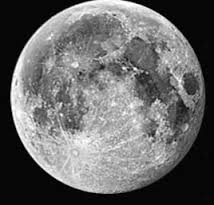
Name the moon phase
a)
First Quarter
b)
Last Quarter
c)
New Moon
d)
Full Moon
60.
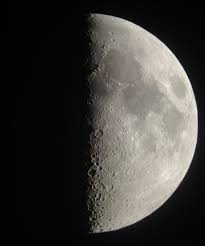
Name the moon phase
a)
First Quarter
b)
Last Quarter
c)
New Moon
d)
Full Moon
61.
When does a lunar eclipse occur?
a)
At night
b)
When the moon's shadow is on the earth
c)
when the moon comes between the sun and earth
d)
During the day
62.
A solar eclipse only happens during a ________ moon.
a)
New
b)
Cresent
c)
Gibbous
d)
Full
63.
A lunar eclipse only happens during a ________ moon.
a)
New
b)
Cresent
c)
Gibbous
d)
Full
64.
Where must you be to see a total solar eclipse?
a)
a corona
b)
an orbit
c)
the moon's shadow
d)
the earth's shadow
65.
In order to have an eclipse, the Moon, Sun and Earth have to be?
a)
Below each other
b)
Above each other
c)
In alignment
66.
Which type of eclipse occurs when the Moon comes directly between Earth and the Sun?
a)
Lunar eclipse
b)
Solar eclipse
67.
A lunar eclipse occurs when the Moon casts a shadow on Earth.
a)
True
b)
False
68.
What is a difference between spring and neap tides?
a)
Spring tides occur when the earth and sun are IN LINE with the new or full moon. 
b)
Spring tides occur when moon in 3rd or 1st quarter phases
c)
Spring tides are LOWER than neap tides
69.
Which body has the greater effect on Earth's tides?
a)
Sun
b)
Saturn
c)
Moon 
d)
Venus
70.
When the moon is at full moon or new moon, what type of tide will we experience?
a)
rip tide
b)
spring tide
c)
neap tide
d)
breaker tide
71.

Wha type of tide would this arrangement of earth-moon-sun create?

a)

full moon tide

b)

new moon tide

c)

neap tide

d)

spring tide

72.

What two things determine the gravity of an object?

a)

mass & weight

b)

mass & distance

c)

density & mass

d)

volume & distance

73.

When will the forces of gravity between two objects be the GREATEST?

a)

when the masses of both objects are small and the objects are far apart

b)

when the masses of both objects are large and the objects are close together

c)

when the masses of both objects are small and the objects are close together

d)

when the masses of both objects are large and the objects are far apart

74.

When will the gravity between two objects be the LEAST?

a)

when the masses of both objects is small and the objects are close together

b)

when the masses of both objects is small and the objects are far apart

c)

when the masses of both objects is large and the objects are close together

d)

when the masses of both objects is large and the objects are far apart

75.

Which statement about gravity is true?

a)

gravity causes objects to pull towards one another

b)

gravity causes objects to push away from each other

c)

gravity only takes place between planets

d)

the moon doesn't have any gravity

76.

What is the biggest difference between the Geocentric Model and the Heliocentric Model?

a)

the shape of the planets' orbits

b)

the movement of the moon

c)

the center of the solar system

77.
  What does "geo-" mean?
a)
Earth
b)
sun
c)
Center
78.
Which planets have no natural satellites?
a)
Earth & Mars
b)
Jupiter & Saturn
c)
Mercury & Venus
d)
Mercury & Mars
79.
What are the rings around planets made of? 
a)
ice
b)
rocks
c)
dust
d)
all of the answer 
80.
What is the difference between the inner planets and the outer planets?
a)
The outer planets are smaller than the inner planets 
b)
The inner planets are smaller than the outer planets
c)
The outer planets have more rocks than the inner planets
d)
the inner planets are heavier than  the outer planets
81.
The gas giants are different from the terrestrial planets because they
a)
have smaller atmospheres
b)
are less dense
c)
have larger atmospheres
d)
are more colorful
82.
The inner planets are called terrestrial planets because they are composed of
a)
water
b)
gas
c)
frozen surfaces
d)
rocks
83.
One factor that makes life possible on Earth is
a)
an atmospher
b)
water
c)
greenhouse effect
d)
gravity
84.
Which planet is the hottest planet because of its clouds?
a)
Venus
b)
Earth
c)
Mars
d)
Pluto
85.
What celestial body is made of ice and cosmic dust?
a)
Meteor
b)
Meteoroid
c)
Asteroid
d)
Comet
86.

What are large chunks of rocks and metal in space?

a)

Earth

b)

comet

c)

asteroids

d)

gibbous

87.
What pulled the matter towards the center of the nebula as the solar system was forming?
a)
inertia
b)
heat
c)
pressure
d)
gravity
88.
Which statement best describes a planetesimal?
a)
small body in space that revolves around a star
b)
a dwarf planet
c)
bodies in space that collide together to form planets
d)
moons
89.
The closer a planet is to the sun...
a)
the faster it travels
b)
the slower it travels
90.
What is a common characteristic of the inner  planets?
a)
Gaseous
b)
Distance between them is longer
c)
Rings
d)
Distance between them is shorter
91.
All planets have the following characteristics EXCEPT
a)
They rotate
b)
They revolve
c)
They have an atmosphere
d)
They have elliptical orbits
92.
A ball of ice and dust with a tail of gas and dust pointing away from the sun.
a)
Asteroid
b)
Comet
c)
Moon
d)
Meteor
93.
A small object that appears as a streak of light as it enters earth's atmosphere.
a)
Asteroid
b)
Comet
c)
Moon
d)
Meteor
94.
A natural satellite of a planet.
a)
Asteroid
b)
Comet
c)
Moon
d)
Meteor
95.

A prediction that can only be supported or not supported by scientific experimentation.

a)

hypothesis

b)

theory

c)

law

96.

Explains something we see in the natural world that has been verified through repeated experiments or testing.

a)

hypothesis

b)

law

c)

theory

97.

A ___ is observed and describes in the natural world what appears to always be true.

a)

hypothesis

b)

theory

c)

law

98.

Select ALL that both theories and laws have in common.

a)

based on empirical evidence

b)

supported by a large amount of data

c)

revised or updated with new evidence

d)

happens under very specific conditions in nature

99.

Explains HOW nature works.

a)

hypothesis

b)

theory

c)

law

100.

A theory can be supported by enough empirical evidence to become a law.

a)

True...with enough new empirical evidence by scientists.

b)

False...it can never be a law.

101.

the ONE variable that is changed or manipulated

a)

control

b)

independent

c)

dependent

d)

super variable

102.

dependent variable

a)

the one variable that is changed/manipulated

b)

the group that is kept the SAME

c)

what is being measured/observed, the DATA

103.

Controlled Variable

a)

the ONE thing that is changed

b)

the DATA, what is being measured or observed

c)

the "normal" group, regular situation

104.

A scientist is testing the impact of light and dark on moth behavior by turning a light on and off. The INDEPENDENT variable is...

a)

the moth's reaction

b)

the amount of light

c)

the temperature of the room

105.

In a study to determine how the TEMPERATURE OF THE ROOM impacts a PLANT'S GROWTH, the DEPENDENT variable is...

a)

amount of growth

b)

type of plant

c)

the temperature of the room

d)

amount of light

106.

This is an example of...

a)

independent

b)

dependent

c)

control

107.
Scientists have MANY trials so their results are 
a)
countable
b)
graphable
c)
reliable
d)
hard to understand
108.
When a another scientist does someone's experiment to see if the results are valid?
a)
repetition
b)
replication
c)
experimental method
d)
controlled variable
109.
Ryan is testing golf balls. He drops three different brands of balls from 40 cm and measures how high they bounce. He drops each ball 10 times.
a)
repetition
b)
replication
110.

What happens if the results of a scientist's experiment are NOT similar to the results gathered by other scientists doing the same experiment at a later date?

a)

The results of the experiment are changed by the scientists.

b)

The results of the experiment are published in scientific journals.

c)

The results of the experiment are questioned by the other scientists.

d)

The results of the experiment are accepted by the scientific community.