
 Worksheets
Wave characteristics
Total questions: 108
Worksheet time: 1hrs 7mins

What is a wave ?
a disturbance that transfers matter
a disturbance that transfers energy
a disturbance that transfers both matter and energy

The highest point or peak of a transverse wave, point B and F, is the ________________ .
trough
amplitude
crest

The lowest point or valley of a transverse wave, point D and point H, is the ......
wavelength
trough
crest

Amplitude , measurement Y, is a measure of how much __________ the wave has.
energy
speed
length

An area of bunched up particles (bottom blue arrow) in a longitudinal wave is an area of ________________ .
rarefaction (low pressure)
compression (high pressure)
amplitude (energy)

An area of spread out particles (bottom red arrow) of a longitudinal wave is an area of ________________.
rarefaction (low pressure)
compression (high pressure)
amplitude (energy)

A sound wave is a longitudinal wave
True
False
The length of a crest (peak) or trough measured from the middle line.
Wavelength
Frequency
Amplitude
Medium
The distance between any two crests (peaks) or troughs.
Frequency
Amplitude
Wavelength
Transverse
The number of times the wavelength occurs in one second, measured in units called hertz.
Amplitude
Wavelength
Medium
Frequency
Unit used to measure the frequency of wavelengths.
Amplitude
Hertz
Joule
Engergy
The number of waves that pass a fixed point in a given amount of time is...
frequency
wave speed
amplitude
wavelength
A wave with a large wavelength will have a ______ frequency and _____ energy
high, low
high, high
low, high
low, low

The bottom part of the wave is called trough.
True
False

What do all waves transfer?
Matter
Heat
Electricity
Energy

What is the number of complete waves passing a fixed point in a given amount of time?
Amplitude
Intensity
Wavelength
Frequency

What is frequency measured in?
Milliseconds
Miles
Hertz
Kilograms

What is the distance between the calm sea and the highest wave called?
Wave
Frequency
Amplitude
Magnitude

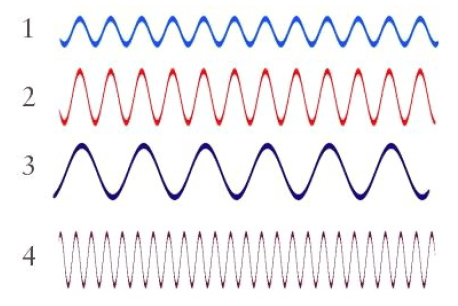
What does #1 represent?
Period
Frequency
Wavelength
Amplitude

What does #2 represent?
Period
Frequency
Wavelength
Amplitude

What does #3 represent?
Period
Frequency
Wavelength
Amplitude
_____ waves NEED a medium to travel.
Seismic
Light
Mechanical
The distance in between two waves.
wave speed
frequency
wavelength
Frequency is always measured in _________
kilometers
Hertz
centimeters
the number of waves that pass a certain point.
wave speed
frequency
when a wave hits a barrier and bounces
diffraction
reflection

This is a high frequency wave. Which part of the wave is "B"
crest/peak
wavelength
trough

Look at this wave. "A" is which part of a wave?
Crest/Peak
Wave Speed
Resting Point

Which wave has the longest wave length?
top wave
bottom wave


As wavelength decreases, the crests of the wave:
become wider
become shorter
get closer together
get farther apart
If a wave has a long wavelength, it will have __________ energy.
High
Medium
Low
If a wave has a short wavelength, it will have __________ energy.
High
Medium
Low
If a wave has a high frequency, it will have __________ energy.
High
Medium
Low
If a wave has a high amplitude, it will have __________ energy.
High
Medium
Low
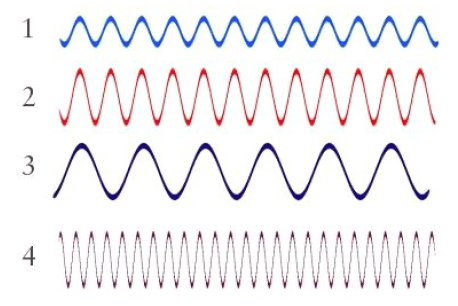

A wavelength is the distance between which 2 points?
B and G
A and C
C and F
A and H
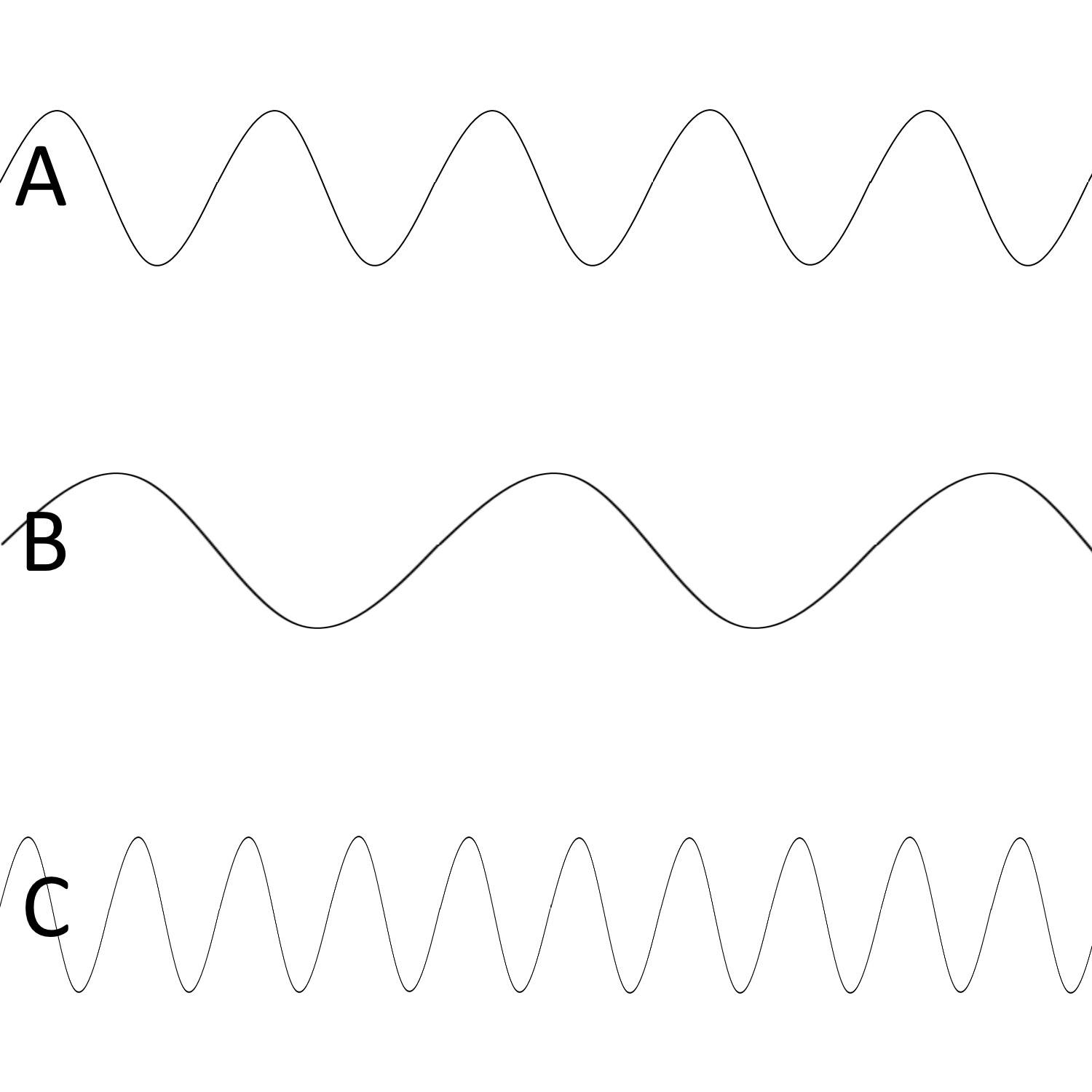

What does a wave carry from place to place?
energy
matter
people
The highest point on a transverse wave is the
compression
crest
rest position
trough
The lowest point on a transverse wave is the
compression
crest
rest position
trough
The number of waves that pass somewhere in a second is:
amplitude
frequency
wavelength
The distance between two corresponding parts of a wave is its
amplitude
frequency
wavelength
velocity
The height of the wave from its resting point is called its
wavelength
amplitude
velocity
frequency
Longitudinal waves have:
crests and troughs
crests and compressions
compressions and rarefactions
troughs and rarefactions

What is the relation between the frequency of electromagnetic waves and their wavelength?
Higher frequency= Higher wavelength
Higher frequency= Lower wavelength
Lower frequency = Lower wavelength

Which wave has more energy? Why?
Top wave because the amplitude is smaller
Bottom wave because the amplitude is larger
They are the same because the wavelengths are equal
What is the definition reflection?
The bending of waves as they enter a new medium
Bouncing back of waves from a surface that it can’t pass through
The bending of waves as they pass through openings or around corners
When two interfering waves have a displacement in the same direction, two crests and two troughs overlap. Increased amplitude.
What is the definition of Refraction?
The bending of waves as they enter a new medium
When two interfering waves have a displacement in the opposite direction, crest and trough overlap. Zero amplitude.
When two interfering waves have a displacement in the same direction, two crests and two troughs overlap. Increased amplitude.


Example(s) of Reflection
Echo
Echo location
rough surface
smooth surface
bouncing
What is the definition of Diffraction?
The bending of waves as they enter a new medium
Bouncing back of waves from a surface that it can’t pass through
When two interfering waves have a displacement in the opposite direction, crest and trough overlap. Zero amplitude.
The bending of waves as they pass through openings or around corners
Waves transfer
energy only
matter only
energy and matter
nothing
The frequency of sound waves determine
quality
type of interference
pitch
loudness
As a wavelength increases, the frequency
decreases
increases
stays the same
fluctuates up and down
The same sound will seem louder if it travels through which of the following?
solid materials
liquids
air
solids, liquids, or gases will sound the same
True or False: Sound needs a medium.
True
False
The speed of sound depends on these two things:
The type of medium and the temperature of the medium
Speed of the medium and temperature of the medium
Temperature of the medium and sound of the medium
None of the above

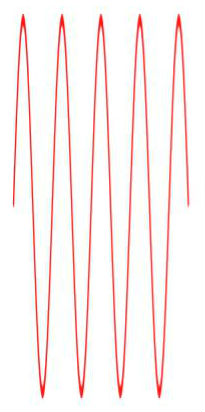
Which sound wave shows the sound with the highest pitch?
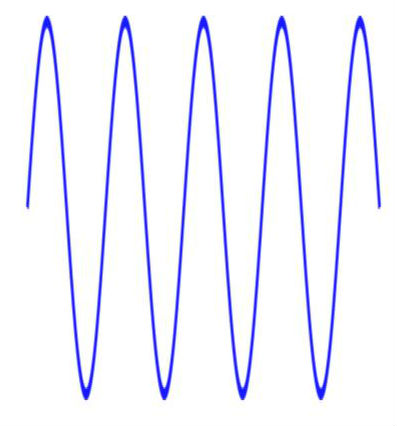
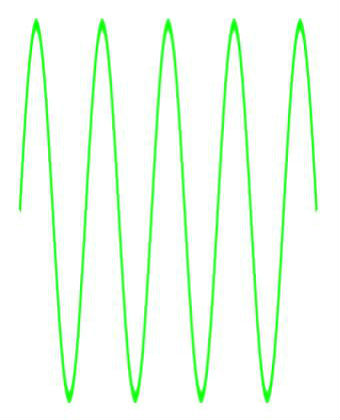
Sound waves cannot travel in
steel
air
a vacuum
water
True or False: Sound waves are faster than light.
False
True
The Tacoma Narrows Bridge, musical instruments, and crystal stemware are examples of -----
Frequency
Resonance
Interference
Speed
Sound waves travel the fastest through ---
Liquids
Gases
Solids
Sound waves from a classroom pass through a doorway into the hallway. This is possible because of __________.
diffraction
resonance
reflection
compression
The pitch of a sound is directly related to the sound's _______.
amplitude
loudness
frequency
intensity
The loudness of a sound is directly related to the wave's _____.
wavelength
frequecy
rest position
amplitude
When a wave has less energy the sound will be _________.
quieter
silent
louder
higher
The unit Hertz is used to measure the waves _______.
frequency
wavelength
loudness
amplitude
______________ of waves is measured in decibels. (dB)
frequency
pitch
wavelength
loudness

This illustration demonstrates which wave property?
diffraction
frequency
amplitude
Doppler Effect
Resonance occurs when
energy is transferred between 2 objects vibrating at different frequencies
energy is transferred between 2 objects vibrating at the same natural frequency
energy is transferred between 2 objects via heat
energy is transferred between 2 objects via gravity
How can resonance break an object?
forcing an object to vibrate at its natural frequency for a short time
forcing an object to vibrate at different frequencies for a short time
forcing an object to vibrate at different frequencies for a longtime
forcing an object to vibrate at its natural frequency for a long time

