wayground logo

Free Printable Worksheets

Font size

S
M
L
XL
Worksheets

Earth's Layers

Total questions: 111

Worksheet time: 2hrs 14mins

Name
Class
Date
1.
What is the outermost layer of earth?
a)
inner core
b)
outer core
c)
mantle
d)
crust
2.

This layer of Earth is solid iron and nickel

a)

Outer Core

b)

Mantle

c)

Inner Core

d)

Crust

3.
The liquid portion at the center of the Earth.
a)
Asthenosphere
b)
Inner Core
c)
Outer Core
d)
Lithosphere
4.
The lithosphere is made up of which two layers?
a)
Upper and Lower Mantle
b)
Upper Mantle and Crust
c)
Core and Mantle
d)
Crust and Uppermost Mantle
5.
Which layer is the thinnest, least dense and most brittle?
a)
Mantle
b)
Inner Core
c)
Crust
d)
Outer Core
6.
What is the name of the layer that contains the uppermost mantle and crust
a)
Asthenosphere
b)
Mesosphere
c)
Lithosphere
d)
Transosphere
7.
This layer of Earth is the thickest part
a)
crust
b)
outer core
c)
mantle
d)
inner core
8.

Is the outer core solid or liquid?

a)

solid

b)

liquid

9.
Identify layer  #20.
a)
mantle
b)
pizza crust
c)
inner core
d)
outer core
10.
Which layer is made of the most solid rock?
a)
inner core
b)
outer core
c)
mantle
d)
crust
11.
Which layer has the coolest temperatures?
a)
outer core
b)
inner core
c)
mantle
d)
crust
12.
Which layer has the hottest temperatures?
a)
inner core
b)
outer core
c)
mantle
d)
crust
13.
Which layer is the least dense?
a)
inner core
b)
outer core
c)
mantle
d)
crust
14.

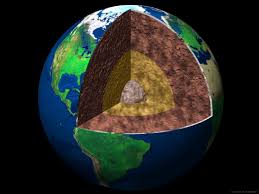
Which layer is represented by the yellow layer?

a)

inner core

b)

outer core

c)

mantle

d)

crust

15.
Which statement is correct?
a)
As you move up through the layers, the pressure increases.
b)
As you move down through the layers pressure increases.
c)
As you move down through the layers, pressure decreases.
d)
As you move up down through the layers, pressure remains the same.
16.
What happens to temperature as you move down through the layers?
a)
it remains the same
b)
it increases then decreases
c)
it increases
d)
it decreases
17.
Which layer of Earth is located above the outer core?
a)
crust
b)
inner core
c)
mantle
d)
lithosphere
18.
Which of these two layers is a solid?
a)
innercore
b)
Outercore
19.
What is the top layer of the Earth's surface called? 
a)
Mantle
b)
Innercore
c)
Outercore
d)
Crust
20.
A dense ball of solid iron and nickel.
a)
crust
b)
inner core
c)
mantle 
d)
outer core
21.
Which best describes the asthenosphere?
a)
molten metal
b)
dense, solid metal ball
c)
solid that flows
d)
dry land and ocean floor
22.
Which layer of Earth is located above the outer core?
a)
crust
b)
inner core
c)
mantle
d)
lithosphere
23.
Which layer of the earth is rock made mostly of iron?

a)
Lithosphere
b)
Core
c)
Asthenosphere
d)
Mantle
24.
What part of the earth is a layer of rock that comprises 67% of Earth’s mass?
a)
mesosphere
b)
mantle
c)
asthenosphere
d)
lithosphere
25.
What is the rigid layer of the Earth's surface made up of the  crust and upper mantle called?
a)
asthenosphere
b)
lithosphere
c)
mesosphere
d)
continental crust
26.
How many layers of the Earth's CORE are there?
a)
one
b)
two
c)
three
d)
four
27.
Temperature _____________________ as you go deeper into the earth.
a)
increases
b)
decreases
c)
goes up and down depending on the layer
d)
stays the same
28.
Pressure ______________________ as you go deeper into the Earth
a)
increases
b)
decreases 
c)
goes up or down depending on the layer
d)
stays the same
29.
Which layer of Earth is characterized by rock that is plastic, or soft enough to flow?
a)
asthenosphere
b)
crust
c)
lithosphere
d)
inner core
30.
What is the correct order (starting from the surface) of Earth's layers?
a)
crust, mantle, inner core, outer core
b)
mantle, outer core, inner core, crust
c)
inner core, outer core, mantle, crust
d)
crust, mantle, outer core, inner core
31.
Earth's inner core is
a)
a layer of hot rock
b)
a solid ball of iron and nickel
c)
a layer of liquid iron and nickel
d)
a layer of rock that forms Earth's outer skin
32.
Which layer of the earth is a pure liquid?
a)
crust
b)
mantle
c)
outer core
d)
inner core
33.
The soft layer of rock in the mantle that can act like a liquid and a solid is called the
a)
core
b)
asthenosphere
c)
lithosphere
d)
crust
34.
The crust and the uppermost mantle make up the solid layer of hard rock called the
a)
inner core
b)
asthenosphere
c)
lithosphere
d)
outer core
35.
How does temperature change as you move from the crust to the core?
a)
it gets cooler
b)
it gets hotter
c)
it stays the same
d)
the core is frozen
36.
What layer is shown by letter A?
a)
Crust
b)
Mantle
c)
Outer core
d)
Inner core
37.
What layer is shown by letter B?
a)
Crust
b)
Mantle
c)
Outer core
d)
Inner core
38.
What layer is shown by letter C?
a)
Crust
b)
Mantle
c)
Outer core
d)
Inner core
39.
What layer is shown by letter D?
a)
Crust
b)
Mantle
c)
Outer core
d)
Inner core
40.
This is the outermost, rigid layer of the Earth, made up of two parts, is divided into pieces call tectonic plates.
a)
Inner Core
b)
Asthensophere
c)
Lithosphere
d)
Outer Core
41.

Select the types of crust

a)

continental

b)

garlic butter

c)

oceanic

d)

volcanic

42.

This type of crust overlies the ocean basins

a)

continental

b)

crustal

c)

oceanic

d)

volcanic

43.

Oceanic crust is _____ than continental crust.

a)

denser

b)

less dense

44.

The ____ is the largest layer of the Earth

a)

inner core

b)

crust

c)

mantle

d)

outer core

45.

____ takes place in the mantle.

a)

conduction

b)

convection

c)

radiation

46.

The outer core is composed of what two elements?

a)

Iron and Nickel

b)

Iron and Helium

c)

Hydrogen and Helium

d)

Hydrogen and Nickel

47.

Which layer of Earth creates its magnetic field?

a)

inner core

b)

outer core

c)

mantle

d)

crust

48.
What layer of Earth do we live on?
a)
Crust
b)
Core
c)
Mantle
49.
What layer is the hottest?
a)
Core
b)
Crust
c)
Mantle
50.
If you traveled from the center of Earth to the surface, the pressure would...
a)
increase
b)
decrease
c)
stay the same
d)
unsure
51.
True or False: 
The Earth's thin shell of hard rock is called the crust.
a)
True
b)
False
52.
Which layer is made up of iron and nickel?
a)
Crust
b)
Mantle
c)
Inner Core
d)
Lithosphere
53.
What are the two types of crust?
a)
top crust,bottom crust
b)
oceanic crust, continental crust
c)
water,land
d)
none of the above 
54.
If we compare the temperature and pressure of the Earth’s mantle to the core, what differences can we expect as we move downward into the Earth?
a)
Both the temperature and pressure increase.
b)
Both the temperature and pressure decrease.
c)
The temperature increases and the pressure decrease.
d)
The temperature decreases and the pressure increases.
55.
What part of the crust is the arrow pointing to?
a)
Continental Crust
b)
Oceanic Crust
c)
Bread Crust
56.
What layer of Earth do we live on?
a)
Crust
b)
Core
c)
Mantle
57.
True or False:  The Earth's crust is made of rock
a)
True
b)
False
58.
True or False: The Earth's crust is thicker than the inner layers.
a)
True 
b)
False
59.
True or False: Roads, buildings and trees are found on Earth's crust.
a)
True
b)
False
60.
Scientists determine what Earth’s interior looks like by using:
a)
Volcanoes
b)
Seismic Waves
c)
Continental Drift
d)
Convection Currents
61.

Which layer has convection currents where the hot, less dense magma rises and the cooler, dense magma sinks?

a)

inner core

b)

outer core

c)

mantle

d)

crust

62.

Which layer is the most diverse containing silica, oxygen, aluminum, and magnesium?

a)

crust

b)

mantle

c)

outer core

d)

inner core

63.

What layer of Earth contains the plates that cause earthquakes and volcanic eruptions?

a)

The asthenosphere which is solid with the core.

b)

The asthenosphere which contains the crust and mantle.

c)

The lithosphere which contains the crust and outer core.

d)

The lithosphere which contains the crust and upper mantle.

64.

Where does Earth’s magnetic field get its energy from?

a)

The motion of the Earth's plates colliding with each other.

b)

The motion of the Earth's liquid core, which generates electric currents.

c)

The motion of the Earth's mantle which has convection currents.

d)

The motion of the Earth's rotation around the sun.

65.

How can you describe the “heat flow” or convection currents in the Earth’s mantle?

a)

When magma is heated by the core, it becomes dense and sinks. When magma cools, it becomes dense and rises.

b)

The heat flow in the mantle bubbles up under the surface causing the surface to be warm.

c)

When magma is heated by the core, it becomes less dense and rises. When magma cools, it becomes dense and sinks.

d)

Heat flow comes up through volcanoes making the Earth warm enough to sustain life.

66.

What is the hot, convecting layer that is located directly under the crust?

a)

mantle

b)

crust

c)

inner core

d)

outer core

67.

What creates both solid and liquid parts in the Earth’s core?

a)

Strong pressure and temperature

b)

The crust and mantle holding the heat inside the Earth

c)

Low pressure and temperature

d)

Strong pressure and low temperature

68.
Why is the Inner Core solid?
a)
Extreme Heat
b)
High Pressure
c)
All the layers are solid
d)
It's made of rock
69.
Which layer of the Earth is the most dense?
a)
crust
b)
mantle
c)
inner core
d)
outer core
70.
True or FalseThe most abundant elements in the Earth's crust are silicon and oxygen.
a)
True
b)
False
71.
The soft layer of the mantle on which the tectonic plates move
a)
Asthenosphere
b)
Outer Core
c)
Mantle
d)
Mesosphere
72.
What are the two kinds of crust that the Earth has?
a)
Oceanic and Crustatious Crust
b)
Oceanic and Continental Crust
c)
Optic and Continental Crust
73.
Which layer of Earth is characterized by rock that is plastic, or soft enough to flow?
a)
asthenosphere
b)
crust
c)
lithosphere
d)
inner core
74.
The partially melted portion of the mantle below the lithosphere
a)
mantle
b)
core
c)
crust
d)
asthenosphere
75.
The quality of being easily shaped or molded
a)
plasticity
b)
semi-solid
c)
lithosphere
d)
asthenosphere
76.
Having the qualities of both a solid and a liquid, exceptionally thick substance
a)
plasticity
b)
semi-solid
c)
asthenosphere
d)
lithosphere
77.
How many different type of crust are there?
a)
1
b)
2
c)
3
d)
4
78.
Some students use an apple to represent the Earth. What is the best reason to use an apple for this comparison?
a)
The skin of the apple is very thin, and the crust of the Earth is very thin.
b)
The flesh of an apple is made of the same material all the way through, and the interior of the Earth is the same all the way through.
c)
The seeds of the apple are very light in comparison to the rest of the apple, and the core of the Earth is also made of very light matter.
d)
The stem of the apple comes from the core and the North Pole comes from the Earth’s core.
79.
A student is building a model of the layers of the Earth. Which material would best represent the crust?
a)
group of magnetic balls
b)
styrofoam packing pellets
c)
bag of shredded paper
d)
thin layer of plaster
80.
Your teacher has asked you to make a model of the interior of the Earth. In your model, how do the thicknesses of the lithosphere and crust compare?
a)
The lithosphere is thinner than the crust.
b)
The lithosphere is exactly the same thickness as the crust.
c)
The lithosphere is thicker than the crust.
d)
The lithosphere is thicker than the oceanic crust, but thinner than the continental crust.
81.
Which layer of Earth has a consistency like silly-putty (or oobleck)?
a)
crust
b)
lithosphere
c)
asthenosphere
d)
inner core
82.
The deepest hole ever drilled is located in Kola, Russia. How deep is it?
a)
3.5 miles
b)
10.5  miles
c)
50 miles
d)
7.5 miles
83.
Which is thicker, continental or oceanic crust?
a)
continental
b)
oceanic
84.
What layer of the mantle is flexible like plastic?
a)
lithosphere
b)
asthenosphere
c)
lower mantle
85.
What layer of the mantle breaks into plates and is like the crust?
a)
lithosphere
b)
asthenosphere
c)
lower mantle
86.
From what rock is continental crust made?
a)
basalt
b)
granite
87.
From what rock is oceanic crust made?
a)
basalt
b)
granite
88.
Magma can be found in the __________________.
a)
Crust
b)
Mantle
c)
Outer Core
d)
Inner Core
89.
Oceans, plants, soil, and rocks make up the _____________.
a)
Crust
b)
Mantle
c)
Outer Core
d)
Inner Core
90.
The _____________ is the hottest layer at over 5000⁰C.
a)
Crust
b)
Mantle
c)
Outer Core
d)
Inner Core
91.
The _____________ found inside the Earth causes materials to be constantly moving.
a)
Nuclear Energy
b)
Thermal Energy
c)
Mechanical Energy
d)
Tectonic Energy
92.
The _____________ is made of solid rock and is the thinnest.
a)
Crust
b)
Mantle
c)
Outer Core
d)
Inner Core
93.
As you travel towards the inner core, the temperature and pressure ________________.
a)
Decreases
b)
Increases
94.

What is a word that essentially means "weak ball?"

a)

lithosphere

b)

asthenosphere

c)

lithologist

d)

geosphere

95.

Which form of heat transfer is in the asthenosphere and causes the tectonic plates to move around?

a)

conduction

b)

convection

c)

radiation

d)

condensation

96.

Which layer of Earth is broken up into tectonic plates?

a)

lithosphere

b)

asthenosphere

c)

mesosphere

d)

core

97.

Which layer(s) of Earth make up the lithosphere? Check all that apply.

a)

crust

b)

mantle

c)

outer core

d)

inner core

98.

Which layer(s) of Earth are made of less-dense materials such as silicates? Check all that apply.

a)

crust

b)

mantle

c)

outer core

d)

inner core

99.

Which of these are types of crust? Select all that apply?

a)

continental

b)

oceanic

c)

mantle

d)

plastic

100.

Why does Earth have different layers?

a)

different densities of the planet's materials

b)

different volumes of the planet's materials

c)

different masses of the planet's materials

d)

different colors of the planet's materials

101.

Which layer(s) of Earth are solids with plasticity? Check all that apply.

a)

lithosphere

b)

asthenosphere

c)

mesosphere

d)

inner core

102.
Which layer of Earth has the GREATEST density?
a)
crust
b)
mantle
c)
outer core
d)
inner core
103.

Which of the following models would best represent the inner and outer core of Earth, based on the physical characteristics of each layer?

a)

Rubber ball ( flexible solid) painted red (thin solid covering)

b)

A ball of clay (solid) filled with water (liquid)

c)

Gelatin (red semi-solid) on top of a cracker (brittle solid)

d)

A metal ball bearing (solid) suspended in oil (liquid)

104.

Oceans and other bodies of water are found on which layer of Earth?

a)

Outer Core

b)

Crust

c)

Mantle

d)

Inner Core

105.

The lithosphere is composed of rock that can be described as being

a)

flowing

b)

dense

c)

solid

d)

liquid

106.

A student constructs a clay model of Earth to show its layers. What property is the model able to share with the real Earth? The model will have layers that are the same-

a)

temperatures as the real Earth

b)

positions as the real Earth

c)

state of matter as the real Earth

d)

thickness as the real Earth

107.

Which is the best description of the characteristics of the asthenosphere?

a)

Solid, but flowing

b)

liquid, but dense

c)

hot, but solid metal

d)

brittle, but shifting

108.

Which layer of Earth is broken up into giant moving plates?

a)

Asthenosphere

b)

Inner Core

c)

Outer Core

d)

Lithosphere

109.

The lithosphere consists of the..

a)

upper mantle and the crust

b)

inner and outer core

c)

crust and the entire mantle

d)

lower mantle and the outer core

110.

Earth's crust would be best modeled by using a material that is-

a)

liquid and hot

b)

soft and flexible

c)

thin and solid

d)

dense and smooth

111.

Which is NOT part of the crust?

a)

Oceanic Crust

b)

Asthenosphere

c)

Continental Crust