
 Worksheets
Interim Assessment 1 Review
Total questions: 106
Worksheet time: 4hrs 32mins


What is the volume of the liquid in this graduated cylinder?
8.6 mL
8.65 mL
8.06 mL
.86 mL


Which unit would you use to measure the length of an ant?
millimeters
centimeters
meters
kilometers
The SI unit for mass is.....
grams
meters
pounds
liters
ounces
The SI unit for volume is.....
grams
meters
pounds
liters
ounces
The SI unit for length is.....
inches
meters
pounds
yards
ounces
Which is the process that breaks up rock on Earth’s surface?
deposition
melting
compaction
weathering
Geologists have classified rocks into three major groups of rocks which are:
inorganic, organic and chemical rocks
igneous, sedimentary and metamorphic rocks
metamorphic, chemical and non chemical rocks
sedimentary, inorganic and igneous rocks
Any rock that forms from another rock as a result of changes in heat or pressure (or both) is a:
chemical rock
igneous rock
sedimentary rock
metamorphic rock
Streak is the color of a mineral’s
fracture
luster
powder
cleavage
The process by which metamorphic rock changes to igneous rock begins with
melting
erosion
deposition
crystallization
If heat and pressure inside Earth cause the texture and crystal structure of a rock to change, what new material is formed?
sedimentary rock
metamorphic rock
igneous rock
chemical rock
A naturally occurring solid that can form by inorganic processes and that has a crystal structure and a definite chemical composition.
It´s a rock
It´s a crystal
It´s a mineral
It´s a substance
The particles of a mineral line up in a pattern that repeats over and over again with a pattern of a mineral’s particles that forms a translucent or transparent solid is a:
granite
crystal
solid
sand
All minerals are substances that where formed by
volcano activity
human intervention
natural processes
rock deposition
To be classified as a mineral, a substance must satisfy this
requirement
have a definite chemical composition
naturally occurring
be a solid
all the above


Scientists use mineral ________________ to identify and classify minerals.
pieces
names
properties
structures

Which one is not a property used to identify minerals?
streak
luster
hardness
size

Gold, silver and copper are examples of minerals that have ______________________ luster.
metallic
nonmetallic

-the name of the scale used to determine a mineral's hardness.
Miller's scale of hardness
The Scale of Hardness
Mohs scale of hardness
Mineral Hardness Scale

Which layer contains the ground we walk on?
atmosphere
lithosphere
hydrosphere
mesosphere
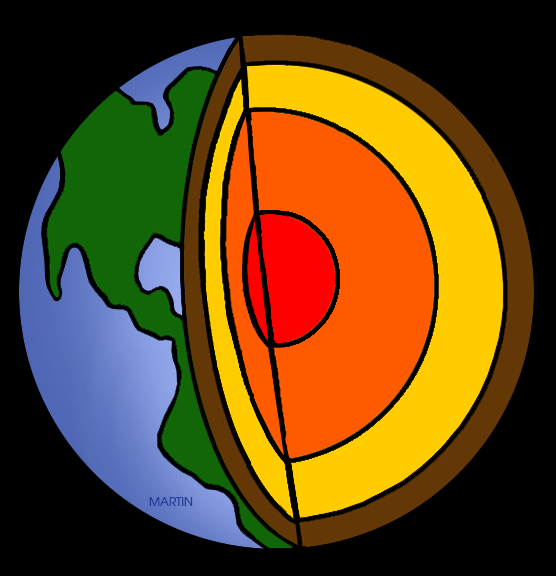
Which layer is shown in red?
crust
mantle
outer core
inner core

Which shows the order of the layers from COOLEST to HOTTEST?
crust, mantle, outer core, inner core
inner core, outer core, mantle, crust
crust, outer core, inner core, mantle
Trick question! All of the layers are the same temperature!

The movement of the tectonic plates is caused by
the rotation of the Earth.
convection currents in the Mantle
the gravity of the iron-nickel core.
the Moho discontinuity.
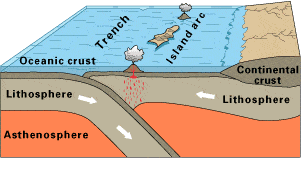
Observe this diagram of a plate boundary. One statement BEST describes what is happening. It is that
the oceanic crust is melting.
the denser oceanic crust is subducting under the less dense oceanic crust
volcanic islands are forming.
the tectonic plates are moving away from each other.
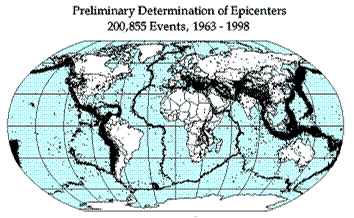
Earthquake epicenters (center of where the earthquakes started) were mapped for a 35 year period in the diagram above. The black dots indicate these epicenters. The black dots appear along what feature on Earth?
hot spots
plate boundaries
rift zones
sea floor spreading
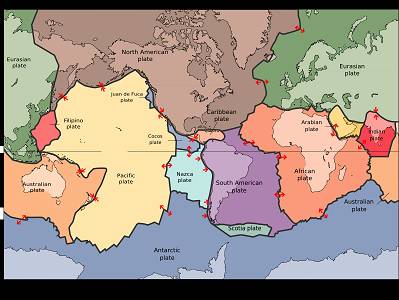
___________ currents in the Earth's mantle cause plate to shift at their boundaries. This movement also causes earthquakes and volcanic activity.
conduction
convection
radiation
ocean
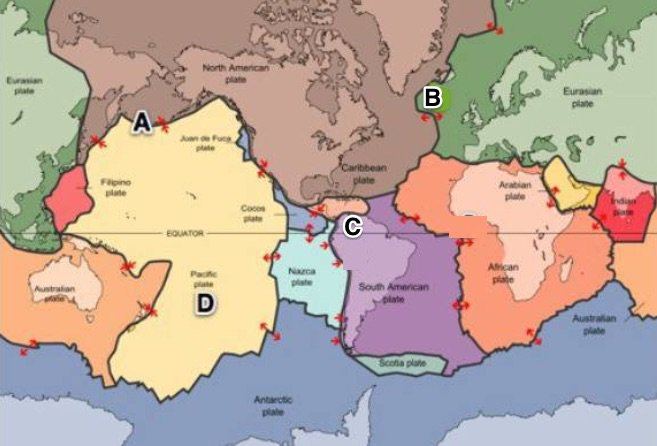
Where would sea floor spreading most likely occur?
At convergent boundaries (oceanic vs. oceanic)
At convergent boundaries (oceanic vs. continental)
At divergent plate boundaries (oceanic vs. oceanic)
At transform plate boundaries
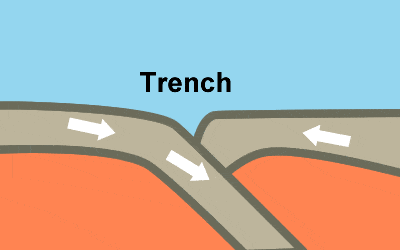
The Marianas Trench, where the Pacific Plate descends under the leading edge of the Eurasian Plate, is the deepest sea floor in the world. These ocean trenches form when two oceanic plates collide
at convergent plate boundaries
at divergent plate boundaries
at transform plate boundaries

