
 Worksheets
physical science review
Total questions: 103
Worksheet time: 1hrs 16mins

Which liquid is the most dense?
lamp oil
milk
soda cap
corn syrup
What is the best hypothesis for this situation?
What will be measured in the experiment?
What is the manipulated variable?

What is happening at segment B?
no motion/object at rest
constant speed
acceleration
What is happening at segment B?
no motion/object at rest
constant speed
acceleration

All changes in states of matter (boiling, melting, evaporation) are
chemical changes
physical changes
Space = ______________
Volume
Mass
Density
An object in motion will remain in motion until acted upon by an outside force or an object at rest will remain at rest until acted upon by an outside force.
weight
gravity
inertia
mass

Which object is the least dense?
soda cap
bolt
milk
ping pong ball

Which of the following has the greatest density?
A
B
C
Matter = _________________, measured with a ________________________
volume, triple beam balance
mass, triple beam balance
mass, graduated cylinder

What tool does the picture represent? What is the tool used to measure?
graduated cylinder, volume
graduated cylinder, mass
triple beam balance, volume

What is the volume of the green jade sample?
50.0 mL
60.5 mL
10.5 mL
110.5 mL

At what point does a liquid change to a gas?
freezing
vaporization (evaporation/boiling)
melting
condensation

At what point does a solid change to a liquid?
boiling
freezing
melting
condensation
What is the boiling point of water?
100oF
212oF
32oF

Which picture has no definite volume?
A
B
C

Which picture is a solid?
A
B
C

Which picture do the molecules move the fastest?
A
B
C


Any object or thing in the world is called ....
Stuff
Mass
Matter
Volume
If something is matter, it must have...
Mass and weight
Volume and weight
Mass and volume
Volume and size
The measure of how much material there is in an object is called..... (usually measured in grams or kilograms)
Mass
Volume
Size
Weight
The measure of how much space an object takes up is called its .....
Mass
Volume
Weight
Size-ola
Matter can be in 3 states. Which one is NOT a state of matter?
Solids
Liquids
Energy
Gases
Objects in which state of matter have a definite size and shape?
Solids
Liquids
Gases
Objects in which state of matter have a definite size or amount, but will take the shape of their container?
Solids
Liquids
Gases
Objects in which state of matter have no definite size (may be squeezed closer together), and will take the shape of their container?
Solids
Liquids
Gases
When a solid turns into a liquid, it's called...... (think ice to water)
Freezing
Melting
Condensing
Vaporizing
When a liquid turns into a solid, it's called...... (think water to ice)
Freezing
Melting
Condensing
Vaporizing
When a liquid turns into a gas, it's called...... (think water to steam)
Freezing
Melting
Condensing
Vaporizing
When a gas turns into a liquid, it's called...... (think water vapor or steam to water)
Freezing
Melting
Condensing
Vaporizing
The smallest piece of any element is called a(n)....
Molecule
Compound
Atom
Element
Compounds are substances made of more than one element. What is the smallest piece of a compound called?
Atom
Element
Compound
Molecule

_________ are the smallest units that make up all matter.
Cells
Compounds
Atoms
Molecules

The state of matter with the highest amount of energy is ______.
solid
liquid
gas
plasma

Which type of energy is used when an object is in motion?
potential energy
kinetic energy
chemical energy
radiant energy
This is the artifact that is manipulated or changed
Dependent Variable
Responding Variable
The y-axis
Independent Variable
The variable that is directly affected as a result of changes made to the independent variable
Responding Variable
Manipulated Variable
Independent Variable
None of the above
A change in some properties of matter without forming different kinds of matter
Mass
Solvent
Physical change
chemical change
There are 4 states of matter
True
False
A substance that has a definite shape and volume is
liquid
volume
gas
solid

The measure of how fast particles in an object are moving is
gas
volume
temperature
matter
Volume is
the amount of space an object takes up.
a proton
a neutron
not sure
The amount of matter an object has is its
matter
mass
volume
compound

A physical change to an apple would be:
putting it in the blender
cooking it
pouring vinegar on it
True or False. Energy is never really created or destroyed because it is captured from the sun and recycled or transformed into different forms.
True
False
The amount of kinetic energy depends upon
the mass of an object and the rate it's moving.
how old an object is.
how much money it costs.
when it was made.

1. Design an experiment
2. Draw a conclusion
3. Form a hypothesis
4. State a problem
5. Collect and record data
6. Conduct background research


Which form of energy is stored energy?
Potential
Kinetic
Which form of energy is moving energy?
Potential
Kinetic
What type of energy is heat?
thermal energy
nuclear energy
mechanical energy
chemical energy
A substance in the solid phase (state) of matter has
a definite shape and a definite volume
a definite shape, but no definite volume
no definite shape, but a definite volume
no definite shape and no definite volume

Kinetic energy is...
energy carried in ultraviolet waves
energy stored in food
energy in motion
energy from splitting an atom
What two factors affect an object's kinetic energy?
area and volume
mass and weight
weight and height
mass and speed
Kinetic energy is measured in
Newtons (N)
Joules (J)
Kilograms (kg)
miles per hour (mph)

Where would this tossed baseball have the least amount of kinetic energy?
point W
point X
point y
point z
Where would this tossed baseball have the greatest amount of kinetic energy?
point W
point X
point y
point z
Increasing an object's mass will increase its kinetic energy.
true
false
Increasing an object's speed will increase its kinetic energy.
false
true
The faster an object moves, the ________ kinetic energy it has.
more
less
__________ energy is stored energy.
Potential
Kinetic
Force
Gravity
Gravitational potential energy depends on the ________ and ________ of the object.
Position (height) and mass
Friction and movement
Mass and Movement
Height and Friction
When you stretch a rubber band, you are storing __________ energy.
kinetic
potential

At which point is potential energy greatest?
W
X
Y
Z

What kind of energy is in a moving skateboard?
Potential
Kinetic

What energy does a rock at the edge of a cliff have?
Potential
Kinetic
Which is the best example of an object having kinetic energy?
a car parked on a steep hill
a tennis ball rolling across the court
a picture hanging on the wall
a piece of coal before it's burned
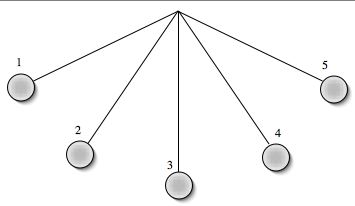
When a pendulum swings, at which point is kinetic energy greatest?
1
2
3
4
Which of the following is an example of kinetic energy decreasing as the gravitational potential energy increases?
a person parachuting out of a plane
a car racing around an oval track
a person skiing down a hill
a person walking up a hill
What would have the greatest kinetic energy?
A car driving down a hill.
A person running down a hill.
A ball rolling down a hill.
leaves rolling down a hill
Which is an example of potential energy?
a roller coaster speeding down a hill
the pulled back string on an archers's bow
releasing the strings on a guitar
an electric current lighting a light bulb

What position has the least amount of potential energy?
W
X
Y
Z
In order to INCREASE the potential energy of an object, you need to:
put the object lower to the ground
raise the object higher

