wayground logo

Free Printable Worksheets

Font size

S
M
L
XL
Worksheets

Cells Practice Test

Total questions: 100

Worksheet time: 2hrs 13mins

Name
Class
Date
1.
Who are the three scientists credited with creating the Cell Theory?
a)
Schlieden, Schwann, Virchow
b)
Schindler, Schmeil, Vanderhoot
c)
Schwimmer, Shanazzek, Van Halen
2.
All cells come from___________ cells.
a)
pregnant
b)
pre-existing
c)
paternal
d)
pin size
3.
Rocks are not living because
a)
they never move
b)
they aren't needed for humans
c)
they are not made of cells
d)
they don't break down
4.
There are three parts to the cell theory. Which is NOT one of those parts?
a)
All organisms are composed of one or more cells.
b)
The cell is the basic unit of structure and organization in organisms.
c)
Cells spontaneously arise from carbon and nutrients carried in the bloodstream.
d)
All cells come from pre-existing cells.
5.
Anton van Leeuwenhoek made his own version of the microscope and discovered something very odd when he looked a the gunk on his teeth. What did he discover?
a)
Cells
b)
Bacteria
c)
Cavities
d)
Influenza
6.
This scientist was the first to identify cells and name them:
a)
Hooke
b)
Leeunwenhoek
c)
Schleiden
d)
Virchow
7.
Which is true of prokaryotic and eukaryotic cells?
a)
Prokaryotic cells are larger than eukaryotic cells.
b)
Eukaryotic cells do not have nuclei, and prokaryotic cells do have nuclei.
c)
Prokaryotic cells lack membrane-bound organelles, and eukaryotic cells contain membrane-bound organelles.
d)
Eukaryotic cells are simpler than prokaryotic cells.
8.

Which do BOTH prokaryotes and eukaryotes contain?

a)

nucleus

b)

mitochondria

c)

ribosomes

d)

cell wall

9.

Which does only eukaryotic cells contain?

a)

nucleus

b)

DNA

c)

cell membrane

d)

ribosomes

10.
Which of the following is not a characteristic of a Prokaryotic cell?
a)
unicellular
b)
floating DNA
c)
very small
d)
complex
11.
A fossilized cell is discovered, and evidence suggests it reproduced on its own and had DNA, but a membrane did not enclose its DNA. Which type of organism would this most likely be?
a)
prokaryote
b)
eukaryote
c)
plant cell
d)
animal cell
12.

Bacteria is an example of a(n)

a)

prokaryotic cell.

b)

eukaryotic cell.

13.
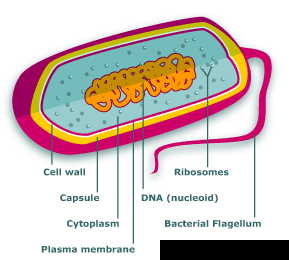
Which type of cell?
a)
Prokaryote
b)
Eukaryote
14.
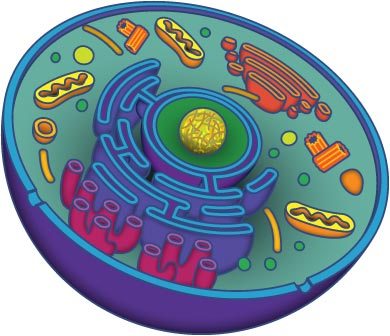
Which type of cell?
a)
Prokaryote
b)
Eukaryote
15.
Robert Hooke, Anton van Leeuwenhoek, Theodor Schwann, Rudolf Virchow, and Matthias Schliden were all responsible for what theory?
a)
The Theory of Gravity
b)
The Theory of Relativity
c)
The Cell Theory
d)
The Theory of Continental Drift
16.
What tool do you use to view the cells?
a)
metric ruler
b)
centrifuge
c)
microscope
d)
telescope
17.
All living things are made up of...
a)
cells
b)
cell tissues
c)
organ
d)
organ systems
18.
All cells come from___________ cells.
a)
pregnant
b)
pre-existing
c)
paternal
d)
pin size
19.
what is a cell classified as?
a)
a basic unit of structure and function of all living organisms
b)
a unit based on only plants and animals that are living
20.
Why are microscopes important when studying most cells?
a)
Most cells are very large.
b)
Most cells are very small.  
c)
Most cells move very quickly.
d)
Most cells are dead.  
21.
Who looked at cork and named the cell?
a)
Robert Hooke
b)
Van Leeuwenhoek
c)
Robert Brown
d)
Francesco Redi
22.

What is the basic structural and functional unit of all living things?

a)

atom

b)

cell

c)

bacteria

d)

animalcules

23.

All cells -----

a)

come from other dead cells

b)

come from other living cells

c)

crystallize out of the air

24.
Which scientist did NOT contribute to the cell theory?
a)
Anton Van Leeuwenhoek
b)

Robert Hooke
c)
Albert Einstein 
d)

Matthias Schleiden
25.
Cells are often called "the ____ of life."
a)
bread
b)
road map
c)
building blocks
d)
meaning
26.
Kingdom Animalia is
a)
Eukayotic
b)
Prokaryotic
c)
Pick me!
d)
No, Pick me!!
27.
Kingdom Archaebacteria is...
a)
unicellular
b)
multicellular
c)
bigger than life!
d)
really pretty, just so pretty.
28.
Members of  Kingdom Animalia are...
a)
heterotrophs.
b)
autotrophs
29.
All living things are divided into three groups called 'domains'. They include, Domain Bacteria, Domain Archaea, and ____________.
a)
Domain Ikea
b)
Domain Eukarya
c)
Domain Romain (Lettuce-based organisms)
d)
Domain of Spain Rains only on the Plane!
30.
My Kingdom includes mushrooms and yeast!
a)
Animalia
b)
Plantae
c)
Eubacteria
d)
Fungi
31.
Do prokaryotes have a nucleus? 
a)
yes
b)
no
32.
Which kingdom is prokaryotic?
a)
Animalia
b)
Archaebacteria
c)
Planta
d)
Fungi
33.
In what kingdom would you find trees and flowers?
a)
Plantae
b)
Fungi
c)
Eubacteria
d)
Animalia
34.
What is the difference between unicellular and multicellular?
a)
They are the same
b)
One has a nucleus and one doesn't
c)
Unicellular has one cell and multicellular has many 
d)
One is bacteria and the is archaebacteria
35.
Organisms that are classified as autotrophic are able to-
a)
be seen with the human eye
b)
move
c)
reproduce
d)
make their own food
36.
To say that an organism is heterotrophic means...
a)
it cannot reproduce asexually
b)
it cannot make its own food
c)
it cannot breathe oxygen gas
37.
This domain is characterized by ancient bacteria that can live in extreme environments, such as volcanoes.
a)
Archaea
b)
Bacteria
c)
Eukarya
d)
Prokarya
38.
This domain contains organisms that have a true nucleus in each of their cells. This domain breaks down into four kingdoms.
a)
Animalia
b)
Archaea
c)
Bacteria
d)
Eukarya
39.

I am made of many cells. My cells have an organized nucleus. I mostly have two parents, but sometimes one. I make my own food. What kingdom do I belong to?

a)

Fungi

b)

Bacteria

c)

Plantae

d)

Animalia

40.
What is the difference between unicellular and multicellular?
a)
They are the same
b)
One has a nucleus and one doesn't
c)
Unicellular has one cell and multicellular has many 
d)
One is bacteria and the is archaebacteria
41.

I reproduce sexually and I am multicellular. My cells have a nucleus. I am not able to make my own food. What kingdom do I belong to?

a)

Plantae

b)

Animalia

c)

Fungi

d)

Protista

42.

I am mostly unicellular. My cells have a nucleus. I am a heterotroph and I reproduce sexually and asexually.

What kingdom do I belong to?

a)

Fungi

b)

Archaea

c)

Bacteria

d)

Protista

43.

The Eukarya Domain has which kingdoms?

a)

Archaea

b)

Bacteria

c)

Plantae, Animalia, Fungi and Protista

d)

none of the above

44.

Cells that do not have a true nucleus are called...

a)

eukaryote

b)

prokaryote

c)

unicellular

d)

multicellular

45.

Cells that have a true nucleus are called...

a)

eukaryotes

b)

prokaryotes

c)

unicellular

d)

multicellular

46.
I have cell walls
I am an autotroph
I am multicellular
What am I?
a)
Plant
b)
Animal
c)
Eubacteria
d)
Unicorn
47.
I am unicellular
I am prokaryotic
I am found in extreme ecosystems
What kingdom do I belong to?
a)
The Candy Kingdom
b)
Kingdom Plantae
c)
Kingdom Animalia
d)
Kingdom Archaebacteria
48.
My Kingdom includes mushrooms and yeast!
a)
Animalia
b)
Plantae
c)
Eubacteria
d)
Fungi
49.
What is the difference between unicellular and multicellular?
a)
They are the same
b)
One has a nucleus and one doesn't
c)
Unicellular has one cell and multicellular has many 
d)
One is bacteria and the is archaebacteria
50.

A cell that does not have a nucleus is a

a)

Multicelular

b)

Prokaryotic

c)

Eukaryotic

d)

Unicellular

51.
What are the three domains?
a)
Archaea, Bacteria, and Eubacteria
b)
Archaea, Protists, and Eubacteria
c)
Archaea, Bacteria, and Eukarya
d)
Archaea, Fungi, Animalia
52.

Heterotrophs

a)

make their own food

b)

get their food from others

c)

are fungi

d)

none of the above

53.

Autotrophs

a)

Make their own food

b)

Get their food from others

c)

are Fungi

d)

are none of the above

54.
The broadest or most general taxonomic classification of living organisms is organized by -- 
a)
Kingdom
b)
Domain
c)
Species
d)
Organisms
55.

Bacteria and archaea are similar because both _________________.

a)

are eukaryotes

b)

are prokaryotes

c)

have the same kind of cell wall

d)

store their DNA in a nucleus

56.
Which of the following is the study of how scientists classify organisms?
a)
Taxonomy
b)
Division
c)
Canis
d)
Identification
57.

Asexual reproduction means...

a)

two parents

b)

one parent

c)

Binary Fission

d)

More than one

58.

An organism that is multicellular, reproduces sexually, and makes its own food (autotrophic) is classified into which taxonomic kingdom?

a)

Fungi

b)

Animalia

c)

Plantae

d)

Protista

59.
Which of the following is the smallest unit of life that can carry out all life functions?
a)
the mitochondria
b)
the vacuoles
c)
the nucleus
d)
the cell
60.

gel-like material, where organelles are located

a)

Cytoplasm

b)

Nucleus

c)

Vacuole

d)

Mitochondria

61.

Control center of cell, contains instructions for everything the cell does.

a)

Ribosomes

b)

Nucleus

c)

Endoplasmic Reticulum

d)

Mitochondria

62.
Characteristics of an organism:
1. Cells have nuclei
2. Cannot move itself
3. Makes its own food
4. Made of many cells
Which word would NOT describe this organism?
a)
Multicellular
b)
Autotrophic
c)
Prokaryotic
d)
Immotile
63.

I reproduce sexually and I am multicellular. My cells have a nucleus. I am not able to make my own food. What kingdom do I belong to?

a)

Plantae

b)

Animalia

c)

Fungi

d)

Protista

64.

The diagram shows some characteristics of the four eukaryotic kingdoms. Which of these is the plant kingdom?

a)

Kingdom 1

b)

Kingdom 2

c)

Kingdom 3

d)

Kingdom 4

65.
Which organelle allows the cell to obtain items from outside the cell?
a)
Nuclear membrane
b)
Vacuole
c)
Cell Membrane
d)
Cell Wall
66.
Which organelle is a gelatin substance that helps fill out the cell
a)
Chloroplast
b)
Lysosomes
c)
Mitochondria
d)
Cytoplasm
67.
Which organelle releases the energy stored inside food
a)
Chloroplast
b)
Mitochondria
c)
Lysosomes
d)
Nucleus
68.
Which organelle helps cleanup the cell
a)
Lysosome
b)
Cytoplasm
c)
Chloroplast
d)
Nucleus
69.
Which organelle takes sunlight and turns it into food?
a)
Lysosome
b)
Cell membrane
c)
Chloroplast
d)
Mitochondria
70.

The _____________ holds the DNA, and controls the functions of eukaryotic cells.

a)

Nucleus

b)

Nuclear Membrane

c)

Mitochondria

d)

Chloroplast

71.

What can only be found in plant cells?

a)

Cell membrane

b)

Vacuole

c)

Chloroplast

d)

Mitochondria

72.
What organelle is called the "powerhouse" of a cell?

a)
Endoplasmic Reticulum
b)
Nucleus
c)
Mitochondria
d)
Nucleolus
73.
What organelle is considered to be the “gatekeeper” for plant and animal cells?

a)
Cell Wall
b)
Cytoplasm
c)
Nucleous
d)
Cell Membrane
74.
What is the name and function of the organelle displayed above?
a)
Mitochondria: breakdown glucose and produce ATP
b)
Chloroplast: converts solar energy into chemical energy
c)
Vacuole: Stores H2O, salt, food
d)
Nucleus: stores genetic information
75.

Stores food and water like a refrigerator for the cell

a)

Chloroplast

b)

Vacuole

c)

Lysosome

d)

Cytoplasm

76.
The two kinds of cells are Prokaryotes and Eukaryotes. How are they different?
a)
Prokaryotes have a nucleus.
b)
Eukaryotes have a nucleus.
c)
Prokaryotes are plant cells.
d)
There is no difference.
77.
What can only be found in plant cells?
a)
Cell membrane
b)
Vacuole
c)
Chloroplast
d)
Mitochondrion
78.
What cell part is NOT found in all cells?
a)
Cell Wall
b)
Cell Membrane
c)
Cytoplasm
d)
Genetic Material
79.

When full, this organelle makes plants stand upright

a)

lysosome

b)

large, central vacuole

c)

plasma membrane

d)

ribosome

80.

This holds water, food, or waste.

a)

lysosome

b)

vacuole

c)

cell wall

d)

cell membrane

81.

Organelles are suspended in this.

a)

nucleus

b)

cytoplasm

c)

golgi body

d)

ribosome

82.
What is the name of the structure shown in the diagram where cellular respiration takes place?
a)
Chloroplast
b)

Mitochondria

c)
Nucleus
d)
Vacuole
83.
What is the name of the genetic material that is inside the nucleus?
a)
ER
b)
ATP
c)
YOLO
d)
DNA
84.
The site of photosynthesis
a)
ribosome
b)
mitochondria
c)
chloroplast
d)
nucleus
85.

Name two organelles that are only found in plant cells.

a)

Cell wall and chloroplasts

b)

Cell wall and nucleus

c)

Chloroplast and mitochondria

d)

Cell membrane and ribosome

86.

This organelle encloses and supports cells in plants

a)

cell membrane

b)

nucleus

c)

cell wall

d)

mitochondria

87.

This is an image of a(n)

a)

plant cell

b)

animal cell

88.

This is a picture of a(n)

a)

animal cell

b)

plant cell

89.

Storage bubbles found in cells. Plant cells have one big one

a)

vacuole

b)

cell wall

c)

cell membrane

d)

mitochondria

90.

This organelle absorb sunlight and uses it to produce food for plant cells

a)

Ribosomes

b)

Endoplasmic Reticulum

c)

Mitochondria

d)

Chloroplasts

91.
A _____________________ is something that scientists use to represent an object or process
a)
mass
b)
matter
c)
model
d)
weight
92.
Sal is studying the solar system. He makes a physical model using different-sized foam balls to represent the planets. Which best describes why a physical model is a useful tool for studying the solar system?
a)
Solar system models can be used to study a system that is too big to study directly.
b)
A model of the solar system eliminates the need for scientists to study the solar system directly.
c)
A model of the solar system provides an exact replica of the actual solar system, so scientists can experience what each planet is like.
d)
A model of the solar system can provide more data about the solar system than direct observations.
93.
Facts, figures and other evidence collected
a)
Pie
b)
Cake
c)
Math
d)
Data
94.

Pick the reasons why we use models

a)

Models are expensive

b)

Models help you understand complex systems

c)

Models are used when systems are too expensive or impossible to use

95.

Models can be helpful in scientific investigations because

a)

it may not be possible to work with the real thing.

b)

they can be smaller and more manageable than the real thing.

c)

they can be safer to work with than the real thing.

d)

all of the above

96.
What is the advantage of creating a model of a dinosaur?
a)
they are too large to easily study 
b)
they are too complicated to study
c)
Real dinosaurs cannot be studied because they are extinct
d)
The model is safer to work with. 
97.
Making models involves creating representations of complex objects or processes to help people study and understand things that cannot be observed directly.
a)
True
b)
False
98.

Which of the statements are INCORRECT about models.

a)

Models must be exactly like what is being modeled.

b)

Models communicate information.

c)

Models can be constructed.

d)

Models can be drawings with labels.

99.
The variable the is changed on purpose is..
a)
Constant
b)
Control
c)
Independent Variable
d)
Dependent Variable
100.
The variable that is being tested, counted, or measured and is responding to the independent variable is known as 
a)
Control
b)
Constant
c)
Independent Variable
d)
Dependent Variable