
 Worksheets
Sci 8 Final Review
Total questions: 123
Worksheet time: 2hrs 34mins
What causes plates to move?
sea floor spreading
earthquakes
continental drift theory
convection currents
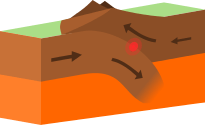
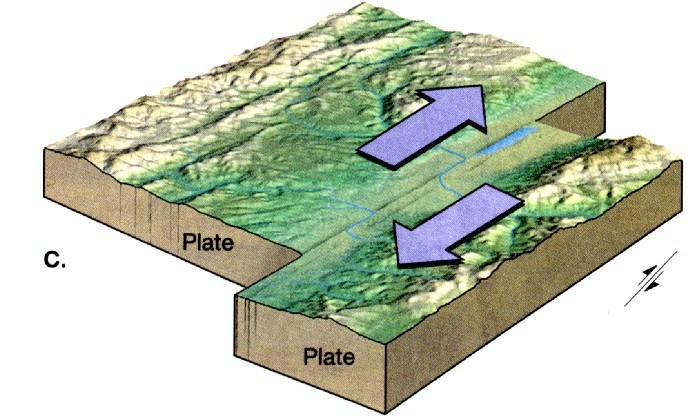
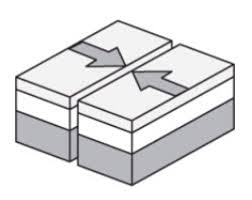
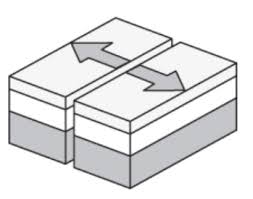
Earthquakes and volcanoes are found along
the ocean floor
mountain ranges
plate boundaries
subduction zones

Which layer is the oldest?
A
B
C
D

Which layer is liquid?
upper mantle
lower mantle
outer core
crust



Soil is formed from
weathering and biological activity
erosion and water
weathering and erosion
Caves form from the ___________ weathering of ______________
chemical, limestone
physical, limestone
chemical, sand
physical, sand
What is the correct order of Earth's Layers, starting from the surface, going toward the center?
crust, outer core, inner core, mantle
mantle, outer core, inner core, crust
crust, mantle, outer core, inner core
outer core, inner core, crust, mantle
All continents were once joined together as a supercontinent called
Pangaea
Cocos
Which part of Earth's crust is thicker, continental or oceanic?
Oceanic
Continental
How can you prepare for a future Earthquake? Check all that apply.
Create an emergency preparedness plan
Stock up on food, water, supplies
Go for a run outside
Have Emergency Kit
Carry ALL of your belongings into the basement.

The diagram below represents a cross section of four sedimentary rock layers containing fossil remains. The layers have not been overturned. Which type of fossil is found in the most recently formed sedimentary rock layer?
early horses
dinosaurs
armored fish
trilobites
How is physical weathering different from chemical weathering?
Chemical weathering happens over much shorter time frame than physical weathering.
Chemical weathering changes the chemical composition of rocks; physical weathering does not.
Chemical weathering occurs only in tropical climates; physical weathering occurs only in cool climates.
Chemical weathering occurs only in the mountains; physical weathering occurs only on flat land.
Weeds growing into the cracks in a sidewalk and the sidewalk begins to crumble is an example of:
physical weathering
chemical weathering
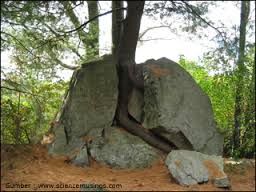
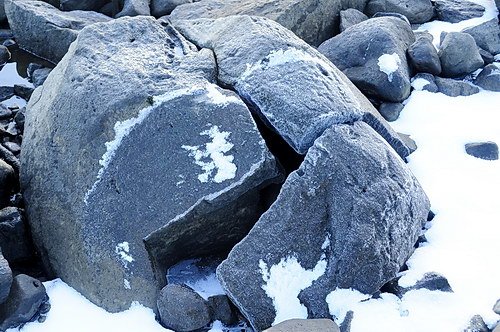

Which rock type is the oldest?
rock type 2
rock type 3
rock type 4
Fastest chemical weathering = _________________ environments
colder, dry
colder, wet
hotter, dry
hotter, wet
Fastest physical weathering such as frost action =__________________ environments.
colder, dry
colder, wetter
hotter, dry
hotter, wetter
Asteroid belt between Mars and ___________ is made of rocks.
Jupiter
Saturn,
Mercury
Venus
Planets that are closest to the Sun are identified as
low-density jovian planets
low-density terrestrial planets
high-density jovian planets
high-density terrestrial planets
Galaxy = a group of ______________ of stars
hundreds
millions
billions
Our Sun and Solar System is located in the_________________ Galaxy which has a(n) ____________ shape.
Andromeda, elliptical
Milky Way, ellipitical
Milky Way, spiral
Andromeda, spiral

ESRT – Characteristics of Stars/a.k.a. H-R Diagram = Stars are classified by their surface temperature and ______________
mood
luminosity

Red = ______________ temperature.
Blue = ______________ temperature.
hottest, coolest
coolest, hottest
What determines the life cycle of a star (such as whether it will become a giant or supergiant)?
Mass
Temperature
The Universe is _____________ and _____________ than the Solar System.
younger, smaller
older, smaller
younger, older
older, larger
Place the Sun’s stellar stages in chronological (time) order: white dwarf, protostar, main-sequence, black dwarf, nebula, red giant
white dwarf, protostar, planetary nebula, main-sequence, black dwarf, nebula, red giant
protostar, nebula, red giant, main-sequence, black dwarf, planetary nebula, white dwarf
nebula, protostar, red giant, main-sequence, white dwarf, planetary nebula, black dwarf
nebula, protostar, main-sequence, red giant, white dwarf, black dwarf

The color of a star tells us its
magnitude
temperature
size
age

Our sun is currently in what star stage?
Protostar
Nebula
Main Sequence
Red Giant

Which star has a surface temperature most similar to the surface temperature of Alpha Centauri?
Polaris
Betelgeuse
Procyon B
Sirus

Which two stars are most similar in luminosity?
Betelgeuse and Bernard's Star
Procyon B and Proxima Centauri
Polaris and the Sun
Alpha Centauri and Sirius
Inner Planets
small, denser, no rings, few moon, Terrestrial
larger, less dense, rings, many moons, Jovian, Gas Giant
Outer Planets
small, denser, no rings, few moon, Terrestrial
larger, less dense, rings, many moons, Jovian, Gas Giant
In New York the shortest day of the year is ____.
June 21
Dec 21
How long does it take Earth to orbit the Sun & what is this motion called?
365 days; revolution
24 hours; rotation
Earth rotates ______ degrees per hour.
1
15
24
Earth revolves _____ degrees per day.
1
15
24
North Pole tilted _______ Sun = summer solstice
toward
away
neither
North Pole tilted __________ from sun- winter solstice
toward
away
neither
How many hours of daylight do we have on an equinox?
9
15
12

As medium-sized stars age from main sequence to red giants, how do their properties change?
Bigger, brighter, cooler
Smaller, dimmer, cooler
Bigger, brighter, warmer
Smaller, dimmer, warmer
As medium-sized stars age from main sequence to white dwarfs, how do their properties change?
Bigger, brighter, cooler
Smaller, dimmer, cooler
Bigger, brighter, warmer
Smaller, dimmer, warmer

This planet is the largest in our solar system.
the sun
Saturn
Jupiter
Neptune

Which two characteristics do all Jovian planets have
in common?
large diameters and low densities
large diameters and high densities
small diameters and low densities
small diameters and high densities

Which planet is the densest?
Mars
Venus
Earth
Mercury

This planet has the longest period of revolution.
Mercury
Mars
Saturn
Neptune

This planet has a longer period of rotation than period of revolution (longer day than year)?
Mercury
Venus
Earth
Mars


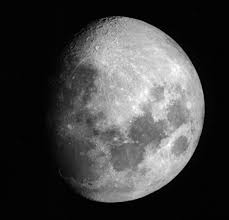
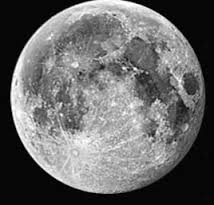
What phase of the moon is this?
Last quarter moon
Waning gibbous
First quarter moon
Full Moon
About how many days does it take to moon to go through a complete cycle?
7 days
365 days
29.5 days
20 days
How do you see the light from the moon?
nuclear fusion
sunlight is reflected off of the moon.
it makes its own light

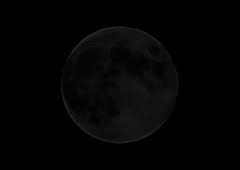


The closer two objects are to each other, the
weaker the gravitational pull
the stronger the gravitational pull

Waning =
draining - light is decreasing
growing light - light is increasing
Gaining Light
only 1/2 the moon is bright

Waxing =
maxing = light increasing
light is getting dimmer
decreasing light
only half the moon is lit

The data table below shows data for four planets in our solar system. For which planet is the length of the planet’s day longer than the planet’s year?
Mercury
Venus
Earth
Mars
The motions of comets and asteroids in our solar system are predictable because they are
smaller than planets
nearly spherical in shape
in orbit around the Sun
controlled by Earth’s gravity

The graph below shows the relative sizes and surface temperatures of four groups of stars. The surface temperature of the stars is measured in Kelvin (K). The Sun is part of the main sequence group. According to the graph, the Sun is best described as
massive sized, with a surface temperature of approximately 20,000 K
massive sized, with a surface temperature of approximately 10,000 K
average sized, with a surface temperature of approximately 8,000 K
average sized, with a surface temperature of approximately 6,000 K

Base your answer on the diagram below and on your knowledge of science. The letters A, B, C, and D represent four positions of the Moon in its orbit around Earth. The nighttime sides of the Moon and Earth are shaded.
Which Moon phase will be seen from Earth when the Moon is at position C?


Base your answer to question on the diagram below and on your knowledge of science. The diagram represents the Moon and its orbit around Earth. The arrow labeled X represents the force that keeps the Moon in its orbit.
Which force is represented by X?
gravity
friction
electricity
magnetism

The diagram below represents the Sun, Earth, and the Moon as viewed from space. Letter X is a location on Earth’s surface.
Which diagram best represents the phase of the Moon as viewed from X?


The photograph below shows an object in space that has an icy core with a tail of gas and dust extending for millions of kilometers.
The object is most likely
a star
an asteroid
a moon
a comet

Which type of eclipse occurs when the moon is blocked by Earth's shadow?
Lunar eclipse
Solar eclipse

Which type of eclipse occurs when the shadow of the moon blocks the sun during the daytime?
Lunar eclipse
Solar eclipse

What season is at position A?
winter
summer
spring
fall
What season is at position C?
winter
summer
spring
fall
The time it takes Earth to revolves around the sun =
1 year
1 month
1 hour
1 day
The change in _______ and ________ are pieces of evidence of Earth’s revolution.
seasons, constellations
Foucault pendulum, star trails
What is evidence of Earth’s rotation?
seasons, constellations, Sun's apparent diameter
Foucault pendulum, star trails and Coriolis effect and day and night
Earth rotates and revolves ______________.
clockwise
counterclockwise
When will gravity be the strongest?
The further away you are from an object
The closer you are to an object
The faster your speed is to an object
What season is at position A?
winter
summer
spring
fall
What season is at position C?
winter
summer
spring
fall
What season is at position B?
winter
summer
spring
fall
What season is at position D?
winter
summer
spring
fall

What season occurs when the area in which you live is tilted away from the sun?
It is summer.
It is spring.
It is winter.
It is fall.

On which day(s) of the year do all locations have 12 hours of day and 12 hours of night?
June 21
Dec 21
March 21 & September 23
What is at the center of the solar system in the Heliocentric model?
Sun
Earth
Moon
Jupiter
Which of the following increases as depth increases into the Earth? (choose all that apply)
time
Pressure
temperature
density
In New York the longest day of the year is ____.
June 21
Dec 21
Age of universe = _________________ years old
4.6 million
5.6 billion
4.6 billion
13.8 billion
The lithosphere is the _________
layer of solid rock surrounding Earth
(land/crust)
layer of gases surrounding Earth
layer of water on Earth's surface
layer of living things
Evidence of continental drift =
· matching _______ & _______on continents now separated by oceans
· South America and _______ fit together like puzzle pieces
rocks only, Africa
rocks & fossils, Asia
rocks & fossils, Africa
rocks & fossils, Asia & Africa

What is thinner, oceanic crust or continental crust?
oceanic crust
continental crust
Seismic (earthquake) Waves

