wayground logo

Free Printable Worksheets

Font size

S
M
L
XL
Worksheets

SSA Review! :)

Total questions: 128

Worksheet time: 2hrs 41mins

Name
Class
Date
1.

What would happen to temperatures on Earth if the atmosphere did not exist?

a)

Nothing would happen to change the temperatures.

b)

All temperatures would decrease.

c)

All temperatures would increase.

d)

Temperatures would become more extreme.
2.
Which of the following describes all of the types of water found in the hydrosphere?
a)
all frozen water on the Earth
b)
all of the water on the Earth
c)
all of the fresh water on the Earth
d)
all of the water found on the surface of the continents
3.
The rock, dust, soil, and minerals of the Earth's solid crust and outer mantle make up the ____
a)
Biosphere
b)
Geosphere
c)
Cryosphere
d)
Atmosphere
4.
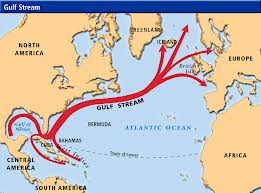
The Gulf Stream is a current that brings warm ocean water from the south to the north.
a)
conduction
b)
convection
c)
radiation
5.
Walking on the warm sand sand with your bare feet.
a)
conduction
b)
convection
c)
radiation
6.
Which direction will the heat flow while this person holds a hot cup of tea?
a)
from the cup to her hand
b)
from her hand to the cup
c)
no heat is transferred
7.
Heat transfers from an area of ____temperature to an area of ___ temperature.
a)
high to low
b)
low to high
c)
high to high
8.
What causes warm air to rise?
a)
the fact that it's less dense than cold air 
b)
The fact that it weighs more than cold air 
c)
The fact that it has higher pressure than cold
d)
the fact that its more dense than cold air 
9.
What causes wind to blow?
a)
Differences in longitude 
b)
Shock waves from clouds 
c)
Differences in air temperature and pressure 
d)
The rotation of the earth
10.
A rock formed from fragments of other rocks is a(n)
a)
Metamorphic Rock
b)
Sedimentary Rock
c)
Extrusive Rock
d)
Igneous Rock
11.
Fossils are only found in
a)
Sedimentary rocks
b)
Foliated Metamorphic rocks
c)
Igneous Rocks
d)
Nonfoliated Metamorphic rocks
12.

The process by which igneous rocks are formed

a)

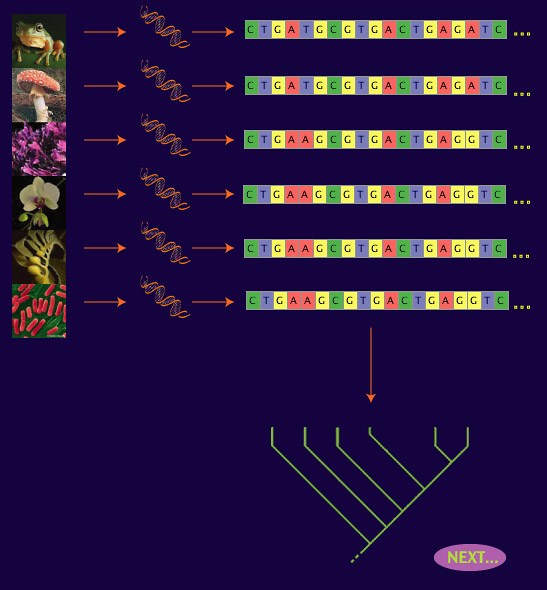
heat and pressure

b)

melting and cooling

c)

weathering and erosion

13.

The process by which metamorphic rocks are formed

a)

heat and pressure

b)

erosion and deposition

c)

melting and cooling

14.

What is weathering?

a)

The movement of sediment

b)

The breaking of sediment

c)

The dropping of sediment

15.

What is erosion?

a)

The movement of sediment

b)

The breaking of sediment

c)

The dropping of sediment

16.

A landform made of sediment that is deposited where a river flows into an ocean or lake is called a...

a)

sea cave

b)

mountain

c)

delta

17.
Which of these is one cause of deforestation?
a)
Urbanization
b)
Buying a chirstmas tree during the holidays
c)
Overbreeding birds in the wild
d)
Cutting down the tree in your backyard
18.

Deforestation has an affect on the water cycle.

a)

true

b)

false

19.

Deforestation causes an increase in atmospheric carbon dioxide.

a)

true

b)

false

20.
Which of the following causes Earth's tectonic plates to move?
a)
Energy from the Sun
b)
Magnetic Pole Reversal
c)
Convection currents in the mantle
d)
Faults in Mountain Ranges
21.
What type of event will occur at this boundary?
a)
Earthquake
b)
Volcano Eruption
c)
Tornado
d)
Mountain Building
22.

Islands can form from magma which is pushed up at a __________ plate boundary.

a)

Divergent

b)

Convergent

c)

Transform

23.
Mountains are created when....
a)
Two continental plates collide
b)
Two oceanic plates pull apart
c)
An Oceanic plate subducts under a Continental Plate
d)
Two continental plates pull apart
24.
What is a galaxy?
a)
A large storm of comets. 
b)
A parallel universe that existed before the Big Bang. 
c)
A collection of stars, dust, and gas bound together by gravity 
d)
Unknown 
25.
The average distance between the earth and the sun is the 
a)
astronomical unit 
b)
Light year
26.

We can use brightness of stars to measure distance because

a)

the strength of light decreases over distance

b)

light is a constant and always is bright

27.

Why do we use light years and astronomical units to measure distances in space?

a)

Scientists want to sound smart.

b)

Hubble discovered these units and wanted to use them.

c)

Space is too small to use km, it wouldn't make sense.

d)

Space is too big, vast, enormous to use traditional units, like miles.

28.

Which of the following scenarios would be appropriate to use light years?

a)

From the sun to Earth

b)

From Earth to Neptune

c)

From the Milky Way to its closest galaxy

d)

Asteroid Belt to the Kuiper Belt

29.

Which of the following scenarios would we use Light Years to determine, not Astronomical Units (AU)?

a)

distance from Mercury to Saturn

b)

distance from Sun to Neptune

c)

distance from Earth to Sun

d)

distance from Asteroid Belt to the Betelgeuse Star

30.
As a whole, Giants are considered hotter than White Dwarfs.
a)
True
b)
False
31.
In the diagram given, what happens as we move to the left?
a)
Stars Get Larger
b)
Stars get Colder
c)
Stars get hotter
32.
The four inner planets are...
a)
Rocky and small
b)
Very large and made of ice
c)
Small and made of ice
d)
Very large and made of gases
33.
Which object has the most gravity?
a)
Earth
b)
moon
c)
Jupiter
d)
sun
34.

Which season is taking place in the Northern Hemisphere in Position 3?

a)

Winter

b)

Spring

c)

Summer

d)

Fall

35.
Rina’s mother asked her to help move some items from the hall closet to the garage. One item she wanted to move was a large box of old school books. Rina tried to lift the box, but could not pick it up. What force was Rina NOT able to overcome? 
a)
frictional force
frictional forcefrictional force
b)
gravitational force
c)
electrical force
d)
magnetic force 
magnetic force
36.
Leanna decided to rearrange her bedroom by moving her dresser to the opposite wall. She tried pushing it, but found that the dresser would not move. What force was Leanne NOT able to overcome?
a)
electrical force
b)
magnetic force
c)
balanced force
d)
frictional force
37.
What does this graph represent?
a)
Constant speed
b)
Acceleration
c)
Not moving
38.
What is happening at C?
a)
Stationary
b)
Accelerating
c)
Fast steady speed; moving away from the starting position
d)
Slower steady speed; moving away from the starting position
39.
A wave with a large wavelength will have a ______ frequency and _____ energy
a)
high, low
b)
high, high
c)
low, high
d)
low, low
40.
If an object appears black, this means all 7 colors of the visible light spectrum are _____
a)
reflected
b)
abosrbed
c)
diffracted
41.
If an object appears white, this means all 7 colors of the visible light spectrum are _____
a)
reflected
b)
abosrbed
c)
diffracted
d)
refracted
42.

If an object appears blue, this means that ______

a)

all colors are absorbed except blue; blue is reflected

b)

all colors are reflected except blue; blue is absorbed

43.
Light waves travel fastest in ________ 
a)
solid
b)
liquid
c)
gas
d)
vacuum
44.
Sound waves travel fastest in ____
a)
solid
b)
liquid
c)
gas
d)
vacuum
45.

What energy transformation occurs during photosynthesis?

a)

Chemical --> Radiant

b)

Thermal --> Chemical

c)

Radiant --> Chemical

d)

Mechanical --> Thermal

46.

What energy transformation occurs as a mouse produces body heat?

a)

Chemical --> Thermal

b)

Thermal --> Chemical

c)

Electrical --> Thermal

d)

Thermal --> Mechanical

47.

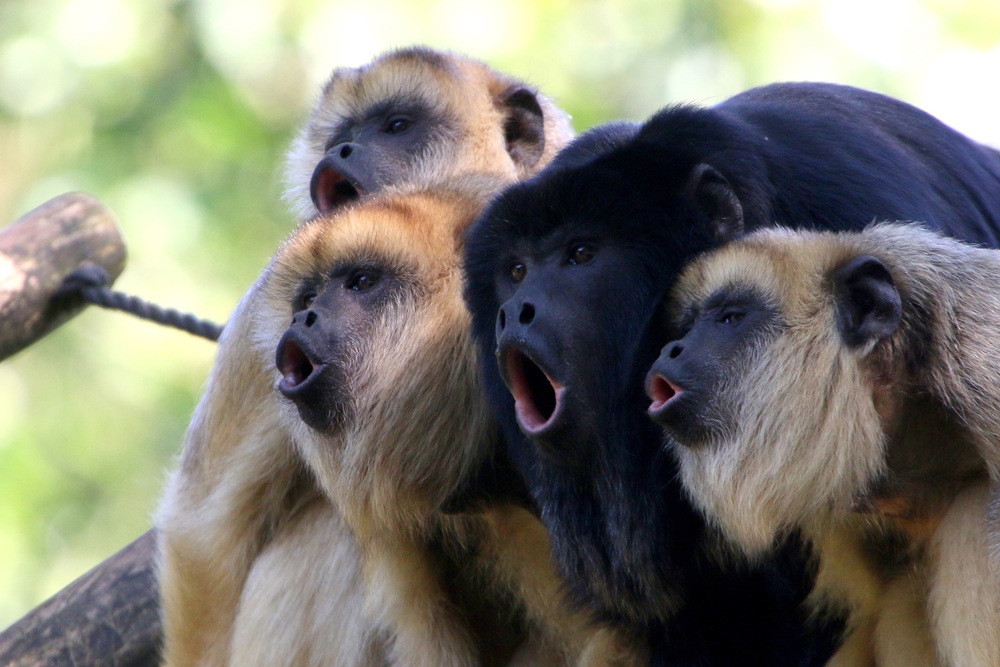
What energy transformation occurs as howler monkeys loudly call to each other in the forest?

a)

Chemical --> Mechanical --> Sound

b)

Chemical --> Sound --> Thermal

c)

Sound --> Chemical --> Radiant

d)

Mechanical --> Chemical --> Sound

48.

Matter with a composition that is always the same is...

a)

Mixture

b)

Atom

c)

Matter

d)

Substance

49.
Substance that consists of one type of atom.  It is a pure substance. Found on the Periodic Table. 
a)
Element
b)
Compound
c)
Mixture
d)
I don't know
50.
A type of substance containing atoms of two or more elements chemically bonded together is a mixture.
a)
Ture
b)
False
51.
Salad is an example of...
a)
a mixutre
b)
an element
c)
a compound
52.
Pure oxygen (O) is an example of...
a)
an element
b)
a mixture
c)
a compound
53.
If a mixture has components you can see it is a...
a)
solution
b)
compound
c)
homogeneous mixture
d)
heterogeneous mixture
54.
What is Kool-aid?
a)
element
b)
Heterogeneous Mixture
c)
Homogeneous Mixture
d)
Compound
55.
What is the term for combining 2 or more DIFFERENT atoms together?
a)
atoms
b)
elements
c)
molecules
d)
compounds
56.
What is the volume of the rock? The water level is displaced from 20 mL to 23 mL with the rock.
a)
3 mL
b)
23 mL
c)
20 mL
d)
43 mL
57.
If you had a sealed bottle of water, how would the mass of the water bottle change after a 5 day period?
a)
Mass would increase. 
b)
Mass would stay the same. 
c)
Mass would decrease. 
d)
None of the above.
58.
Which statement is true?
a)
Oil is the most dense substance.
b)
Corn syrup is less dense than water.
c)
Oil is less dense than water.
d)
Oil and corn syrup have the same density but different masses.
59.
What is an example of a physical property?
a)
reactivity
b)
 color
60.
________ is a measure of how packed the molecules of a substance are.
a)
volume
b)
density
c)
weight
61.
Weight is the measure of the pull of ________ on the mass of an object. 
a)
magnetism
b)
the Earth
c)
volume
d)
gravity
62.
Which property is an example of a chemical property?
a)
The ability to burn
b)
The ability to dissolve
c)
The ability to evaporate
d)
The ability to melt
63.
Silver is a white metal that is an excellent conductor. Silver tarnishes when exposed to air and light. The density of silver is 10.49 g/cm3 The melting point is 962oC and the boiling point is 2000oC. A chemical property of silver is
a)
melting point
b)
boiling point
c)
density
d)
tarnishing
64.
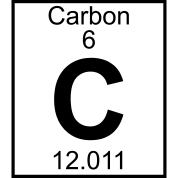
What does the 6 represent?
a)
atomic mass
b)
atomic number
c)
element name
d)
chemical symbol 
65.

The atomic number tells you what?

a)

only the number of electrons

b)

only the number of protons

c)

only the number of neutrons

d)

the number of both electrons and protons in an atom.

66.

Neutral solutions have a pH of

a)

pH of 2

b)

pH of 0

c)

pH of 7

d)

A neutral solution does not have a pH

67.

In a test of pH levels, a baking soda has a pH of 9 and bleach has a pH of 12. What is true about there relationship?

a)

Both of the solution are Bases

b)

Both of the solution are Acids

c)

The Baking soda is an acid and the Bleach is a base

d)

The baking soda is a base and the Bleach is an Acid.

68.

The least complex level of organization of the human body is

a)

cell

b)

tissue

c)

organ

d)

organ system

69.

A group of similar cells performing the same function is

a)

cell

b)

tissue

c)

organ

d)

organ tissue

70.

Each organ in the body is part of ___________ performing a major function.

a)

cell

b)

tissue

c)

organ

d)

organ system

71.
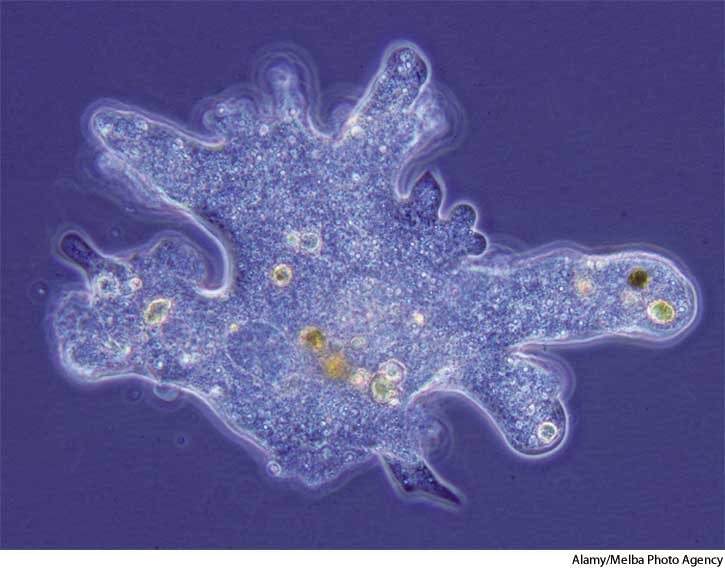
An Amoeba is a unicellular, animal-like protist that lives in ponds and streams. According to cell theory, where did this cell come from?
a)
another pre-existing amoeba cell.
b)
energy from sun that allowed the protist to reproduce.
c)
a multicellular organism.
d)
the nonliving environment.
72.
Rocks are not living because
a)
they never move
b)
they aren't needed for humans
c)
they are not made of cells
d)
they don't break down
73.
In order to sustain life, all cells must...
a)
digest nutrients and water
b)
excrete waste and fluids
c)
must be able to maintain a homeostasis environment (aka cellular respiration and regulation)
d)
All of the above
74.
Which human body systems interact to produce movement of the body?
a)
Nervous and endocrine
b)
Skeletal and muscular
c)
Circulatory and digestive
d)
Excretory and nervous
75.
Which body systems work together to supply the body's cells with oxygen?
a)
Respiratory and immune
b)
Nervous and reproductive
c)
Circulatory and respiratory
d)
Endocrine and muscular
76.

When your body cells need glucose, the brain causes a release of a hormone into the blood that triggers hunger to make you eat. What 4 systems do you see at work together in this process?

a)

cardiovascular, immune, nervous, endocrine

b)

urinary, digestive, endocrine, integumentary

c)

skeletal, digestive, endocrine, reproductive

d)

Digestive, nervous, cardiovascular, endocrine

77.
Which characteristic of life is shown when you step out into the cold and your body shivers in order to keep its temperature at 98.6 F?
a)
All living things use energy
b)
All living things contain cells
c)
All living things maintain homeostasis
d)
All living things grow
78.
Which characteristic of life is shown when green plants produce their own food through the process of photosynthesis?
a)
All living things use energy
b)
All living things contain cells
c)
All living things maintain homeostasis
d)
All living things grow
79.
Which characteristic of life is shown when a caterpillar hibernates in a cocoon and emerges as a butterfly?
a)
All living things adapt to their environment
b)
All living things use energy
c)
All living things respond to their environment
d)
All living things grow
80.
This Kingdom includes multicellular, autotrophic organisms whose cell wall is made up of a polysaccharide known as cellulose
a)
Animalia
b)
Plantae
c)
Fungi
d)
Protista
81.
Chromosomes are found in the ____________ of the cell
a)
Chloroplast
b)
Nucleus
c)
Cytoplasm
d)
Mitochondria
82.
What is a gene?
a)
An entire chromosome that  codes for a trait
b)
a piece of clothing
c)
a piece of a DNA on chromosome that codes for a trait
d)
Chemical messengers in your brain that code for a trait
83.
What is a recessive allele?
a)
A trait that is always shown (capital letter)
b)
A trait that can be hidden (lower case letter)
c)
Alleles that are the same
d)
Alleles that are different
84.
What is a dominant allele?
a)
A trait that is always shown (capital letter)
b)
A trait that can be hidden (lower case letter)
c)
Alleles that are the same
d)
Alleles that are different
85.
What is Bb?
a)
Homozygous
b)
Heterozygous
c)
Recessive
d)
Alleles
86.
What is the only Genotype that shows the RECESSIVE Phenotype?
a)
GG
b)
Gg
c)
gg
87.
A heterozygous long-tusked elephant is crossed with a homozygous recessive short-tusked elephant. What is the probability of the offspring having short tusks?
a)
0%
b)
25%
c)
50%
d)
75%
88.
What is the probability of a purple-horned unicorn if a heterozygous pink-horned unicorn is crossed with a heterozygous pink-horned unicorn?
a)
0%
b)
25%
c)
50%
d)
75%
89.

Ostriches and gazelles feed next to each other. They both watch for predators and alert each other to danger.

a)

Mutualism

b)

Commensalism

c)

Parasitism

d)

Not Symbiosis

90.

A barn owl kills and eats a field mouse.

a)

Mutualism

b)

Commensalism

c)

Parasitism

d)

Not Symbiosis

91.

A tree uses energy from the sun to make sugar.

a)

Mutualism

b)

Commensalism

c)

Parasitism

d)

Not Symbiosis

92.

Mistletoe vines wrap around a tree, robbing the tree of water and nutrients.

a)

Mutualism

b)

Commensalism

c)

Parasitism

d)

Not Symbiosis

93.

Moss gains exposure to sunlight by growing on the branches of trees. The moss does not harm the trees.

a)

Mutualism

b)

Commensalism

c)

Parasitism

d)

Not Symbiosis

94.

A plant or animal that comes into a new ecosystem and consumes limited resources are called _____________.

a)

Invasive Species

b)

Native Species

95.

A deer population has significantly increased. The best hypothesis for why this has occurred is

a)

the deer's main predator has been eliminated

b)

competition increased

c)

decreased water levels of local ponds

d)

organisms that rely on similar food sources migrated to the area

96.
an organism that can produce its own food through photosynthesis
a)
consumer
b)
heterotroph
c)
autotroph
d)
herbivore
97.

an example of producer-consumer relationship would be

a)

lion eating a deer

b)

grasshopper getting energy from grass

c)

hawk getting energy from snakes

d)

earthworm breaking down dead material

98.
Where does cellular respiration occur?
a)
Nucleus
b)
Mitochondria
c)
Vacuole
d)
Chloroplast
99.
Anaerobic respiration.....
a)
doesn't require CO2
b)
requires CO2
c)
doesn't require oxygen
d)
requires oxygen
100.
______________ produces the most ATP.
a)
photosnthesis
b)
aerobic respiration
c)
anaerobic respiration
d)
glycolysis
101.
What is cellular respiration?
a)
the breakdown of glucose  to release ATP
b)
the breakdown of glucose to release NADH
c)
the breakdown of glucose to release FADH
d)
the breakdown of glucose to release carbon
102.
The Law of Conservation of Energy states:
a)
Energy can created or destroyed but not transformed 
b)
Energy cannot be created or destroyed, it can only transformed
c)
Energy can't be created, destroyed or transformed
103.
The Law of Conservation of matter states that the total amount of matter ______________ after it undergoes change.
a)
disappears
b)
stays the same
c)
weighs less
d)
explodes
104.
How much does a 5 gram Hershey's kiss weigh after it is melted in the microwave?
a)
5 grams
b)
3 grams
c)
7 grams
105.

You are testing how the amount you water a plant affects its growth. What would be the INDEPENDENT VARIABLE in this experiment?

a)

They type of pot you put the plants in.

b)

The amount you water each plant.

c)

The amount of sunlight the plants get.

d)

The amount the plant grows.

106.

If you were testing the time it took for objects of different sizes to reach the ground after being dropped from 30 feet in the air, which of these would be the DEPENDENT VARIABLE?

a)

The time it takes for each object to hit the ground.

b)

The size of each object.

c)

The type of object you use.

d)

The height you drop the object from

107.

A team of scientists is testing which flavor of ice cream melts the fastest. What would their controlled variables be? (Choose ALL that apply.)

a)

The flavor of ice cream

b)

the bowl the ice creams are in

c)

the place in the room where the ice cream is

d)

the size of the scoop

e)

the time it takes to melt

108.

A scientist is studying if height and arm length are connected. What can the scientist conclude from this graph?

a)

Height does not affect arm length.

b)

Height does affect arm length for most people.

c)

Height always affects arm length.

d)

There is no trend so I would not be able to tell.

109.

Sadie is testing how the age of a seed affects how fast plants grow. Look at the picture to see if you can figure out what makes her experiment unfair. Mark all that apply.

a)

She used different types of seeds/plants.

b)

The plants are in different pots.

c)

She did not plant very many plants.

d)

Seed age might not make a difference.
110.
When a another scientist does someone's experiment to see if the results are valid?
a)
repetition
b)
replication
c)
experimental method
d)
controlled variable
111.
Josue goes to Silver River each week for 4 weeks and collects 5 samples of water to test the pH.
a)
repetition
b)
replication
112.
Theory or Law???  Makes NO attempt to explain an event.
a)
Theory
b)
Law
113.
Theory or Law???  How the universe was formed.
a)
Law
b)
Theory
114.
Theory or Law???  The effect of gravity on objects?
a)
Theory
b)
Law
115.
Geologists use radioactive dating to determine THE ABSOLUTE AGE OF ROCKS.
a)
True
b)
False
116.
The Law of Superposition states that younger rocks lie _________ older ones.
a)
above
b)
below
c)
mixed within
d)
all the time to
117.
Which layer is the oldest ?
a)
A
b)
E
c)
D
d)
F
118.
Which of the following is NOT an example of natural selection? 
a)
People selectively breeding hamsters.
b)
Insect populations developing resistance to certain pesticides.
c)
Bacteria becoming resistant to antibiotics.
d)
Male birds of certain species developing colorful feathers to attract female mates.
119.
Two organisms that are closely related would have
a)
very similar DNA sequence
b)
exactly the same DNA sequences
c)
no proteins in common
d)
completely different DNA sequence
120.
The scientific theory of evolution is supported by different types of evidence. The diagrams below show the skeletons of two different animal species. How does comparing the skeletons of these animals provide support for the scientific theory of evolution?
a)
 It provides information about the organisms' habitats.
b)
 It shows possible common ancestry between organisms.
c)
It provides information to determine the organisms' ages.
d)
It shows possible chromosomal similarities between organisms.
121.
According to fossil records, the horses that lived 50 million years ago were much smaller, weaker and slower than modern horses. Which process is most likely responsible for the changes that have led to the increased size, strength, and speed in horses?
a)
commensalism
b)
inbreeding
c)
migration
d)
evolution by natural selection
122.
The diagram illustrates an embryonic stage of two organisms.Which of the following can be determined by observing the embryos shown in the diagram? 
a)
The organisms share a common ancestry.
b)
The organisms belong to the same genus.
c)
The organisms are native to the same geographic areas.
d)
The organisms will grow into anatomically similar adults.
123.
 The diagram represents the relationship between beak structure and food in several species of finches found on the Galapagos Islands. The different beak structures observed in the diagram are evidence of
a)
 different species of finches adapting to different environments over many generations
b)
 finches changing their beak characteristics so that they could feed efficiently
c)
finch species with different beak structures coming to the Galapagos Islands from the mainland
d)
 finches mating with birds of other species and acquiring some of their traits
124.
Natural selection is best described as
a)
a change in an organism in response to a need of that organism
b)
a process of nearly constant improvement that leads to an organism that is nearly perfect
c)
differences in survival rates as a result of different inherited characteristics
d)
inheritance of characteristics acquired during the life of an organism
125.
Which occurrence represents an example of evolution?
a)
 Exposure to radiation reduces the rate of mutation in leaf cells.
b)
A mutation in a liver cell causes a person to produce an enzyme that is less efficient.
c)
 Cells in a zygote eventually change into bone cells or skin cells
d)
Some antibiotics are almost useless, because pathogens have developed a resistance to these antibiotics.
126.

Brown mice survive and reproduce in their desert environment better than white mice because owls can see and eat the white mice more easily. In this situation, what part of the environment is doing the selecting?

a)

predator

b)

soil composition

c)

mouse fur color

d)

sexual preferences

127.

Individuals undergo evolution.

a)

True

b)

False

128.

A phenotype that improves an organism’s chance of survival in their environment is considered a(n) ____________.

a)

natural selection

b)

adaption

c)

speciation