wayground logo

Free Printable Worksheets

Font size

S
M
L
XL
Worksheets

Science MAAP Practice

Total questions: 127

Worksheet time: 3hrs 19mins

Name
Class
Date
1.

Where in the cell is DNA found?

a)

Nucleus

b)

Cytoplasm

c)

Chloroplast

d)

Cell Membrane

2.
Why are your chromosomes arranged in pairs?
a)
Scientists have no idea
b)
Because you get one from your mom and one from your dad
c)
Because pairs can divide easier
d)
Because DNA is awesome
3.

How many chromosomes are found in each cell of your body (excluding gametes)?

a)

46

b)

23

c)

40

d)

45

4.

What is a gene

a)

A long length of DNA that codes for a chromosome

b)

A short length of DNA that codes for a chromosome

c)

A short length of DNA that codes for a protein.

5.

Order from largest to smallest

a)

Gene, DNA, Chromosome

b)

DNA, Gene, Chromosome

c)

Chromosome, Gene, DNA

d)

Chromosome, DNA, Gene

6.
Which section of this figure shows a gene? Click here to see figure.
a)
W
b)
X
c)
Y
d)
Z
7.
What type(s) of cells undergo mitosis?
a)
sex cells
b)
gametes
c)
body cells
d)
sperm and egg cells
8.
What do the cells look like at the end of mitosis?
a)
different from original cell
b)
similar to the original cell
c)
identical to the original cell
d)
none of these
9.

PMAT helps us remember the correct order of the phases of Mitosis. Which of the following has the phases of Mitosis in the correct Order

a)

Interphase, Mitosis, Cytokinesis

b)

Prophase, Metaphase, Anaphase, Prophase

c)

Anaphase, Telophase, Prophase, Telophase

d)

Prophase, Metaphase, Anaphase, Telophase

10.
What phase is this?
a)
prophase
b)
metaphase
c)
anaphase
d)
telephase
11.
What phase is this?
a)
prophase
b)
metaphase
c)
anaphase
d)
telephase
12.
What phases is this?
a)
Prophase
b)
metaphase
c)
anaphase
d)
telephase
13.
What phase is this?
a)
prophase
b)
metaphase
c)
anaphase
d)
telephaseddddduuu
14.
How many daughter cells are produced in mitosis?
a)
1
b)
2
c)
4
d)
6
15.
What is it called when a sperm and egg meet?
a)
meiosis
b)
fertilization
c)
cell division
d)
mitosis
16.
Which process and type of resulting cells are represented?
a)
mitosis, gametes
b)
mitosis, body cells
c)
meiosis, gametes
d)
meiosis, body cells
17.
A male shark has 40 chromosomes in each of its sex cells. How many would be present in its body cells?
a)
20
b)
40
c)
80
d)
160
18.
Compared to the number of chromosomes contained in a body cell, how many chromosomes would normally be contained in a gamete?
a)
The same number
b)
One-fourth as many
c)
Twice as many
d)
Half as many
19.
What causes genetic variation in meiosis?
a)
chromosomes lining up
b)
crossing over of chromosomes
c)
separation of chromosomes
d)
chromosomes pulling apart
20.
How many parents does asexual reproduction involve?
a)
one 
b)
two
c)
three
d)
four
21.
The offspring from asexually reproduced organisms are?
a)
Different than their parents
b)
Identical to parents
c)
Like a combination from both parents
d)
A different species
22.
If two organisms reproduce sexually, then their offspring will exhibit a genetic makeup that is -
a)
identical to only one parent
b)
identical to all of its siblings
c)
a unique combination of traits
d)
the recessive traits of each parent
23.
This is when a new organism grows by cell division on the body of its parent. The bud, or offspring is identical to the parent. The bud, when large enough, can break off of the parent and live on its own.  Examples of this include yeast, hydra and potatoes.
 
a)
Regeneration
b)
Vegetative propagation
c)
Fission
d)
Budding
24.
Passes genetic information
onto future generations
a)
sexual reproduction
b)
asexual reproduction
c)
both
25.

What are some advantages of asexual reproduction are: (select all that apply - there are 3)

a)

it only requires one organism

b)

it takes less energy than sexual reproduction

c)

offspring are already well-adapted for the environment

d)

there is a lot of genetic variety

26.

Some advantages of sexual reproduction include: (select all that apply - there are 3)

a)

genetic variation

b)

improves chances of adapting to the environment

c)

helps species survive catastrophes

d)

it doesn't take as much energy as asexual reproduction

27.

A mutation is defined as:

a)

A change in the cell's structure

b)

Anything that changes in an embryo

c)

Any change in the physical features of a human

d)

A change in the DNA sequence

28.
A rabbit that has short deformed legs and cannot jump or run fast would have a____
a)
Harmful mutation
b)
Beneficial mutation
c)
Neutral mutation
d)
normal life
29.
What do hurtful mutations do? 
a)
Decrease chances of survival 
b)
Increases changes of survival 
c)
Decreases likelihood of developing cancer
d)
Increases likelihood of developing cancer
30.

Mutations can benefit humans because they can:

a)

Cause illness

b)

Make an organism more suited to live in its environment.

c)

Make organisms live shorter lives

d)

Cause organisms to grow extra limbs.

31.

One problem with selective breeding is

a)

creating a new species

b)

gene variety is lost

c)

new food sources

32.
Aa, DD, bB, yy are all examples of
a)
genotypes
b)
phenotypes
33.
Which of the following is a phenotype?
a)
Aa
b)
red hair
c)
heterozygous
d)
DNA
34.

A version or variation of a gene

a)

trait

b)

gene

c)

allele

d)

DNA

35.

When an organism has two of the same alleles, it is called

a)

homozygous

b)

heterozygous

c)

recessive

d)

dominant

36.

When an organism has two different alleles, it is called

a)

homozygous

b)

heterozygous

c)

recessive

d)

dominant

37.

The genotype Aa is best described as

a)

heterozygous

b)

homozygous

38.

The genotype gg is best described as

a)

heterozygous

b)

homozygous

39.

Select dominant phenotypes. (More then 1 answer)

a)

HH

b)

Hh

c)

hh

d)

None

40.

Brown eyes are dominant to blue eyes. Which of the following is blue eyes?

a)

BB

b)

Bb

c)

bb

d)

None

41.
The differences among a species, like different bird beaks, are called
a)
genes.
b)
variations.
c)
traits.
d)
theories.
42.
Why are advantageous traits more likely to be passed onto offspring?
a)
Because they are more likely to survive and reproduce.
b)
Because they come from dominant alleles.
c)
Because they come from recessive alleles.
d)
Because the trait is an acquired phenotype.
43.
Do organisms "decide" to evolve and change?
a)
Yes, they know they need to change to survive 
b)
No, they change because of natural selection
44.

What is most likely to happen to moth populations in the picture shown?

a)

Light moths--hunted easily, dark moths--population increase

b)

Dark moths--hunted easily, dark moths--population increase

c)

Light moths--hunted easily, light moths--population increase

d)

Lights moths will change their color to match dark moths.

45.
What is a species? 
a)
A group of organisms that can mate with each other and produce fertile offspring. 
b)
A group of organisms that can mate and produce offspring even if those offspring are infertile.
c)
A group of organisms that genetically are very different from each other. 
d)
Indivual organisms that live in the same environment. 
46.
When a population becomes divided by an event such as a new river forming, ____________ has occurred.
a)
Differentiation 
b)
Isolation
c)
Adaptation
d)
Separation
47.
Which of the following means "change over time"
a)
natural selection
b)
speciation
c)
evolution
d)
isolation
48.

These limbs provide evidence of common ancestry because they....

a)

have the same basic structure

b)

Perform the same function

c)

Are the same size

d)

Are parts of mammals

49.
Some organisms that share a common ancestor have features that have different functions, but similar structures.  These are known as
a)
vestigial structures
b)
analogous structures
c)
homologous structures
d)
fossil structures
50.
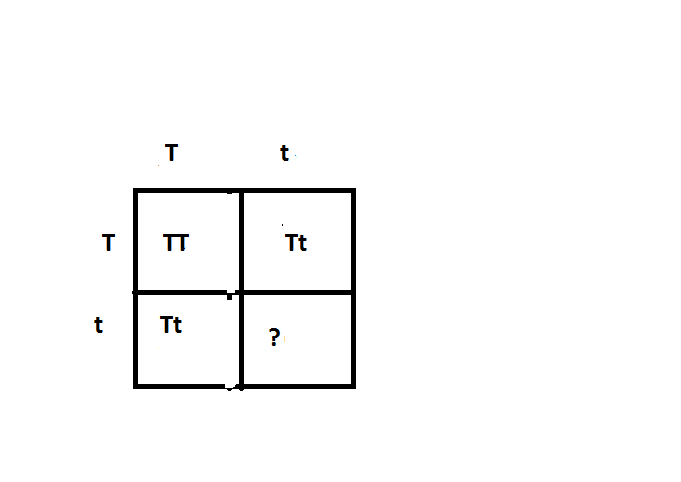
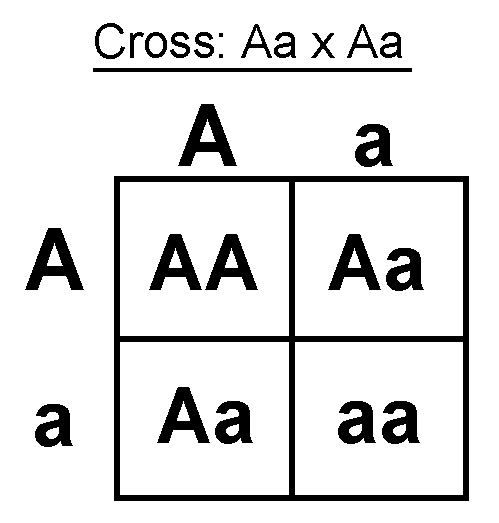
T - tall and t = short
In the punnett square below, what belongs in the missing square
a)
tt
b)
Tt
c)
Bb
d)
TT
51.
What is the phenotype of the offspring? (A-Brown hair; a-blond hair) 
a)
50 % Brown Hair and 50% Blond Hair 
b)
25 % Brown Hair and 75% Blond Hair 
c)
75 % Brown Hair and 25% Blond Hair 
d)
0% Brown Hair and 100% Blond Hair 
52.
What allele combination should go in the missing box?
a)
AA
b)
Aa
c)
aa
d)
none of these
53.
According to the law of superposition, which layer is the youngest?
a)
A
b)
B
c)
C
54.
Which Rock type would be best to find fossils?
a)
Igneous Rock
b)
Sedimentary Rock
c)
Metamorphic Rock
55.
This rock was formed when molten rock cooled into a solid. What type of rock is it?
a)
Igneous Rock
b)
Metamorphic Rock
c)
Sedimentary Rock
56.
The process by which igneous rocks are formed...
a)
heat and pressure
b)
melting and cooling
c)
weathering and erosion
57.
The process by which metamorphic rocks are formed...
a)
heat and pressure
b)
erosion and deposition
c)
melting and cooling
58.
The tectonic plates float on the 
a)
lithosphere
b)
lower mantle
c)
outer core
d)
asthenosphere
59.
Which layer is made of the crust and upper mantle?
a)
lithosphere
b)
asthenosphere
c)
mesosphere
d)
outer core
60.
This layer is solid & rigid
a)
Lithosphere
b)
asthenosphere
c)
mantle
d)
outer core
61.
Earth's plates are....
a)
Constantly moving and changing the face of the Earth
b)
Never moved
c)
Move seldom and very fast
d)
move when they feel like it
62.
Plate movement is caused by _____
a)
The rotation of the Earth
b)
Ocean tides
c)
Convection current in the mantle
d)
The moon's gravity
63.
Which piece of evidence did Wegener use to prove continental drift?
a)
The shape of the continents
b)
Similar fossils found on separate continents
c)
Tree fossils found in odd places
d)
All of the above
64.
The process by which molten material adds new oceanic crust to the ocean floor is called ___________.
a)
Divergent boundary
b)
Sea-floor spreading
c)
Convergent boundary
d)
Renovating 
65.
What is the process by which oceanic crust sinks beneath a deep-ocean trench and back into the mantle at a convergent plate boundary?
a)
Subduction
b)
Induction
c)
Abduction 
d)
Reduction
66.
_____________ is a plate boundary where two plates move away from each other.
a)
Convergent boundary
b)
Transform boundary
c)
Divergent boundary
d)
Insurgent boundary
67.
_____________ is when two plates move toward each other.
a)
Convergent boundary
b)
Allegiant boundary
c)
Transform boundary
d)
Sliding boundary
68.
A _____________ is when two plates move past each other in opposite directions.
a)
emergent boundary
b)
divergent boundary
c)
transform boundary
d)
convergent boundary
69.
What new feature forms at a convergent plate boundary where two continental plates collide?
a)
mid-ocean ridge
b)
trench
c)
mountain range
d)
none of these features form
70.
Mid Ocean Ridge Formation  is created at this type of  boundary.
a)
Divergent 
b)
Convergent
c)
Transform 
71.
What forms at a convergent boundary between a continental plate and an oceanic plate?
a)
volcanoes
b)
rift valleys
c)
faults
d)
mid-ocean ridges
72.
What is a destructive force?
a)
A natural process that destroys land
b)
A natural process that creates land
c)
A natural process where areas that are normally dry is covered in water
73.
A constructive force is defined as
a)
a natural occurrence that can build up or break down
b)
an earthquake or a volcano
c)
a natural force that builds up and creates new land
d)
a destructive force that has been controlled
74.
 Deposition is a process that
a)
Dissolves sediment
b)
Breaks down rock to form sediment
c)
Removes sediment from land forms
d)
Drops sediment to form landforms
75.

Volcanic eruptions

a)

Constructive

b)

Destructive

c)

Both

d)

Neither

76.

Earthquakes

a)

Constructive

b)

Destructive

c)

Both

d)

Neither

77.

Weathering

a)

Constructive

b)

Destructive

c)

Both

d)

Neither

78.

Erosion

a)

Constructive

b)

Destructive

c)

Both

d)

Neither

79.

Landslides

a)

Constructive

b)

Destructive

c)

Both

d)

Neither

80.

Flooding

a)

Constructive

b)

Destructive

c)

Both

d)

Neither

81.

Deposition

a)

Constructive

b)

Destructive

c)

Both

d)

Neither

82.
What is the breaking up of rocks into smaller pieces without changing the chemistry of it?
a)
physical weathering
b)
chemical weathering
83.
What is the process in which rock is broken down by changes in its chemical makeup?
a)
physical weathering
b)
chemical weathering
84.
What agent of chemical weathering, causes rocks to break down and change composition?
a)
burrowing animals 
b)
roots of plants
c)
acid rain
d)
wind abrasion 
85.
Burrowing animals can move soil and rock to the surface which exposes rocks and can cause...
a)
physical weathering
b)
chemical weathering
86.
Roots of plants can slowly grow overtime into small cracks in rocks which causes...
a)
physical weathering
b)
chemical weathering
87.
The very top layer of soil is mostly made of
a)
Solid rock 
b)
Clay and mineral deposits
c)
A mixture of minerals and organic material
d)
Mostly organic material (humus)
88.
Place the following layers in order from top to bottom: bedrock, topsoil, subsoil, organic, parent material.
a)
Organic, Topsoil, Subsoil, Parent Material, Bedrock
b)
Organic, Topsoil, Parent Material, Subsoil, Bedrock
c)
Topsoil, Organic, Subsoil, Parent Material, Bedrock
d)
Topsoil, Organic, Parent Material, Subsoil, Bedrock
89.
Water that is located in the ground in the pores within rock is called…
a)
watershed
b)
surface water
c)
groundwater
d)
water cycle
90.
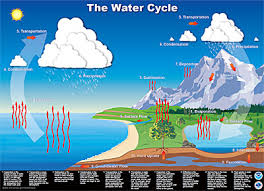
What process is happening at C in the diagram?
a)
runoff
b)
precipitation
c)
condensation
d)
transpiration
91.

groundwater

a)

all the bodies of fresh water, salt water, ice, and snow that are found above the ground

b)

the water that is beneath Earth's surface

c)

the area of land that is drained by a river system

d)

a body of rock or sediment that stores groundwater and allows the flow of groundwater
92.
Water that flows over the ground surface instead of sinking in is called
a)
water table
b)
runoff
c)
watershed
d)
aquifer
93.

In which stage does water on earth's surface try to soak into the ground?

a)

condensation

b)

evaporation

c)

precipitation

d)

infiltration

94.
What measures the waves of earthquakes?
a)
seismic wave
b)
seismograph
c)
seismology
d)
a scientist
95.
Scientists can predict exactly when a volcanic eruption will occur. 
a)
True
b)
False
96.
Hurricanes typically form over...
a)
cold ocean water. 
b)
tropical rain forests. 
c)
warm ocean water. 
d)
very dry land masses. 
97.
What are renewable resources?
a)
Resources that can be replaced in a short amount of time
b)
Resources that are used faster than they can be replaced
c)
They can not be replaced
98.
What are Nonrenewable resources? 
a)
Resources that can be replaced in a short amount of time  
b)
Resources that are used faster than they can be replaced 
c)
Resources America does not use
99.
Name Two examples of Nonrenewable resources?
a)
Coal and Oil
b)
Biomass and Wind Turbines
c)
Tidal and Geothermal
100.
Name two examples of Renewable energy?
a)
Coal and Nuclear
b)
Oil and Gas
c)
Solar Panels and Hydroelectric
101.
What is a disadvantage of Fossil Fuels?
a)
Scientists guess that it will run out in the next 50 years
b)
There are no disadvantages
c)
It does not pollute the earth
102.
A huge undersea earthquake off the Alaskan coastline could produce what natural hazard? 
a)
Tsunami 
b)
Cyclone 
c)
Hurricane 
d)
Drought 
103.

The protection, preservation and management of natural resources is known as

a)

recycling

b)

consumption

c)

conservation

d)

restoration

104.

_____ waves NEED a medium to travel.

a)

Seismic

b)

Light

c)

Mechanical

105.

This is a high frequency wave. Which part of the wave is "B"

a)

crest/peak

b)

wavelength

c)

trough

106.

Look at this wave. "A" is which part of a wave?

a)

Crest/Peak

b)

Wave Speed

c)

Resting Point

107.

Which wave has the longest wave length?

a)

top wave

b)

bottom wave

108.

What is transferred from place to place by waves?

a)

energy

b)

water

c)

fish

d)

amplitude

109.

An area of bunched up particles (bottom blue arrow) in a longitudinal wave is an area of ________________ .

a)

rarefaction (low pressure)

b)

compression (high pressure)

c)

amplitude (energy)

110.

_____________ is a measurement of how long or short a wave is. (Point B to Point F or Point D to Point H)

a)

wavelength

b)

amplitude

c)

compression

111.
Which wave has a greater frequency?
a)
A
b)
B
112.
As volume increases, ____ increases.
a)
amplitude
b)
frequency
c)
pitch
d)
resting point
113.
_____?______ materials do not allow light waves to pass through.
a)
Opaque
b)
Transparent
c)
Translucent
114.
Which objects on the table are "Translucent"?
a)
Fish Bowl; Supply Box; Goggles
b)
Pencil; Fish Bowl; Cup
c)
Fish Bowl; Supply Box; Pitcher
115.
Which objects on the table are "Transparent"?
a)
Rock; Pencil
b)
Cup; Goggles
c)
Supply Box; Fish Bowl
116.
This diagram best represents 
a)
reflection
b)
refraction
c)
absorption
d)
diffusion
117.
If you see an object as orange,
a)
it is absorbing orange light and reflecting all other colors. 
b)
it is reflecting all colors. 
c)
it is absorbing all colors. 
d)
it is reflecting orange light and absorbing all other colors. 
118.
When a sound is louder what measurement gets bigger?
a)
Frequency 
b)
Amplitude 
c)
Wavelength 
d)
Crest
119.
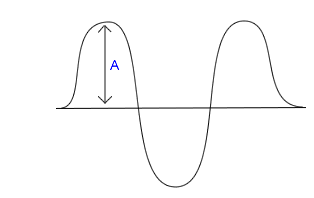
If the distance represented by the letter A (the amplitude) were increased, how would it change the sound?
a)
The sound would be higher. 
b)
The sound would be lower. 
c)
The sound would be softer. 
d)
The sound would be louder. 
120.
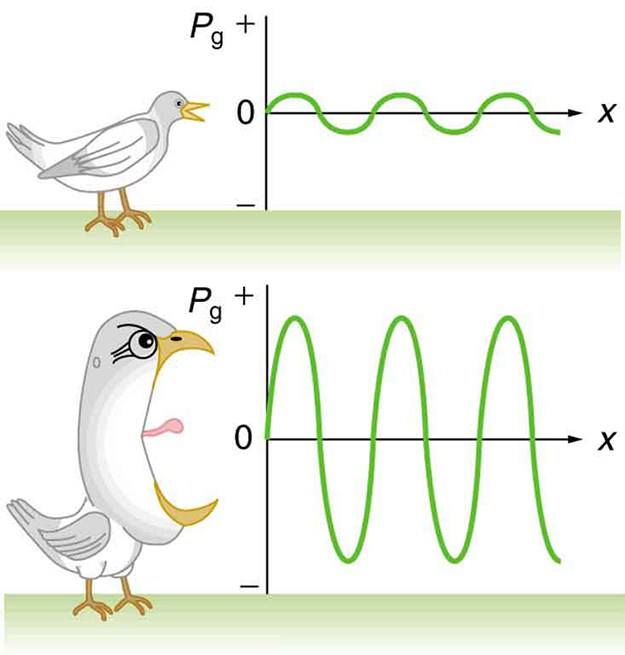
What is changed in the second picture?
a)
Someone is talking louder in picture 2
b)
Someone is talking softer in picture 2
c)
Someone is talking lower pitch in picture 2
d)
Someone is talking higher pitch in picture 2
121.

The picture shows waves being bent as they go through plastic. What type of wave movement is this?

a)

absorption

b)

transmission

c)

reflection

d)

refraction

122.

What type of wave is a light wave?

a)

A sound wave

b)

A seismic wave

c)

A electromagnetic wave

d)

A mechanical wave

123.

How is an electromagnetic wave different from a mechanical wave?

a)

An electromagnetic wave travels slower than a mechanical wave.

b)

An electromagnetic wave has a larger amplitude than a mechanical wave.

c)

An electromagnetic wave can travel through a vacuum, but a mechanical wave cannot.

d)

An electromagnetic wave has no wavelength, but a mechanical wave has a wavelength.

124.

Based on your observations of the prism, select the true statements.

a)

When light travels through a prism, the light is separated by wavelength.

b)

Humans see the different wavelengths of visible light as different colors.

c)

The prism is being used to combine different colors of light.

d)

The light bends when it enters the prism and again when it leaves the prism.

125.
Is music playing from a record an analog or digital signal?
a)
Analog
b)
Digital
126.
Is a video game coded as analog or digital data?
a)
Analog
b)
Digital
127.
Which type(s) of signal(s) can be easily corrected to remove noise?
a)
Analog
b)
Digital
c)
Both
d)
Neither