
 Worksheets
Scientific Thinking Skills Review For Final
Total questions: 124
Worksheet time: 4hrs 37mins
How does the amount of fertilizer affect the height of a plant? The independent variable is
the height of the plant
the amount of fertilizer
How does the amount of fertilizer affect the height of a plant? The dependent variable is
the height of the plant
the amount of fertilizer
Max is rolling a car down a ramp. Max thinks that cars roll faster on steeper ramps. What is Max's independent variable?
If the ramp is steeper, then the car will roll faster.
the steepness of the ramp
the speed of the car
the same car, the same surface, the same wind, etc..
Max is rolling a car down a ramp. Max thinks that cars roll faster on steeper ramps. What is Max's dependent variable?
If the ramp is steeper, then the car will roll faster.
the steepness of the ramp
the speed of the car
the same car, the same surface, the same wind, etc..
Max is rolling a car down a ramp. Max thinks that cars roll faster on steeper ramps. What is Max's hypothesis?
If the ramp is steeper, then the car will roll faster.
the steepness of the ramp
the speed of the car
the same car, the same surface, the same wind, etc..
Max is rolling a car down a ramp. Max thinks that cars roll faster on steeper ramps. What could be a control?
If the ramp is steeper, then the car will roll faster.
the steepness of the ramp
the speed of the car
the same car, the same surface, the same wind, etc..
Julia kicks a ball many times while kicking with different strengths to see how far Julia can kick the ball. What could Julia use a control?
the same ball
how hard Julia kicks
how far the ball goes
If Julia kicks harder, then the ball goes further.
Julia kicks a ball many times while kicking with different strengths to see how far Julia can kick the ball. What is Julia's independent variable?
the same ball
how hard Julia kicks
how far the ball goes
If Julia kicks harder, then the ball goes further.
Julia kicks a ball many times while kicking with different strengths to see how far Julia can kick the ball. What is Julia's dependent variable?
the same ball
how hard Julia kicks
how far the ball goes
If Julia kicks harder, then the ball goes further.
Julia kicks a ball many times while kicking with different strengths to see how far Julia can kick the ball. What is Julia's hypothesis?
the same ball
how hard Julia kicks
how far the ball goes
If Julia kicks harder, then the ball goes further.
Zemo has a hot air balloon. Zemo experiments with increasing the air temperature in the balloon to see how it affects the balloons altitude. What is a contol Zemo should use?
If the air temperature increases, then the balloon will rise.
the altitude of the balloon
the air temperature inside the ballon
the same balloon
Zemo has a hot air balloon. Zemo experiments with increasing the air temperature in the balloon to see how it affects the balloons altitude. What is Zemo's hypothesis?
If the air temperature increases, then the balloon will rise because the molecules will spread out.
the altitude of the balloon
the air temperature inside the ballon
the same balloon
Zemo has a hot air balloon. Zemo experiments with increasing the air temperature in the balloon to see how it affects the balloons altitude. What is Zemo's independent variable?
If the air temperature increases, then the balloon will rise.
the altitude of the balloon
the air temperature inside the ballon
the same balloon
Zemo has a hot air balloon. Zemo experiments with increasing the air temperature in the balloon to see how it affects the balloons altitude. What is Zemo's dependent variable?
If the air temperature increases, then the balloon will rise.
the altitude of the balloon
the air temperature inside the ballon
the same balloon
What three words should be in your hypothesis?
I think
My guess
If... then... because
No idea
What a hypothesis?
an explanation about what you observed
using your 5 senses to gather data
the thing changed on purpose in the experiment
an educated guess about what will happen in the experiment.
Which hypothesis is written corrctly?
If you sleep 8 hours then will help you do better in class because you need a good night sleep.
If the amount of sleep is changed then it will affect how you do in class.
I think the amount of sleep will affect how you do in class.
When is a hypothesis written?
before you decide on a question
after the experiment
after the conclusion
before the experiment
A hypothesis is never wrong.
True
False


What is CONSTANT VARIABLE?
Variables that remain constant
A variable that is changed in an investigation.
A variable that is observed in an investigation.
What is MANIPULATED VARIABLE?
Variables that remain constant
A variable that is changed in an investigation.
A variable that is observed in an investigation.
What is RESPONDING VARIABLE?
Variables that remain constant
A variable that is changed in an investigation.
A variable that is observed in an investigation.
This variable is the one thing that changed on purpose...
responding variable
constant variable
manipulated variable

What is the RESPONDING VARIABLE in this experiment?
"Does eating breakfast improve test scores?"
eating breakfast or not
the test score
what time you get up in the morning

You are testing how the amount you water a plant affects its growth. What would be the MANIPULATED VARIABLE in this experiment.
The amount the plant grows.
The amount you water each plant.
The amount of sunlight the plants get.

A scientist is testing which flavor of ice cream melts the fastest. What would his manipulated variables be? (choose TWO)
The flavor of ice cream
the time it takes to melt
the temperature in the room where the ice cream is
the size of the scoop

Siti is testing how the age of a seed affects how fast plants grow. Look at the picture to see if you can figure out what makes her experiment unfair.
She used different types of seeds/plants.
Seed age might not make a difference.
She did not plant very many plants.

What is the CONSTANT VARIABLE (same) in this picture?
type of the plant
weight of the plant
price of the plant

The variable that is being tested, counted, or measured and how it reacts to the manipulated variable is known as:
Manipulated Variable
Constant Variable
Responding Variable
These are the variables that should stay the same. They do not get any changes in order to make for a fair test.
Responding Variables
Constant variables
Manipulated Variables

What is the manipulated variable in the picture?
presence of sunlight
girl and boy
price of plant

A student wants to test the hypothesis of "If salt is added to water then the boiling point of water will decrease (go down)." What is the manipulated variable?
Whether salt is added or not
Boiling Point
Amount of water
How many manipulated variables are allowed to be changed in an experiment?
1
2
as many as you want
0

What is the manipulated variable in this picture?
The amount of water
The size of plant
You spend $40 on 5 pounds of concrete. What is the unit rate in dollars per pound?
$8 per pound
$35 per pound
$5 per pound
$0.125 per pound
Will spent $3.75 for 3 pounds of granola. What is his unit rate in dollars per pound?
$.50 per pound
$1.25 per pound
$3 per pound
$2.50 per pound
A unit rate is a rate in which the unit in the denominator is:
0
3
1
2
A cashier at the grocery store rung up 2 customers in 8 minutes. At this rate, how many customers can he ring up in 30 minutes?
16 customers
10.5 customers
7.5 customers
14 customers
You're throwing a party, and you ordered 15 pizzas for your guests. Your total came to $97.50. What was your unit cost per pizza?
$4.95 per pizza
$5.75 per pizza
$7.25 per pizza
$6.50 per pizza
You're throwing a party, and you ordered 15 pizzas for your guests. Your total came to $97.50. What was your unit cost per pizza?
$4.95 per pizza
$5.75 per pizza
$7.25 per pizza
$6.50 per pizza
You go to the grocery store to buy dog food. The store has three sizes available:
A 20-lb bag for $23.44
An 8-lb bag for $9.88
A 40-lb bag for $49.00
Which size bag has the lowest cost per pound rounded to the nearest cent?
The 8-lb bag
The 20-lb bag
The 40-lb bag
I have a cat


is the unit rate

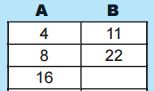


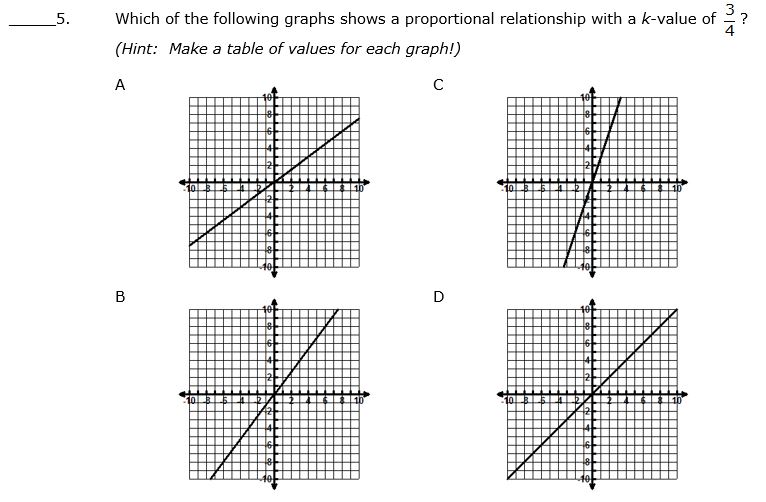
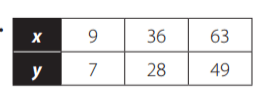
Which best describes the graph represented in this table?
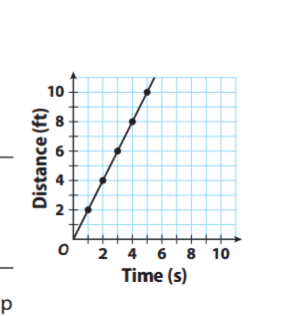


Determine the Independent Variable in the statement below
Farah studied 2 hours for her summative, Layan studied 4 hours. Layan got better marks.
Marks
Summative Test
Layan
Studying hours
Determine the dependent variable
Group (A) drinks coffee 3 times a day, Group (B) does not drink coffee.
Group (A) sleeps 3 hours at night. Group (B) sleeps 10 hours at night.
Drink Coffee
Does not drink Coffee
hours of sleep
Group A

Determine the Controlled Variable
A kid was playing with 2 red toy cars, he slides one on a short slide at the park and another on a long slide. The second car reached the end faster.
Short Slide
The park
Long Slide
the cars
The variable that We change on purpose is
Controlled
Dependent
Independent
Constant
How many independent variables are allowed to be changed in one experiment?
0
1
2
3

A scientist is testing how fast different flavors of ice cream melts. What could be a controlled variable?
Chocolate
Ice cream
Vanilla Ice cream
The size of the scoop
Place they are in
A student wants to test the effects of type of exercise on heart rate.
What is the dependent variable?
amount of exercise
heart rate
type of exercise
time of the day
A hypothesis is
a question
a possible explanation or postulate
using your senses to collect data
measure using tools to collect data
What is the independent variable?
What is the dependent variable?
What is a possible control variable?

What does the independent variables' definition, and how many should there be?
what the scientist thinks; 1
what the scientist observes; 1
what the scientist changes; 1
none of the above
Constants should be...
different
same
kind of the same
none of the above
Controls don't
receive experimental treatment
keep things the same
keep the experiment the same
keep procedures the same
Select ALL choices that are true regarding experiments.
contains controls and variables
test the hypothesis
used to test your variables
ensure experiments are valid

What is the probability of flipping a coin
3 times and getting 3 heads?
1/8
1/4
1/2
3/4
The theoretical probability of rolling an even number on a dice.
3/6
1/2
1/6
5/6
A farm has 5 brown cows and 10 white cows. A fence is open and two cows escape. What is the probability that it will be a brown cow, then a white cow?
1/9
2/9
5/21
10/21

You pick a marble from this bag.
What is the probability you will choose either a black or white marble?
3/5
9/100
1/10
2/5
In a drawer, there are 6 white socks, 4 black socks, and 2 brown socks. You pick out a sock, replace it, then pick out a 2nd sock. What is the probability that you will pick a brown, then black sock?
1/11
1/18
1/36
2/33
You roll two die.
What is the probability you will roll a 4, then roll a number less than 3?
1/36
1/18
1/9
1/6


You spin the spinner. How many possible outcomes are there?
4
8
1
6

picking an even number.
picking a number divisible by 5.

What is the probability of flipping a coin, getting tails?
1/2
1/3
1/4
Never, Tails never fails.
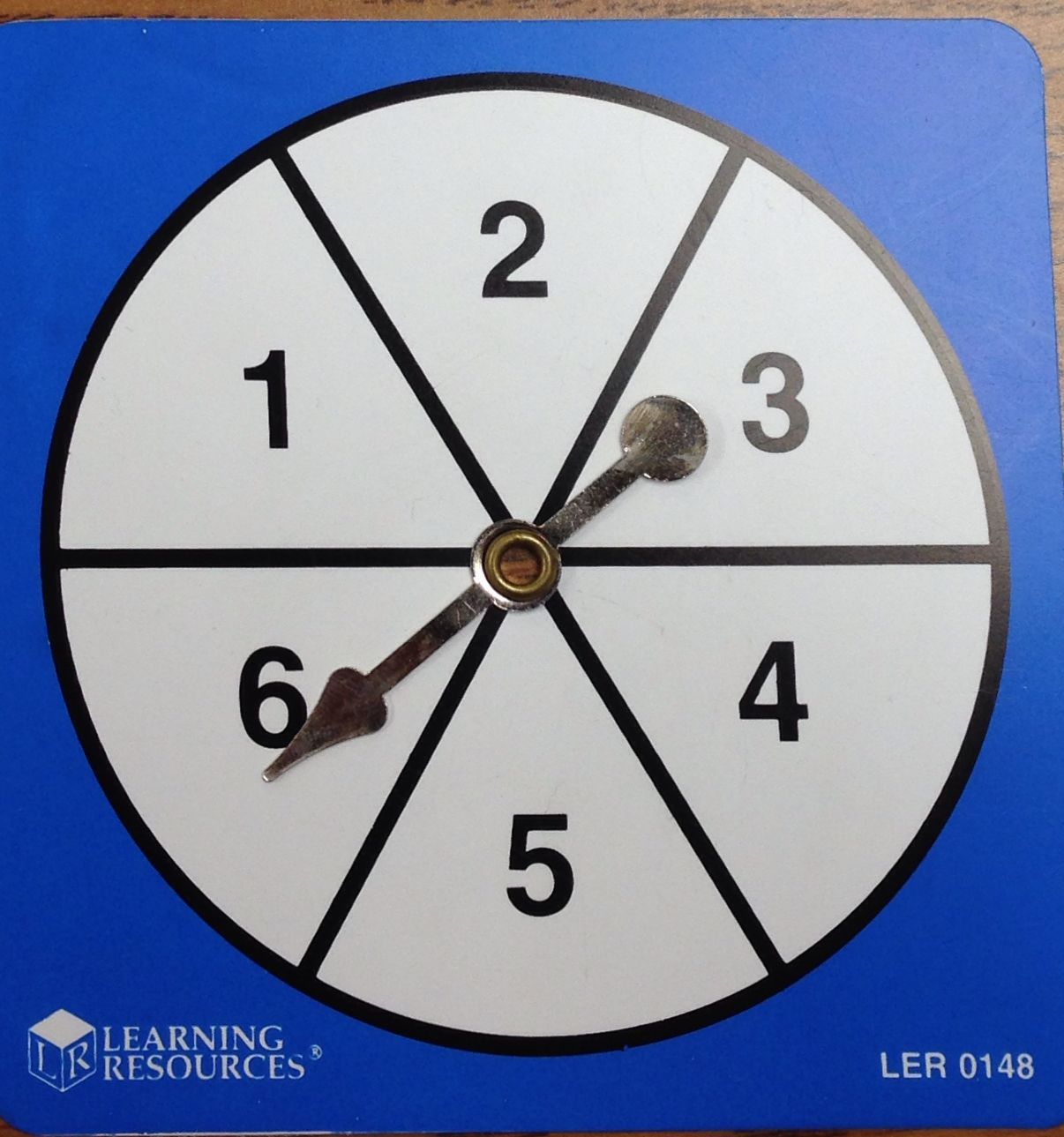
What is the probability of spinning an even number?
30%
33%
50%
67%

