wayground logo

Free Printable Worksheets

Font size

S
M
L
XL
Worksheets

Science STAAR Review

Total questions: 120

Worksheet time: 6hrs 34mins

Name
Class
Date
1.
Which of these correctly describes a relationship between organisms in the soil food web shown?
a)
Protazoa gets nutrients from small arthropods
b)
mammals are predators of birds
c)
nematodes prey on arthropods
d)
bacteria get nutrients from organic matter
2.
The rising magma that can result from this type of plate movement can produce--
a)
fossil layers
b)
volcanic islands
c)
deep-sea sediment
d)
sea floor spreading
3.
Which student correctly identified the geologic process that formed the Himalayan Mountains?
a)
1
b)
2
c)
3
d)
4
4.
Which hiker took the steeper path to point X?
a)
W
b)
Y
5.
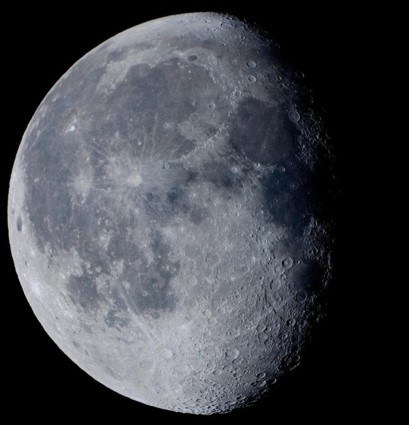
If you observe a waning gibbous moon, what phase would you expect to see one week later?
a)
waning crescent
b)
new moon
c)
waxing gibbous 
d)
full moon
6.
What season is it in the southern hemisphere?
a)
summer
b)
spring
c)
winter
d)
autumn
7.
How many peaks are shown in this topographic map?
a)
0
b)
1
c)
2
d)
3
8.
How many peaks are shown in this topographic map?
a)
0
b)
1
c)
2
d)
3
9.
In this food web, which two organisms are in competition for food?
a)
Coyote and rabbit
b)
Berries and green plants
c)
Raccoon and coyote
d)
Raccoon and rabbit
10.
Which locations would be experiencing a high tide?
a)
B and C
b)
B and D
c)
C and D
d)
C and A
11.
These stripes of different aged crust are evidence of what?
a)
Divergent boundaries
b)
Fossil records
c)
Global warming
d)
Seafloor Spreading
12.
Who was the scientist who proposed the idea of Continental Drift?
a)
Henry Hess
b)
Alfred Wegner
c)
Albert Einstein
d)
Isaac Newton
13.
What is the contour interval of this map?
a)
100
b)
10
c)
20
d)
200
14.
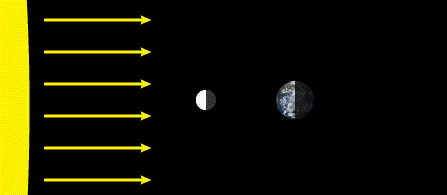
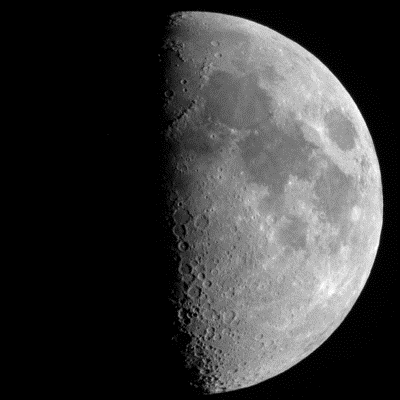
What moon phase will be visible from earth?
a)
Full moon
b)
Waning Gibbous
c)
Third Quarter
d)
New Moon
15.
What moon phase is this?
a)
Waning Gibbous
b)
Waning Crescent
c)
Waxing Gibbous
d)
Waxing Crescent
16.
Which trophic level will recieve the most energy from the sun?
a)
A
b)
B
c)
C
d)
D
17.
In which position is it spring in the southern hemisphere?
a)
A
b)
B
c)
C
d)
D
18.
When the earth has completed one revolution, what has it caused?
a)
One day/night cycle
b)
A political uprising
c)
All 4 seasons
d)
Plate tectonics
19.
When the earth has completed one rotation, what has it caused?
a)
One day/night cycle
b)
A political uprising
c)
All 4 seasons
d)
Plate tectonics
20.
Which location on the earth experiences the least change in the number of daylight hours?
a)
Equator
b)
North Pole
c)
South Pole
d)
Tropic of Cancer
21.
What is speed?
a)
how far you go
b)
how much distance is covered over a period of time
c)
how fast you accelerate
d)
the change in the location of a object
22.
What is the formula to calculate speed?
a)
Speed = time/distance
b)
Speed = distance/time
c)
Speed = distance x time
d)
Speed = time x distance
23.
Which of the following is a unit for acceleration?
a)
km/s
b)
m/s2
c)
mi/hr
d)
ft
24.
What is velocity?
a)
the quickness of an object
b)
the location of an object
c)
acceleration
d)
speed in a specific direction
25.
A measurement of how fast an object is moving
a)
Velocity
b)
Speed
c)
Vector
d)
Acceleration
26.
A description of the speed and direction of an object's motion
a)
Velocity
b)
Speed
c)
Acceleration
d)
Vector
27.
When a car goes around a corner at 20 mph, why do we say it  accelerates?
a)
The car is accelerating because of the velocity is constant
b)
The car accelerates because it's going 20 mph
c)
Cars always accelerate when they are in motion
d)
The car is accelerating because it's changing direction
28.
Why does a car accelerate as it round a corner at a constant speed?
a)
Its direction changes
b)
It doesn't
c)
It slows down
d)
Its speeds up  
29.
Acceleration only takes place when things speed up. 
a)
True
b)
False
30.
A drag racer accelerated from 0 m/s to 200 m/s in 5 s.  What was the acceleration?
a)
0 m/s
b)
40 m/s2
c)
-40 m/s2
d)
40 m/s
31.
Acceleration can be classified as _______________
a)
Speeding up
b)
Slowing Down
c)
Changing directions
d)
All of the above
32.
What is the person doing from 5 seconds to 10 seconds?
a)
Walking 
b)
Running
c)
Standing Still 
d)
Walking Fast
33.
In which time interval was the object speeding up?   
a)
between 0 s and 2 s
b)
between 2 s and 4 s
c)
between 6 s and 8 s
d)
between 8 s and 10 s
34.
The type of plate boundary where two plates come together is a .....
a)
Convergent Boundary
b)
Divergent Boundary
c)
Transform Boundary
d)
Plate Boundary
35.
Which of the following causes Earth's tectonic plates to move?
a)
Energy from the Sun
b)
Magnetic Pole Reversal
c)
Convection currents in the mantle
d)
Faults in Mountain Ranges
36.
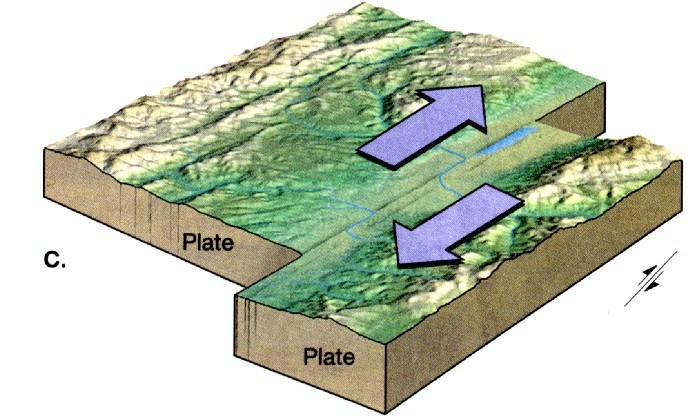
What type of plate boundary is this?
a)
Plate
b)
Divergent
c)
Convergent
d)
Transform
37.
What type of event will occur at this boundary?
a)
Earthquake
b)
Volcano Eruption
c)
Tornado
d)
Mountain Building
38.
A divergent boundary occurs when plates ....
a)
Pull apart
b)
Come together
c)
Slide past each other
d)
subducting
39.
Which of the following is the name of the ancient supercontinent formed 28 Million Years ago.
a)
Pangea
b)
Gondwanda
c)
Laurasia
d)
Neverland
40.
Which of the following is NOT evidence to support the theory of plate tectonics?
a)
Fossils
b)
Mountains
c)
Glaciers
d)
Sand Erosion
41.
What type of plate boundary is this?
a)
Transform
b)
Convergent
c)
Divergent
d)
Plate
42.
Oceanic Trenches are formed by _______ plate boundaries
a)
Convergent
b)
Transform
c)
Plate
d)
Divergent
43.
The theory that says Earth's continents once made up an ancient supercontinent, and have been drifting apart ever since, is called the theory of...
a)
Pangea
b)
Plate Tectonics
c)
Natural Selection
d)
Gravity
44.
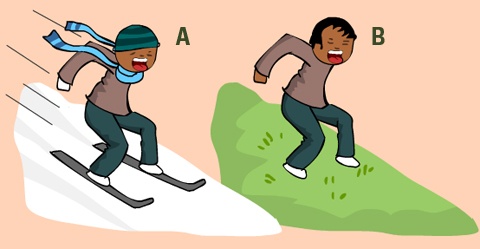
Why is it harder for the boy in Image B to get down the hill?
a)
Motion
b)
Friction
c)
Work
d)
Displacement
45.
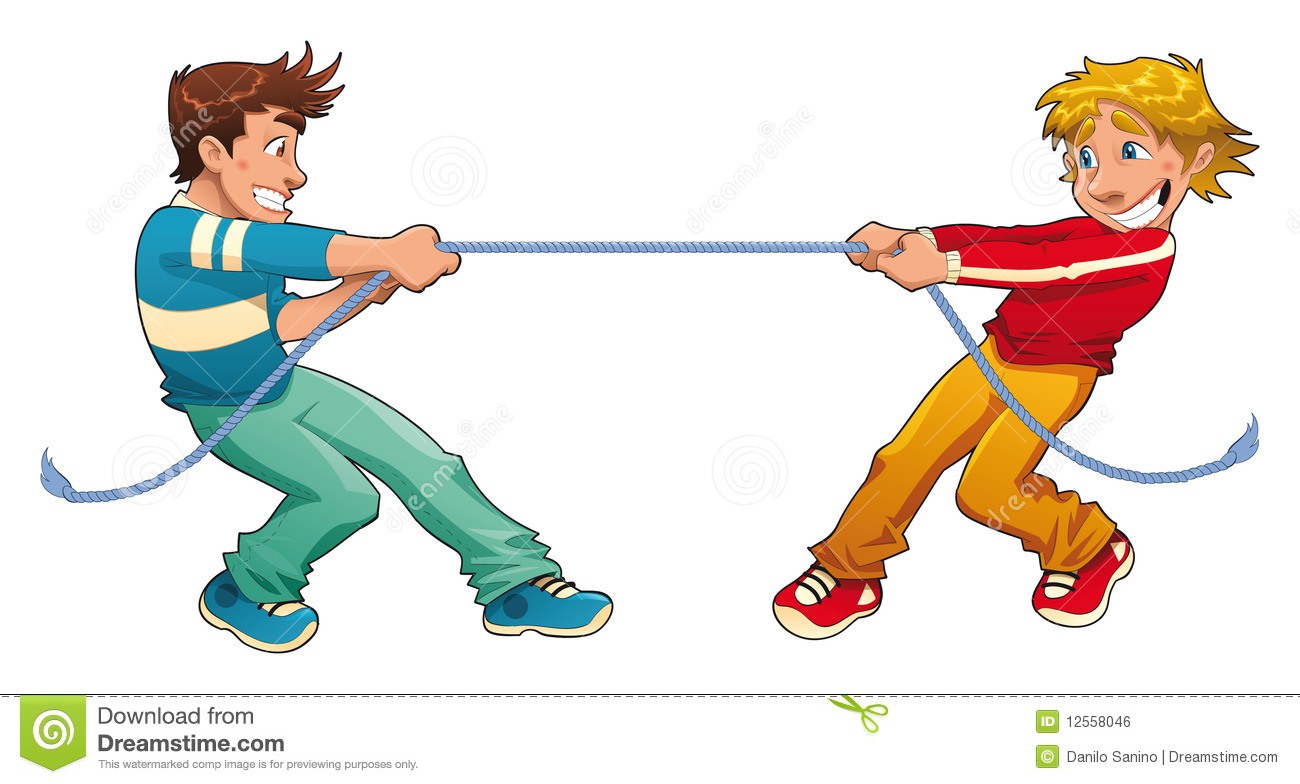
If these boys are pulling with the same amount of force.  What will happen?
a)
The boy in blue will win.
b)
They will not move at all.
c)
The boy in red will win.
d)
Both will fall down.
46.
What is the formula for force?
a)
F=M/A
b)
F=A/M
c)
F=M*A
d)
F=M*F
47.
What happens when two forces act in the same direction?
a)
They cancel each other out.
b)
The stronger one prevails.
c)
Their strengths are added.
d)
Their sum divided by the two is the total force.
48.
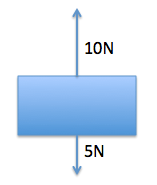
What is the net force on the block? (click on the words to view the picture)
a)
5 Newtons up
b)
5 Newtons down
c)
15 Newtons up
d)
15 Newtons down
49.
If a 10 kilogram object accelerates suddenly at 15 m/s2, how much force was applied to the object?
a)
150 Newtons
b)
15 Newtons
c)
150 kilograms
d)
100 kilograms
50.
A baseball is thrown a distance of 50 meters. What is the speed if it takes 2 seconds to cover that distance?
a)
100 m/s2
b)
25 m/s2
c)
52 m/s2
d)
100 seconds
51.
8 N to the left , and 4 N to the right. Find the net force. Is this balanced 
a)
12 N Right  No
b)
4 N Left  No
c)
12 N Right  Yes
d)
4 N Left  Yes
52.
A baseball is thrown a distance of 50 meters. What is the speed if it takes 2 seconds to cover that distance?
a)
100 m/s2
b)
25 m/s2
c)
52 m/s2
d)
100 seconds
53.
a)
Warm Front
b)
High Air Pressure
c)
Cold Front
d)
High Temperatures
54.
a)
Low Clouds
b)
Low Temperatures
c)
Light Wind
d)
Low Air Pressure
55.
a)
High Air Pressure
b)
High Temperatures
c)
Heavy Rain
d)
Hail
56.
a)
High Pressure
b)
Warm Front
c)
Cold Front
d)
Mountains
57.
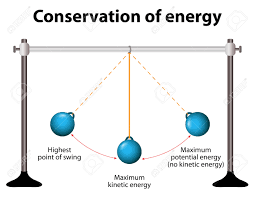
At which point is potential energy greatest?
a)
W
b)
X
c)
Y
d)
Z
58.
What kind of energy is in a rock at the edge of a cliff?
a)
Potential
b)
Kinetic
c)
Both potential and kinetic energy
d)
none of the above
59.
Which is the best example that something has kinetic energy?
a)
a. a car parked on a steep hill 
b)
b. a tennis ball rolling across the court
c)
c. a picture hanging on the wall 
d)
d. a piece of coal before it's burned 
60.
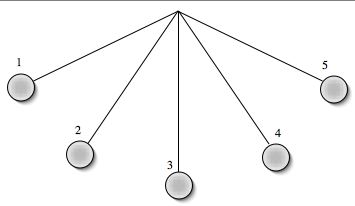
When a pendulum swings, at which point is kinetic energy highest?
a)
1
b)
2
c)
3
d)
4
61.
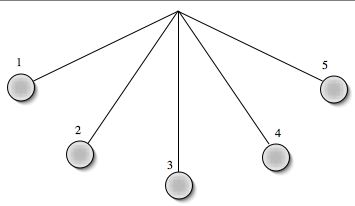
When a pendulum swings, at which point is potential energy at its greatest?
a)
1
b)
2
c)
3
d)
4
62.
Conservation of energy states that energy cannot be ________ or ________, but can be altered from one form to another.
a)
created, destroyed
b)
gravity, force
c)
heat, created
63.

Which part of the atom determines its identity?

a)

Protons

b)

Neutrons

c)

Electrons

d)

Valence Electrons

64.
What charge does a proton have?
a)
Negative
b)
Positive
c)
Neutral
65.
What charge does an electron have?
a)
Negative
b)
Positive
c)
Neutral
66.
What charge does a neutron have?
a)
Positive
b)
Negative
c)
Neutral
67.
What is the atomic number?
a)
the number of protons
b)
the number of protons and neutrons
c)
the number of neutrons
d)
the number of protons and electrons
68.
the central region of an atom where its neutrons and protons are is its 
a)
nucleus 
b)
electron cloud
c)
core 
d)
center 
69.
an atom with atomic number 6 would have how many protons 
a)
6
b)
12
c)
3
d)
cannot be determined 
70.
How many protons does this atom have?
a)
2.5
b)
6
c)
5
d)
10.811
71.
What part of the atom is the arrow pointing to?
a)
nucleus
b)
proton
c)
electron shell
d)
electron
72.
What does the Law of Conservation of Mass state?
a)
Matter cannot be gained or lost in a chemical reaction.
b)
Matter can only be lost in a chemical reaction.
c)
Matter can only be gained in a chemical reaction.
d)
Matter can be gained and lost in a chemical reaction. 
73.
After you mix two substances together, a new substance forms.  This is an example of:
 
a)
 Physical Change
b)
 Chemical Change
74.
Which of the following is a sign that a chemical reaction has occurred?
a)
change in shape
b)
melting
c)
bubbles of gas appear
d)
dissolving
75.
When iron nails get rusty, heat is released.  What kind of change is this?
a)
Chemical
b)
Physical
76.
Negatively charged particles found outside of the nucleus are called
a)
electron
b)
protons
c)
neutrons
d)
nucleons
77.
Positively charged particles found in the nucleus of an atom are called
a)
protons
b)
neutrons
c)
electrons
d)
isotopes
78.
If there is no subscript, there is ______ atom(s) of that element.
a)
0
b)
2
c)
only 1
d)
1 million
79.

How many atoms of carbon are present in one molecule of  C2H6O2C_2H_6O_2  

a)

0

b)

2

c)

6

d)

10

80.

How many total atoms are present in C2H3O2C_2H_3O_2  

a)

2

b)

3

c)

7

d)

10

81.

How many atoms of Phosphorus are present in one molecule of Ba3(PO4)2

a)

3

b)

4

c)

6

d)

2

82.
How does the Moon move around the Earth?
a)
The Moon revolves around the Earth
b)
The Moon revolves around the Sun
c)
The Moon revolves around the Earth and rotates on it’s axis at the same rate
d)
The Moon revolves around the Sun and rotates around the Earth at the same rate
83.
Why do we see phases of the Moon?
a)
Changing angles of the Earth, Moon, and Sun 
b)
Moon’s revolution around the Earth
c)
The views of light and dark on the Moon as visible from Earth
d)
All answer choices are correct
84.
Name this phase
a)
New Moon
b)
First Quarter
c)
Last Quarter
d)
Full Moon
85.
Name this phase
a)
Waxing Crescent
b)
Waxing Gibbous
c)
Waning Crescent
d)
Waning Gibbous
86.
Name this phase
a)
Waxing Gibbous
b)
First Quarter
c)
Waning Gibbous
d)
Last Quarter
87.
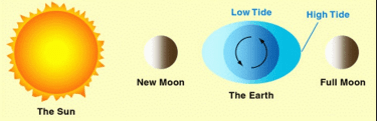
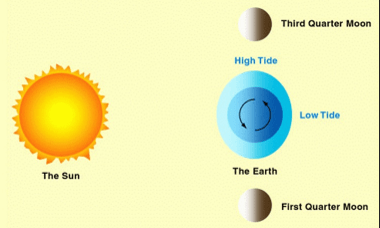
How does the position of the Moon and Sun affect the tides?
a)
The Moon has a strong gravitational pull on the Earth
b)
The Sun has a weak gravitational pull on the Earth
c)
The Moon and Sun have the same gravitational pull on the Earth
d)
Moon has a strong pull / Sun has a weak pull
88.
Which tide occurs during the Full or New Moon phase?
a)
Spring Tide
b)
Neap Tide
89.
Which tide occurs during the quarter Moon phases?
a)
Spring Tide
b)
Neap Tide
90.
A student begins keeping a moon journal each night for science class. The first night of recording is a Last Quarter moon. What is the next phase visible that the student documents in their journal?
a)
Waxing crescent moon
b)
Waning crescent moon
c)
Waxing gibbous moon
d)
Waning gibbous moon
91.
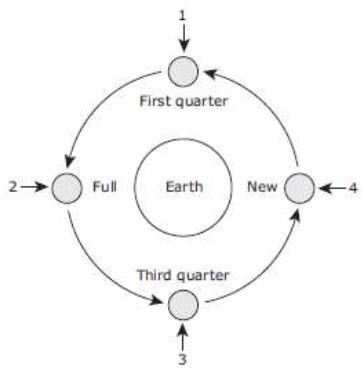
A student builds a model of the Sun, Earth, Moon system. In which position should the student place a flashlight to represent the Sun in the model?
a)
1
b)
2
c)
3
d)
4
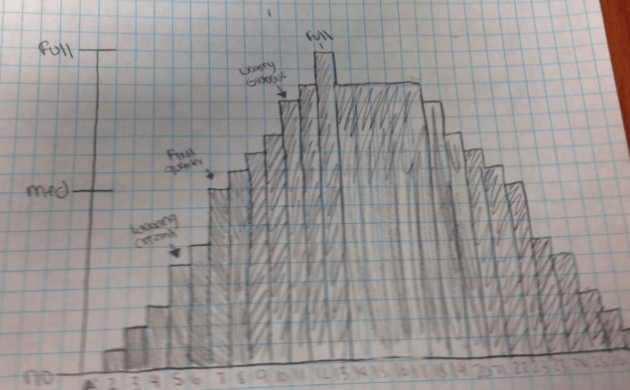
92.
A student creates a bar graph of the intensity of moonlight for a whole month. If days 13 and 14 have the greatest light intensity, what day(s) would be the New Moon phase?
a)
1
b)
8
c)
15
d)
23
93.

Which diagram best represents a first quarter moon?

a)
b)
c)
d)
94.

Based on the diagram, where is the sun located

a)

On the left of the diagram

b)

On the right of the diagram

c)

Above the diagram

d)

Below the diagram

95.

Based on the diagram above, what phase is observed from Earth at location D?

a)

waxing crescent

b)

first quarter

c)

waning crescent

d)

new moon

96.

How would the moon appear from point B?

a)
b)
c)
d)
97.

Based on the image, what lunar phase will be visible from Earth next?

a)

waxing gibbous

b)

first quarter

c)

full moon

d)

new moon

98.

Based on the sequence shown, which word best describes the changes in the moon's appearance during this portion of the lunar cycle?

a)

waxing

b)

waning

c)

crescent

d)

gibbous

99.

Based on the sequence shown, which word best descrives the changes in the Moon's appearance?

a)

waxing

b)

waning

c)

gibbous

d)

equinox

100.
What causes the seasons to change?
a)
The warming and cooling of Earth's core.
b)
The distance from the sun.
c)
Earth's tilt in relation to the sun.
d)
Earth's rotation on its axis.
101.
What happens when the area in which you live tilts away from the sun?
a)
It is summer.
b)
It is spring.
c)
It is winter.
d)
It is fall.
102.
What season is it in the Southern Hemisphere when it is fall in the Northern Hemisphere?
a)
winter
b)
spring
c)
summer
d)
fall
103.
Why does the area around the equator stay the same temperature all year?
a)
The equator rotates slower than the poles.
b)
The equator remains the same distance from the sun.
c)
The equator always receives direct sunlight.
d)
The equator has 18 hour days.
104.
In the Northern Hemisphere, on which day will you receive the most daylight?
a)
September 21
b)
December 21
c)
March 21
d)
June 21
105.
Which season is taking place in the Southern Hemisphere in Position 1?
a)
Winter
b)
Spring
c)
Summer
d)
Fall
106.
Which season is taking place in the Northern Hemisphere in Position 2?
a)
Winter
b)
Spring
c)
Summer
d)
Fall
107.
Which season is taking place in the Northern Hemisphere in Position 3?
a)
Winter
b)
Spring
c)
Summer
d)
Fall
108.
One rotation of Earth is equal to
a)
a day.
b)
a year.
109.
What would seasons be like if Earth's axis were straight up and down?
a)
Seasons would be the same.
b)
Seasons would be more extreme.
c)
There would be no seasons.
110.
If Earth rotated slower, we would have...
a)
shorter days.
b)
longer days.
c)
shorter years.
d)
longer years.
111.
Which seasons have an equal amount of daylight and darkness?
a)
Spring and Fall
b)
Winter and Summer
c)
Winter and Spring
d)
Summer and Fall
112.
Where on Earth can you experience entire days of darkness?
a)
The equator
b)
The poles
c)
The Tropic of Cancer
d)
The Tropic of Capricorn
113.
Which season is taking place in the Southern Hemisphere in Position 4?
a)
Winter
b)
Spring
c)
Summer
d)
Fall
114.
Why do globes lean sideways?
a)
To allow them to spin easier.
b)
To demonstrate the tilt of Earth's axis.
c)
To demonstrate the effects of gravity.
d)
To demonstrate day and night.
115.
What determines the reactivity of an element?
a)
Size of its nucleus
b)
Number of total electrons
c)
Number of valence electrons
d)
Number of shells
116.
How do you determine the number of valence electrons an element has?
a)
Look at its period
b)
Look at its group
c)
Look at its atomic number
d)
Look at its atomic mass
117.

What are valence electrons?

a)

The total number of electrons in an atom

b)

The number of electrons in the outermost shell

c)

The number of electrons in the second shell

d)

The number of protons in the outermost shell

118.

where are the metaloids found

a)

far left, vertical

b)

stair step/diagonal

c)

far right horizontal

d)

at the bottom

119.

Periodic law states that the elements are arranged according to their atomic ________ so that elements with similar chemical properties are in the same ________ and properties repeat periodically.

a)

numbers, rows

b)

masses, rows

c)

masses, column

d)

numbers, column

120.

A row on the Periodic Table of Elements

a)

family

b)

period

c)

row

d)

isotope