wayground logo

Free Printable Worksheets

Font size

S
M
L
XL
Worksheets

8th Grade Final Review

Total questions: 115

Worksheet time: 2hrs 55mins

Name
Class
Date
1.
A possible explanation to a problem that has not yet been tested. 
a)
data
b)
theory
c)
hypothesis
d)
fact
2.
This part of the experiment serves as a basis of comparison; the one variable being tested has been omitted. 
a)
experimental group
b)
control group
c)
data
d)
variables
3.
This variable in an experiment is the one being deliberately changed by the scientist. 
a)
dependent variable
b)
independent variable
c)
data
d)
control group
4.
What step does every scientific experiment begin with?
a)
hypothesis
b)
question/problem
c)
procedures
d)
conclusion
5.
An experiment is performed on plants to see how different liquids affect plant growth. Each plant in the experiment is given a different liquid; water, apple juice, or milk. Each plant has the same amount of soil, sunlight, and listens to the same music. In this investigation, the independent variable is ...
a)
The type of plant
b)
The amount of sunlight
c)
The type of music
d)
The type of liquid
6.
The summary at the end of an experiment that explains the results. 
a)
conclusion
b)
procedures
c)
materials
d)
responding variable
7.
A student wants to test the effects of type of exercise on heart rate.  What is the dependent variable?
a)
heart rate
b)
type of exercise
c)
amount of exercise
d)
time of day exercise occurs
8.
An experiment is performed on plants to see how different liquids affect plant growth. Each plant in the experiment is given a different liquid; water, apple juice, or milk. Each plant has the same amount of soil, sunlight, and listens to the same music. In this investigation, what are the controlled variables?
a)
Type of plant, amount of music, and sunlight
b)
Water, apple juice, milk
c)
Plant growth
9.

What is the standard unit for length?

a)

meter

b)

liter

c)

mass

d)

second

10.

What is the standard unit for mass?

a)

kilograms

b)

meters

c)

pounds

d)

liters

11.
How do you calculate density?
a)
mass divided by volume
b)
volume divided by mass
c)
mass times volume
d)
very carefully
12.
How do you calculate the volume of a rectangular solid?
a)
length x width x height
b)
mass divided by volume
c)
with a triple beam balance
d)
it's impossible
13.
What is mass?
a)
a measure of the amount of matter an object contains
b)
a measure of the force of gravity acting on an object
c)
the amount of space an object takes up
d)
a temperature scale
14.
How do you measure the volume of an irregular solid?
a)
displacement method
b)
length x width x height
c)
mass divided by volume
d)
kick it
15.
What is the volume? Count by 2s.
a)
22 ml
b)
25 ml
c)
28 ml
d)
18 ml
16.
What is the mass?
a)
155g
b)
105g
c)
105.6g
d)
105.2g
17.
Which box has a higher density?  
a)
Box A
b)
Box B
c)
cannot be determined
d)
they are the same
18.
Energy of motion is which type of energy?
a)
Potential
b)
Kinetic
c)
Sound
d)
Gravitational
19.
What kind of energy is represented in this picture?
a)
Thermal
b)
Potential
c)
Nuclear
d)
Mechanical
20.
What kind of energy does this device use?
a)
Chemical
b)
Electrical
c)
Thermal
d)
Chemical
21.
What kind of energy is represented in the picture?
a)
Thermal
b)
Chemical
c)
Sound
d)
Nuclear
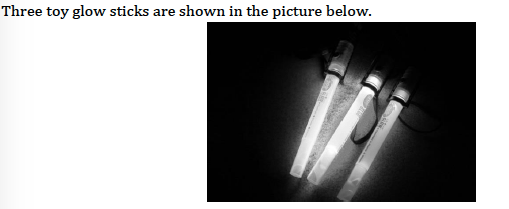
22.
The glow sticks produce light for a short amount of time. The light from the glow stick is a conversion from what to what?
a)
thermal to light
b)
gravitational to potential
c)
radiant to electrical
d)
chemical to light
23.
On a roller coaster, where is maximum potential energy?
a)
At the bottom of a big hill
b)
When going around a corner
c)
When going upside down
d)
At the top of a big hill
24.
On a roller coaster, where is maximum kinetic energy?
a)
At the bottom of a big hill
b)
When going around a corner
c)
When going upside down
d)
At the top of a big hill
25.
Energy that comes from the nucleus of an atom. A form of potential energy.
a)
chemical energy
b)
Nuclear energy
c)
Sound energy
d)
Electrical energy
26.
According to which law of energy, energy can't be created or destroyed?
a)
First law of motion
b)
The law of tacos
c)
Laws of Energy
d)
law of conservation of energy
27.
The ability to do work is
a)
power
b)
energy
c)
thermal
d)
kinetic
28.
What type of energy includes both kinetic and potential energy?
a)
mechanical energy
b)
chemical energy
c)
heat energy
d)
sound energy
29.

A windmill is an example of ________________energy.

a)

thermal

b)

mechanical

c)

light

d)

electrical

30.
What kind of energy is in a rock at the edge of a cliff?
a)
Potential
b)
Kinetic
c)
both
d)
neither
31.
Which of the following is NOT an alternative energy source?
a)
fossil fuels
b)
geothermal
c)
hydroelectric
d)
wind 
32.
As water flows through a dam, a generator is turned and creates enough electricity for thousands of homes. This describes...
a)
biofuels
b)
hydroelectric energy
c)
geothermal energy.
d)
potential energy
33.
Oil, natural gas and coal are called ________resources because they are not easy to replace.
a)
fossil fuels
b)
cheap
c)
natural resources
d)
nonrenewable
34.
Fossil fuels are a major source of air pollution and therefore, a major contributor to _____________________!
a)
ozone depletion
b)
global warming
c)
skin cancer
d)
none of the above
35.
Solar Energy is... 
a)
Energy that comes from harnessing the movement of the air
b)
Energy that comes from the Sun
c)
A source of renewable energy, such as solar, wind, or geothermal energy
d)
Fuel from plant material
36.

Hot water is pumped up from deep inside Earth and is used to heat homes or to generate electricity. This describes...

a)

biomass

b)

hydroelectric energy

c)

geothermal energy

37.
What is biomass? 
a)
energy from the sun
b)
energy from water
c)
energy from wind
d)
energy from plant and animal waste
38.
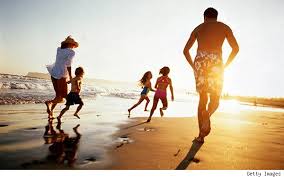
The sun shines down on this family as the play on the beach.
a)
conduction
b)
convection
c)
radiation
39.
Walking on the warm sand sand with your bare feet.
a)
conduction
b)
convection
c)
radiation
40.
Blow drying your wet hair.
a)
conduction
b)
convection
c)
radiation
41.
Warm air rises and the cool air sinks.
a)
conduction
b)
convection
c)
radiation
42.
A material that reduces the flow of heat by conduction, convection, and radiation is ____. 
a)
a conductor 
b)
 an insulator
c)
a solar collector
d)
condensation
43.
Which of the following would be the best insulator? 
a)
 air
b)
copper 
c)
silver
d)
aluminum
44.
Characteristic that can be observed such as color, state, or hardness
a)
physical property
b)
chemical property
c)
density
d)
mass
45.
Example of a chemical change
a)
baking cookies
b)
grinding flour
c)
melting popsical
d)
cutting a piece of paper
46.
A sample of a substance has a mass of 7.3 g and a volume of 2.8 cm3. What is the objects density?
a)
2.61 g/cm3
b)
10.1 g/cm3
c)
0.38 g/cm3
d)
20.44 g/cm3
47.
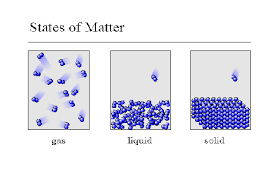
Which state of matter has the highest amount of energy?
a)
solid
b)
liquid
c)
gas
48.
When a solid turns into a liquid
a)
freezing
b)
melting
c)
evaporating
d)
condensing
49.
When a liquid turns into a gas
a)
freezing
b)
melting
c)
evaporating
d)
condensing
50.
When a gas turns into a liquid
a)
freezing
b)
melting
c)
evaporating
d)
condensing
51.
At higher temperatures
a)
particles in an object have less energy
b)
particles in an object move faster
c)
a gas contracts
52.
Define a liquid.
a)
Indefinite shape, indefinite volume
b)
Definite shape, definite volume
c)
Found in stars
d)
Definite volume, indefinite shape
53.

Vaporization/ evaporation is the change of physical state from _______ to _______.

a)

gas to liquid

b)

liquid to gas

c)

solid to gas

d)

gas to solid

54.
The group number tells us how many _________ there are in an element.
a)
groups
b)
valence electrons
c)
energy levels
d)
chemicals
55.
The ________________ tells you how many energy levels are used in an element.
a)
group number
b)
atom
c)
protons
d)
period number
56.

The innermost energy level can only hold ______ electrons.

a)

1

b)

0

c)

2

d)

18

57.
The characteristics or properties of metals include
a)
shiny and solid
b)
ductile and malleable
c)
lose electrons
d)
all of the above
58.
Which particle does not contribute mass to the atom?
a)
Proton
b)
Neutron
c)
Electron
d)
Nucleus
59.
Which particle contributes the negative charge to the atom?
a)
proton
b)
electron
c)
neutron
d)
nucleus
60.
Water is an element?
a)
true
b)
false
61.
Most of the mass in an atom is made up of _____________________?
a)
protons and electrons
b)
protons and neutrons
c)
neutrons and electrons
d)
electrons and quarks
62.
What is a pure substance that cannot be broken down into any other substance by physical or chemical means. Ex: Gold, Silver, Oxygen, & Nitrogen
a)
element
b)
compound
c)
mixture
d)
salad
63.
What is a  pure substance made of two or more elements chemically combined in a set ratio. Ex: CO2 has a set ratio of 1:2, meaning for every one carbon atom there are two oxygen atoms.
a)
element
b)
compound
c)
mixture
d)
salad
64.
What type of mixture contains visible parts (like a salad or a pizza or granite)
a)
homogenous
b)
heterogenous
65.
What is matter
a)
Anything which is solid
b)
Anything that takes up space and has mass
c)
when something is wrong
66.
Gold is an example of a(n) 
a)
pure element
b)
pure compound
c)
pure mixture
67.
Air is an example of a(n)
a)
element
b)
compound
c)
heterogenous mixture
d)
homogenous mixture
68.
In a mixture items can be separated __________
a)
chemically
b)
physically
69.
who developed the modern day periodic table of elements?
a)
Darwin
b)
Shultz
c)
Hooke
d)
Mendeleev
70.
On the Periodic Table each element increases by one _________
a)
electron
b)
proton
c)
neutron
d)
letter
71.
Humidity is the...
a)
Amount of Water Vapor in the Air
b)
Amount of Wind in the Air
c)
Amount of Precipitation in the Air
d)
Amount of Pressure in the Air
72.
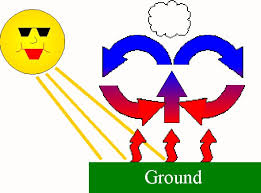
Warm air near the Earth’s surface rises and then cools and drops, this creates a _________________ in the atmosphere.
a)
run-off
b)
Greenhouse Effect
c)
convection current
d)
water cylce
73.
What kind of weather is usually associated with a low pressure system?
a)
Sunny weather
b)
Precipitation (rain, snow, etc.)
74.
What kind of weather is usually associated with a high pressure system?
a)
Sunny weather
b)
Precipitation (rain, snow, etc.)
75.
What layer does weather occur in?
a)
mesosphere
b)
troposphere
c)
thermosphere
d)
stratosphere
76.
Where is the ozone layer located?
a)
Thermosphere
b)
Troposphere
c)
Stratosphere
d)
Mesosphere
77.
The blanket of gases that surrounds the Earth
a)
Lithosphere
b)
Atmosphere
c)
Hydrosphere
d)
Green House Effect
78.
What measures temperature?
a)
barometer
b)
anemometer
c)
thermometer
d)
psychrometer
79.
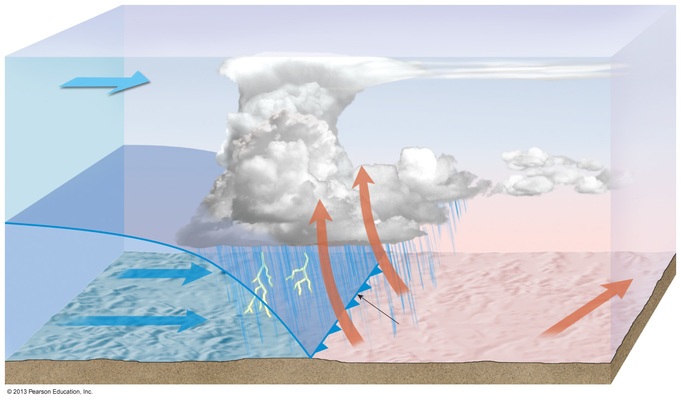
What type of storm front is this? 
a)
warm front
b)
cold front
c)
stationary front
d)
occluded front
80.
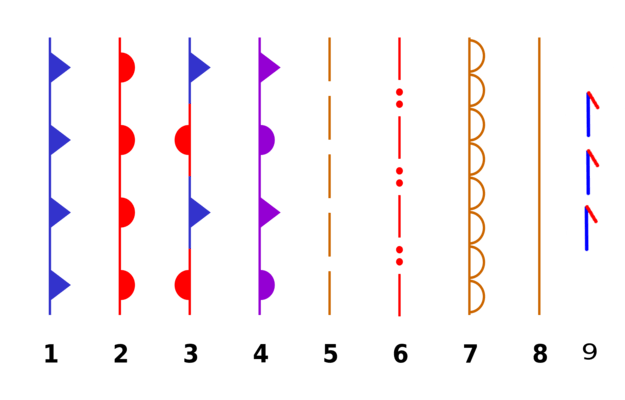
What does symbol # 3 mean?
a)
stationary front
b)
occluded front
c)
warm front
d)
cold front
81.
A front is
a)
where warm air is cooling at earth's surface
b)
a line where hot and cold air are separating
c)
a line where two different air masses meet
d)
where cold air is rising and forming rain clouds
82.
_____________ air is more dense and tends to sink
a)
cold
b)
warm
c)
moist
d)
dry
83.
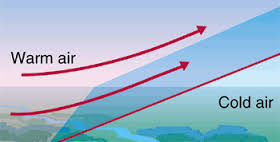
Which type of front is pictured?
a)
Cold front
b)
Warm front
c)
Occluded front
d)
Stationary front
84.
The natural chemical or physical processes that breaks down rock on Earth's surface.
a)
weathering
b)
erosion
c)
deposition
d)
jackhammering
85.
The process by which water, ice, wind or gravity moves weathered rock and soil from one place to another.
a)
weathering
b)
erosion
c)
deposition
d)
dumptruck
86.
This type of weathering occurs when rock is physically broken down into smaller pieces of rock.
a)
mechanical weathering
b)
chemical weathering
c)
erosion weathering
d)
deposition
87.
This type of weathering occurs when rocks weaken then break down due to chemical changes in the composition of the rock.
a)
mechanical weathering
b)
chemical weathering
c)
erosion weathering
d)
deposition
88.
These rocks were broken apart from the continuous freeze/thaw of water in the cracks of the rocks. This is an example of:
a)
ice wedging
b)
acid rain
c)
permeability
d)
abrasion
89.
How is mechanical weathering different from chemical weathering?
a)
Chemical weathering happens over much shorter time frame than mechanical weathering.
b)
Chemical weathering changes the chemical composition of rocks; mechanical weathering does not.
c)
Chemical weathering occurs only in tropical climates; mechanical weathering occurs only in cool climates.
d)
Chemical weathering occurs only in the mountains; mechanical weathering occurs only on flat land.
90.
This is the process of dropping sediment in a new location.
a)
Weathering
b)
Erosion
c)
Deposition
91.
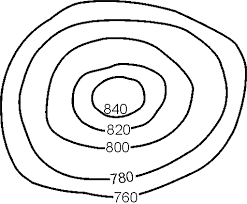
What is the elevation of Y?
a)
Between 120-140 meters
b)
Between 100-120 meters
c)
Between 140-160 meters
d)
Between 80-100 meters
92.
Determine the contour interval:
a)
5 m
b)
10 m
c)
15 m
d)
20 m
93.
What do contour lines that are farther apart represent?
a)
waterfall
b)
steep area
c)
gentle slope
d)
river
94.
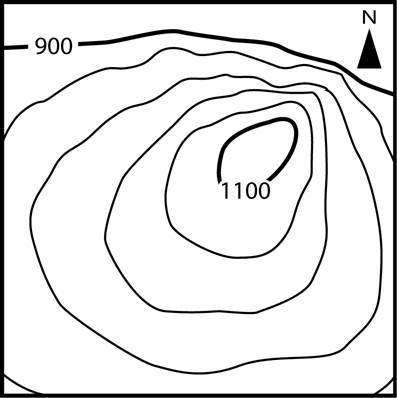
Provided is a topographic map of a hill with contour lines drawn showing elevation in meters.
The steepest slope on this hill can be found on the side that is facing which direction?
a)
Southwest
b)
Northeast
c)
Northwest
d)
Southeast
95.

Location D is located at which coordinates?

a)

30oN, 90oW

b)

90oN, 30oW

c)

10oN, 40oW

d)

30oN, 90oE

96.

Location H is located at which coordinates?

a)

60oN, 120oE

b)

90oN, 30oE

c)

10oS, 40oW

d)

30oN, 90oE

97.
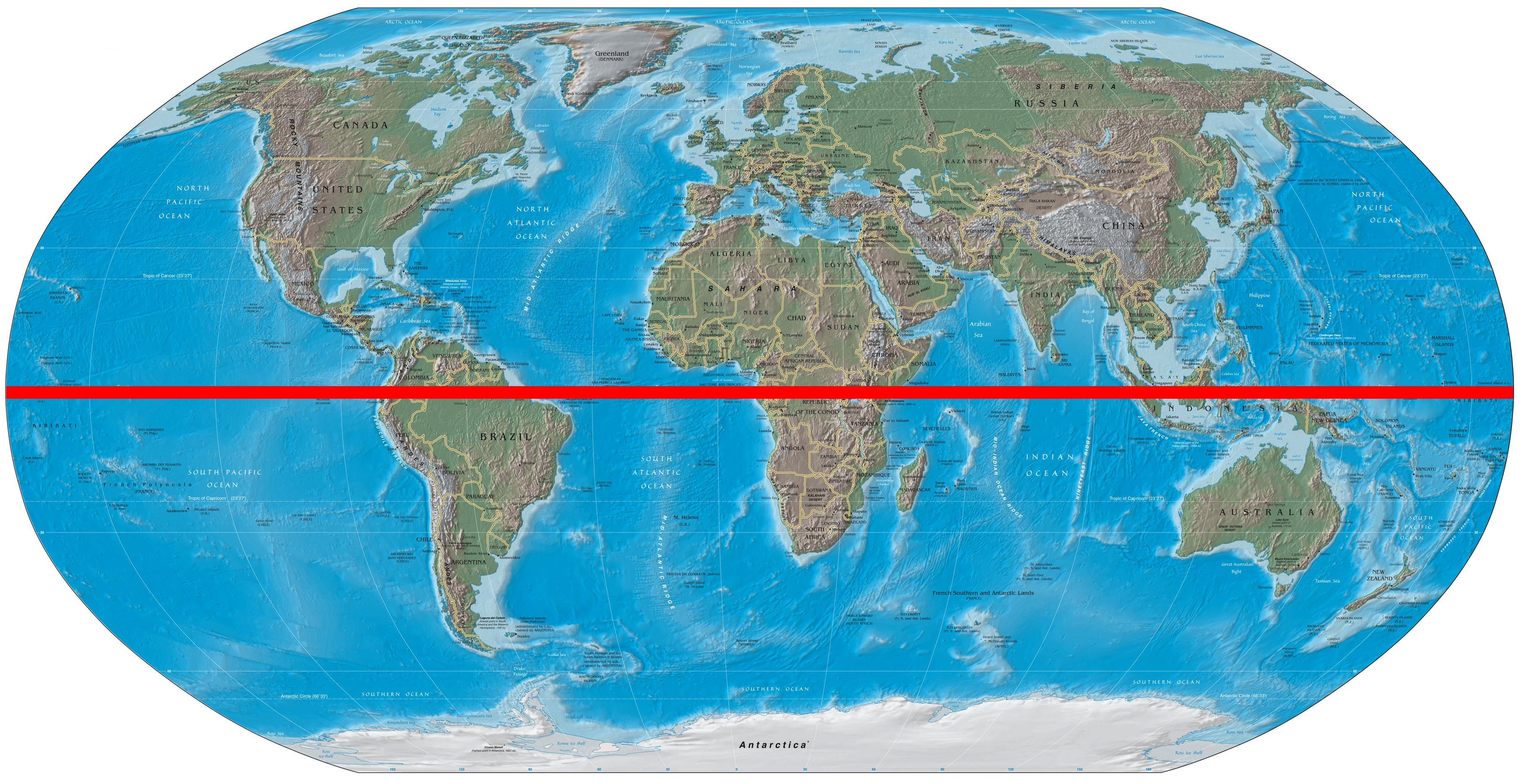
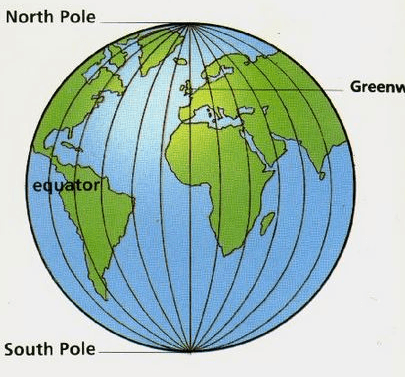
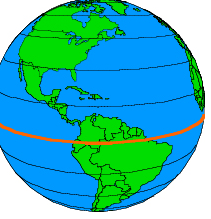
What is the name of this line at 0 degrees latitude?
a)
Prime Meridian
b)
Equator
c)
North Pole
d)
South Pole
98.
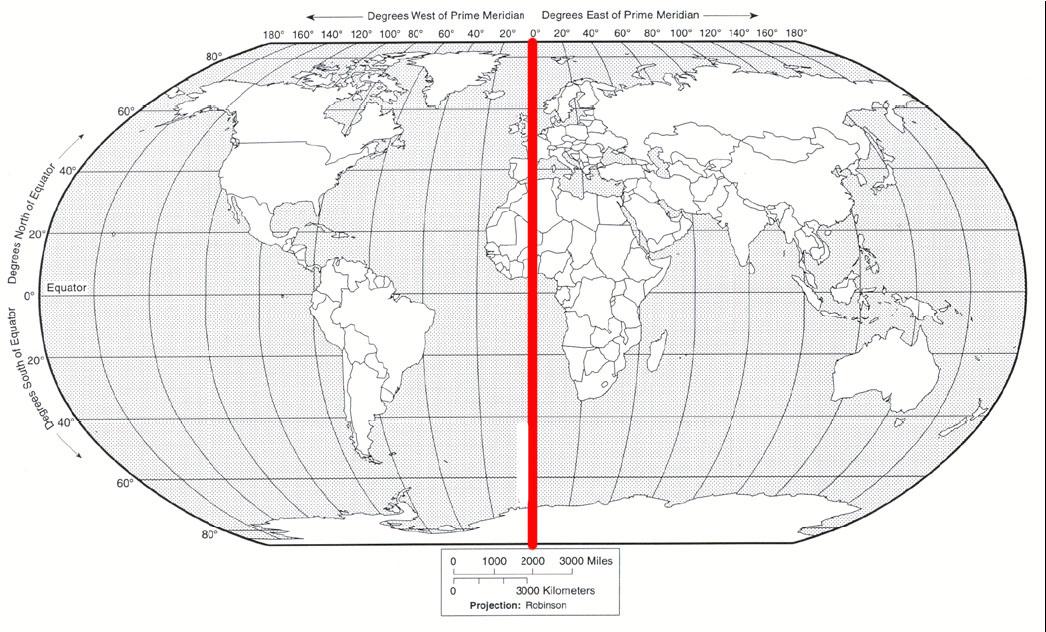
What is the name of the line at zero degrees longitude?
a)
Equator
b)
Prime Meridian
c)
North Pole
d)
South Pole
99.
a)
The map show the lines of longitude.
b)
The map shows the lines of latitude.
100.
a)
The map shows lines of longitude.
b)
The map shows lines of latitude.
101.

Atoms that have a positive charge will be ATTRACTED to atoms with a ___________ charge.

a)

positive

b)

negative

c)

neutral

102.

In a magnet the opposite poles will ___________.

a)

attract

b)

repel

103.

The magnetic field of a magnet is ____________ further away from the magnet.

a)

stronger

b)

weaker

104.
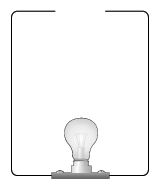
This circuit won't work. What essential part is missing from this circuit?
a)
resistance
b)
source of electric current
c)
conductor
d)
ammeter
105.
Which circuit (s) are parallel?
a)
A
b)
A and B
c)
B and C
d)
C
106.
Which one will still function if one light bulb goes out?
a)
A-Series
b)
B-Parallel
c)
A-Parallel
d)
B-Seriese
107.
If I add more light bulbs to a series circuit what happens?
a)
The current speeds up and the lights get brighter
b)
The current slows down and the lights dim lower
c)
The current speeds up and the lights dim lower
d)
The current slows down and the lights get brighter
108.
What is climate?
a)
What's happening in space at a time and place.
b)
What's happening in our atmosphere at a time and place
c)
The average weather over many years
d)
The average temperature over many years.
109.

How does latitude affect the climate of an area?

a)

The higher the latitude, the warmer the temperature.

b)

The higher the latitude, the lower the temperature.

c)

The higher the latitude, the more precipitation.

d)

The higher the latitude the less precipitation.

110.

How does elevation affect the climate of an area?

a)

As elevation increases, air temperature increases.

b)

As elevation increases, air temperature decreases.

c)

As elevation increases, precipitation increases.

d)

As elevation increases, precipitation decreases.

111.

How do ocean currents affect the climate of an area? Choose all that apply.

a)

Cold ocean currents have a cooling effect on nearby land.

b)

Cold ocean currents have a warming effect on nearby land.

c)

Warm ocean currents make nearby land warmer.

d)

Warm ocean currents make nearby land colder.

112.

How does distance from a large body of water affect the climate?

a)

Cities near the ocean have less precipitation.

b)

Cities near the ocean have more precipitation.

c)

Cities near the ocean have a smaller temperature range.

d)

Cities near the ocean have a large temperature range.

113.
Which location probably has the greatest annual rainfall?
a)
A
b)
F
c)
C
d)
D
114.
Which physical characteristics would cause location G to have a colder yearly climate than any other location?
a)
the nearness of location G to a large ocean
b)
the location of G with respect to the prevailing winds
c)
the elevation of location G above sea level
d)
the distance of location G to the equator
115.
Which location probably has the greatest range in temperature during the year? 
a)
A
b)
B
c)
H
d)
D