
 Worksheets
Unit 1 Review-Matter and everything in it!
Total questions: 120
Worksheet time: 2hrs 31mins

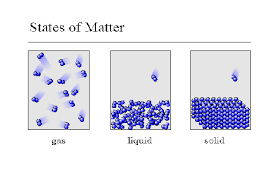
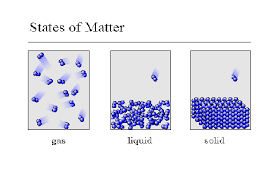
Which state of matter has both definite shape and definite volume?
Gas
Liquid
Solid

Which state of matter has no definite shape and no definite volume?
Gas
Liquid
Solid

Which state of matter has no definite shape but does have definite volume?
Gas
Solid
Liquid
Matter is _______________________________.
The amount of matter in an object.
The amount of space an object occupies.
Anything that has mass and volume.
Mass is ________________________________.
The amount of matter in an object.
Anything that has Mass and volume.
The amount of space an object occupies.
Volume is _______________________.
the amount of matter an object has.
the amount of space an object occupies.
anything that mass and volume.
Which 2 lab equipments are used to measure mass?


Which 3 lab equipments are used to measure volume?


A gas has _______________ . (Pick 3)
A lot of space between particles
Very little space between particles
Particles with no definite pattern.
Particles that hold a very definite pattern.
Particle that bounce all over the place.

A solid has _______________ . (Pick 3)
A lot of space between particles
Very little space between particles
Particles with no definite pattern.
Particles that hold a very definite pattern.
Particles that only vibrate in place.
A liquid has _______________ . (Pick 3)
A lot of space between particles.
Very little space between particles.
Particles that have have no definite pattern.
Particles hold that a very definite pattern.
Particles that freely flow past each other.
Which one is the flask?


Which one is the graduated cylinder?


Which one is the beaker?


Which 2 are balances used to measure mass?



Freezing
Solid to gas
Liquid to solid
Gas to solid

Boiling
liquid to gas
gas to solid
gas to liquid
Solid to Gas
Deposition
Sublimation
Evaporation
The slower the particles in a substance move,
the colder it is.
the warmer it is.
the more energy it has.
Liquid to Gas
Condensation
Evaporation
Sublimation
What happens to particles when their temperature increases?
The particles move slower
The particles move faster
The particles lose mass
The particles gain mass


one or two letters that represent the name of an element
element name
element symbol
atomic number
atomic mass


What does the C represent?
atomic mass
atomic number
element name
chemical symbol

What does the 6 represent?
atomic mass
atomic number
element name
chemical symbol

What does 12.011 represent?
atomic mass
atomic number
element name
chemical symbol
The letter, C, is a .................. of carbon.
Name
Nickname
Chemical Symbol
Pseudonym
The Modern Periodic Table of Elements is arranged by
atomic mass
atomic number
valence electrons
number of isotopes
Which group of the periodic table is composed of inert (not reactive) gases?
answer choices
alkali metals
alkaline earth metals
halogens
noble gases
Which is an alkali metal?
Magnesium
Iron
Sodium
Europium
Which is a halogen?
Helium
Chlorine
Oxygen
Neptune
Elements in a .................. have similar chemical properties.
period
group
row
Which of the following are physical properties of metal?
Luster
Conductivity
Malleability
Ductility
Name this group: These metals are the most reactive.


Name this group: These metals are the second most reactive.
Name this group: These metals contain familiar metals such as gold, iron, and copper.
Which of the following could be properties of nonmetals?
Poor electrical conductivity
Poor thermal conductivity
Dullness
Brittleness
Locate Lanthanides and Actinides.


I am a nonmetal
I am in period 2
I am in group 16/6A
Ba
Si
O
S
I am a metal
I am in group 2
I am in period 6
I am…
Mo
Re
S
Ba
The atomic mass is the
number of protons and neutrons inside the nucleus
number or electrons or protons
number of protons, neutrons and electrons
All matter is made of _________.


pure, made of only one type of atom
Water is made up of hydrogen and oxygen, two elements that were chemically combined. This makes water a(n)
atom
compound
element
mixture
__ is a pure substance containing two or more kinds of atoms.
Element
compound
mixture
solution
Which of the following are both solutions?
Water and chicken noodle soup
Baking powder and cornstarch
milk and household bleach
lemonade and soda pop
An element is a ___ that cannot be separated into simpler substances by physical or chemical means.
pure substance
mixture
solution
compound
Which of the following is a heterogenous mixture?
neon
soil
steel
salt water
Which of the following is a homogeneous mixture?
sand in a bottle
lemonade
Mercury
salad
A __ mixture is a mixture in which the composition is not uniform throughout the mixture.
element
homogenous
heterogenous
compound

Which of the diagrams below represent a mixture?
A
B
C
D

Diagram B is an example of a(n)
element
compound
mixture
Diagram C is an example of a(n)
element
compound
mixture

What does this diagram represent?
Elements
Compounds
Mixture of Elements and Compunds
Mixture of Compounds
Compound
In a ______________, one substance is dissolved in another substance.
solution
suspension
Which of these is an element?
Salt (NaCl)
Water (H20)
Oxygen (O)
Carbon Dioxide (CO2)
Which of these is a compound?
Aluminium (Al)
Carbon Dioxide (CO2)
Nitrogen (N)
Sand
Which of these is a mixture?
Laundry Detergent
Salt (NaCl)
Oxygen (O)
Fluorine (Fl)
Air is:
An element
A compound
A mixture
None of these
Milk and gelatin are examples of __________________.
suspensions
colloids
solutions
A snow globe would be an example of a __________________.
colloid
solution
suspension
Tea and air are examples of ________________.
solutions
suspensions
colloids

Water is the univeral ____.
solute
solvent
solution
Fish breathe oxygen, which is dissolved in water. Is the oxygen the fish breathe considered to be the solute or solvent?
Solute
Solvent
For heartburn relief some take an Alka-Seltzer tablet (an antacid) and dissolve it in water. Is the Alke-Seltzer tablet the solute or sovent?
Solute
Solvent
Vinegar is a solution that is made up of acetic acid dissolved in water. Which part of the solution is the solute?
water
acetic acid
Solutes dissolve quicker in _________ water.
cold
warm
Solutes dissolve quicker if you stir them.
true
false
When matter is heated, the particles______.
Come together
Stay the same
spread apart

If a solute dissolves in water than it is (a) .
Which is the stronger acids ?
pH 1
pH 8
pH 13
pH 7
Which of the following is an acid ?
Shampoo
Baking soda
Orange juice
Water
Value from 0-14 that determine the acidity of a solution
pH scale
Base
Number line
Acid
Pure water has a pH of 7
is a base
is a neutral substance
is an acid
could be either an acid or a base
What is the range of pH values in an acidic solution?
pH = 7
7-14
0-7
0-14
An acid is a solution that contains __________ ions dissolved in water.
positive
negative
Which has a slippery texture?
Acid
Base
Tastes Sour
Acids
All
Bases
Salts
Which of these do you predict will turn red like an acid
Lemon Juice
Baking Soda
Vinegar
Cleaner
Milk


Products of a neutralization reaction are always:
an acid and a base
an acid and a salt
a salt and water
a salt and a base

What kind of change occurs if matter changes in amount, size, or shape?
substance change
chemical change
physical change
elemental change
What is a chemical change?
Forming a new substance
When two or more substances combine to make a greater one
When two or more substances combine to make a new chemical substance
Combing substances
Students observed a piece of iron change from shiny to rusty. What caused this change?
a chemical reaction
a heat reaction
a cold reaction
a physical reaction
Which is the best example of a new substance forming?
lighting a match
cutting a piece of paper
popping a balloon
hitting a nail with a hammer
Cutting, crushing, melting, and boiling are all examples of what?
physical changes
chemical changes
messes
Law of Conservation of Particles
A change is a substance that affects its chemical properties thus a chemical reaction happens and a new substance is formed.
physical change
physical properties
chemical change
chemical properties
Blue color: Chemical or Physical Property
Reacts with acid: Chemical or Physical Property
Sour taste: Chemical or Physical Property
Melting point: Chemical or Physical Property
Reacts with water: Chemical or Physical Property
Which one of these is a chemical property?
Melting point
Boiling point
Color
Toxicity

